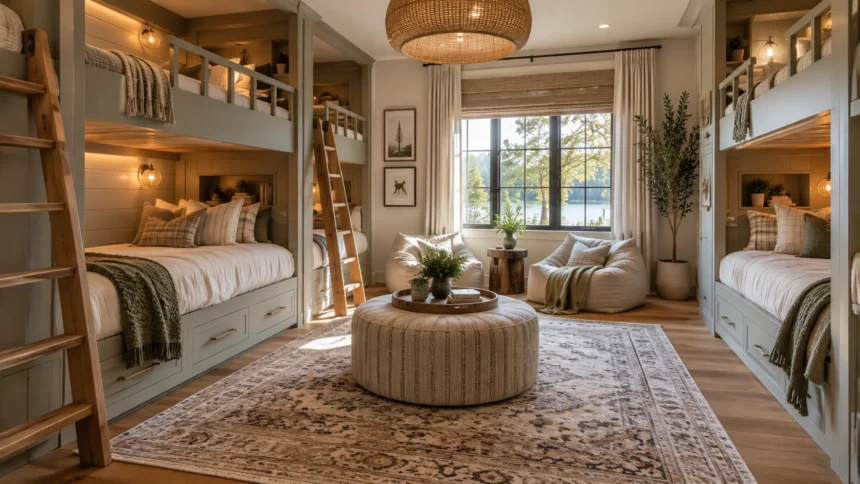
A well-designed bunk room can transform an ordinary spare space into a comfortable, practical, and inviting place for children, guests, or extended family. Whether you are decorating a vacation home, basement, cabin, or shared bedroom, bunk beds allow you to maximize sleeping capacity without sacrificing valuable floor space. The right design choices can make the room feel stylish rather than crowded.
Creating an elevated bunk room does not necessarily require an expensive renovation. Thoughtful lighting, storage, bedding, wall treatments, and furniture placement can dramatically improve both appearance and functionality. By balancing comfort with smart space planning, you can create a bunk room that feels organized, welcoming, and suitable for everyday use or occasional overnight guests.
Choose the Right Bunk Bed Layout
The bunk bed layout is the foundation of a successful bunk room design. Traditional stacked bunks work well in smaller spaces because they provide two sleeping areas without using much floor space. In wider rooms, built-in bunks or multiple beds arranged along one wall can create a clean, custom appearance while accommodating several guests comfortably.
Think carefully about traffic flow before placing the beds. People should be able to enter, move around, access ladders, and reach storage areas without bumping into furniture. Leaving enough open floor space also prevents the room from feeling cramped, especially when several people are using the space at the same time.
Ceiling height is another important consideration when selecting a bunk configuration. The person sleeping on the upper level should have enough room to sit up safely without hitting the ceiling. Measuring the room before purchasing or building bunks can prevent uncomfortable spacing and help you choose proportions that feel balanced within the overall design.
Add Built-In Storage Wherever Possible
Storage becomes especially important in a bunk room because several people may need space for clothing, bags, shoes, and personal belongings. Drawers underneath lower bunks can provide valuable storage without requiring additional furniture. Built-in cabinets, shelves, or cubbies can also help keep the room organized while preserving open floor space.
Individual storage areas make shared rooms easier to use. Consider adding a small cubby, shelf, basket, or drawer for each sleeping space so every guest has somewhere to keep personal items. Clearly defined storage can reduce clutter and prevent belongings from spreading across beds, floors, and common surfaces.
Vertical space can provide additional storage opportunities when floor space is limited. Wall-mounted shelves, hooks, peg rails, and narrow cabinets can hold everyday items without making the room feel crowded. Choosing storage solutions that match the color and style of the beds also helps the room feel more intentional and visually cohesive.
Upgrade the Bedding for a Polished Look
Bedding has a major influence on how a bunk room feels because the beds usually occupy most of the visual space. Coordinated sheets, quilts, blankets, and pillows can instantly make the room appear more polished. You do not need identical bedding on every bunk, but colors and patterns should complement one another.
Layering different textures can make simple bunks feel much more comfortable and inviting. Combine breathable sheets with lightweight quilts, soft blankets, and a few supportive pillows. In guest bunk rooms, neutral bedding often provides flexibility because it can work with different seasons, age groups, and decorative styles without requiring frequent updates.
Practicality should remain important when choosing bedding. Washable fabrics, durable materials, and fitted sheets that are easy to replace can save time, particularly when the room is used frequently. Avoid excessive decorative pillows on upper bunks because they can take up valuable sleeping space and make changing bedding unnecessarily difficult.
Improve Lighting Around Every Bunk
Good lighting can significantly improve comfort in a shared sleeping room. A single ceiling fixture may provide general illumination, but it does not always give each person enough light for reading or relaxing. Individual wall-mounted lights or compact sconces near each bunk can create a more comfortable and personalized sleeping area.
Choose fixtures that do not extend too far into the sleeping space. Low-profile lights with protected bulbs are usually more practical around bunk beds, especially where children may be using the room. Warm lighting can create a cozy atmosphere, while dimmable options allow guests to adjust brightness according to their preferences.
Natural light should also be considered when planning the room. Avoid blocking windows with tall furniture whenever possible, and use curtains or blinds that allow easy control over sunlight and privacy. Combining natural light during the day with layered artificial lighting at night can make even a small bunk room feel brighter and more welcoming.
Use Color to Make the Room Feel Larger
Color can affect whether a bunk room feels open and relaxing or crowded and visually heavy. Light neutrals, soft greens, muted blues, warm whites, and gentle earth tones can make smaller rooms feel more spacious. These shades also create a calm foundation that works well with different bedding and decorative accents.
Darker colors can still work beautifully when used thoughtfully. A deep accent wall behind built-in bunks can create depth and make lighter bedding stand out. Wood finishes, black hardware, or darker textiles can add contrast without overwhelming the space when they are balanced with lighter walls and natural materials.
Try to maintain a consistent color palette throughout the room. Repeating two or three main shades across bedding, storage, rugs, and wall decor creates visual harmony. Too many competing colors and patterns can make a shared room appear cluttered, even when the actual furniture arrangement is neat and organized.
Add Personal Touches to Each Sleeping Space
Individual details can make each bunk feel like a private retreat within a shared room. Small shelves, name tags, reading lights, artwork, or personalized blankets can give each sleeper a defined space. These touches are particularly useful in children’s bunk rooms, where everyone may appreciate having a small area that feels like their own.
Personalization does not need to create a mismatched design. Keep the overall materials, colors, and shapes consistent while allowing small decorative differences between bunks. One sleeper might have a different throw pillow or framed print, while another has a unique storage basket that still coordinates with the overall room style.
Guest rooms can benefit from thoughtful details as well. Provide accessible charging outlets, a small shelf for phones, extra blankets, and somewhere to place glasses or personal belongings. These simple conveniences can make a bunk room feel much more comfortable and intentional, especially when adults or overnight visitors are using the space.
Create a Comfortable Shared Area
If space allows, include a small shared area where people can relax without sitting on their beds. A compact bench, floor cushions, beanbags, or a small chair can create an informal place for conversation, reading, or playing games. This helps the room function as more than simply a collection of sleeping spaces.
Choose furniture that matches the scale of the room. Large sofas or oversized chairs can quickly make a bunk room feel crowded, while smaller multifunctional pieces maintain flexibility. An upholstered storage bench, for example, can provide seating while also holding extra bedding, towels, toys, or seasonal items.
A small rug can help visually define the shared zone while making the room feel warmer. Select something durable and easy to clean, particularly in rooms used by children or frequent guests. Keeping the central area relatively open also makes cleaning easier and allows the room to accommodate changing needs over time.
Make the Room Feel Like Part of the Home
A bunk room should feel connected to the rest of the property rather than looking like an afterthought. Repeating architectural details, colors, flooring, or materials used elsewhere can create continuity. Even a casual bunk room can feel sophisticated when its design reflects the overall style of the surrounding home.
This is particularly useful when improving a newly purchased property or preparing a home for guests. Homeowners balancing renovation ideas with broader financial planning may also find it useful to understand home buying costs before committing to larger upgrades. Knowing your overall budget makes it easier to prioritize improvements that provide the greatest practical value.
Decorative details can reinforce this connection without requiring major construction. Use similar hardware finishes, wood tones, trim styles, or artwork themes found in nearby rooms. When the bunk room follows the broader character of the property, it feels more intentional and can contribute positively to the overall impression of the home.
Focus on Safety Without Sacrificing Style
Safety should remain one of the highest priorities in any bunk room. Upper bunks need secure guardrails, stable ladders, and appropriate mattress heights to reduce the risk of falls. Built-in bunks should also be properly anchored, while freestanding models should be assembled according to manufacturer instructions and checked regularly for loose hardware.
Keep pathways clear and avoid placing sharp-edged furniture directly beside ladders or sleeping areas. Electrical cords should be organized carefully so they do not create tripping hazards. If children use the room, age suitability should also be considered before allowing them to sleep on upper bunks or climb ladders without supervision.
Safety features can still blend naturally into the overall design. Guardrails, ladders, and handles can be painted or finished to match the beds, while integrated lighting can improve nighttime visibility. Thoughtful design allows practical protection to become part of the room’s aesthetic instead of looking like an unattractive addition.
Conclusion
Elevating a bunk room is largely about combining practical space planning with thoughtful design. The right bunk layout, coordinated bedding, individual lighting, storage, and a consistent color palette can transform even a compact room. These improvements help the space feel comfortable and organized rather than crowded or purely functional.
Small details can make a surprisingly large difference. Personal shelves, charging areas, soft textiles, shared seating, and coordinated decor help guests feel more comfortable while giving the room personality. You do not need a large renovation budget when simple improvements can create a polished and welcoming atmosphere.
Most importantly, design the bunk room around the people who will actually use it. Prioritize safe sleeping arrangements, accessible storage, durable materials, and enough flexibility to accommodate different guests. When practicality and style work together, a bunk room can become one of the most useful and enjoyable spaces in the home.
FAQs
What is a bunk room?
A bunk room is a shared sleeping space containing multiple bunk beds or built-in sleeping areas. It is commonly used in vacation homes, cabins, children’s rooms, basements, and guest spaces.
How can I make a bunk room look more expensive?
Use coordinated bedding, built-in storage, warm lighting, consistent hardware, quality textiles, and a limited color palette. Small design details can create a custom appearance without requiring an expensive full renovation.
What colors work best in a bunk room?
Soft neutrals, muted blues, greens, warm whites, and natural wood tones work well because they create a calm atmosphere. Darker accent colors can add depth when balanced with lighter finishes.
How do you add privacy to a bunk room?
Curtains around individual bunks, partial dividers, personal lighting, and separate storage can provide greater privacy. These features help each sleeping area feel more individual without completely dividing the shared room.
What should every bunk room include?
A practical bunk room should include safe beds, comfortable bedding, accessible lighting, storage, clear pathways, and charging options. Additional seating and personal shelves can make the space even more comfortable and functional.