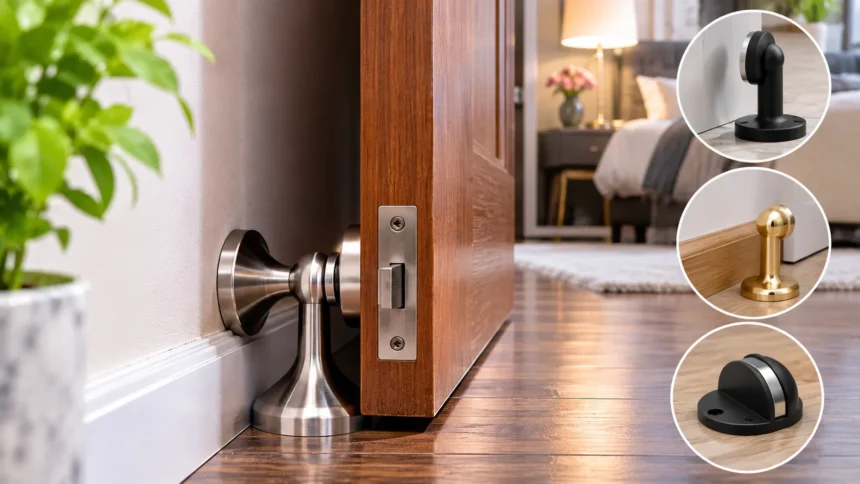
You are carrying groceries into your home when the door suddenly swings shut. You try holding it open with your foot, but managing everything at once becomes frustrating. Meanwhile, repeated door movement may leave scratches and dents on nearby walls.
A traditional door stopper can prevent some damage, but it does not always keep the door securely open. You need something that controls unwanted movement without creating unnecessary inconvenience.
A magnetic door stop offers a practical solution to these everyday problems. However, choosing the right one requires understanding door weight, magnetic strength, mounting options, and available space. This guide will help you make an informed decision.
What Is a Magnetic Door Stop?
A magnetic door stop is a hardware accessory designed to hold a door open using magnetic attraction. It can also help prevent the door from swinging too far and hitting nearby walls or furniture.
Most magnetic door stoppers consist of two components: a magnet assembly and a metal catch plate. One component attaches to the door, while the other mounts to a nearby wall, floor, or suitable surface.
When the door opens, these components connect and hold it in position. A gentle pull releases the magnetic connection, allowing the door to close normally.
How Does a Magnetic Door Stop Work?
Traditional door stops mainly prevent doors from opening beyond a certain point. However, they may not stop doors from swinging shut because of airflow, uneven flooring, or ordinary movement.
A magnetic door holder addresses this problem by creating an attractive force between its magnet and metal catch plate. When both components meet, the magnetic connection helps maintain the door’s open position.
The basic working process includes:
- The door swings toward the magnetic stopper.
- The metal catch approaches the magnet.
- Both components connect through magnetic attraction.
- The door remains open within the holder’s capacity.
- Pulling the door separates the components.
Some models also feature spring-loaded mechanisms or cushioning materials. These features help soften contact and reduce noise when the door reaches its stopping point.
What Are the Different Types of Magnetic Door Stops?
Buying the wrong door stopper can lead to installation difficulties and disappointing performance. Different mounting styles are designed to accommodate different door arrangements, surfaces, and room layouts.
Understanding the available options makes it easier to choose hardware that fits your space. The following are some of the most common magnetic door stopper designs.
Wall-Mounted Magnetic Door Stop
Wall-mounted magnetic door stops attach to a wall or suitable baseboard behind the door. A matching component attaches to the door and connects with the stopper when opened.
These models are useful when you want to keep the floor free from obstacles. They work well in bedrooms, living rooms, offices, and other spaces with appropriate mounting surfaces.
Floor-Mounted Magnetic Door Stop
A floor-mounted magnetic door stop attaches directly to the flooring. It can be useful when there is no suitable wall behind the door or when the door needs to stop at a particular angle.
These models are available in various sizes and designs. However, their placement requires careful consideration to avoid creating a tripping hazard or damaging flooring materials.
Concealed Magnetic Door Stop
Concealed magnetic door stops offer a discreet appearance by hiding some hardware components within the door or floor. They are particularly appealing in modern interiors where visible accessories may interrupt the overall design.
These models generally require more precise installation than conventional surface-mounted stoppers. Professional installation may be appropriate when modifications to doors or flooring are necessary.
Heavy-Duty Magnetic Door Stop
Heavy doors can easily disconnect from weak magnetic holders. Heavy-duty magnetic door stops are designed to provide stronger holding force and durable construction.
These models may be suitable for larger wooden doors, office doors, and frequently used interior doors. Always verify the manufacturer’s holding capacity and compatibility before purchasing.
Adhesive Magnetic Door Stop
Adhesive magnetic door stoppers use suitable mounting pads instead of traditional screws. They can be convenient for renters or homeowners who want to avoid permanent modifications.
However, adhesive performance depends on surface preparation, material compatibility, and door movement. These models are generally better suited to lighter doors within their rated capacity.
Wall-Mounted vs Floor-Mounted Magnetic Door Stops
Choosing between wall-mounted and floor-mounted models can be confusing. Both perform similar functions, but their installation requirements and practical advantages differ.
Your decision should depend on available mounting space, door movement, flooring material, and accessibility. The following comparison highlights the main differences.
| Feature | Wall-Mounted Door Stop | Floor-Mounted Door Stop |
|---|---|---|
| Installation location | Wall or baseboard | Floor |
| Floor obstruction | Generally none | Possible |
| Cleaning convenience | Usually easier | May collect dirt |
| Appearance | Visible behind the door | Visible on the floor |
| Suitable rooms | Bedrooms and living rooms | Spaces without suitable walls |
| Installation concerns | Wall and baseboard strength | Flooring and hidden utilities |
| Positioning flexibility | Depends on wall location | Greater positioning flexibility |
Choose a wall-mounted model if a suitable wall is available and you want an unobstructed floor. A floor-mounted model may be more practical when the room layout requires a different stopping position.
How to Choose the Right Magnetic Door Stop
An attractive magnetic door stopper may look suitable online but perform poorly after installation. The most important consideration is whether its design matches your door and mounting surface.
Before purchasing, evaluate the following factors. Spending a little time checking compatibility can help prevent unnecessary returns and installation problems.
Consider the Door Weight
A lightweight interior door does not require the same holding strength as a solid wooden door. Heavy doors may disconnect from magnets that cannot resist their movement.
Check the manufacturer’s specifications for recommended door types and holding capacity. Door weight, hinge alignment, airflow, and closing mechanisms can all influence the required strength.
Check the Magnetic Holding Strength
A weak magnet may release the door unexpectedly, while an unnecessarily strong magnet can make closing it difficult. Finding the right balance improves everyday convenience.
Look for a magnetic holder designed for your door’s operating conditions. Consider who will use the door regularly and whether comfortable release is particularly important.
Measure the Door Clearance
Door clearance refers to the available space between the door and nearby surfaces. Incorrect measurements may prevent the magnet and catch plate from connecting properly.
Measure the available mounting space and the gap between the door and floor where relevant. Compare these measurements with the product dimensions before placing an order.
Evaluate the Mounting Surface
Different surfaces require different mounting methods. A stopper suitable for a wooden baseboard may not attach securely to drywall, tile, or another material without appropriate hardware.
Check whether the product supports your intended mounting surface. For uncertain surfaces or installations requiring drilling, consult a qualified installer.
Match Your Interior Design
Door hardware can influence the appearance of a room more than you might expect. A mismatched finish may look out of place alongside handles, hinges, and other accessories.
Choose finishes that complement your existing hardware and interior style. Brushed nickel, matte black, brass, and stainless steel are popular options for different design preferences.
What Are the Best Materials for Magnetic Door Stops?
A magnetic door stopper may be exposed to frequent contact, moisture, dust, and everyday wear. Poor-quality materials can deteriorate, affecting both appearance and functionality.
Selecting an appropriate material helps improve durability and reduces unnecessary maintenance. Consider the following options when comparing different products.
| Material | Main Benefits | Suitable Applications |
|---|---|---|
| Stainless steel | Durable and corrosion-resistant | Kitchens, bathrooms, and interiors |
| Solid brass | Attractive and generally durable | Traditional and decorative interiors |
| Zinc alloy | Affordable and available in various finishes | Everyday residential use |
| Aluminum | Lightweight and corrosion-resistant | Modern interior spaces |
| Plastic | Lightweight and economical | Suitable lightweight doors |
Material quality matters more than appearance alone. Check the product’s construction, finish, mounting components, and suitability for the conditions in which it will be used.
Where Can You Use a Magnetic Door Stop?
Doors serve different purposes throughout a home. Some need to remain open for ventilation, while others require controlled movement to prevent damage to nearby surfaces.
Magnetic door holders can offer practical benefits in several areas. Choosing suitable locations helps you get the most value from your installation.
Bedrooms
Bedroom doors may move unexpectedly when windows are open or air circulates through the house. A magnetic stopper can help maintain a comfortable open position when needed.
It also helps prevent door handles from repeatedly hitting nearby walls. Choose a model that operates quietly and releases comfortably.
Kitchens
Moving between the kitchen and surrounding rooms becomes inconvenient when doors constantly swing shut. A magnetic door holder can make ordinary household activities easier.
Choose hardware that is easy to clean and appropriate for the surrounding environment. Avoid positioning the stopper where it could interfere with regular foot traffic.
Bathrooms
Bathroom doors may benefit from magnetic holders when additional ventilation is needed. Keeping the door open can support airflow when the room is not in use.
Moisture exposure makes material selection particularly important. Choose corrosion-resistant hardware suitable for the intended bathroom location.
Offices
Office doors frequently open and close throughout the working day. Repeated movement may create noise, inconvenience, and damage to nearby walls.
A suitable magnetic door stopper can help manage door movement where holding the door open is appropriate. Confirm that the installation does not interfere with workplace fire safety or accessibility requirements.
How to Install a Magnetic Door Stop
Even a high-quality magnetic door stopper may perform poorly when its components are incorrectly aligned. Installation accuracy is essential for achieving reliable contact between the magnet and catch plate.
Start by reviewing the manufacturer’s instructions and confirming that the hardware is compatible with your door and mounting surface. Determine where the door should stop without allowing its handle to hit the wall.
A typical installation involves:
- Selecting an appropriate mounting position.
- Checking door movement and available clearance.
- Aligning the magnetic holder and catch plate.
- Securing both components using the specified mounting method.
- Testing the door’s movement and magnetic connection.
- Checking that the door opens and releases comfortably.
If installation requires drilling into walls, floors, or specialized doors, consider professional assistance. Hidden wiring, pipes, and underfloor heating systems must be accounted for before making permanent modifications.
Magnetic Door Stop vs Traditional Door Stop
Traditional door stoppers are simple, affordable, and widely available. However, their ability to control unwanted door movement depends on their design.
Magnetic door stops combine stopping and holding functions, while many conventional models primarily limit how far a door opens. Understanding these differences helps you decide which option suits your requirements.
| Feature | Magnetic Door Stop | Traditional Door Stop |
|---|---|---|
| Holds door open | Yes | Depends on design |
| Wall protection | Yes, when positioned correctly | Yes, when positioned correctly |
| Moving parts | Depends on model | Generally simple |
| Installation | Often requires alignment | Usually straightforward |
| Convenience | Automatic magnetic connection | Depends on stopper type |
| Cost | Varies by features | Often more affordable |
| Maintenance | Occasional cleaning and alignment checks | Generally minimal |
A traditional door stopper may be sufficient if your only concern is protecting walls. A magnetic model is worth considering when you also need the door to remain open.
What Are the Benefits of Magnetic Door Stops?
Small household inconveniences can become frustrating when they happen repeatedly. Doors that swing shut or strike nearby walls may interrupt activities and lead to avoidable repairs.
Magnetic door stoppers provide a simple way to manage these issues. Their practical advantages extend beyond protecting walls from ordinary contact.
The main benefits include:
- Helping prevent dents and scratches on walls.
- Holding doors open within the product’s capacity.
- Reducing unwanted door movement.
- Supporting easier movement between rooms.
- Offering various finishes and mounting styles.
- Reducing reliance on loose door wedges.
- Providing convenient magnetic engagement and release.
These benefits depend on appropriate installation and product selection. A well-matched magnetic door holder can improve everyday functionality without requiring complicated adjustments.
What Are the Disadvantages of Magnetic Door Stops?
Magnetic door stops are useful, but they are not suitable for every situation. Some homeowners discover compatibility problems only after purchasing or installing their chosen model.
Knowing the potential limitations helps you make a more practical decision. Consider whether these disadvantages could affect your intended installation.
- Weak magnets may struggle to hold heavier doors.
- Strong magnets may require additional effort to release.
- Floor-mounted models can create obstacles.
- Incorrect alignment can reduce holding performance.
- Adhesive mounts may loosen over time.
- Unsuitable materials may deteriorate in damp environments.
- Certain models require permanent installation.
Magnetic door holders should not be used to defeat the closing function of fire doors. Such doors require appropriate, approved hold-open systems that comply with applicable fire safety requirements.
Why Is My Magnetic Door Stop Not Working?
A magnetic door stopper that suddenly stops holding the door can be frustrating. Fortunately, common performance problems often relate to alignment, loose components, or unsuitable holding strength.
Start by observing how the magnet and catch plate meet when the door opens. Even a small alignment problem may prevent the components from connecting correctly.
| Problem | Possible Cause | Recommended Solution |
|---|---|---|
| Door does not stay open | Insufficient holding strength | Choose a compatible model |
| Magnet does not connect | Incorrect alignment | Check component positioning |
| Stopper feels loose | Mounting components have loosened | Have the mounting checked |
| Adhesive comes off | Incompatible or dirty surface | Use an approved mounting method |
| Door makes loud contact | Worn or missing cushioning | Inspect the cushioning component |
| Hardware develops rust | Moisture exposure | Choose suitable corrosion-resistant hardware |
Regular inspections can help identify problems before they become more inconvenient. Replace damaged components when they can no longer provide reliable performance.
How Much Does a Magnetic Door Stop Cost?
Buying the cheapest magnetic door stop might seem like a sensible way to save money. However, poor construction or unsuitable holding strength can lead to premature replacement.
Prices vary according to material, brand, mounting design, magnetic strength, and additional features. Basic residential models are generally less expensive than concealed or heavy-duty designs.
When comparing prices, consider:
- Construction quality and material.
- Included mounting accessories.
- Manufacturer warranty.
- Installation requirements.
- Recommended door compatibility.
- Potential maintenance and replacement costs.
Focus on overall value rather than the initial purchase price alone. A suitable, durable product may provide better long-term performance than a cheaper alternative that does not meet your requirements.
How to Maintain a Magnetic Door Stop
Door hardware is easy to overlook during routine household cleaning. Dust, moisture, and repeated contact can gradually affect the appearance and performance of magnetic components.
Fortunately, most magnetic door stoppers require relatively little maintenance. Regular cleaning and occasional inspections can help keep them functioning properly.
Follow these simple maintenance practices:
- Wipe the exterior using a soft cloth.
- Keep magnetic contact surfaces clean.
- Check for loose mounting components.
- Inspect hardware for corrosion or damage.
- Monitor changes in door alignment.
- Replace worn cushioning components when necessary.
- Follow the manufacturer’s cleaning recommendations.
Avoid harsh cleaning chemicals that could damage protective finishes. Addressing minor problems early can help prevent larger maintenance issues later.
Conclusion
A magnetic door stop is a practical addition to many homes, offering wall protection, convenient door holding, and improved control over everyday door movement. However, its effectiveness depends on selecting a suitable design.
Consider door weight, magnetic strength, mounting surfaces, material quality, and available clearance before purchasing. These factors are more important than appearance or price alone.
Start by measuring your available space and identifying whether a wall-mounted or floor-mounted magnetic door stopper meets your needs. Compare compatible products using their specifications, and choose an option that provides reliable performance and everyday convenience.
Frequently Asked Questions
Are magnetic door stops worth buying?
Magnetic door stops are worth considering if you want to protect walls and hold doors open conveniently. Their effectiveness depends on magnetic strength, installation quality, and compatibility with your door.
Can magnetic door stops hold heavy doors?
Heavy-duty magnetic door stops can hold certain heavier doors. Check the manufacturer’s recommended holding capacity and consider factors such as airflow, hinge alignment, and existing door-closing mechanisms.
Do magnetic door stops damage doors?
Properly installed magnetic door stops generally help prevent damage. However, unsuitable mounting methods, excessive holding strength, or poor alignment may damage surfaces or place unnecessary stress on door hardware.
Can you install a magnetic door stop without drilling?
Yes, some magnetic door stoppers use adhesive mounting systems. These are generally suitable for compatible surfaces and lighter doors, provided the manufacturer’s installation and holding capacity requirements are followed.
How long do magnetic door stops last?
A quality magnetic door stop can last several years with appropriate use and maintenance. Its lifespan depends on material quality, environmental conditions, mounting stability, and frequency of use.