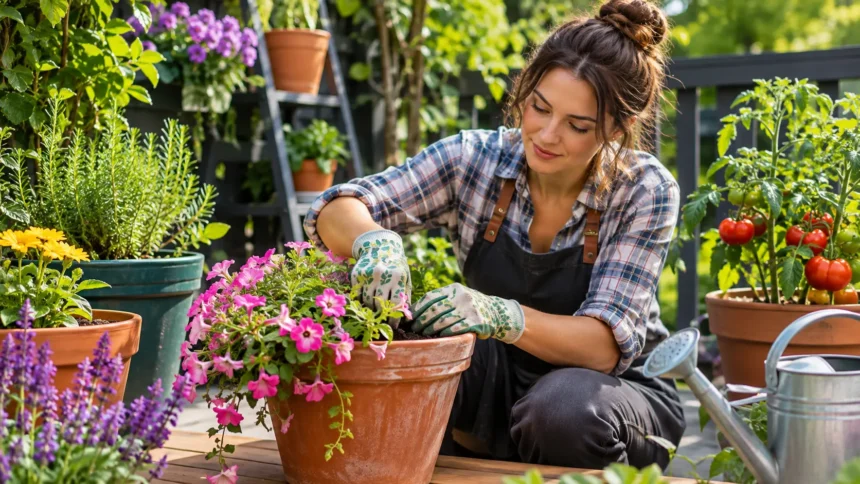
Container gardening makes it easy to grow beautiful flowers, fresh vegetables, and healthy herbs without needing a large backyard. However, even experienced gardeners sometimes struggle with unhealthy plants, yellow leaves, or slow growth. Many of these problems happen because of small mistakes that are easy to overlook.
Understanding common container gardening mistakes to avoid can help you grow stronger plants and create a beautiful garden in any space. Whether you use balcony planters, patio pots, or indoor containers, the right techniques make a noticeable difference. From choosing suitable pots to managing watering schedules, simple improvements can keep your container garden thriving throughout the growing season.
Choosing the Wrong Container Size
One of the most common container gardening mistakes is selecting pots that are too small for growing plants. Small containers restrict root development and limit the amount of available water and nutrients. As plants mature, their roots need additional room to spread and absorb moisture. Without enough space, plants may become stressed, grow slowly, or produce fewer flowers and vegetables.
Different plants require different container sizes based on their mature growth and root systems. Herbs such as thyme can grow comfortably in relatively small pots, while tomatoes often need larger containers. Choosing a pot based only on appearance may create problems later. Always consider the plant’s expected size before selecting a suitable gardening container.
Oversized containers can also cause problems when the soil remains wet longer than the roots need. Young plants in very large pots may struggle if their growing medium stays excessively moist. Select a container that provides enough root space without holding unnecessary moisture. As the plant grows, move it into a larger pot when needed.
Using Containers Without Proper Drainage
Poor drainage is another major reason container plants struggle to grow successfully. When excess water cannot escape, it collects around the roots and reduces available oxygen. Constantly saturated soil can encourage root rot and other moisture-related problems. Proper drainage helps maintain a healthier growing environment and supports strong root development in potted plants.
Choose containers with drainage holes at the bottom to allow excess water to escape naturally. If you use decorative pots without holes, place a smaller nursery pot with drainage inside them. Remove collected water after watering to prevent roots from sitting in moisture. This simple method allows you to combine attractive containers with practical plant care.
Some gardeners place stones or gravel at the bottom of containers, believing they improve drainage. However, adding a gravel layer does not solve drainage problems and may reduce the space available for roots. Instead, use a suitable potting mix and containers with functional drainage holes. Keeping these areas clear helps prevent water accumulation and improves overall growing conditions.
Using Regular Garden Soil Instead of Potting Mix
Using ordinary garden soil in containers is a mistake that can affect plant growth. Garden soil often becomes compacted when placed inside pots, reducing airflow and drainage around the roots. It may also contain weed seeds, insects, or disease-causing organisms. Container plants generally perform better in a lightweight growing medium designed specifically for potted plants.
A quality potting mix provides a suitable balance of moisture retention, drainage, and aeration. Many commercial mixes contain ingredients such as composted bark, coir, peat, or perlite to improve their structure. These materials help roots access water and oxygen without becoming waterlogged. Selecting the right potting medium gives plants a healthier foundation for growth.
Different plants may require specialized growing mixes depending on their moisture and drainage needs. Succulents often perform better in a fast-draining mix, while moisture-loving plants benefit from media that retain more water. Always check the growing requirements of the plants you choose. Refreshing old potting mix when necessary can also support healthier roots and better results.
Overwatering Your Container Plants
Overwatering is one of the most frequent mistakes beginners make when growing plants in containers. Many gardeners assume that watering every day will keep their plants healthy and hydrated. However, constantly wet soil can limit oxygen around the roots and encourage fungal diseases. Plants suffering from excess moisture may develop yellow leaves, weak growth, or drooping stems.
The best watering schedule depends on plant type, container size, temperature, and sunlight exposure. Rather than following a strict daily routine, check the moisture level before adding more water. For many plants, feeling the upper layer of potting mix can help determine when watering is necessary. Some species prefer consistently moist conditions, while others need time to dry slightly.
When watering, apply moisture slowly until it reaches the root zone and drains through the container. Allow excess water to escape instead of leaving the pot standing in a filled saucer. Avoid repeatedly adding small amounts without checking whether the soil needs them. Consistent watering habits help maintain healthy roots and reduce unnecessary moisture-related problems.
Underwatering and Ignoring Soil Moisture
Although overwatering causes problems, underwatering can be equally harmful to container plants. Pots contain limited amounts of growing medium, which means they can dry out faster than garden beds. During hot weather, small containers may lose moisture quickly through evaporation and plant activity. Without sufficient water, plants may wilt, develop dry leaves, or stop growing properly.
Check container moisture regularly, especially during warm, windy, or unusually dry conditions. Insert your finger into the upper portion of the potting mix to assess whether it feels dry. For deeper containers, a moisture meter or careful checking below the surface may provide additional information. Water according to individual plant needs rather than assuming every pot requires the same amount.
Mulching the surface of larger containers can help reduce evaporation and maintain more consistent moisture. Materials such as fine bark or suitable organic mulch can protect exposed potting mix from direct sunlight. Leave a little space around plant stems to prevent excessive moisture buildup. Grouping plants with similar watering needs also makes container garden maintenance easier.
Placing Containers in the Wrong Sunlight
Sunlight plays an important role in photosynthesis, healthy growth, and flower production. However, placing plants in unsuitable lighting conditions is a common container gardening mistake. Some plants need several hours of direct sunlight, while others grow better in partial shade. Ignoring these differences can lead to weak stems, damaged leaves, or disappointing harvests.
Vegetables such as tomatoes and peppers usually perform best with plenty of direct sunlight. Leafy greens and certain herbs may tolerate partial shade, particularly during hot afternoons. Before arranging your containers, observe how sunlight moves across your balcony, patio, or garden. This helps you identify suitable growing locations for plants with different light requirements.
Indoor container gardens need similar attention because sunlight levels change throughout the home. A bright window may provide sufficient light for some plants but not others. Move containers gradually when adjusting them to stronger sunlight to avoid sudden leaf damage. Matching each plant to suitable lighting conditions encourages balanced growth and improves its overall appearance.
Crowding Too Many Plants Into One Pot
Planting several flowers or vegetables together can create an attractive container display. However, overcrowding limits the space available for roots, leaves, and healthy plant development. When plants grow too close together, they compete for water, nutrients, and sunlight. Poor airflow between leaves may also create conditions that encourage certain fungal diseases.
Always consider the mature size of each plant when planning a container arrangement. Small seedlings may look widely spaced initially, but they can expand significantly during the growing season. Follow recommended planting distances whenever possible and avoid filling every available space. Proper spacing allows plants to develop naturally while maintaining a more balanced container garden.
For mixed planting arrangements, choose varieties with compatible watering, sunlight, and nutrient requirements. Combining plants with very different needs can make regular maintenance unnecessarily difficult. For example, moisture-loving flowers may not grow well beside drought-tolerant succulents in the same container. Thoughtful plant combinations create attractive displays without compromising individual plant health.
Using Too Much or Too Little Fertilizer
Container plants depend on a limited supply of nutrients within their growing medium. Over time, watering and active plant growth can reduce the nutrients available to roots. Without adequate nutrition, some plants may develop pale leaves, weak stems, or limited flowering. However, adding excessive fertilizer can also damage roots and interfere with healthy development.
Choose fertilizers based on the type of plants you are growing and their nutritional requirements. Flowering plants, leafy vegetables, and herbs may benefit from different feeding approaches. Follow the product’s recommended application instructions rather than guessing how much fertilizer to use. Applying excessive amounts may lead to salt buildup, damaged roots, or reduced plant performance.
Some potting mixes already contain slow-release fertilizer that feeds plants for a specific period. Check the package information before introducing additional nutrients into the container. During active growth, certain plants may require regular feeding, while others need very little. Monitoring plant development helps you adjust fertilization without creating unnecessary stress or nutrient imbalances.
Ignoring Temperature and Seasonal Changes
Container plants experience temperature changes more quickly than plants growing directly in the ground. Their limited soil volume can heat up rapidly during summer and cool down quickly during winter. Extreme temperatures may stress roots, affect moisture levels, and slow plant growth. Understanding seasonal conditions helps gardeners protect plants and maintain healthier containers throughout the year.
During hot weather, move sensitive plants away from intense afternoon sunlight when appropriate. Light-colored containers may absorb less solar heat than dark pots placed in exposed locations. Check moisture levels more frequently because warmer conditions often increase water loss. Providing temporary shade during extreme heat can help reduce stress without completely blocking necessary sunlight.
Cold weather requires additional attention, particularly for plants growing in exposed balcony or patio containers. Roots inside pots may be more vulnerable to freezing than roots protected by surrounding garden soil. Move frost-sensitive plants into suitable sheltered locations when necessary. Choosing plants adapted to your local climate also reduces seasonal maintenance challenges and improves growing success.
Neglecting Regular Plant Maintenance
Container gardening requires ongoing attention even when plants initially appear healthy and attractive. Ignoring routine maintenance can allow small problems to develop into larger growing difficulties. Dead leaves, damaged stems, and crowded branches may interfere with airflow and plant appearance. Regular observation helps gardeners identify changes before they become difficult to manage.
Remove dead or damaged plant material using clean gardening tools when appropriate. Some flowering plants benefit from deadheading, which involves removing faded blooms to encourage continued flowering. Pruning requirements vary by species, so avoid cutting healthy growth without understanding the plant’s needs. Gentle maintenance supports attractive containers and helps plants direct energy toward productive development.
Repotting is another important task that gardeners sometimes overlook during container plant care. Roots growing through drainage holes or circling densely inside a pot may indicate limited space. Certain plants also need their growing medium refreshed after extended use. Checking containers periodically helps you decide whether repotting, pruning, or other adjustments are necessary.
Ignoring Pests and Plant Diseases
Pests can affect container gardens even when plants are grown indoors or on elevated balconies. Common problems include aphids, spider mites, whiteflies, and fungus gnats. These insects may damage leaves, weaken plant growth, or become difficult to control when ignored. Regular inspection makes it easier to recognize early warning signs and respond appropriately.
Look closely at the undersides of leaves, young shoots, and areas around plant stems. Signs such as unusual spotting, sticky residue, fine webbing, or distorted growth may indicate pest activity. Identify the likely cause before applying any treatment because symptoms can have several explanations. Some issues result from watering problems or environmental stress rather than insects.
Keeping plants appropriately spaced and avoiding excessive moisture can reduce conditions favorable to certain diseases. Remove affected material when suitable and clean gardening tools between plants to limit potential disease transmission. For minor pest problems, gentle rinsing or an appropriate plant-safe treatment may help. Healthy growing conditions remain an important part of preventing recurring problems.
Conclusion
Avoiding common container gardening mistakes can make growing flowers, herbs, and vegetables much easier. Choosing suitable containers, providing proper drainage, and using quality potting mix create a strong foundation for healthy plants. Paying attention to watering and sunlight also helps prevent many common growing problems.
Successful container gardening depends on understanding the individual requirements of each plant. Proper spacing, balanced nutrition, and regular maintenance support healthy growth throughout the growing season. Small changes to everyday gardening habits can improve plant appearance and help prevent unnecessary damage.
Whether you have a small balcony garden or a collection of patio planters, patience and observation are essential. Check your plants regularly and adjust your care routine as conditions change. By avoiding these common mistakes, you can create a healthier, more productive, and attractive container garden.
Frequently Asked Questions
What is the most common mistake in container gardening?
Overwatering is one of the most common mistakes in container gardening. Excess moisture reduces oxygen around roots and may cause root rot. Always check soil moisture before watering.
How often should I water plants in containers?
Watering frequency depends on plant type, pot size, weather, and soil conditions. Check the growing medium regularly and water when the plant needs moisture rather than following a fixed schedule.
Can I use regular garden soil for container plants?
Regular garden soil is generally not recommended because it can become compacted and drain poorly in pots. A lightweight potting mix usually provides better aeration, drainage, and root-growing conditions.
Why are my container plants turning yellow?
Yellow leaves may result from overwatering, nutrient deficiencies, poor drainage, pests, or unsuitable lighting. Check soil moisture, inspect the roots when necessary, and review the plant’s growing requirements before changing its care routine.
How can I make my container garden more successful?
Choose appropriate containers, use quality potting mix, provide suitable sunlight, and water according to plant needs. Regular maintenance, balanced fertilization, and early pest detection help container plants grow healthier.