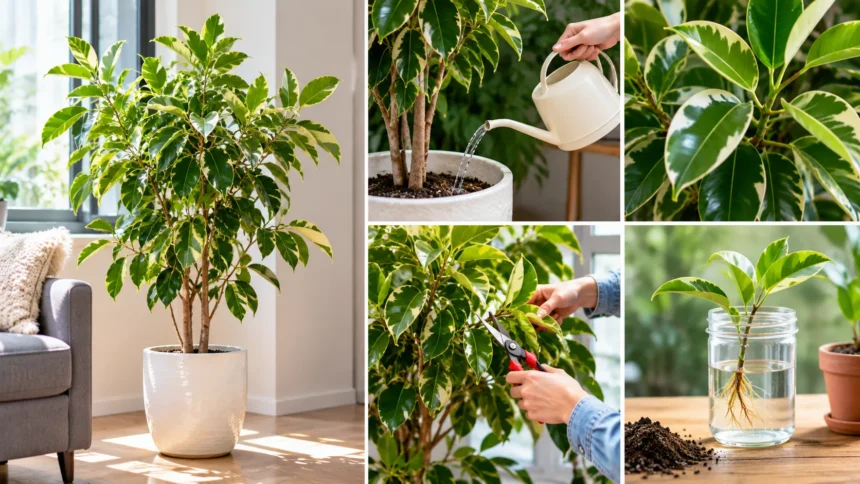
Audrey Ficus is a beautiful indoor plant known for its large green leaves, elegant appearance, and attractive tree-like growth. Its soft, velvety foliage and light-colored trunk make it a popular choice for decorating living rooms, offices, and other indoor spaces. Although it has a tropical background, this plant can grow successfully indoors when provided with suitable light, water, and care.
Learning proper Audrey Ficus care is important for keeping the plant healthy and encouraging steady growth. Also known as Ficus benghalensis ‘Audrey’, this attractive houseplant belongs to the fig family and is closely related to the famous banyan tree. This guide explains its light requirements, watering needs, soil preferences, propagation methods, common problems, and related Ficus varieties.
What Is an Audrey Ficus Plant?
Audrey Ficus, scientifically known as Ficus benghalensis ‘Audrey’, is an evergreen tropical plant belonging to the Moraceae family. It is a cultivated form of the Indian banyan tree, which naturally grows across parts of South Asia. The plant is recognized for its oval green leaves, noticeable pale veins, and smooth, light-colored trunk.
Unlike its enormous wild relatives, Audrey Ficus can be maintained as a manageable indoor tree through container growing and occasional pruning. Its broad leaves create an attractive display, while its upright growth habit makes it suitable for floor planters. The plant may grow several feet tall indoors when provided with appropriate conditions and enough space.
Many people appreciate Audrey Ficus because it offers an elegant alternative to other popular indoor trees. Its foliage has a softer appearance than the glossy leaves of some related species. However, the plant still requires consistent care and suitable environmental conditions. Understanding its natural growing habits helps homeowners provide a healthier indoor environment.
How Much Light Does Audrey Ficus Need?
Audrey Ficus grows best in bright, indirect sunlight, although it can tolerate some direct sunlight when introduced gradually. A location near a bright east-facing window is often suitable for indoor growth. The plant needs enough light to support healthy leaf development and steady growth. Insufficient light may cause slower growth and occasional leaf loss.
Windows facing south or west can also provide suitable lighting when the plant is protected from excessively intense afternoon sunshine. A sheer curtain may help soften strong sunlight during warmer months. Avoid moving a plant directly from a shaded location into powerful sunlight. Sudden exposure can damage leaves that have not adapted to brighter conditions.
Rotating the container occasionally can help encourage more even growth when light mainly reaches one side. Observe how the leaves respond to their position over several weeks. A healthy plant generally maintains firm foliage and produces new growth during favorable conditions. If growth becomes weak or uneven, adjusting the lighting may help.
How Often Should You Water Audrey Ficus?
Proper watering is one of the most important parts of Audrey Ficus care. The plant prefers moderately moist soil but does not tolerate prolonged waterlogging around its roots. Allow the upper two to three inches of potting soil to become dry before watering again. The exact watering frequency depends on temperature, sunlight, container size, and indoor humidity.
When the soil needs moisture, water thoroughly until excess liquid begins draining from the bottom of the container. Allow the pot to drain completely and empty any collected water from the saucer. This helps prevent the roots from remaining in constantly wet conditions. Avoid watering according to a strict weekly schedule without checking the soil first.
During spring and summer, Audrey Ficus may require more frequent watering because warmer temperatures and active growth increase moisture use. In winter, growth often slows and the soil may remain moist longer. Always check the soil before adding water. Both prolonged dryness and excessive moisture can contribute to unhealthy foliage and root problems.
Best Soil and Potting Mix for Audrey Ficus
Audrey Ficus prefers a well-draining potting mix that retains moderate moisture without becoming compacted. A good-quality indoor plant mix combined with perlite and suitable organic material can provide an effective growing environment. The roots need access to both moisture and oxygen. Heavy soil that stays constantly wet may increase the risk of root rot.
A mixture containing potting soil, perlite, and fine orchid bark can help improve drainage and aeration. The exact proportions depend on the original potting mix and growing conditions. Avoid using dense garden soil in indoor containers because it may compact easily. A loose, well-structured mix supports healthy root development and makes watering easier to manage.
Container drainage is just as important as the soil itself. Choose a pot with drainage holes that allow excess water to escape after watering. Decorative planters without drainage can be used as outer covers for suitable nursery pots. Always remove standing water so the roots are not exposed to prolonged moisture.
Ideal Temperature and Humidity for Audrey Ficus
Audrey Ficus prefers warm indoor conditions similar to those found in tropical environments. Temperatures around 65°F to 80°F, or approximately 18°C to 27°C, are generally comfortable for healthy growth. The plant should be protected from sudden temperature changes and cold drafts. Consistent warmth supports normal leaf development and reduces environmental stress.
Humidity is another important consideration because Audrey Ficus naturally grows in environments with relatively moist air. Moderate to higher indoor humidity can help maintain healthy foliage. Very dry conditions may contribute to brown leaf edges or other signs of stress. However, ordinary household humidity may be adequate when the plant receives consistent overall care.
A room humidifier can help improve conditions when indoor air becomes excessively dry. Grouping houseplants together may also create a slightly more humid local environment. Avoid placing Audrey Ficus directly beside heating vents, air conditioners, or frequently opened cold windows. Protecting the plant from sudden environmental changes helps maintain healthy foliage.
How to Fertilize Audrey Ficus for Healthy Growth
Audrey Ficus benefits from occasional fertilization during periods of active growth, particularly in spring and summer. A balanced liquid houseplant fertilizer can provide nutrients that support leaf production and overall development. Follow the manufacturer’s dilution and application instructions carefully. Excess fertilizer can damage roots and create unnecessary stress.
Many indoor gardeners fertilize approximately once a month during the active growing season, although the appropriate schedule depends on the product and growing conditions. Plants receiving limited light or growing slowly may require less fertilizer. Avoid applying concentrated fertilizer to excessively dry soil. Appropriate feeding supports growth without overwhelming the root system.
During autumn and winter, Audrey Ficus often grows more slowly because of reduced daylight and cooler conditions. Fertilization can usually be reduced or paused when the plant is not actively growing. Observe new leaf production and overall plant health before adjusting your routine. Fertilizer should complement proper lighting and watering rather than replace them.
How to Prune Audrey Ficus and Maintain Its Shape
Pruning helps control the size and shape of an Audrey Ficus growing indoors. The plant naturally develops an upright form, but occasional trimming can encourage branching and maintain a balanced appearance. Spring is generally a convenient time for pruning because active growth can support recovery. Avoid removing excessive foliage from a stressed or unhealthy plant.
Use clean pruning tools to remove damaged leaves or unwanted growth. Small cuts above suitable growth points can encourage new branches to develop. Work gradually and observe the plant’s natural structure before making major changes. Light maintenance pruning is often sufficient when the plant has enough space and suitable growing conditions.
Audrey Ficus produces a milky latex sap when its stems or leaves are cut. This substance can irritate skin and should be kept away from the eyes and mouth. Wear gloves when pruning, and clean tools after use. Keep the plant away from pets and young children because its sap and plant material can be harmful if ingested.
How to Propagate Audrey Ficus From Cuttings
Audrey Ficus can be propagated through stem cuttings or air layering under suitable conditions. Stem propagation involves encouraging roots to develop from a healthy section of the parent plant. Spring and summer are often favorable periods because warmer temperatures support growth. Successful propagation depends on plant health, cleanliness, moisture control, and appropriate environmental conditions.
A suitable stem cutting should contain healthy tissue and at least one growth node from which roots can develop. Cuttings may be rooted in an appropriate propagation medium under warm, humid conditions. Some growers also use water propagation, although roots formed in water may need time to adapt to soil. Root development can take several weeks.
Air layering is another method sometimes used for woody indoor plants. It encourages roots to form on a stem while that section remains attached to the parent plant. The rooted portion can later become a separate plant. Because Ficus sap can irritate skin, use appropriate protection and avoid unnecessary contact when handling cut stems.
When and How to Repot Audrey Ficus
Audrey Ficus may eventually require repotting as its root system grows. Signs include roots emerging from drainage holes, soil drying unusually quickly, or growth slowing despite suitable care. However, repotting is not necessary simply because a year has passed. The plant’s actual root condition provides a better indication of when a larger container is needed.
When repotting becomes necessary, select a container only slightly larger than the existing one. A pot approximately one or two inches wider may provide sufficient additional space for many indoor plants. Using an excessively large container can leave too much wet soil around the roots. A suitable potting mix and effective drainage remain essential.
Spring is usually a convenient time to repot because the plant is entering a more active growing period. Handle the root system carefully and avoid unnecessary disturbance. After repotting, provide stable lighting and appropriate moisture while the plant adjusts. Temporary changes in growth may occur, but prolonged wilting or yellowing should be investigated.
Why Are Audrey Ficus Leaves Turning Yellow or Falling?
Yellow leaves are a common concern among people growing Audrey Ficus indoors. Excessive watering, poor drainage, insufficient light, and sudden environmental changes can all contribute to discoloration. Older leaves may also turn yellow naturally before falling. Identifying the cause requires checking soil moisture, lighting conditions, and recent changes in plant care.
Leaf dropping can occur when Audrey Ficus experiences stress after relocation or exposure to cold drafts. Moving the plant between very different lighting environments may also affect its foliage. Avoid repeatedly changing its position while trying to solve the problem. Instead, assess the conditions carefully and make gradual adjustments when necessary.
Brown leaf edges may indicate dry air, inconsistent watering, or other environmental stress. Soft stems and persistently wet soil can suggest serious root problems. Check the roots when appropriate and avoid adding more water to already saturated soil. If leaf problems continue, reviewing the complete care routine is usually more helpful than treating one symptom alone.
Common Audrey Ficus Pests and Plant Problems
Audrey Ficus can occasionally attract common indoor plant pests such as spider mites, mealybugs, scale insects, and thrips. These pests may feed on foliage or stems, causing discoloration, reduced growth, or visible damage. Inspecting leaves regularly helps identify problems early. Pay particular attention to leaf undersides and areas where stems connect.
Spider mites may produce fine webbing and small pale marks on leaves, especially in dry indoor conditions. Mealybugs often appear as small cotton-like clusters, while scale insects may resemble raised spots attached to stems. Isolating an affected plant can help reduce pest movement to nearby houseplants. Treatment should match the pest involved and follow product safety instructions.
Root rot is another serious problem associated with prolonged excessive moisture. Damaged roots may struggle to absorb water, resulting in wilting, yellow leaves, or declining growth. Improving drainage and correcting watering habits can help prevent this condition. Advanced root damage may require more extensive plant care, making early identification particularly valuable.
Audrey Ficus Varieties and Related Ficus Plants
Audrey Ficus is itself a named cultivar of Ficus benghalensis rather than a group containing many formally recognized varieties. Nurseries may sell it in different sizes or growth forms, including young tabletop plants and taller indoor trees. These differences usually reflect age, pruning, and cultivation methods. They should not automatically be described as separate botanical varieties.
The traditional Indian banyan, Ficus benghalensis, is the larger species from which the Audrey cultivar is derived. In suitable tropical outdoor conditions, banyan trees can become enormous and develop extensive root systems. Audrey is generally grown as an ornamental indoor plant instead. Its manageable container-grown appearance makes it practical for many homes.
Other popular plants in the Ficus genus include the fiddle-leaf fig, Ficus lyrata, rubber plant, Ficus elastica, and weeping fig, Ficus benjamina. These are related species rather than varieties of Audrey Ficus. Each has its own appearance and growing requirements. Understanding these distinctions helps buyers choose a plant that suits their space and care preferences.
How to Grow Audrey Ficus Successfully Indoors
Growing Audrey Ficus successfully indoors involves creating a stable environment that supports healthy foliage and root development. Choose a bright location with suitable temperature conditions and enough space for future growth. Check soil moisture regularly rather than watering automatically. Consistent care is usually more effective than frequent major adjustments.
Cleaning the leaves occasionally can help remove dust that collects on broad indoor foliage. Use a soft, slightly damp cloth and handle the leaves gently to avoid damage. Regular inspection also provides an opportunity to check for pests and discoloration. Avoid applying unnecessary leaf-polishing products that may leave residue on the foliage.
Although Audrey Ficus can grow into a large tree outdoors in suitable tropical climates, outdoor planting requires careful consideration. The species can develop extensive roots that may damage nearby infrastructure. It also performs poorly in freezing conditions. For most indoor gardening enthusiasts, container growing provides greater control over its size, location, and maintenance.
Conclusion
Audrey Ficus is an attractive tropical houseplant valued for its broad green foliage, pale leaf veins, and elegant tree-like growth. Proper care involves providing bright light, well-draining soil, moderate watering, and comfortable indoor temperatures. When these basic requirements are met, the plant can become a long-lasting decorative feature in homes and offices.
Successful Audrey Ficus care also includes occasional fertilization, careful pruning, and monitoring for common pests. Yellow leaves, dropping foliage, and brown edges may indicate environmental stress or watering problems. Understanding these warning signs makes it easier to adjust the growing conditions before more serious damage develops.
Whether you are a beginner or an experienced indoor gardener, Audrey Ficus can be a rewarding addition to your plant collection. Start with a suitable location, check soil moisture consistently, and allow the plant time to adapt. With patience and thoughtful maintenance, this distinctive indoor tree can provide beautiful greenery for years.
Frequently Asked Questions
Is Audrey Ficus easy to care for?
Audrey Ficus can be manageable for beginners when provided with bright light, well-draining soil, and consistent watering. It still requires attention to temperature changes, excessive moisture, and common indoor pests.
How often should I water my Audrey Ficus?
Water when the upper two to three inches of soil feel dry. The exact frequency depends on light, temperature, humidity, and container size, so checking the soil is better than following a fixed schedule.
Does Audrey Ficus need direct sunlight?
Audrey Ficus prefers bright, filtered light and can tolerate some direct sunlight when gradually acclimated. Protect plants from sudden exposure to intense afternoon sunshine, which may damage sensitive foliage.
How tall can Audrey Ficus grow indoors?
Audrey Ficus can grow several feet tall indoors, sometimes reaching approximately five to eight feet under suitable conditions. Its eventual size depends on container space, light, pruning, and growing conditions.
Is Audrey Ficus toxic to cats and dogs?
Yes, Audrey Ficus contains irritating latex sap and plant material that can be harmful if chewed or swallowed. Keep it away from pets and contact a veterinarian if exposure causes concerning symptoms.