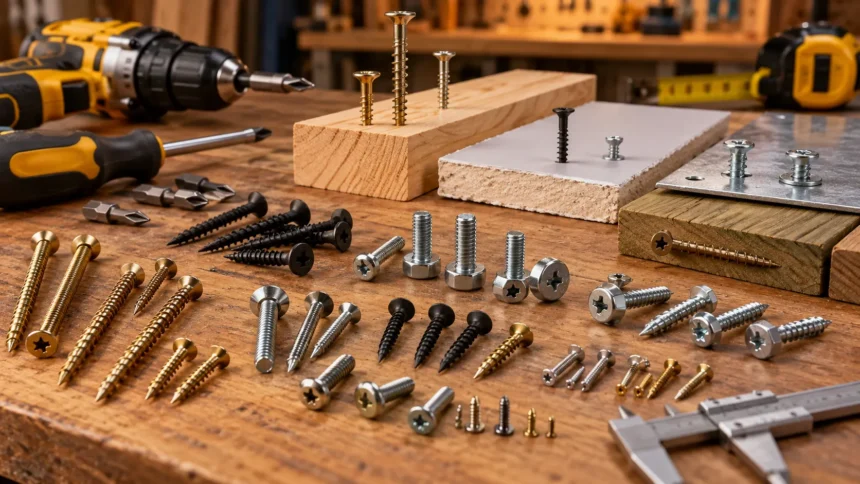
Screws are among the most widely used fasteners in construction, furniture assembly, home improvement, and manufacturing. They help connect different materials, secure components, and create reliable connections in everyday products. However, screws come in many shapes, sizes, materials, and designs, making it important to understand their differences before selecting the right fastener.
Different types of screws are designed for particular applications, including woodworking, drywall installation, metal fastening, concrete construction, and furniture assembly. Some screws feature sharp points that help them enter suitable materials, while others have specialized threads or require prepared holes. Screw length, diameter, head style, and drive type also affect compatibility.
Understanding screw names, sizes, and uses can help homeowners and DIY enthusiasts choose appropriate materials for their projects. This guide explains the most common screw types, how they differ, and their typical applications. It also covers screw measurements, head styles, materials, coatings, and important buying considerations for everyday fastening needs.
What Are Screws and How Do They Work?
A screw is a mechanical fastener with a threaded shaft that helps connect or secure materials. Its spiral-shaped threads engage with compatible material or internal threads to create a connection. Different screw designs serve different purposes depending on the material and application. Some are intended for permanent assemblies, while others allow components to be removed for maintenance.
Most screws have several recognizable parts, including the head, shank, threads, and tip. The head provides a surface for driving or holding the fastener, while the threaded section engages with the surrounding material. The tip may be pointed, blunt, or specially shaped. These features influence the screw’s intended use and compatibility.
Screws are manufactured in numerous sizes and materials to support different mechanical requirements. A small furniture screw has different performance characteristics from a structural construction fastener. Choosing the correct product involves considering strength, corrosion resistance, dimensions, and manufacturer specifications. Proper selection helps create reliable connections and reduces unnecessary material damage.
Main Types of Screws and Their Uses
Screws are commonly classified according to the materials and applications for which they are designed. Popular categories include wood screws, machine screws, drywall screws, sheet metal screws, deck screws, and concrete screws. Each category has different thread patterns, point designs, or construction characteristics. Understanding these distinctions makes product selection easier.
Some screws are intended to create threads in compatible materials, while others engage with preexisting internal threads. Specialty fasteners may have particular features for structural loading, exterior exposure, or decorative applications. The same screw should not automatically be used for every project. Manufacturer recommendations provide important information about intended applications.
The following chart summarizes common screw names and their typical uses.
| Screw Type | Common Uses |
|---|---|
| Wood screws | Furniture and wood connections |
| Machine screws | Machinery and threaded components |
| Drywall screws | Attaching drywall to framing |
| Sheet metal screws | Thin metal and compatible materials |
| Deck screws | Outdoor decking |
| Concrete screws | Approved masonry connections |
| Self-drilling screws | Suitable metal fastening applications |
| Lag screws | Selected heavy-duty wood connections |
| Cabinet screws | Cabinet installation and assembly |
| Socket head screws | Machinery and mechanical assemblies |
Although this chart covers widely used categories, individual screws may have specialized requirements. For example, structural wood screws and ordinary wood screws are not necessarily interchangeable. Exterior fasteners also need suitable corrosion protection. Always review product specifications before selecting screws for important load-bearing or weather-exposed connections.
1. Wood Screws
Wood screws are designed for fastening wooden components in furniture, cabinets, trim, and general woodworking projects. They usually feature threads intended to grip wood fibers and create secure connections. Depending on the design, they may have pointed tips and partially or fully threaded shafts. Their dimensions vary according to the intended application.
Common wood screw head styles include flat, round, and pan heads. Some products are designed to sit flush with the wood surface, while others remain slightly raised. Manufacturers offer different thread designs for hardwood, softwood, and engineered wood materials. Choosing the correct screw depends on wood thickness, connection requirements, and product specifications.
Wood screws are available in steel, stainless steel, brass, and other materials. Indoor furniture applications may have different corrosion requirements from outdoor wood structures. Structural connections require fasteners specifically rated for the intended loads. Ordinary wood screws should not automatically replace engineered structural hardware.
2. Machine Screws
Machine screws are commonly used in machinery, electronics, appliances, and mechanical assemblies. Unlike many wood screws, they typically have uniform threads designed to engage with nuts or internally threaded holes. They are available in numerous metric and imperial thread sizes. Their consistent dimensions make them useful for manufactured components.
Common machine screw head styles include pan, flat, button, and socket head designs. Different drive types are also available depending on equipment requirements. Some machine screws are used with washers or locking components to support specific assemblies. Compatibility depends on thread diameter, pitch, length, and head configuration.
Machine screws are frequently manufactured from steel, stainless steel, brass, and other suitable alloys. Their strength and corrosion resistance vary according to material grade and finishing. Selecting the correct thread specification is essential because incompatible threads can damage components. Equipment manufacturers usually provide the appropriate fastener details.
3. Drywall Screws
Drywall screws are specialized fasteners designed to attach gypsum wallboard to suitable framing. They typically feature bugle-shaped heads that help distribute pressure near the drywall surface. Different thread patterns are available for wood and metal framing. Their design supports drywall installation rather than general-purpose structural fastening.
Coarse-thread drywall screws are commonly associated with wood framing, while fine-thread versions are often used with appropriate metal studs. Some products have specialized points or coatings for particular construction applications. Length selection depends on board thickness and framing requirements. Building specifications should guide the final choice.
Drywall screws are generally not suitable substitutes for structural wood screws or other load-rated fasteners. Their material characteristics and intended applications differ from those of structural connectors. Using them in unsuitable connections can create reliability problems. Homeowners should choose fasteners specifically approved for the task.
4. Sheet Metal Screws
Sheet metal screws are designed for fastening relatively thin metal sheets and certain compatible materials. They often feature sharp threads that engage with prepared or suitable openings. Some products are also used with plastics or other materials when specified by the manufacturer. Their construction differs from conventional machine screws.
Sheet metal screws come in different head styles, including pan, hex washer, and flat heads. Their points may be sharp or specially designed for the intended material. Thread configuration influences how the screw interacts with thin metal. Product compatibility depends on metal thickness and fastening requirements.
These screws are common in sheet metal fabrication, ventilation equipment, and selected household products. However, not every sheet metal screw is appropriate for structural or exterior applications. Corrosion protection and material compatibility remain important considerations. Manufacturer specifications help determine the correct fastener for a particular assembly.
5. Deck Screws
Deck screws are designed for fastening deck boards and other approved outdoor wood components. They typically feature coatings or corrosion-resistant materials intended to withstand environmental exposure. Some products also include specialized threads or drive designs. Their construction helps distinguish them from ordinary indoor wood screws.
Outdoor fasteners must account for moisture, temperature changes, and possible exposure to treated lumber. Certain preservative-treated wood products can create additional corrosion concerns. Manufacturers specify which coatings and materials are compatible with particular conditions. Stainless steel options may be appropriate for selected demanding environments.
Deck screws used for attaching deck boards should not automatically be used for structural framing connections. Ledger boards, joist connections, and other load-bearing components may require specially rated fasteners. Local building requirements and engineering specifications should guide these selections. Choosing suitable screws supports long-term outdoor durability.
6. Concrete Screws
Concrete screws are specialized fasteners designed for approved connections into concrete and certain masonry materials. Their threads and material characteristics differ from those of conventional wood screws. They are often used when attaching compatible fixtures or components to masonry surfaces. Different products have different load ratings and installation requirements.
Concrete screws are available in various diameters, lengths, and head designs. Their suitability depends on the masonry material, required embedment, edge distances, and applied loads. Cracked and uncracked concrete may also require different product approvals. These details are particularly important for structural or safety-related connections.
Concrete fasteners should be selected according to the manufacturer’s technical documentation and applicable building requirements. Incorrect installation or unsuitable material conditions can affect holding capacity. Heavy fixtures and structural connections may require professional evaluation. Ordinary screws are not appropriate replacements for approved masonry anchoring systems.
7. Self-Drilling Screws
Self-drilling screws include a specially designed drill-like point intended for compatible fastening applications. They are commonly used with certain metal materials in manufacturing and construction. Their design distinguishes them from ordinary pointed screws. Different point types accommodate different material thicknesses and applications.
Many self-drilling screws also feature hex washer heads or other designs suitable for mechanical fastening. They may include corrosion-resistant finishes for selected environments. However, the presence of a drill point does not mean that a screw is suitable for every metal thickness. Each product has specific technical limitations.
Self-drilling screws are used in metal building components, roofing systems, and industrial assemblies when properly specified. Material thickness, connection strength, and corrosion requirements influence selection. Certain applications require specialized sealing washers or approved structural fasteners. Manufacturer guidance is essential for evaluating these products.
8. Lag Screws
Lag screws are large threaded fasteners commonly associated with selected heavy-duty wood connections. They typically have hexagonal heads and substantial threaded shafts. Their larger dimensions distinguish them from ordinary wood screws. In some regions, they are also called lag bolts, although their design differs from conventional bolts.
Lag screws may be specified for connecting substantial wooden components or attaching approved hardware. Their performance depends on wood characteristics, screw dimensions, and the overall connection design. Different grades and materials are available. A large screw is not automatically suitable for every structural load.
For structural projects, engineers and building specifications determine whether lag screws or alternative connectors are appropriate. Certain applications may require specific installation methods and minimum dimensions. Improper fastener selection can compromise a connection. Professional guidance is important for load-bearing structures and safety-critical assemblies.
9. Cabinet Screws
Cabinet screws are designed for selected cabinet installation and assembly tasks. Some feature washer-style heads that distribute pressure across the fastening surface. Others have specialized thread patterns suited to engineered wood or cabinet materials. Their design often reflects the particular requirements of cabinetry.
Cabinet installation may involve attaching cabinet boxes to approved wall framing or connecting adjacent cabinet components. These applications can have different fastening requirements. Screw length, head style, and material compatibility must match the manufacturer’s recommendations. Ordinary decorative screws may not provide suitable support.
Cabinet screws are available in different finishes and corrosion-resistant materials. Some products include features intended to reduce splitting or improve alignment in compatible materials. However, specialized designs should be selected according to the actual task. Secure cabinet mounting requires appropriate structural support and compatible fasteners.
10. Socket Head Cap Screws
Socket head cap screws are commonly used in machinery, equipment, and precision mechanical assemblies. Their heads contain internal sockets designed for compatible driving tools. Many products feature cylindrical heads, although related socket-drive screws are available in other shapes. These fasteners are often associated with engineered mechanical connections.
Socket head cap screws are manufactured in a wide range of metric and imperial thread sizes. Different materials and strength classes are available for various applications. Their compact head design can be useful in certain equipment arrangements. However, suitability depends on the complete mechanical connection and required specifications.
These screws are frequently found in industrial machinery, automotive components, and manufactured equipment. Selecting the correct strength grade, thread pitch, and dimensions is essential. Substituting an incompatible fastener may damage threads or compromise performance. Equipment documentation should guide replacement decisions.
Types of Screw Heads Explained
Screw heads differ according to how they contact the surface and distribute fastening forces. Common designs include flat, pan, round, button, and hex heads. Some sit flush with the surrounding material, while others remain above the surface. Head selection influences appearance, clearance, and compatibility with the intended connection.
Flat-head screws are often used where a flush surface is required in a suitable countersunk opening. Pan-head screws have a rounded upper profile and relatively broad bearing surface. Hex-head screws provide external driving surfaces and are common in certain mechanical and construction applications. Each design serves different fastening needs.
Decorative appearance can also influence screw head selection, particularly in furniture and visible assemblies. However, structural requirements should take priority when the connection carries important loads. Head diameter, material, and strength matter as much as appearance. Reviewing manufacturer specifications helps ensure appropriate compatibility.
Different Screw Drive Types
Screw drive types describe the shapes used to engage compatible driving tools. Common examples include slotted, Phillips, square, hex, and Torx drives. Each design has different mechanical characteristics and tool requirements. Understanding the distinction helps users identify compatible replacement fasteners and equipment components.
Slotted screws have a single straight recess, while Phillips screws use a cross-shaped design. Square drives feature a square recess, and Torx drives use a six-lobed pattern. Hex drives are also widely used in machinery and mechanical assemblies. Different variations may require particular tool sizes.
The appropriate drive depends on manufacturer requirements, equipment compatibility, and the intended application. Certain specialized screws also use security drive designs to discourage unauthorized removal. Drive shapes should not be treated as interchangeable. Using mismatched tools can damage fastener heads and make future maintenance more difficult.
Understanding Screw Sizes and Measurements
Screw size describes several dimensions, including diameter, length, and thread characteristics. In the United States, smaller screws are often identified by numbered gauges, while larger products may use fractional inch measurements. Metric screws are commonly identified by nominal diameter and thread pitch. These systems are not directly interchangeable.
For example, a #8 screw represents a particular nominal diameter category, while an M6 machine screw has a nominal thread diameter of 6 millimeters. Length is measured separately according to the fastener’s head configuration. Thread pitch describes the distance between adjacent threads. Correct measurements are important for compatibility.
Different screw categories may use different sizing conventions. Wood screws, machine screws, and structural fasteners should therefore be compared using their applicable standards. Product packaging usually identifies the relevant dimensions. Manufacturer specifications provide the most reliable information when exact compatibility is required.
Common Screw Size Chart
Screw dimensions vary depending on the application and measurement system. The following chart shows approximate major diameters for several commonly encountered American numbered screw sizes. These values are useful for general identification rather than selecting structural fasteners. Exact product dimensions and tolerances depend on the relevant standard.
| Screw Size | Approximate Diameter |
|---|---|
| #4 | 0.112 inch |
| #6 | 0.138 inch |
| #8 | 0.164 inch |
| #10 | 0.190 inch |
| #12 | 0.216 inch |
| #14 | 0.242 inch |
Screw diameter is only one part of proper selection. Two screws with the same diameter may have different thread patterns, lengths, head shapes, or strength characteristics. These differences influence compatibility and performance. Always verify the full specification before purchasing replacement fasteners.
Metric vs. Imperial Screw Sizes
Metric screws are generally identified using millimeter measurements, often including nominal diameter and thread pitch. For example, M6 × 1.0 describes a nominal 6-millimeter diameter with a 1-millimeter thread pitch. The screw length is specified separately. This system is widely used in machinery and international manufacturing.
Imperial screws may use numbered sizes or fractional inch dimensions depending on the fastener type. Machine screws can also be identified by threads per inch, such as 1/4-20. This describes a quarter-inch nominal diameter with 20 threads per inch. The notation differs from the metric system.
Metric and imperial threads are not normally interchangeable, even when their diameters appear similar. Differences in thread pitch and geometry can prevent proper engagement. Attempting to combine incompatible components may damage the connection. Checking the original fastener specifications is essential when replacing machine screws or other threaded components.
Common Materials Used to Make Screws
Screws are manufactured from different materials to accommodate strength, corrosion resistance, and appearance requirements. Carbon steel is widely used because it offers practical mechanical properties and relatively affordable production. Stainless steel is common in applications requiring improved corrosion resistance. Brass and certain other alloys are also used for specialized purposes.
Material grade influences performance as much as the general material category. Stainless steel fasteners, for example, are available in multiple grades with different mechanical and corrosion characteristics. Steel screws may also receive protective surface treatments. Choosing the correct material depends on both environmental conditions and mechanical demands.
Some screws are designed specifically for compatibility with treated wood, outdoor exposure, or particular metals. Contact between dissimilar metals can contribute to galvanic corrosion under certain conditions. Manufacturers may provide recommendations for avoiding these problems. Material selection is especially important for exterior and structural applications.
Screw Coatings and Corrosion Resistance
Protective coatings help certain steel screws resist corrosion and environmental deterioration. Common finishes include zinc plating, mechanical galvanizing, and specialized polymer coatings. These products differ in thickness, durability, and intended exposure conditions. A decorative finish does not necessarily provide adequate protection for demanding outdoor use.
Exterior environments can expose screws to rain, humidity, and chemical substances. Coastal areas may create additional corrosion challenges because of salt exposure. Treated lumber can also require compatible fastener materials. Product packaging and technical documentation should identify suitable applications.
Corrosion resistance should be evaluated alongside connection strength and installation requirements. A screw with an attractive coating may still be inappropriate for a structural connection. Similarly, stainless steel products vary in mechanical properties. Selecting a fastener approved for the intended environment helps support long-term reliability.
How to Choose the Right Type of Screw
Choosing the correct screw begins with identifying the materials being connected. Wood, metal, drywall, concrete, and engineered materials have different fastening requirements. Screw thread patterns, point designs, and head configurations should match the application. General-purpose fasteners are not suitable substitutes for every specialized screw.
Next, consider the dimensions and performance requirements of the connection. Length, diameter, thread engagement, and corrosion resistance all influence suitability. Structural or safety-critical connections may require screws with specific load ratings and approvals. Manufacturer instructions should guide these decisions.
Finally, review product quality, compatibility, and long-term environmental exposure. A suitable screw should meet the needs of the complete assembly rather than simply fit into an available opening. When project requirements are uncertain, consulting a qualified professional can help prevent mistakes. Careful selection supports dependable connections and efficient material planning.
Common Mistakes When Choosing Screws
One common mistake is using a screw intended for one material in an unrelated application. For example, ordinary drywall screws are not suitable substitutes for approved structural fasteners. Different screw types have different mechanical characteristics and performance limitations. Ignoring these distinctions can create unreliable connections.
Another mistake is overlooking screw dimensions or thread compatibility. A fastener that appears similar may have a different diameter, pitch, or head configuration. This can cause fitting problems or damage existing threads. Accurate measurement and product identification help prevent unnecessary replacement expenses.
Buyers may also underestimate environmental conditions when selecting screws. Indoor fasteners may corrode quickly in certain outdoor environments. Similarly, decorative finishes may not meet structural or durability requirements. Reviewing manufacturer recommendations helps avoid these errors and supports better long-term performance.
Conclusion
Understanding the different types of screws is essential for selecting suitable fasteners for woodworking, construction, furniture assembly, and mechanical applications. Wood screws, machine screws, drywall screws, sheet metal screws, deck screws, and other specialized products serve different purposes. Their thread designs, head shapes, materials, and dimensions influence how they perform.
Screw sizes are commonly identified through diameter, length, and thread specifications. Metric and imperial systems use different measurement conventions, making accurate identification important. Materials and protective coatings also affect durability and corrosion resistance. Choosing the correct combination helps support reliable connections.
Before purchasing screws, consider the materials being connected, environmental conditions, and any structural requirements. Compare manufacturer specifications rather than selecting fasteners based only on appearance or price. A suitable screw can help improve assembly quality and long-term durability. Understanding screw names, sizes, and uses makes everyday project planning more informed and practical.
Frequently Asked Questions
What are the most common types of screws?
Common screw types include wood screws, machine screws, drywall screws, sheet metal screws, deck screws, concrete screws, and self-drilling screws. Each is designed for particular materials and fastening applications.
What is the difference between wood screws and machine screws?
Wood screws are generally designed to grip wood fibers, while machine screws have uniform threads that engage with compatible nuts or threaded holes. Their dimensions and applications differ.
What do screw sizes like #6, #8, and #10 mean?
These numbers identify nominal screw diameter categories in the American sizing system. Larger numbers generally indicate larger diameters. Length and thread specifications are identified separately.
What type of screws should be used outdoors?
Outdoor screws should have corrosion resistance appropriate for the environment and materials. Suitable options may include approved stainless steel or specially coated fasteners, depending on application requirements.
Are metric and imperial screws interchangeable?
No, metric and imperial screws generally have different thread dimensions and specifications. Even when diameters appear similar, incompatible threads can damage components or create unreliable connections.