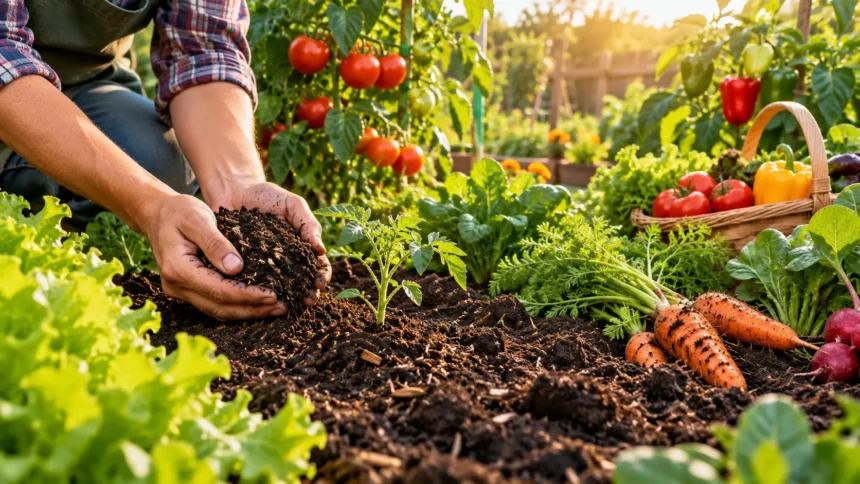
What Makes Soil Good for a Vegetable Garden?
The best soil for a vegetable garden should support healthy roots while holding enough moisture and nutrients for steady plant growth. Most vegetables perform best in soil that is loose, fertile, and well drained. Good garden soil should also contain enough organic matter to support beneficial microorganisms and prevent the soil from becoming compacted or difficult to work.
Healthy vegetable soil needs a balanced structure rather than being excessively sandy, heavy, or sticky. Roots require access to both water and oxygen, so drainage is just as important as moisture retention. When soil drains poorly, roots may struggle to breathe, while extremely fast-draining soil can dry out before vegetables absorb the water they need.
Soil fertility also affects crop quality and productivity. Vegetables remove nutrients from the ground as they grow, meaning the soil must provide adequate nitrogen, phosphorus, potassium, and micronutrients. Regular additions of compost and other organic materials can improve fertility while also supporting better soil structure, water retention, and long-term garden health.
Why Loamy Soil Is Ideal for Vegetables
Loamy soil is often considered the best general-purpose soil for vegetable gardens because it contains a useful balance of sand, silt, and clay. This combination gives the soil enough structure to retain moisture while still allowing excess water to drain. Loam is also usually easier to dig and plant in than very heavy clay soil.
Good loamy soil tends to feel crumbly rather than sticky or extremely loose. It holds together lightly when squeezed but breaks apart easily when disturbed. This texture allows vegetable roots to expand through the soil while creating small air spaces that support root respiration and beneficial microbial activity throughout the growing area.
Not every garden naturally contains perfect loam, and that does not mean you cannot grow vegetables successfully. Clay and sandy soils can both be improved over time with organic matter and careful management. The goal is usually to create loam-like growing conditions rather than completely replacing all of the existing soil in your garden.
The Importance of Organic Matter
Organic matter is one of the most valuable components of healthy vegetable garden soil. Materials such as finished compost, well-rotted manure, decomposed leaves, and other plant-based amendments can improve both soil fertility and structure. They also provide food for microorganisms that help break down nutrients into forms that plant roots can use.
In sandy soil, organic matter helps increase moisture and nutrient retention. In clay soil, it can improve aggregation and create better drainage and aeration. This makes compost especially useful because it can benefit different soil types without requiring gardeners to completely change the natural composition of their garden.
Organic matter should usually be added regularly rather than treated as a one-time improvement. Vegetable crops use nutrients throughout the growing season, while organic materials continue decomposing over time. Adding a layer of mature compost before planting or between growing seasons can help maintain fertility and keep the soil easier to work.
How to Prepare Soil Before Planting Vegetables
Preparing the soil before planting gives young vegetables a better environment for root development. Start by removing weeds, large stones, and unwanted plant debris from the growing area. Loosen compacted soil gently so roots can penetrate more easily, but avoid repeatedly working the ground when it is extremely wet because this can damage soil structure.
Adding compost is one of the most useful steps during preparation. Spread mature compost across the planting area and mix it into the upper soil layer if necessary. Gardeners who want a more detailed process can follow this guide on how to prepare garden soil before planting vegetables.
Once the soil has been improved, level the surface and break apart large clumps before sowing seeds or transplanting seedlings. Fine seeds need relatively smooth soil contact, while larger vegetables can tolerate a somewhat coarser texture. Water the area appropriately and avoid compressing the soil by repeatedly walking across prepared vegetable beds.
Understanding Soil pH for Vegetable Gardens
Soil pH describes how acidic or alkaline the soil is, and it influences how easily plants can access nutrients. Many common vegetables grow well in slightly acidic to neutral soil, although individual crops have different preferences. Soil that is far outside the suitable range can make nutrients less available even when those nutrients are physically present.
Testing your soil can help you understand whether pH adjustments are necessary. Home soil test kits can provide basic information, while professional soil testing may offer more detailed nutrient and pH recommendations. It is generally better to test first rather than adding lime, sulfur, or other amendments based only on assumptions.
Changes in soil pH should usually be made gradually. Adding too much amendment can create new problems and may be difficult to reverse quickly. When possible, follow soil test recommendations and allow time for the amendment to interact with the soil before expecting major changes in growing conditions.
Improving Heavy Clay Soil
Clay soil contains very small particles that hold water and nutrients effectively but can become dense and poorly drained. When wet, heavy clay may feel sticky and difficult to work. When dry, it can become hard and compacted, making it difficult for vegetable roots to expand comfortably through the growing area.
The best way to improve clay soil is usually to add organic matter regularly. Compost can encourage better soil aggregation, which creates spaces for water and air to move more easily. Avoid trying to fix heavy clay by adding large quantities of sand because the wrong proportions can sometimes create an even denser mixture.
Raised beds may also help when drainage is consistently poor. Filling them with a balanced garden soil and compost mixture can create a more manageable growing environment above difficult native soil. Over time, the soil underneath can still improve as organic matter, roots, and soil organisms gradually influence its structure.
Improving Sandy Soil
Sandy soil drains quickly because its particles are relatively large and leave significant spaces between them. This can be useful during wet weather, but it also means water and nutrients may move beyond the root zone quickly. Vegetables grown in very sandy soil may therefore require more frequent watering and careful nutrient management.
Compost is especially helpful because it increases the soil’s ability to retain moisture and nutrients. Adding well-decomposed organic matter before planting can make sandy soil more productive without eliminating its useful drainage characteristics. Mulching the soil surface can also help reduce evaporation during hot or dry periods.
Because nutrients can leach through sandy soil more easily, smaller and more frequent fertilizer applications may sometimes be preferable to one heavy feeding. The exact approach depends on the vegetables being grown and existing soil fertility. Soil testing can help prevent unnecessary fertilization while ensuring crops receive what they actually need.
Choosing Soil for Raised Vegetable Beds
Raised beds give gardeners greater control over soil quality because the growing area can be filled with a custom soil blend. A good raised-bed mixture should be fertile, loose, and capable of holding moisture without becoming waterlogged. Garden soil, compost, and other suitable organic components are often combined to create balanced growing conditions.
Avoid filling a raised bed entirely with dense native soil or pure compost. Heavy soil may compact and drain poorly, while extremely rich organic material can shrink significantly as it decomposes. A balanced mixture provides better long-term structure and supports a wider range of vegetables throughout multiple growing seasons.
Raised beds still require ongoing soil maintenance. Organic matter breaks down, nutrients are removed by crops, and the soil level may gradually settle. Adding compost between seasons can restore fertility and volume while helping maintain the loose, productive structure that makes raised beds especially convenient for vegetable gardening.
Best Soil for Different Vegetable Crops
Leafy vegetables such as lettuce, spinach, and kale generally perform well in fertile soil that retains consistent moisture without staying waterlogged. These crops often benefit from adequate nitrogen because they produce a large amount of leafy growth. Compost-rich loamy soil can provide an excellent foundation for healthy and productive plants.
Root crops such as carrots, radishes, and beets usually prefer loose soil without large stones or severe compaction. Dense soil can make it more difficult for roots to develop straight and evenly. Avoid adding fresh manure immediately before growing many root vegetables because excessive nitrogen may encourage leafy growth rather than desirable root development.
Fruiting vegetables such as tomatoes, peppers, cucumbers, and squash also benefit from fertile, well-drained soil. These crops need consistent access to water and nutrients during flowering and fruit development. Adding compost before planting and maintaining balanced fertility can support healthy growth without relying on excessive fertilizer applications.
How Compost Supports Healthy Crops
Compost improves vegetable gardens in several ways at the same time. It adds organic matter, supports microorganisms, improves water retention, and contributes nutrients as it continues to decompose. Unlike quick-release fertilizers, compost primarily supports the overall soil environment rather than providing only an immediate burst of plant nutrition.
Well-finished compost should smell earthy and have a dark, crumbly texture. Materials inside it should be mostly decomposed so they do not compete strongly with plants for nitrogen during breakdown. Avoid using unfinished compost directly around young vegetable roots if it is still hot, strongly scented, or contains large amounts of recognizable undecomposed material.
A moderate layer of compost added regularly is often more useful than very large amounts applied occasionally. Too much of any amendment can create nutrient imbalances or unnecessary buildup. Treat compost as an ongoing soil-building tool and combine it with soil testing when you need a clearer understanding of fertility.
Mulching and Protecting Vegetable Garden Soil
Mulch covers the soil surface and helps protect it from rapid moisture loss, erosion, and temperature extremes. Organic mulches such as straw, shredded leaves, or other suitable plant materials can gradually break down and add organic matter. Mulching also reduces the amount of bare soil available for many weeds to establish.
Apply mulch after seedlings are established and the soil has warmed appropriately for the crop. Keep thick mulch slightly away from delicate stems to avoid excessive moisture directly against the plant base. The ideal depth depends on the material, climate, and crop, so avoid creating an extremely thick layer that prevents water from reaching the soil.
Mulch can also protect soil structure during heavy rain. Instead of raindrops striking bare soil directly and forming a crust, the mulch absorbs some of the impact. This helps maintain a more open surface and can reduce erosion, especially in raised beds, sloped gardens, or areas exposed to strong seasonal storms.
Maintaining Healthy Soil Year After Year
Healthy vegetable garden soil improves through consistent care rather than one major amendment. Rotate crops when practical, add organic matter regularly, and avoid leaving soil bare for long periods. These habits help support soil biology and reduce the likelihood of repeatedly exhausting the same nutrients in one part of the garden.
Cover crops can also contribute to long-term soil health when space and climate allow. Certain cover crops protect the soil, add organic material, and help maintain structure between vegetable-growing seasons. Some species can also contribute nitrogen when managed properly, although the best choice depends on your region and planting schedule.
Avoid unnecessary soil compaction by creating permanent paths and keeping foot traffic out of planting beds. Compacted soil contains fewer spaces for water, air, and root growth. Gentle cultivation, regular organic amendments, and limited disturbance can help create a productive soil environment that continues improving as your garden matures.
Conclusion
The best soil for vegetable gardens is fertile, well drained, moisture-retentive, and rich in organic matter. Loamy soil naturally provides many of these qualities, but clay and sandy soils can also become highly productive with proper improvement. Compost is one of the most useful amendments because it supports both soil structure and long-term fertility.
Successful vegetable gardening also depends on matching soil conditions to the needs of different crops. Root vegetables benefit from loose soil, leafy greens appreciate consistent moisture and fertility, and fruiting vegetables need balanced nutrition throughout the growing season. Soil testing can provide additional guidance when pH or nutrient problems are suspected.
Think of soil improvement as an ongoing process rather than something completed before the first planting. Regular compost additions, mulching, careful watering, crop rotation, and reduced compaction can steadily improve garden performance. Healthy soil creates healthier roots, and healthier roots provide a stronger foundation for productive vegetable crops.
FAQs
What type of soil is best for a vegetable garden?
Loamy soil is generally ideal because it balances drainage, moisture retention, fertility, and aeration. However, sandy and clay soils can also grow excellent vegetables when improved with compost and other organic matter.
Can I use regular garden soil in a raised bed?
Regular garden soil can be part of a raised-bed mix, but dense soil used alone may compact or drain poorly. Combining it with compost and other suitable materials usually creates better growing conditions.
How much compost should I add to vegetable garden soil?
The amount depends on existing soil quality and fertility. A moderate layer incorporated or applied to the surface between seasons is often useful, while excessive compost can sometimes create nutrient imbalances.
How do I know if my vegetable garden soil is healthy?
Healthy soil is usually crumbly, drains reasonably well, holds some moisture, and supports strong plant growth. Soil testing can provide more precise information about pH, nutrient levels, and potential deficiencies.
Should vegetable garden soil be replaced every year?
Usually not. Existing soil can often be renewed with compost, mulch, and appropriate amendments. Regular soil building is generally more practical and sustainable than replacing the entire garden soil every growing season.