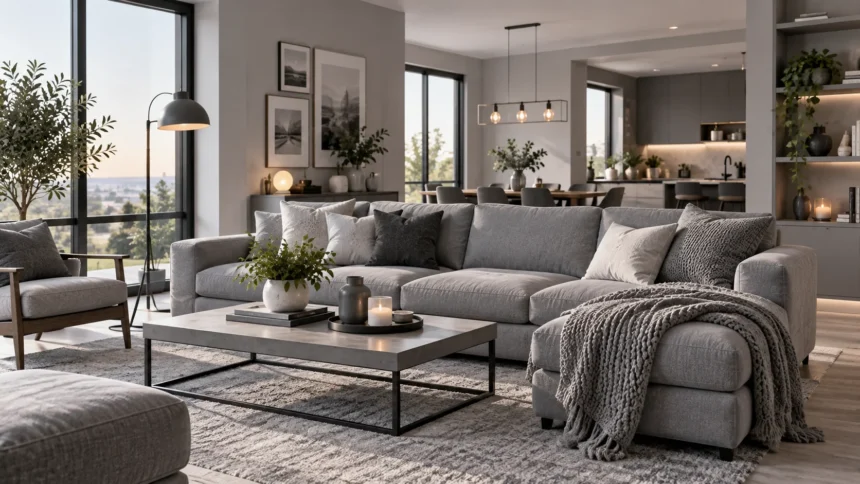
Millennial grey has become one of the most recognizable interior color trends of the past decade. It appeared everywhere from new-build apartments and rental properties to kitchens, bedrooms, furniture, and flooring. Its appeal came from being clean, neutral, modern, and easy to coordinate with almost any style.
Today, however, homeowners are approaching millennial grey differently. Instead of covering entire rooms in cool grey tones, designers are using warmer greiges, natural textures, wood finishes, layered neutrals, and richer accent colors. The result feels more comfortable and less sterile while keeping the simplicity that originally made grey interiors so popular.
If you already have grey walls, floors, sofas, or cabinets, there is no need to replace everything. Small changes in lighting, accessories, materials, and complementary colors can completely refresh the look. Understanding how to balance millennial grey with warmer elements is the key to making this familiar neutral feel current again.
What Is Millennial Grey?
Millennial grey refers to the cool or medium grey tones that became especially popular in homes, apartments, offices, and renovated properties during the 2010s. The shade often appeared on walls, flooring, cabinets, furniture, and decorative finishes. It was frequently paired with white trim, chrome hardware, black accents, and minimalist interiors.
Part of its popularity came from practicality. Grey felt safer than bold colors and looked more modern than traditional beige, making it attractive to homeowners, landlords, developers, and property flippers. It also photographed well in bright interiors and gave buyers a neutral backdrop that could work with many different furniture styles.
The term now sometimes carries a slightly dated association because entire homes were often decorated almost exclusively in grey. That does not mean grey itself is out of style. Instead, today’s interiors usually combine grey with warmer undertones, tactile materials, natural wood, earthy colors, and more personality.
Why Did Millennial Grey Become So Popular?
Millennial grey grew alongside the rise of minimalist and Scandinavian-inspired interiors. Social media, property listings, home renovation television, and interior blogs repeatedly featured neutral spaces with grey floors, white walls, and simple furniture. The look felt clean and aspirational while remaining achievable for people decorating apartments or starter homes.
Another reason was its flexibility. Grey could act as a background for modern furniture, metallic fixtures, monochrome artwork, and almost any accent color. Developers also liked it because neutral finishes appealed to a wider range of potential buyers than highly personal colors such as bright red, yellow, or deep purple.
Mass-market furniture and flooring brands helped reinforce the trend by offering extensive grey collections. Grey sofas, laminate flooring, rugs, curtains, bedding, and kitchen finishes became easy to find at almost every price point. Once these products became widely available, the color naturally spread through residential interiors even more quickly.
Is Millennial Grey Still in Style?
Millennial grey is not disappearing, but the way it is being used has changed. Completely grey rooms with cool walls, grey floors, silver accessories, and matching furniture can now feel flat or overly coordinated. Contemporary interiors tend to use grey as one part of a broader palette rather than making it the dominant color everywhere.
Warmer neutrals such as taupe, mushroom, cream, sand, and greige have become popular because they create softer and more inviting rooms. These colors can work beautifully alongside existing grey finishes. The combination keeps the calm foundation of a neutral interior while adding warmth and depth that older all-grey schemes sometimes lacked.
If your home already contains plenty of grey, you do not need a complete renovation. Adding warm wood, woven textures, plants, artwork, layered lighting, and warmer fabrics can instantly change the mood. The goal is not to eliminate grey but to prevent it from being the only visual story in the room.
How to Make Millennial Grey Feel Warmer
One of the easiest ways to warm up a grey room is through natural wood. Oak, walnut, pine, and other warm-toned woods create immediate contrast against cooler grey walls or flooring. Furniture, shelving, picture frames, side tables, and wooden decorative objects can all introduce warmth without requiring major structural changes.
Textiles are equally useful because they add both color and texture. Consider cream curtains, beige rugs, rust-colored cushions, wool blankets, linen bedding, or soft brown upholstery. These materials break up large expanses of grey and make the room feel layered rather than polished to the point of feeling impersonal.
Lighting also dramatically affects grey interiors. Cool white bulbs can emphasize blue undertones and make grey feel harsher, while warmer bulbs create a softer atmosphere. Table lamps, wall sconces, floor lamps, and pendant lights can introduce multiple lighting levels, making the same grey surfaces appear more comfortable during the evening.
Best Colors to Pair With Millennial Grey
Warm neutrals are among the easiest colors to combine with millennial grey. Beige, ivory, cream, camel, and taupe soften cool undertones without creating an abrupt contrast. This palette works especially well in living rooms and bedrooms where you want the space to remain calm while feeling warmer and more welcoming.
Earthy colors can give grey interiors much more personality. Olive green, terracotta, clay, muted mustard, chocolate brown, and burnt orange all create visual warmth while keeping the room sophisticated. These shades work beautifully through cushions, artwork, ceramics, rugs, upholstered chairs, and other pieces that are easy to replace later.
For a more dramatic look, try navy, forest green, burgundy, or charcoal. Deep colors can create contrast against lighter grey backgrounds and make a space feel intentional rather than bland. The key is to balance stronger shades with enough light and neutral elements so the room does not become visually heavy.
Millennial Grey Living Room Ideas
A grey sofa or grey walls can still form an excellent foundation for a stylish living room. Start by introducing a large textured rug in cream, beige, or a subtle pattern. Then layer cushions in several complementary shades instead of choosing accessories that match the sofa exactly.
Natural materials can completely change the atmosphere. A wooden coffee table, woven baskets, linen curtains, ceramic lamps, and indoor plants will make the room feel more relaxed and lived-in. These details are especially helpful when existing floors are grey because they introduce warmth at several visual levels.
Artwork offers another opportunity to move away from an overly monochrome appearance. Choose pieces containing earthy reds, greens, blues, ochres, or soft neutrals and repeat one or two of those colors elsewhere in the room. This creates a coordinated design without making every item look intentionally matched.
Millennial Grey Bedroom Inspiration
Bedrooms benefit from softness, which makes texture particularly important when grey is the main background color. Instead of using grey bedding on grey walls, choose warm white, oatmeal, blush, sage, or muted brown fabrics. Layering sheets, blankets, pillows, and throws creates depth while keeping the room restful.
Wooden bedside tables or a warm upholstered headboard can provide an immediate focal point. Brass or bronze lighting also feels softer than chrome against cool grey finishes. Small decorative details such as books, ceramic vases, framed prints, and woven storage baskets can further reduce the showroom-like quality of an all-grey bedroom.
You can also create a subtle contrast wall using a warmer neutral or muted color. Mushroom, clay, dusty green, or soft blue can complement existing grey without feeling disconnected. This approach allows you to refresh the room dramatically while leaving most of your current furniture and finishes untouched.
Millennial Grey Kitchen Ideas
Grey kitchens remain practical because cabinetry in this color can work with many different materials. If your kitchen feels too cool, introduce warm wood through open shelves, stools, cutting boards, or dining furniture. Even small wooden elements can soften large grey cabinet surfaces and create more visual variety.
Hardware is another simple way to update the appearance. Brushed brass, aged bronze, or warm black handles can give grey cabinets a more current feel than highly polished chrome. Pairing these finishes with warm pendant lighting helps create a kitchen that feels more layered and less dominated by one color family.
Backsplashes and countertops also influence how grey cabinetry appears. Cream stone, warm-veined quartz, handmade tiles, or softly textured surfaces can balance cooler tones. If a full renovation is not practical, accessories such as rugs, plants, cookware, and ceramics can still introduce warmer colors without permanently changing the space.
How to Update Grey Floors Without Replacing Them
Grey flooring became one of the defining features of the millennial grey trend, particularly in laminate and vinyl finishes. Replacing flooring can be expensive, so rugs are often the easiest solution. A large rug in cream, brown, terracotta, green, or a vintage-inspired pattern can dramatically soften a cool grey floor.
Furniture choice matters as well. Wood furniture creates a clear visual distinction from grey flooring and prevents everything from blending together. Choosing pieces with warm undertones rather than additional grey finishes helps establish contrast and makes the floor feel like a neutral foundation instead of the room’s defining feature.
You can also redirect attention upward with stronger wall colors, artwork, curtains, and lighting. When the room contains enough visual interest elsewhere, the flooring becomes less noticeable. This strategy works especially well in rental properties where permanent changes may not be possible or worthwhile.
Adding Personality to Millennial Grey Interiors
One criticism of millennial grey is that it can make different homes look almost identical. Personal objects are the easiest way to solve this problem. Family photographs, travel finds, books, handmade ceramics, artwork, vintage pieces, and meaningful collections create a home that reflects the people living there rather than a generic showroom.
Lifestyle inspiration can also influence how neutral interiors are styled. People often discover design ideas through fashion, entertainment, social media, and celebrity-focused content, including profiles such as Bre Tiesi. The useful approach is to borrow individual colors, materials, or styling ideas rather than copying an entire look exactly.
Mixing old and new pieces creates another layer of personality. A modern grey sofa can look more interesting beside an antique wooden table or vintage lamp. Combining contemporary furniture with objects that show age, texture, and craftsmanship prevents a neutral space from feeling overly manufactured or visually predictable.
Common Millennial Grey Decorating Mistakes
The biggest mistake is using the same shade of grey everywhere. When walls, flooring, furniture, curtains, and accessories all sit within an almost identical color range, the room loses visual depth. Even a minimalist interior benefits from variations in tone, material, pattern, and texture.
Another mistake is ignoring undertones. Some grey paints lean noticeably blue, green, purple, or beige depending on lighting and surrounding colors. A warm beige sofa may look strange beside a strongly blue-grey wall unless other elements help connect the palette, so always compare samples in the actual room before buying.
Overusing cool metallic finishes can also exaggerate the sterile effect. Chrome and silver can look beautiful, but combining them with nothing except grey and white may create a cold atmosphere. Introducing wood, brass, textiles, plants, or earthy accessories makes the overall scheme feel more balanced and comfortable.
How to Create a Modern Grey Interior in 2026
A current grey interior begins with contrast rather than perfect coordination. Use grey as a backdrop, then introduce several warmer surfaces and colors throughout the room. A grey wall might sit behind a caramel leather chair, cream rug, oak table, olive cushions, and artwork containing warmer neutral tones.
Texture should play a major role in the design. Bouclé, linen, wool, natural wood, stone, rattan, and handmade ceramics add visual variation even when the color palette remains restrained. These tactile materials make neutral interiors feel intentional and sophisticated instead of flat or unfinished.
Finally, let your home evolve rather than trying to achieve one trend perfectly. Millennial grey became dated mainly when it was repeated too uniformly. By combining existing grey elements with warmer colors, natural materials, meaningful objects, and flexible accessories, you can create a room that feels current without constantly redecorating around every new trend.
Conclusion
Millennial grey became popular because it offered a simple, modern, and versatile approach to decorating. Although completely grey interiors can now feel dated, grey itself remains a useful neutral. The key is using it alongside warmer colors, natural materials, stronger textures, and more individual design choices.
You do not need to remove grey floors, repaint every wall, or replace existing furniture to refresh your home. Warm lighting, rugs, wood furniture, plants, artwork, textured fabrics, and earthy accent colors can transform the same neutral foundation. Small changes often make a surprisingly large difference.
The most successful modern approach treats millennial grey as a supporting color rather than the entire design. Let it provide calmness and flexibility while other materials and colors add character. This balance creates a home that feels comfortable, personal, and far more timeless than an all-grey scheme.
FAQs
What exactly is millennial grey?
Millennial grey describes the cool grey interiors that became especially popular during the 2010s. It commonly appeared on walls, flooring, furniture, kitchens, and rental properties because it was considered modern and neutral.
Is millennial grey outdated?
All-grey rooms can feel dated, but grey itself is still useful. Pairing existing grey finishes with warm neutrals, wood, earthy colors, plants, and textured materials can make the same space feel much more current.
What colors look best with millennial grey?
Cream, beige, taupe, olive green, terracotta, camel, navy, and warm brown all pair well with grey. Choose shades based on whether you want a soft neutral look or stronger visual contrast.
How can I warm up a grey living room?
Add warm wood furniture, cream or beige textiles, layered lighting, plants, and earthy-colored accessories. A large textured rug can also reduce the cool appearance of grey flooring or furniture.
Do I need to replace grey flooring to modernize my home?
No. Large warm-toned rugs, wooden furniture, colorful artwork, and softer wall colors can balance grey flooring effectively. Replacing the floor is usually unnecessary unless you already want a larger renovation.