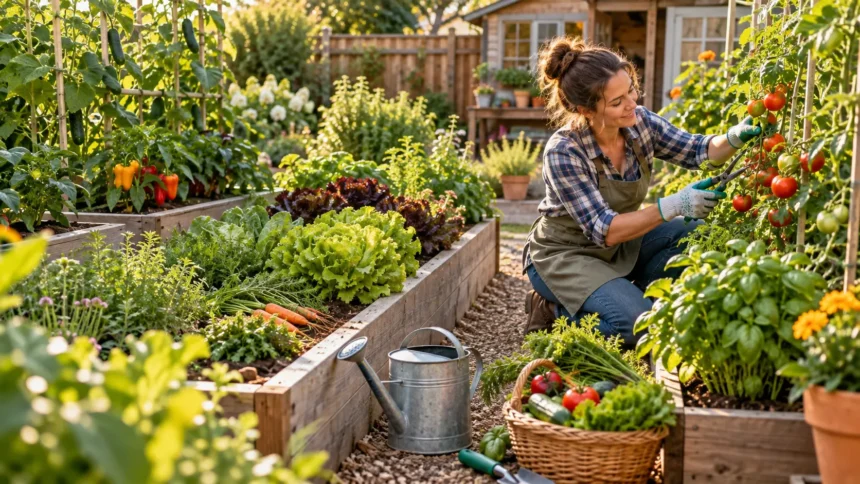
A productive vegetable garden needs more than good seeds and healthy soil at planting time. Regular maintenance helps vegetables receive the water, nutrients, sunlight, airflow, and protection they need throughout the growing season. Small tasks completed consistently can prevent many common problems before they become difficult to manage.
Vegetable garden maintenance does not have to take hours every day. A practical routine built around watering, weeding, mulching, fertilizing, pruning, pest monitoring, and timely harvesting can keep plants healthier with less effort. The following vegetable garden maintenance tips can help beginners and experienced gardeners protect their crops while improving overall garden productivity.
Check Your Vegetable Garden Regularly
Regular observation is one of the simplest vegetable garden maintenance habits you can develop. Walk through the garden several times each week and look closely at leaves, stems, flowers, developing vegetables, and the surrounding soil. Early changes in plant appearance often provide useful clues about watering problems, pests, nutrient deficiencies, overcrowding, or disease.
Check both the upper and lower surfaces of leaves because insects, eggs, and early damage may be hidden underneath. Look for yellowing, holes, unusual spots, curling leaves, broken stems, or vegetables beginning to rot. Catching these issues early usually gives you more options than waiting until a large portion of the plant becomes affected.
Regular garden checks also help you notice vegetables that are ready for harvesting. Cucumbers, zucchini, beans, peppers, and other crops can mature quickly during warm weather. Spending a few minutes observing your plants frequently makes maintenance easier because problems and harvesting needs can be handled gradually instead of accumulating into a larger workload.
Water Vegetables Consistently and Correctly
Consistent watering is essential because vegetables can become stressed when soil repeatedly swings between extremely dry and overly wet conditions. Instead of watering automatically every day, check soil moisture and consider recent rainfall, temperature, soil type, and plant size. Established vegetables often benefit from deeper watering that reaches the main root zone.
Watering near the base of plants directs moisture where roots can use it while reducing unnecessary wetting of leaves. Early morning is often a convenient time because plants receive moisture before hotter conditions increase evaporation. Avoid relying only on brief surface watering, which may leave deeper roots without enough moisture during warm or windy periods.
Containers and raised beds may require closer attention because they often dry faster than traditional garden soil. Newly planted seedlings can also need more frequent monitoring while their root systems become established. Adjust your watering routine as weather and plant growth change rather than following exactly the same schedule throughout the entire season.
Keep Weeds Under Control
Weeds compete with vegetables for moisture, nutrients, sunlight, and growing space, making regular weed removal an important maintenance task. Small weeds are generally much easier to remove than mature plants with deep roots. Pulling or cultivating them early also reduces the chance that they will flower and spread additional seeds throughout the garden.
Make weeding part of your weekly routine instead of waiting until beds become heavily overgrown. Work carefully around young vegetables because their roots may be shallow and easily disturbed. Hand pulling is useful near crop stems, while a hoe can help manage weeds growing in more open areas between established vegetable plants.
Mulch can reduce the number of new weeds by limiting sunlight reaching exposed soil. However, weeds that appear through mulch should still be removed before they become established. Keeping pathways and bed edges tidy is also helpful because mature weeds outside the main planting area can eventually spread seeds back into productive garden spaces.
Use Mulch to Protect the Soil
Mulching is a practical way to reduce several vegetable garden maintenance challenges at once. A suitable layer of organic mulch can slow moisture loss, reduce weed growth, and help protect the soil surface from direct sun. Materials such as straw, shredded leaves, or other appropriate organic matter are commonly used around established vegetables.
Apply mulch after seedlings are established and the soil has warmed sufficiently for crops that prefer warm conditions. Keep the material slightly away from plant stems rather than piling it directly against them. Constant moisture around tender stems can create unhealthy conditions, so leave enough open space for airflow near the base of each vegetable plant.
Mulch gradually breaks down over time and may need to be refreshed during a long growing season. Check underneath occasionally to make sure the soil is not remaining excessively wet. Mulching should support good watering practices rather than replace moisture monitoring, especially in beds with heavy soil or limited drainage.
Feed Vegetable Plants According to Their Needs
Vegetable plants need nutrients throughout the growing season, but fertilizing more often does not automatically improve production. Different vegetables have different nutritional requirements, and soil fertility also varies from garden to garden. Use soil conditions, crop type, growth stage, and fertilizer instructions to guide feeding instead of applying extra nutrients whenever plants appear slow.
Leafy vegetables often require adequate nitrogen for healthy green growth, while excessive nitrogen around fruiting crops can encourage foliage at the expense of flowers and fruit. Tomatoes, peppers, cucumbers, and squash may need balanced nutrition as they mature. Root crops and legumes also have different feeding requirements, so one fertilizer routine may not suit every vegetable.
Watch plants for unusual growth but avoid diagnosing every problem as a fertilizer deficiency. Poor drainage, inconsistent watering, temperature stress, compacted soil, or damaged roots can create similar symptoms. Proper feeding works best when combined with healthy soil, regular moisture, and appropriate sunlight rather than being treated as a solution for every gardening problem.
Support and Prune Plants When Necessary
Many vegetables become easier to manage when they receive proper physical support. Tomatoes, climbing beans, peas, cucumbers, and other tall or vining plants can benefit from stakes, cages, or trellises. Supporting plants keeps growth organized and can prevent heavy stems or vines from collapsing onto nearby vegetables as the season progresses.
Install supports early whenever possible because pushing stakes or trellises into soil around mature plants can damage established roots. Tie stems loosely using soft material so growth is supported without being tightly restricted. Check ties throughout the season because stems become thicker and may need additional room as plants continue developing.
Pruning can also improve garden organization when it is appropriate for the crop. Remove dead, badly damaged, or diseased-looking plant material using clean tools, and avoid unnecessary heavy pruning that weakens healthy vegetables. Maintaining manageable plant growth can improve access, airflow, visibility, and harvesting in crowded beds or compact gardening spaces.
Monitor Pests Before They Spread
Pest monitoring should be part of routine vegetable garden care rather than something you begin only after serious damage appears. Look for chewed leaves, holes, sticky residue, distorted growth, insects, eggs, or unusual discoloration. Regular inspection makes it easier to identify problems while they are still limited to a few leaves or individual plants.
Avoid treating every insect as harmful because vegetable gardens also attract bees, butterflies, ladybugs, spiders, and other beneficial organisms. Some insects pollinate crops, while others feed on common garden pests. Correct identification is important before choosing any treatment because unnecessary pesticide use can affect organisms that contribute positively to the garden environment.
If pests are present, begin with the least disruptive practical approach suitable for the problem. Hand removal, pruning heavily affected leaves, physical barriers, or targeted treatments may be appropriate depending on the pest. Continue monitoring after taking action so you can determine whether the problem is improving instead of repeatedly applying treatments without checking results.
Maintain Good Spacing and Airflow
Vegetables may begin the season with plenty of room but become crowded as leaves and vines expand. Dense growth can block sunlight, reduce airflow, and make it difficult to inspect or harvest plants. Check spacing during the season and train climbing crops onto supports before they spread across neighboring vegetables.
Remove finished crops promptly instead of leaving unproductive plants occupying valuable garden space. This is particularly useful in small gardens where every section of soil matters. If you want to increase production from limited beds, strategies for a small-space vegetable garden can help you use vertical growing, succession planting, and efficient crop placement without unnecessary overcrowding.
Good airflow does not mean vegetables need huge empty spaces between them. The goal is to provide enough room for mature leaves while maintaining reasonable air movement and access. Proper spacing also makes watering, pruning, harvesting, pest inspection, and weed control easier because you can reach each plant without pushing through dense foliage.
Harvest Vegetables at the Right Time
Timely harvesting is an important part of maintenance because many vegetables continue producing when mature crops are removed regularly. Beans, cucumbers, zucchini, peppers, and certain leafy greens can provide repeated harvests throughout the season. Leaving produce on plants for too long may reduce eating quality and sometimes slows the development of additional vegetables.
Learn the preferred harvest stage for each crop rather than waiting until everything becomes extremely large. Young zucchini and beans are often more tender, while leafy greens can sometimes be harvested gradually by removing outer leaves. Tomatoes, peppers, and other fruiting vegetables may be picked at different stages depending on variety and how you plan to use them.
Check productive plants every few days during peak season because vegetables can mature quickly. Bring a basket or container during routine garden inspections so ready produce can be collected immediately. Regular harvesting keeps the garden cleaner, reduces forgotten overripe vegetables, and gives you another opportunity to notice plant problems while examining each crop closely.
Remove Diseased and Damaged Plant Material
Damaged leaves and stems sometimes recover, but severely affected plant material can become an unnecessary burden on the garden. Remove leaves that are clearly dead, heavily damaged, or affected by a confirmed problem when appropriate. Keeping plants tidy also makes it easier to monitor new growth and notice whether symptoms are continuing to spread.
Use clean pruning tools and avoid tearing healthy stems when removing plant material. If you suspect disease, clean tools between plants to reduce the chance of carrying contaminated material from one vegetable to another. Do not automatically add obviously diseased plant material to a basic home compost pile unless you understand how the specific problem should be handled.
At the end of the growing season, remove finished annual vegetable plants and fallen produce from the garden. Leaving large amounts of decaying crop material in beds can make cleanup harder and may allow some pests or problems to remain nearby. A clean garden gives you a better starting point when preparing for the next planting period.
Keep Simple Garden Records
Garden records can improve maintenance because they help you remember what worked instead of relying entirely on memory. Record planting dates, vegetable varieties, fertilizer applications, pest problems, watering challenges, and harvest periods. Even a small notebook or basic digital list can provide useful information when planning future growing seasons.
Notes can reveal patterns that are easy to miss during a busy season. You may discover that one bed dries faster, a certain tomato variety performs particularly well, or specific vegetables struggle during the hottest part of the year. These observations can guide future decisions about planting locations, irrigation, crop timing, and variety selection.
Records also help prevent repeating unsuccessful maintenance practices. If a fertilizer schedule caused excessive leafy growth or a container dried too quickly, note the result and adjust next time. Over several seasons, your garden history becomes a personalized growing guide based on the actual conditions and performance of your own vegetable garden.
Conclusion
Effective vegetable garden maintenance is built around small, consistent tasks rather than occasional major efforts. Regular watering checks, weed removal, mulching, plant support, pest monitoring, feeding, and timely harvesting help vegetables remain healthier throughout the growing season. When problems are noticed early, they are usually easier to manage before they affect several plants.
Pay attention to how your garden changes as weather, plant size, and seasonal conditions change. Vegetables that needed little water during cooler weeks may require closer monitoring during hot weather, while rapidly growing plants may suddenly need support or additional space. Flexible maintenance is more effective than following an identical routine from planting day until harvest.
The best maintenance routine is one you can follow consistently without making gardening feel overwhelming. Spend a few minutes checking plants several times each week, keep simple records, and respond to problems based on what you actually observe. These practical habits can help you grow healthier vegetables, improve harvest quality, and keep your garden productive throughout the season.
FAQs
How often should I maintain my vegetable garden?
Check your vegetable garden several times each week for watering needs, weeds, pests, and ready produce. Frequent short maintenance sessions are usually easier than allowing several small tasks to build into major problems.
How can I keep weeds out of my vegetable garden?
Remove weeds while they are small and use suitable mulch around established vegetables. Regular inspection prevents weeds from developing deep roots, competing heavily with crops, or producing seeds that create future problems.
Should I water my vegetable garden every day?
Not necessarily. Watering frequency depends on weather, soil type, containers, and plant size. Check soil moisture and water deeply when needed rather than automatically providing a small amount of water every day.
How do I know when vegetables need fertilizer?
Slow growth or unusual leaf color may suggest nutrient problems, but other issues can look similar. Consider soil fertility, watering, pH, and crop requirements before applying fertilizer, and always follow product directions.
What is the easiest way to keep a vegetable garden productive?
Maintain consistent watering, control weeds, harvest regularly, monitor pests, and keep plants properly spaced. Removing finished crops and replacing them when the season allows can also help extend vegetable production.