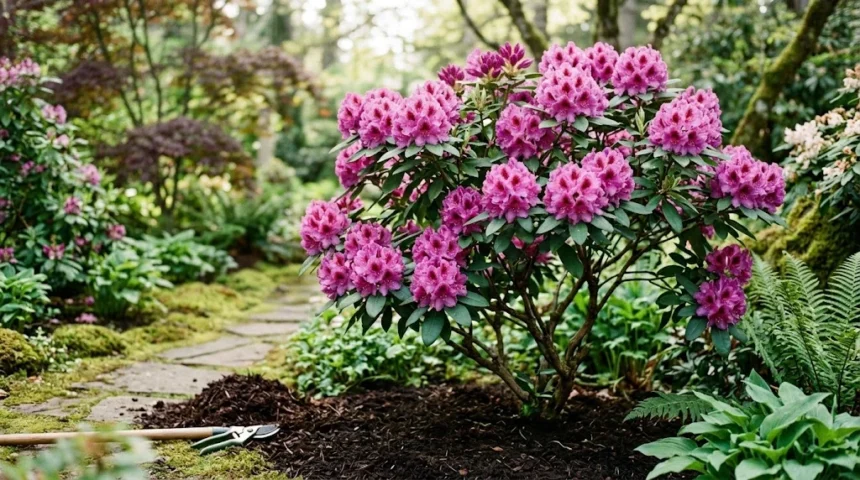
Rhododendrons can turn a quiet corner of the garden into a spectacular spring display with clusters of colorful flowers and rich evergreen foliage. Their blooms may appear delicate, but established plants can remain attractive for decades when their basic growing needs are understood. Successful rhododendron care depends less on constant attention and more on getting a few important conditions right from the beginning. Soil acidity, drainage, moisture, light exposure, and planting depth all influence how well a plant grows and flowers. Gardeners also need to understand when to prune, fertilize, mulch, and protect developing flower buds. With the right routine, rhododendrons can become reliable landscape plants rather than demanding garden challenges.
One reason rhododendrons sometimes develop a reputation for being difficult is that their roots behave differently from those of many common shrubs. They have shallow, fibrous root systems that need moisture but can quickly struggle in waterlogged or compacted soil. Planting them too deeply, allowing the root zone to dry repeatedly, or growing them in highly alkaline ground can cause yellow leaves, weak growth, and disappointing flowers. Fortunately, most of these problems are preventable with good preparation and timely maintenance. Whether you are planting a new shrub or improving an established specimen, understanding what the plant is communicating through its leaves, growth, and blooms makes care much easier. This guide explains practical rhododendron planting, watering, feeding, pruning, flowering, and troubleshooting methods that work together throughout the year.
Understanding What Rhododendrons Need to Thrive
Rhododendrons belong to a large and diverse group of flowering shrubs that includes plants ranging from compact garden varieties to substantial landscape specimens. Many popular types are evergreen, keeping their leathery leaves throughout winter, while others may be deciduous depending on the species and cultivar. Azaleas are also botanically part of the Rhododendron genus, although gardeners commonly treat them as a separate ornamental group. Flower colors can include white, pink, purple, red, yellow, orange, and combinations with distinctive markings. Blooming time varies by variety and climate, with many plants flowering from spring into early summer. Understanding which rhododendron you are growing helps you predict its mature size, flowering period, cold tolerance, and preferred garden conditions.
Most rhododendrons perform best in environments that protect them from extreme heat, drying winds, and intense afternoon sunshine. Woodland-style conditions are particularly suitable because they provide filtered light, organic-rich soil, and relatively consistent moisture around shallow roots. Morning sunlight followed by afternoon shade often produces a good balance between healthy growth and protection from leaf scorch. Too much shade, however, can reduce flower production and create thin, stretched branches as the plant searches for light. Different cultivars vary in sun tolerance, making variety selection important when planning a rhododendron garden. Matching the shrub to your local climate and available light usually produces better long-term results than trying to force an unsuitable variety into a difficult location.
The root system is one of the most important things to understand when learning how to care for rhododendrons properly. Unlike shrubs that send large roots deep into the ground, rhododendrons create dense networks of fine roots close to the soil surface. These roots need access to oxygen, which explains why heavy clay, standing water, and excessive planting depth can quickly weaken a plant. At the same time, shallow roots lose moisture faster during warm and dry conditions, especially when there is little mulch protecting the soil. Gardeners should therefore aim for consistently moist but well-drained ground rather than soil that remains saturated. A healthy root environment supports nearly everything else, including dark green foliage, new shoot development, flower bud formation, and resistance to environmental stress.
Rhododendrons are acid-loving plants, meaning they generally perform best when soil conditions are moderately acidic rather than neutral or strongly alkaline. A soil pH somewhere around 4.5 to 6.0 is commonly suitable for many varieties, although individual plants can have slightly different tolerances. In alkaline conditions, rhododendrons may struggle to access iron and other nutrients even when those nutrients are technically present in the soil. This can produce chlorosis, where leaves become pale or yellow while their veins remain noticeably greener. Testing garden soil before planting can therefore prevent years of unnecessary fertilizer applications and unsuccessful treatments. When naturally alkaline ground is difficult to change, gardeners may find container growing with suitable ericaceous compost easier and more reliable.
Flower production begins long before the first colorful petals appear, which is why year-round rhododendron care matters. Many rhododendrons form their next flower buds during the previous growing season, usually after the current year’s blooms have finished. Stress caused by drought, excessive shade, poor nutrition, aggressive pruning, or harsh weather can interfere with that process. A shrub that looks healthy but refuses to bloom may therefore be responding to conditions that occurred several months earlier. Regular observation allows gardeners to identify problems before they affect another flowering season. When soil, moisture, light, and pruning are properly managed together, rhododendrons generally require less intervention and can produce increasingly impressive displays as they mature.
Choosing the Best Location and Planting Rhododendrons Correctly
Selecting the right planting location is one of the most valuable decisions you can make for long-term rhododendron health. Look for a position offering bright filtered light, gentle morning sun, or dappled shade rather than intense afternoon exposure. Areas beneath high-canopied trees can work well provided the trees do not create excessive root competition or extremely dry soil. Protection from strong winter winds is useful for evergreen rhododendrons because their leaves continue losing moisture even during colder weather. Avoid low areas where rainwater collects for long periods, since poor drainage encourages root problems. A sheltered location with acidic, moisture-retentive, well-aerated soil gives a newly planted rhododendron the strongest possible foundation.
Consider the mature dimensions of your chosen variety before deciding exactly where the shrub will grow. A small plant at the garden center may eventually become several feet wider and taller, especially when it belongs to a vigorous large-leaved variety. Crowding rhododendrons against walls, paths, fences, or neighboring shrubs can create airflow problems and make future pruning unnecessarily difficult. Leaving adequate space also allows you to appreciate the plant’s naturally rounded shape rather than continually cutting it back. Check plant labels or cultivar descriptions for expected height and spread instead of estimating from the size of the nursery container. Planning for mature growth reduces maintenance while creating a more balanced and attractive landscape over the years.
Before planting, examine the root ball and make sure it is thoroughly moist rather than dry and resistant to water. Container-grown rhododendrons can sometimes develop tightly circling roots around the outside of the potting mix, preventing them from spreading effectively into surrounding soil. Gently loosening the outer roots can encourage new growth beyond the original root ball without causing unnecessary damage. Dig a planting hole considerably wider than the root mass but avoid making it excessively deep. The top of the root ball should remain level with, or slightly above, the surrounding soil surface because rhododendrons dislike deep planting. Backfill carefully without heavily compacting the soil, since the fine roots need air as well as moisture.
Water thoroughly after planting so the surrounding soil settles gently around the root zone and large air pockets are removed. Newly planted rhododendrons need particularly careful moisture management during their first growing season because their roots have not yet spread far into the surrounding ground. A layer of organic mulch can stabilize moisture levels, moderate soil temperature, and gradually contribute organic matter as it decomposes. Pine bark, shredded leaves, pine needles, and other acidic organic materials are commonly useful choices for rhododendron beds. Keep mulch slightly away from the trunk and main stems instead of creating a deep mound directly against the plant. Excess material around the crown can retain too much moisture and encourage bark deterioration or disease.
Spring and early autumn are often convenient times to plant rhododendrons because moderate temperatures reduce stress while roots become established. Exact timing should depend on your local climate, rainfall pattern, and winter conditions rather than a fixed calendar date. In regions with very hot summers, planting shortly before intense heat arrives can make establishment more difficult and increase watering demands. In extremely cold climates, very late autumn planting may leave insufficient time for roots to settle before frozen ground develops. Choose a period when the soil is workable and the weather is reasonably mild. Thoughtful timing combined with correct planting depth can dramatically reduce transplant stress and improve the shrub’s chances of flowering well in future seasons.
Creating the Right Soil and Mulching Around Rhododendrons
Healthy soil for rhododendrons should combine acidity, moisture retention, drainage, organic matter, and sufficient air space around the roots. This balance is important because simply adding large quantities of fertilizer cannot compensate for unsuitable soil structure. Heavy ground that remains saturated can suffocate fine roots, while extremely sandy soil may dry too quickly during warm weather. Organic matter such as well-decomposed leaf mold can improve both conditions by supporting moisture management and soil structure. Avoid burying large amounts of undecomposed organic material directly within the planting hole because decomposition can alter moisture and nutrient availability. Improving a broader planting area generally encourages roots to spread more naturally than creating a small pocket of dramatically different soil.
Testing soil pH is especially helpful when rhododendron leaves repeatedly become yellow despite otherwise reasonable care. Acid-loving plants depend on the right chemical environment to absorb nutrients efficiently, particularly iron and other micronutrients. If the soil is moderately alkaline, gradual amendments may sometimes improve conditions, but gardeners should avoid making drastic changes without knowing the existing pH. Adding random acidic products can create uneven conditions and potentially damage roots if they are applied excessively. Where the underlying soil is naturally very alkaline, maintaining permanently acidic conditions can become an ongoing challenge. Growing rhododendrons in raised beds or large containers filled with appropriate ericaceous growing medium may provide a more predictable solution.
Mulching is one of the easiest ways to improve rhododendron care because it addresses several needs at the same time. A suitable organic mulch reduces evaporation, protects shallow roots from temperature extremes, limits weed competition, and slowly contributes organic material to the soil. Pine bark, leaf mold, shredded leaves, and pine needles work particularly well in informal woodland-style planting schemes. A moderate layer is usually more effective than piling mulch deeply against branches or trunks. Because rhododendron roots occur close to the surface, avoid vigorous digging or cultivating beneath the canopy when refreshing mulch. Hand-pulling occasional weeds and renewing decomposed material gently is safer than disturbing the root zone with tools.
Companion planting can also help create a favorable soil and moisture environment when compatible plants are selected carefully. Woodland perennials, ferns, hostas, and other shade-tolerant plants can complement rhododendrons visually without competing aggressively when sufficient space is provided. Avoid placing thirsty, fast-growing plants immediately beside young rhododendrons because they may compete strongly for available moisture. Large trees can create similar challenges, particularly species with dense surface roots that dominate the upper soil layers. Observe how quickly the ground dries beneath nearby vegetation before adding a rhododendron to the area. A beautiful planting combination should support healthy roots rather than forcing several plants to fight for limited water and nutrients.
Good garden organization can make seasonal plant maintenance easier because fertilizers, gloves, pruners, labels, and testing supplies are simpler to manage when household storage systems are also kept orderly. Gardeners refreshing their home and outdoor routines may also find this guide on how to organize kitchen drawers like a pro useful for creating a more practical, clutter-free home environment. The same basic principle applies outdoors: frequently used items should be accessible, while unnecessary clutter should not interfere with regular care. Keeping gardening supplies organized makes it easier to test soil, refresh mulch, prune at the correct time, and respond quickly to plant problems. Efficient maintenance does not require complicated systems. Small improvements in organization can make caring for rhododendrons and the rest of the landscape more consistent throughout the year.
Watering and Feeding Rhododendrons Without Overdoing It
Watering rhododendrons successfully requires consistency rather than simply giving the plant large amounts of water occasionally. The shallow root system means prolonged dry conditions can cause stress faster than they might in deeply rooted shrubs. Newly planted rhododendrons are especially vulnerable because their roots are still concentrated within a relatively small area. Check moisture below the surface rather than judging conditions only by whether the top layer of soil looks dry. Water deeply enough to moisten the active root zone, then allow excess water to drain instead of keeping the ground permanently saturated. The goal is evenly moist soil with access to oxygen, not a continuously wet environment around the roots.
Weather conditions should determine watering frequency instead of relying on an automatic schedule throughout the year. Warm temperatures, low humidity, wind, sandy soil, and newly planted shrubs may require more frequent attention than established plants growing beneath protective mulch. During rainy periods, additional irrigation may be unnecessary and can actually increase the risk of root disease. Drip irrigation and soaker hoses are useful because they deliver water directly to the soil while reducing unnecessary wetting of foliage. Watering during the morning allows any splashed leaves to dry during the day. Regularly checking actual soil conditions is more reliable than assuming every rhododendron needs water simply because several days have passed.
The quality of irrigation water may also influence rhododendron health in areas where tap water is particularly hard or alkaline. Repeatedly applying highly alkaline water can gradually affect conditions around acid-loving plants, especially when they are grown in containers with limited soil volume. Rainwater can be a useful alternative when it can be collected safely and conveniently. Container rhododendrons deserve closer attention because their growing medium can dry more rapidly during warm weather than soil in a garden bed. At the same time, containers need drainage holes that remain clear so excess moisture can escape. Watering problems can often be avoided by understanding both the plant’s moisture requirements and the characteristics of the soil or compost surrounding its roots.
Rhododendrons generally do not need aggressive feeding when they are planted in healthy acidic soil containing sufficient organic material. Excess fertilizer can encourage weak growth, damage sensitive roots, or contribute to unnecessary salt buildup around the plant. When feeding is needed, choose a fertilizer formulated for acid-loving plants and follow the product instructions rather than increasing the dose in an attempt to produce more flowers. Spring feeding is commonly appropriate when active growth begins, although specific timing depends on climate and product type. Avoid heavy nitrogen applications later in the growing season because they may encourage tender growth that does not harden properly before cold weather. Balanced nutrition supports flowers, foliage, roots, and overall plant resilience.
Leaf appearance can offer useful clues about whether nutrition or soil chemistry needs attention, but symptoms should not be treated as automatic proof of fertilizer deficiency. Yellow leaves may result from alkaline soil, waterlogged roots, drought stress, natural aging, pest activity, or several other conditions. Applying additional fertilizer without identifying the cause can make some problems worse instead of correcting them. Check drainage, moisture levels, soil pH, and recent weather before deciding that the plant simply needs more nutrients. Older leaves occasionally yellowing and dropping can be part of normal evergreen foliage replacement. Successful rhododendron feeding involves supporting the soil environment first and using fertilizer as a targeted supplement rather than the main solution.
Pruning Rhododendrons for Healthy, Attractive Growth
Most rhododendrons naturally develop attractive rounded forms and therefore require less routine pruning than many hedge plants or rapidly growing shrubs. Light maintenance usually involves removing dead, damaged, crossing, or poorly positioned branches rather than cutting the entire plant every year. The best time for general shaping is commonly soon after flowering because this allows you to enjoy the current blooms before trimming. Pruning too late can remove developing flower buds and reduce the display the following year. Before cutting, examine the plant from several angles and decide which branches genuinely need adjustment. Selective pruning preserves the natural character of the shrub while improving structure, airflow, and overall appearance.
Always use clean, sharp pruning tools so cuts are precise rather than crushed or torn. Small stems can usually be handled with bypass pruners, while thicker branches may require loppers or a pruning saw. Remove dead wood back to healthy tissue or an appropriate branch junction rather than leaving long, awkward stubs. When correcting crowded growth, take out selected branches instead of repeatedly clipping the outside surface into a dense shell. Rhododendrons generally look better when their natural branching pattern remains visible. Cleaning tools between plants is particularly sensible when disease symptoms are present because contaminated equipment can potentially move pathogens from one shrub to another.
Deadheading spent rhododendron flowers is optional rather than an absolute requirement for every mature plant. Removing faded flower clusters can improve appearance and may help younger plants direct energy toward vegetative growth instead of seed production. When deadheading, hold the old flower cluster carefully and remove it without damaging the fresh shoots or developing buds immediately below it. These new growth points can be surprisingly delicate, especially shortly after flowering. Large, established rhododendrons may be impractical to deadhead completely and can generally continue growing without this treatment. Consider deadheading most useful for accessible shrubs where appearance matters and the task can be completed without damaging new growth.
Older rhododendrons that have become oversized, sparse, or badly shaped can sometimes respond to more substantial rejuvenation pruning. However, severe pruning should be approached carefully because different varieties vary in their ability to produce new shoots from old wood. Instead of removing most of the canopy at once, gradual renovation over two or more growing seasons can reduce stress and preserve some flowering branches. Start by removing dead or weak growth and shortening selected older stems to create a more balanced framework. Observe where new shoots emerge before making additional major cuts. A patient approach usually produces a more attractive result than dramatically reducing a mature shrub in a single pruning session.
Pruning cannot permanently solve problems caused by placing a naturally large rhododendron in a space that is far too small. Constantly cutting a vigorous variety back to fit beside a narrow walkway or window often produces repeated labor and disappointing flowering. If a shrub has clearly outgrown its location, transplanting it during a suitable season may sometimes be more practical than years of aggressive pruning. Smaller cultivars are also available for compact gardens and foundation beds where controlled size matters. Good plant selection remains the easiest form of pruning management. When the mature size fits the location, annual maintenance becomes simpler and the rhododendron can develop the graceful layered form that makes the plant so attractive.
How to Encourage More Rhododendron Blooms
A rhododendron that produces healthy leaves but few flowers is usually responding to environmental conditions rather than simply needing more fertilizer. Light is one of the first factors to evaluate because extremely dense shade can reduce flower bud development even when foliage remains green and attractive. Many varieties appreciate filtered sunlight or several hours of gentle morning light before afternoon shade protects them from heat. If surrounding trees have gradually created deeper shade, selective canopy management may improve flowering without exposing the shrub to harsh conditions. Avoid making dramatic light changes suddenly because leaves adapted to shade can scorch when abruptly exposed. The goal is balanced light that supports bud formation while protecting foliage from excessive stress.
Correct pruning timing is another major factor in consistent rhododendron flowering. Because many varieties begin developing next year’s flower buds after the current display finishes, pruning several months later can accidentally remove buds before they open. Gardeners sometimes assume winter is the ideal time to trim every shrub, but this approach can significantly reduce spring blooms on rhododendrons. Complete shaping soon after flowering whenever possible, then limit later pruning to dead or damaged wood. Flower buds are typically larger and rounder than vegetative buds, making them easier to recognize once you know what to look for. Learning to identify those buds helps prevent accidental removal and makes pruning decisions more precise.
Summer moisture has a strong relationship with future flowering because developing buds need a healthy, unstressed plant to form properly. Repeated drought can cause rhododendrons to prioritize basic survival over producing abundant flowers for the following season. Maintain consistent moisture during warm periods, particularly for recently planted shrubs and plants growing beneath trees that compete for water. Mulch helps reduce rapid evaporation, but it does not replace watering when the underlying soil has genuinely become dry. Avoid allowing the root zone to alternate repeatedly between extremely dry and waterlogged conditions. Stable moisture encourages stronger foliage and shoots while supporting the gradual development of healthy flower buds.
Nutrition should support flowering without creating excessive soft, leafy growth. Large doses of high-nitrogen fertilizer can encourage vigorous shoots at the expense of flower production, particularly when the plant already has access to adequate nutrients. Use products designed for rhododendrons, azaleas, or other acid-loving plants when feeding is genuinely necessary. Following recommended application rates protects the sensitive roots while reducing the chance of nutrient imbalance. Soil pH should also be checked if leaves appear chlorotic because nutrient availability changes when conditions become too alkaline. A plant growing in suitable acidic soil can often use available nutrients more efficiently than one repeatedly receiving fertilizer in unsuitable ground.
Weather occasionally explains a disappointing bloom season even when a gardener has done everything correctly. Late frost can damage swollen flower buds, especially when unusually warm winter weather encourages them to develop earlier than normal. Severe cold, drying winds, or sudden temperature swings may also affect exposed buds on sensitive varieties. Choosing cultivars suited to your local hardiness conditions can reduce these problems considerably over time. Providing a sheltered planting location and maintaining adequate soil moisture before winter can further support plant resilience. Some flowering variation from year to year is normal, so evaluate the plant’s overall health and several seasons of performance before deciding that a major care change is necessary.
Seasonal Rhododendron Care From Spring Through Winter
Spring is the most visually rewarding season for many rhododendron growers, but it is also an important time for observation and maintenance. Check plants for winter damage, broken stems, discolored leaves, and signs of stress as active growth resumes. Refresh mulch if the previous layer has decomposed significantly, while keeping material away from the main stems and crown. Monitor soil moisture as temperatures rise because shallow roots can dry faster than expected during windy spring weather. Feeding, when needed, is usually most useful during the active growing period rather than late in the year. Once flowering finishes, spring also becomes the ideal opportunity for light shaping and optional deadheading.
Summer care is mainly about protecting roots and foliage from heat and moisture stress while new growth matures. Check soil beneath the mulch regularly during extended dry spells instead of assuming the protected surface means deeper soil remains moist. Plants receiving strong afternoon sunlight may show leaf scorch, especially during unusually hot weather or when water availability is inconsistent. Newly planted rhododendrons deserve additional attention because they have limited root systems compared with mature shrubs. Avoid heavy late-summer fertilization that stimulates soft growth shortly before cooler weather approaches. Healthy summer care also supports the formation and maturation of flower buds that will provide the following season’s display.
Autumn provides an opportunity to prepare rhododendrons for winter without encouraging unnecessary new growth. Continue watering when rainfall is limited because evergreens can enter winter stressed if their root zone becomes excessively dry. A refreshed layer of mulch helps moderate soil temperature as colder conditions arrive and protects shallow roots from abrupt temperature changes. Avoid piling leaves or organic material tightly around the trunk, since constant moisture against the bark can create problems. Inspect plants for damaged branches and remove obviously dead material, but postpone unnecessary shaping that could remove flower buds. Autumn is also a good time to review which shrubs struggled during summer so drainage, shade, or watering improvements can be planned.
Winter requirements vary considerably according to cultivar, climate, plant age, and garden exposure. Cold-hardy rhododendrons can tolerate substantial winter conditions, while less suitable varieties may experience leaf burn, bud injury, or branch damage. Evergreen rhododendron leaves commonly curl or droop during very cold weather, and this response does not automatically mean the plant is dying. The leaves often return to their usual position when temperatures become milder. Protection from drying wind can be particularly helpful for young shrubs planted in exposed locations. Temporary wind barriers may be useful, but avoid wrapping foliage tightly in materials that trap excessive moisture and limit airflow.
Seasonal care works best when gardeners respond to actual conditions rather than following an inflexible calendar. Weather patterns can shift considerably from one year to another, meaning a dry spring may require more watering while a wet summer may make irrigation unnecessary. Observe the soil, leaves, buds, and new shoots before deciding what action is needed. Keeping basic notes about flowering time, pruning dates, heat damage, or recurring pests can help you recognize patterns in future seasons. Rhododendrons often become easier to maintain as gardeners learn how individual plants respond to their specific microclimate. Consistent observation combined with simple preventative care is usually more effective than reacting only after serious symptoms appear.
Growing Rhododendrons in Containers and Small Gardens
Container growing can make rhododendrons accessible to gardeners who have alkaline soil, limited planting space, patios, or small urban gardens. Compact cultivars are particularly well suited to pots because they remain manageable while still producing colorful seasonal flowers. Choose a substantial container with several reliable drainage holes and enough room for the root system to develop gradually. Containers that are excessively large can hold more wet compost than a small plant can use, while very small pots dry quickly. A balanced size provides moisture stability without creating permanently saturated conditions. As the shrub grows, repotting into a slightly larger container can support continued root development without overwhelming the plant.
Use an ericaceous potting mix specifically designed for acid-loving plants rather than ordinary alkaline garden soil. Container compost gradually changes as organic material decomposes and repeated watering moves nutrients through the pot, so its condition should be monitored over time. A thin layer of suitable organic mulch can help retain moisture, particularly during warm weather when containers heat more quickly than garden beds. Avoid blocking drainage holes with compacted material because rhododendron roots still require access to oxygen. Raising large pots slightly above hard surfaces can sometimes help excess water drain freely. Good drainage remains just as important in container rhododendron care as it does for shrubs planted directly in the landscape.
Container rhododendrons often need more frequent watering because their roots cannot extend beyond the pot in search of additional moisture. Check the growing medium regularly during spring and summer, especially on warm, windy days when evaporation increases rapidly. Water thoroughly when needed and allow excess liquid to escape rather than giving small surface splashes that fail to reach the deeper roots. Avoid leaving pots permanently standing in trays filled with water unless temporary bottom watering is being used intentionally. During prolonged rainfall, make sure drainage holes remain open and the compost does not become constantly saturated. Consistent moisture without waterlogging creates the best environment for healthy container roots.
Feeding also requires greater attention in containers because nutrients are gradually removed through plant growth and repeated watering. Use an appropriate fertilizer for acid-loving plants according to its recommended rate and seasonal schedule. More fertilizer does not automatically produce more flowers and can damage roots when concentrated salts accumulate in the limited growing medium. Watch for pale leaves, reduced growth, or other symptoms, but also consider whether the compost has become old, compacted, or unsuitable. Periodic repotting with fresh ericaceous mix can improve physical growing conditions as well as nutrient availability. Healthy container plants depend on the combination of appropriate compost, balanced feeding, good drainage, suitable light, and dependable watering.
Winter container care deserves attention because roots in pots are more exposed to freezing temperatures than roots protected by the surrounding ground. In colder regions, moving containers into a sheltered position can reduce exposure to wind and extreme temperature changes. Large pots may be protected with suitable insulating materials around the outside while keeping drainage areas clear. Avoid moving hardy rhododendrons into warm indoor rooms for winter, since they generally need outdoor seasonal conditions rather than household temperatures. Check moisture occasionally during mild winter periods because evergreen foliage can still lose water. Choosing a cultivar appropriate for your climate remains the most dependable starting point for successfully growing rhododendrons in containers year after year.
Common Rhododendron Problems, Pests, and Diseases
Yellow rhododendron leaves are among the most common concerns gardeners notice, but several different conditions can produce similar symptoms. When younger leaves become yellow while their veins remain green, alkaline soil and reduced iron availability may be responsible. Uniform yellowing can also be associated with poor drainage, excessive moisture, root stress, nutritional imbalance, or natural leaf aging. Before treating the plant, inspect where the symptoms occur and consider recent watering, rainfall, fertilization, and temperature conditions. Soil pH testing can provide valuable information when chlorosis is suspected. Correcting the underlying environment is more effective than repeatedly applying quick treatments without understanding why the foliage has changed color.
Root rot is a serious problem that is often associated with poorly drained or persistently saturated soil. Affected plants may show wilting, declining vigor, discolored foliage, branch dieback, or general collapse even though the ground appears wet. Because healthy roots require oxygen, additional watering can make the situation worse when drainage is already inadequate. Prevention begins with selecting a well-drained site, planting at the correct depth, and avoiding locations where water regularly collects. Improving drainage around a severely affected established shrub can be difficult, which is why site preparation matters so much before planting. Avoid interpreting every wilted rhododendron as drought stressed until the condition of the soil has been checked.
Several insects can feed on rhododendrons, although the specific pests encountered vary considerably by region. Lace bugs can cause pale stippling or speckled discoloration on leaves, particularly when plants grow in hot, sunny conditions that favor pest activity. Spider mites, weevils, scale insects, and other pests may also appear depending on local climate and surrounding vegetation. Inspect both sides of leaves closely rather than applying pesticides simply because foliage looks unhealthy. Small populations may not justify aggressive treatment, especially when beneficial insects are helping maintain natural balance. Improving plant health, correcting excessive sun exposure, and using targeted management when necessary usually provide better results than routine preventative spraying.
Leaf spots and other fungal symptoms sometimes develop during periods of prolonged moisture, crowded growth, or poor airflow. Avoid frequently wetting foliage late in the day, particularly when cool conditions mean leaves remain damp for many hours. Selective pruning can improve air circulation when branches are extremely crowded, although heavy cutting is rarely necessary for disease prevention alone. Remove severely damaged or fallen material when appropriate so the area remains tidy and easier to monitor. Not every spot requires chemical treatment because minor cosmetic damage may have little effect on the overall health of an established shrub. Correct identification should always come before deciding whether a particular treatment is justified.
Bud failure, browning leaves, and branch dieback can also result from environmental stress rather than pests or disease. Winter wind, late frost, drought, excessive fertilizer, transplant shock, sun scorch, and physical damage may create symptoms that resemble infectious problems. Look at the entire plant and surrounding growing conditions rather than focusing only on one damaged leaf or stem. Determine whether symptoms appeared suddenly after unusual weather or developed gradually over several months. Healthy rhododendrons growing in appropriate soil with reliable moisture are generally more resilient when occasional stress occurs. Learning to distinguish environmental problems from pests and diseases prevents unnecessary treatments while allowing truly serious issues to receive attention quickly.
Frequently Asked Questions About Rhododendron Care
Where is the best place to plant a rhododendron?
Rhododendrons usually perform best in a sheltered location with dappled light, morning sun, or partial shade. Choose acidic, well-drained soil that stays consistently moist while avoiding areas exposed to intense afternoon heat or standing water.
When should rhododendrons be pruned?
Prune rhododendrons shortly after flowering whenever possible because next year’s flower buds begin developing later in the growing season. Late pruning can remove those buds and significantly reduce the following spring’s display.
Why is my rhododendron not blooming?
Too much shade, incorrect pruning time, summer drought, excessive nitrogen, unsuitable soil conditions, or winter bud damage can reduce flowering. Check the plant’s light, moisture, pruning history, and general health before automatically adding fertilizer.
How often should I water a rhododendron?
Water according to soil moisture rather than following a fixed weekly schedule. Keep the shallow root zone consistently moist during dry weather, especially for newly planted shrubs, but allow excess water to drain freely to prevent root problems.
Should I deadhead rhododendrons after flowering?
Deadheading is optional but can improve appearance and prevent younger plants from spending energy on seed development. Remove spent flower clusters carefully so you do not damage the tender new shoots and developing buds immediately beneath them.