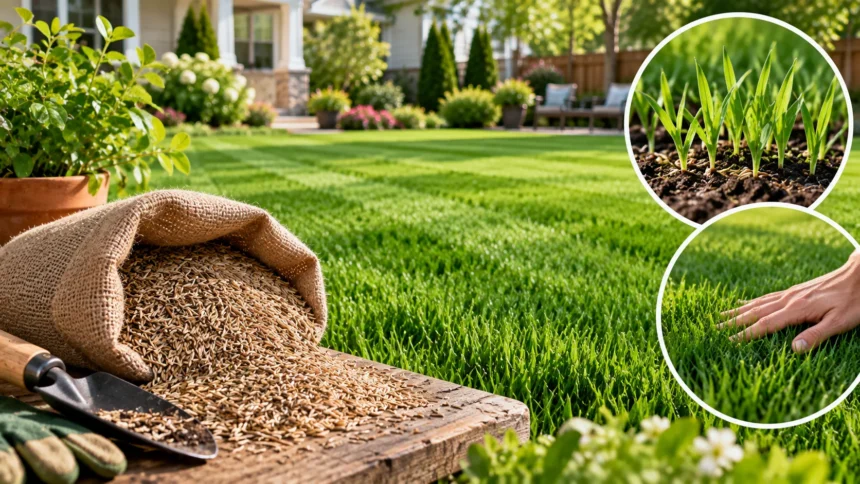
Best Grass Seed for a Thick, Green Lawn
Choosing the best grass seed for a thick, green lawn starts with understanding that no single grass variety performs perfectly everywhere. Climate, sunlight, soil type, rainfall, foot traffic, and lawn maintenance all influence which seed will give you the strongest results. A grass that creates a beautiful lawn in a cool northern region may struggle badly in a hot southern climate. Likewise, a seed that performs well in full sun may become thin and patchy underneath trees. The right choice can produce dense turf that naturally competes with weeds and recovers from everyday wear. The wrong choice can leave you constantly reseeding, watering, and fighting bare spots.
A healthy lawn also depends on more than the seed itself because preparation and aftercare determine whether those seeds develop into strong plants. Fresh seed needs consistent moisture, good soil contact, suitable temperatures, and enough time to establish before facing heavy traffic. Popular choices include tall fescue, Kentucky bluegrass, perennial ryegrass, fine fescue, Bermuda grass, and zoysia grass, each with different strengths. Seed blends can also provide greater adaptability by combining varieties with complementary traits. Understanding these differences makes it easier to select lawn seed that fits your property instead of simply buying the most expensive bag. This guide explains the best grass types, planting methods, and care practices for building a fuller, greener lawn.
What Makes a Grass Seed Good for a Thick, Green Lawn?
The best grass seed should first match the climate where the lawn will grow. Cool-season grasses perform best in regions with cooler winters and moderate summers, while warm-season grasses thrive where summers are long and hot. Cool-season varieties generally grow most actively during spring and fall, whereas warm-season grasses grow strongly through late spring and summer. Planting a grass outside its preferred climate forces it to survive conditions it was not naturally suited to handle. This often creates weak growth, discoloration, disease problems, or excessive water requirements. Choosing according to climate is therefore more important than choosing according to packaging claims or appearance alone.
Density is another important characteristic because thick turf creates the lush appearance most homeowners want. Dense grass also leaves less open soil where weed seeds can germinate and establish. Some grasses, such as Kentucky bluegrass and Bermuda grass, spread through underground or above-ground growth structures and can gradually fill small bare areas. Others, including many tall fescues, grow primarily in bunches and may need occasional overseeding to maintain uniform coverage. Neither growth habit is automatically better because each has advantages depending on the lawn. Understanding how a grass spreads helps you predict how quickly it will repair thinning areas after drought, traffic, or damage.
Color also influences how homeowners judge lawn quality, but deeper green does not always mean healthier grass. Different species naturally range from light green to dark blue-green, even when they are receiving excellent care. Modern turf-type tall fescues, for example, can produce a dark, attractive appearance while tolerating conditions that challenge more delicate grasses. Kentucky bluegrass is also famous for rich color and a soft, uniform texture under good growing conditions. Fertility, moisture, mowing height, and soil health can further influence color. Selecting a species you genuinely like is useful, but long-term adaptability should matter more than choosing the darkest-looking grass on a seed package.
Germination speed is worth considering when you need visible results quickly. Perennial ryegrass can germinate relatively fast under suitable conditions, making it popular in seed blends and for repairing bare patches. Kentucky bluegrass generally takes longer to establish, which means it requires more patience and careful watering during the early stages. Tall fescue falls somewhere between these extremes and can establish reasonably quickly when soil temperatures are suitable. Faster germination is convenient, but it should not be confused with better long-term performance. A slower grass that matches the climate may ultimately produce a stronger lawn than a fast-growing species that struggles once summer or winter arrives.
Seed quality itself also matters, so read the label instead of choosing entirely by price. Look at the percentages of named grass species, weed seed, inert material, and germination rate when that information is provided. A high-quality mixture should contain grass varieties that make sense for your region and lawn conditions rather than large amounts of filler. Some products also include coatings designed to help manage moisture around the seed, although coatings reduce the amount of actual seed by weight. Fresh seed with a strong germination percentage generally gives you a better chance of successful establishment. Good seed costs more initially, but poor germination can make a cheap product expensive once repeated reseeding becomes necessary.
Best Cool-Season Grass Seeds for Green, Dense Turf
Turf-type tall fescue is one of the most versatile cool-season choices for homeowners who want a durable green lawn without extremely demanding care. Modern turf-type varieties have finer blades and a more attractive appearance than older coarse pasture-style fescues. Tall fescue develops relatively deep roots, which can help it tolerate periods of heat and reduced rainfall better than some other cool-season grasses. It performs well in full sun and can handle moderate shade depending on the cultivar. Tall fescue also tolerates everyday foot traffic reasonably well once established. These qualities make it especially useful across transition-zone regions where both summer heat and winter cold can challenge turf.
One limitation of tall fescue is that most varieties grow in bunches rather than spreading aggressively across the soil. When a section dies, neighboring plants may not quickly fill the open space the way Kentucky bluegrass can. Overseeding thin areas can therefore become part of long-term lawn maintenance. The good news is that tall fescue germinates more quickly than Kentucky bluegrass and can establish a strong root system when planted at the right time. Many homeowners choose a blend containing several turf-type tall fescue cultivars to improve disease resistance and adaptability. For a practical combination of appearance, durability, and drought tolerance, tall fescue is often one of the strongest cool-season options.
Kentucky bluegrass is frequently chosen when the goal is a classic, dense, dark green lawn with a relatively fine texture. It spreads through underground stems called rhizomes, allowing healthy turf to repair small damaged areas naturally. This self-spreading growth habit can create an exceptionally uniform lawn when sunlight, water, and fertility are favorable. Kentucky bluegrass also handles cold winters very well, making it especially popular in northern climates. The tradeoff is that it generally requires more water and careful maintenance during hot summer periods than tall fescue. Its relatively slow germination also means homeowners must maintain consistent seedbed moisture for longer during establishment.
Perennial ryegrass stands out because of its fast germination and quick early growth. It is commonly included in cool-season seed mixtures because it provides rapid green coverage while slower species are still establishing. Perennial ryegrass has a fine-to-medium texture and can create an attractive lawn when growing conditions are suitable. It also handles moderate traffic well, which explains its use in athletic turf and frequently used lawns. However, it does not spread aggressively, so damaged areas may require reseeding. Heat, drought, and severe winter conditions can also challenge some varieties, making perennial ryegrass particularly valuable as part of a carefully selected mix rather than always as a standalone lawn.
Fine fescues include several grasses valued for their ability to perform in lower light and relatively low-fertility conditions. Types such as creeping red fescue, chewings fescue, hard fescue, and sheep fescue have narrow blades that create a soft, fine-textured appearance. They can be excellent components of shade grass mixtures, especially beneath open tree canopies where other cool-season grasses become thin. Fine fescues usually prefer conditions that are not excessively wet or heavily fertilized. They may struggle under intense foot traffic or extreme summer heat, depending on the location. Combining fine fescue with Kentucky bluegrass or other compatible cool-season grasses can create a lawn that adapts better to changing sun and shade across a property.
Best Warm-Season Grass Seeds for Hot Climates
Bermuda grass is one of the strongest options for hot, sunny lawns where dense coverage and excellent recovery are priorities. It thrives during warm weather and spreads aggressively through both stolons and rhizomes, allowing it to fill damaged areas rapidly. Once established, Bermuda can create a thick carpet of turf capable of handling considerable foot traffic. Its strong spreading habit also helps it compete with many weeds when properly maintained. Bermuda performs best in full sun and generally struggles when trees or buildings create significant shade. It naturally goes dormant and turns brown when temperatures become cold, which is an important appearance consideration in climates with noticeable winters.
Bermuda grass is also valued for drought tolerance once its root system becomes well established. Although regular irrigation produces the best appearance, mature Bermuda can survive dry periods better than many grasses that prefer cooler climates. It responds strongly to sunlight, nitrogen, and frequent mowing during active growth. Homeowners who want a manicured lawn may mow some Bermuda varieties quite low, although appropriate height depends on the cultivar and mowing equipment. Its aggressive growth means edging around flower beds and walkways may require extra attention. Where heat, sunshine, and traffic are major concerns, however, Bermuda remains one of the most reliable warm-season turf choices.
Zoysia grass is another warm-season option known for creating dense, attractive turf with excellent wear resistance. Zoysia generally has a slower establishment rate than Bermuda, but once mature it forms a thick lawn that can suppress weeds effectively. Its texture varies by species and cultivar, ranging from relatively fine to noticeably coarse. Zoysia can also tolerate more shade than Bermuda, although it still performs best with a reasonable amount of sunlight. Once established, it can handle heat and periods of reduced rainfall efficiently. The major drawback is patience because creating a complete zoysia lawn from seed may take longer than homeowners expect.
Centipede grass is often selected for warm, humid regions where homeowners prefer a lower-maintenance lawn. It grows more slowly than Bermuda and generally requires less fertilizer, making it suitable for people who do not want an intensely managed turf program. Centipede produces a light-to-medium green lawn and spreads gradually through stolons. It performs well in acidic soils common to some southern regions but can decline when soil conditions or fertility are inappropriate. Heavy traffic is not its strongest feature, so it is better suited to residential lawns with moderate use. Homeowners should appreciate its natural color rather than applying excessive nitrogen in an attempt to force an unnaturally dark green appearance.
Bahia grass is another option for hot regions, particularly where drought tolerance and relatively low maintenance matter more than a perfectly fine lawn texture. It develops a deep root system and can survive challenging soil conditions that might cause more demanding turfgrasses to struggle. Bahia is commonly used on large properties, roadside areas, and lawns where resilience is a greater priority than a highly manicured appearance. Seed heads can become noticeable during active growth, so regular mowing may be necessary to maintain neatness. Its open growth habit may not create the same carpet-like density as Bermuda or zoysia. Still, for difficult sunny sites with limited irrigation, Bahia grass can provide dependable green ground cover.
Best Grass Seed for Sun, Shade, Drought, and Heavy Traffic
For a lawn receiving six or more hours of strong direct sunlight, you have the widest range of grass seed choices. In cool climates, Kentucky bluegrass, tall fescue, and perennial ryegrass can all perform well when other conditions are appropriate. In warm climates, Bermuda grass is particularly suited to open, sunny areas because it uses intense summer light efficiently. Zoysia can also perform beautifully in sun while providing dense growth and good wear resistance. The right choice then depends on temperature, water availability, and maintenance expectations. Full sun makes grass establishment easier, but even sun-loving turf can decline if mowing, irrigation, or soil conditions are consistently poor.
Shade requires much more careful grass selection because most turfgrasses need substantial sunlight to produce enough energy for dense growth. Among cool-season options, fine fescues are widely valued for shade tolerance, while some tall fescue cultivars also perform reasonably well in partial shade. Zoysia is one of the more shade-tolerant warm-season choices, although it still needs meaningful light to remain dense. Bermuda generally performs poorly in significant shade and tends to become thin as light decreases. Pruning tree canopies carefully may improve sunlight and air circulation where appropriate. In extremely dark areas, groundcovers, mulch, or landscape beds may be more successful than repeatedly reseeding grass that cannot receive sufficient light.
For drought-tolerant grass seed, turf-type tall fescue is a strong cool-season candidate because of its relatively deep root system. Fine fescues can also perform well in lower-input environments, although their suitability depends on traffic and regional climate. Among warm-season species, Bermuda and Bahia are both known for surviving dry conditions once established. Zoysia also develops good drought tolerance as its root system matures. Drought tolerance does not mean that newly planted grass can survive without water, because seedlings have shallow roots and require consistent moisture. Establishing a strong root system first is essential before expecting a lawn to tolerate extended dry periods.
Lawns exposed to children, pets, sports, or frequent walking need grasses that resist wear and recover from damage. Perennial ryegrass has good traffic tolerance in cool-season regions and establishes rapidly after seeding. Kentucky bluegrass can recover from damage through rhizomes, making it useful where wear is moderate and growing conditions are favorable. Tall fescue tolerates traffic reasonably well, although damaged bunches may need overseeding because the plants do not spread aggressively. Bermuda is an excellent warm-season option for active lawns because its vigorous spreading growth helps it recover quickly. Zoysia also handles wear well once established, though recovery may be slower than Bermuda.
Many properties contain a mixture of conditions rather than one uniform environment. The front yard may receive full sun while the backyard has partial tree shade, and some areas may experience more traffic than others. In these situations, a carefully designed grass seed mixture can provide better overall performance than a single species. Cool-season mixtures often combine tall fescue, Kentucky bluegrass, perennial ryegrass, or fine fescue in different percentages based on the expected conditions. Each species contributes useful traits such as speed, shade tolerance, density, or recovery. Choosing a mixture based on your lawn’s actual microclimates can produce more consistent coverage than expecting one grass to excel everywhere.
How to Choose the Right Grass Seed for Your Lawn
Begin by identifying whether you live primarily in a cool-season, warm-season, or transition-zone climate. This single decision immediately narrows the list of grasses that are likely to perform well. Northern lawns generally favor cool-season species such as Kentucky bluegrass, perennial ryegrass, and fescues. Hot southern regions are more suitable for warm-season grasses such as Bermuda, zoysia, centipede, and Bahia. Transition zones are more challenging because summers can be hot while winters may also become cold. Turf-type tall fescue is particularly popular in many transition areas because it tolerates a relatively broad range of seasonal conditions.
Next, observe the amount of sunlight different sections of the lawn receive during the growing season. Do not assume an area is sunny simply because it receives light early in the morning because total daily exposure matters. Buildings, fences, and mature trees can dramatically reduce the number of hours available for photosynthesis. A seed labeled for dense shade still needs some usable light, and marketing claims cannot overcome severe environmental limitations. If sunlight varies across the property, consider using a compatible mixture rather than one uniform grass type. Matching grass to light conditions is one of the simplest ways to reduce long-term thinning.
Think realistically about how much maintenance you are willing to provide. A beautiful Kentucky bluegrass lawn may require more irrigation and fertility than a homeowner wanting a low-input yard is prepared to deliver. Bermuda can produce outstanding warm-season turf but may need frequent mowing and edging during vigorous summer growth. Centipede generally requires less fertilizer, while fine fescues can work well in lower-input cool-season settings. Maintenance expectations should be considered before planting because changing grass species later can require significant renovation. The best lawn is one you can realistically maintain, not simply the species that looks most impressive in ideal photographs.
Check your soil conditions before blaming every lawn problem on the seed. Poor drainage, extreme compaction, unsuitable pH, low fertility, or shallow topsoil can cause even excellent grass varieties to struggle. A soil test can help identify pH and nutrient issues that should be corrected before or during establishment. Compacted areas may benefit from core aeration when conditions are appropriate. Improving soil structure with suitable organic matter can also support stronger roots, although heavy amendment should be planned carefully. Grass seed performs best when roots can access oxygen, water, and nutrients consistently. Investing in soil preparation often creates a bigger improvement than buying a more expensive seed mixture.
Finally, decide whether you are creating a new lawn, repairing bare patches, or overseeding existing turf. New lawns offer more flexibility because you can select a grass species without needing to match mature plants already present. Overseeding works best when the new seed has similar texture, color, and growth habits to the existing lawn. Repairing a Bermuda lawn with cool-season tall fescue, for example, can create obvious differences during different seasons. Read existing lawn characteristics carefully before introducing another species. Matching new seed to the current turf helps produce the uniform, thick appearance most homeowners are trying to achieve.
How to Plant Grass Seed for the Best Germination
Successful seeding begins with good seed-to-soil contact. Grass seed scattered on top of thick dead material, leaves, or dense existing turf may dry out before roots reach the soil. When establishing a new lawn, loosen and level the upper layer of soil so seeds have a suitable surface for germination. Remove stones, large debris, and problematic weeds before planting. For overseeding, mowing the existing lawn somewhat shorter and removing excessive clippings can help seed reach the ground. Core aeration can also create openings where seed and moisture collect, particularly on compacted lawns.
Spread seed evenly according to the recommended rate for the specific species and whether you are establishing or overseeding. Applying too little seed can leave open spaces where weeds become established, while applying excessive seed creates overcrowded seedlings competing for light, moisture, and nutrients. A broadcast or drop spreader can provide more consistent coverage than throwing seed by hand across a large property. Splitting the total amount into two applications made in perpendicular directions often improves uniformity. After spreading, lightly rake exposed soil areas if appropriate so the seed settles into close contact with the surface. Avoid burying most lawn seed deeply because small grass seeds need to remain near the soil surface.
Watering correctly is critical during germination because new seeds cannot tolerate the same drying cycles as an established lawn. The top layer of soil should generally remain consistently moist while seeds are germinating, but it should not become waterlogged. Light watering several times during hot or windy days may be necessary at first depending on conditions. As seedlings emerge and roots develop, gradually reduce watering frequency while applying enough moisture to reach deeper into the soil. This transition encourages roots to grow downward rather than remaining dependent on constant surface moisture. Sudden drying during early germination can reduce establishment dramatically.
Timing also has a major effect on seeding success. Cool-season grasses are usually easiest to establish when soil remains warm enough for germination but air temperatures are becoming milder, which often makes early fall especially favorable. Spring can also work, although young grass must then face summer heat sooner and may compete with spring-germinating weeds. Warm-season grasses are typically planted during late spring or early summer when soil temperatures are reliably warm. Planting too early can leave warm-season seed sitting in cold soil without active growth. Matching the planting window to grass biology gives seedlings more time to establish before stressful weather arrives.
Protect newly seeded areas from unnecessary traffic until seedlings have developed enough strength. Walking, pets, children, and equipment can disturb seed placement or damage fragile young plants. Begin mowing only when the new grass reaches an appropriate height and can tolerate the mower without being uprooted. Use a sharp mower blade because dull blades tear young grass rather than cutting it cleanly. Avoid removing too much height during the first mowing or any later mowing session. Patient establishment may feel slow, but allowing roots and leaves to develop properly produces a lawn that becomes denser and more resilient over time.
How to Keep New Grass Thick, Green, and Healthy
Mowing height has a surprisingly large influence on lawn density and long-term health. Cutting grass too short removes much of the leaf surface the plant needs to produce energy, which can weaken roots and expose soil to weeds. Different grass species prefer different mowing heights, so adjust your mower according to the turf you are growing. Tall fescue generally performs better when maintained higher than closely cut Bermuda, for example. Follow the one-third guideline by avoiding removal of more than about one-third of the grass blade at a time. Consistent mowing at an appropriate height encourages stronger growth and a more attractive appearance.
Established lawns usually perform better with deeper, less frequent irrigation than with tiny amounts of water every day. Deep watering encourages roots to move farther into the soil, improving the lawn’s ability to tolerate short dry periods. The exact schedule depends on climate, soil texture, rainfall, grass type, and season, so fixed daily recommendations are rarely ideal. Watch the lawn for signs of water stress such as lingering footprints, folded blades, or a dull bluish appearance. Watering early in the day generally reduces evaporation and allows foliage to dry reasonably quickly. Excessive watering can encourage shallow rooting, disease, and wasted resources.
Fertilizer can improve density and color, but applying more nitrogen is not always better. Excessive fertility can create weak, fast-growing leaves, increase mowing requirements, and contribute to certain disease problems. A soil test provides a useful foundation for understanding nutrient and pH conditions before applying large amounts of fertilizer. The best fertilization schedule also depends on grass type because cool-season and warm-season lawns have different periods of active growth. Feed turf when it can use nutrients effectively rather than simply following a calendar without considering conditions. Proper fertilization supports steady growth without forcing unnatural color or excessive leaf production.
Overseeding can help keep bunch-type cool-season lawns dense as individual plants thin with age, disease, drought, or traffic. Tall fescue lawns in particular may benefit from periodic overseeding because damaged spaces do not always fill themselves quickly. Prepare thin areas so seed reaches soil instead of resting on existing leaves or thatch. Use compatible cultivars that match the appearance of your current grass whenever possible. Overseeding is not a substitute for correcting underlying problems such as shade, compaction, insects, or poor irrigation. Solving those issues first gives new seedlings a better chance of surviving rather than repeating the same cycle of decline.
Weed prevention becomes easier when the lawn itself is dense and healthy. Thick grass intercepts sunlight, occupies soil space, and competes for resources that young weeds need. Bare areas should therefore be investigated rather than simply covered repeatedly with herbicide. Compaction, drainage problems, improper mowing, insects, disease, pets, and inadequate sunlight can all create openings where weeds establish. Maintaining healthy turf reduces dependence on repeated chemical treatments and improves the lawn’s appearance at the same time. The combination of suitable seed, proper planting, good mowing, appropriate watering, and balanced nutrition is what ultimately creates a consistently thick green lawn.
Common Grass Seeding Mistakes That Can Ruin Your Results
Choosing grass seed based only on the picture printed on the bag is one of the easiest mistakes to make. Packaging may show a perfect deep-green lawn even when the included grass species is poorly suited to your climate or property. Read the actual seed label and identify which species and cultivars are included. A blend intended for shade may perform very differently from one designed for sunny, high-traffic areas. Also check whether the product is intended for cool-season or warm-season climates. Ten minutes spent understanding the mixture before purchase can prevent months of trying to maintain grass that was never suitable for the site.
Another common mistake is scattering seed over hard, compacted ground without improving seed-to-soil contact. Seeds need access to moisture and a suitable surface where young roots can penetrate. If they remain suspended in old grass, thatch, leaves, or loose debris, germination may be inconsistent. Birds, wind, and runoff can also move exposed seed before it establishes. Raking bare soil lightly or aerating an existing lawn can improve contact depending on the situation. Preparation may require more work than spreading seed, but it greatly influences the final result. Grass seed cannot compensate for a poor seedbed simply because a higher quantity was applied.
Allowing newly seeded soil to dry completely is another frequent reason for failure. Germinating seeds are highly vulnerable because they have not yet developed deep root systems that can reach stored soil moisture. Missing irrigation during a hot, windy afternoon can damage young seedlings quickly. At the same time, excessive watering can wash seed downhill, create puddles, or encourage disease. The goal is consistent surface moisture rather than saturation. Once seedlings become established, watering should gradually transition toward deeper and less frequent applications. Changing the schedule as the plants mature is essential for developing stronger roots.
Planting at the wrong time can waste high-quality seed. Cool-season grass planted immediately before intense summer heat may germinate successfully but die once temperatures rise and shallow roots cannot keep up with water demand. Warm-season seed planted while soil is still cold may germinate slowly or inconsistently. Timing also affects weed competition and how long seedlings have to develop before stressful weather. Planning the project around seasonal growing conditions usually produces better results than planting whenever a bare patch becomes noticeable. Waiting several weeks for the proper window can sometimes be more effective than repeatedly seeding during unfavorable conditions.
Finally, homeowners sometimes expect a newly seeded lawn to become perfect after one round of germination. Seedlings emerge at different rates, weather changes, and some areas naturally establish more slowly than others. Kentucky bluegrass, for example, can require considerably more patience than quickly germinating perennial ryegrass. Avoid applying extra seed or fertilizer immediately simply because the lawn does not look mature after a short period. Give plants time to develop roots, tillers, and spreading growth where applicable. A thick lawn is created over a growing season and then maintained over multiple years. Consistent care generally matters more than trying to force instant results.
Frequently Asked Questions
What is the best grass seed for a thick lawn?
Turf-type tall fescue is one of the most versatile choices for many cool-season and transition-zone lawns, while Kentucky bluegrass creates excellent density in suitable northern climates. In hot, sunny southern areas, Bermuda grass is especially effective at producing thick, self-repairing turf.
What grass seed grows the fastest?
Perennial ryegrass is among the fastest-germinating common cool-season lawn grasses and can provide relatively quick coverage under proper conditions. Germination speed should still be balanced with climate suitability and long-term durability.
What is the best grass seed for shade?
Fine fescues are some of the best cool-season grasses for partial shade, and selected tall fescue varieties can also tolerate reduced sunlight. Zoysia offers relatively good shade tolerance among warm-season turfgrasses, although no lawn grass thrives in extremely deep shade.
Should I use straight grass seed or a seed mixture?
A mixture can be useful when the lawn contains different conditions because multiple grass types provide complementary traits such as shade tolerance, quick germination, density, and durability. A single species may be preferable when you want a very uniform lawn and the entire site provides suitable conditions for that grass.
How long does grass seed take to grow?
Germination varies considerably by species, temperature, moisture, and soil conditions. Perennial ryegrass may begin emerging within roughly a week under favorable conditions, while Kentucky bluegrass commonly takes considerably longer and requires more patience during establishment.