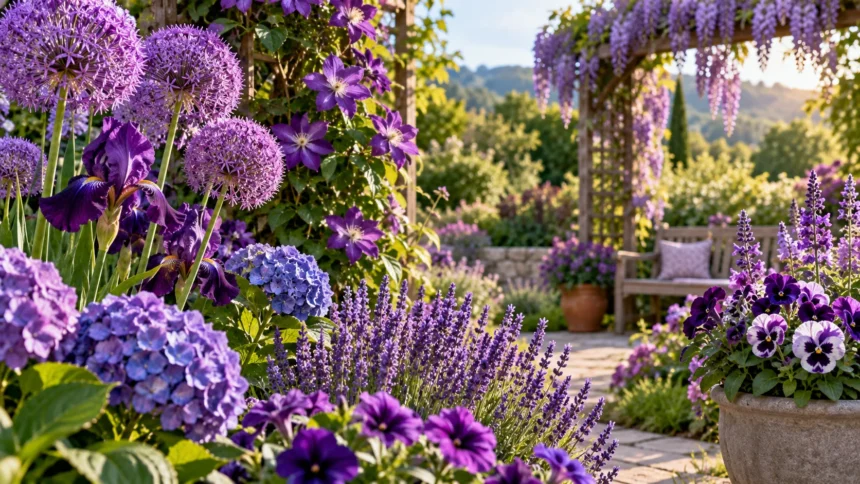
25 Beautiful Purple Flowers to Grow in Your Garden
Purple flowers have a way of making a garden feel richer, calmer, and more intentional without requiring an overly formal design. Their colors range from pale lavender and soft lilac to deep violet, plum, and almost-blue shades that can completely change the mood of a planting bed. Purple also pairs naturally with white, pink, silver, yellow, and green foliage, making it one of the easiest flower colors to work into an existing landscape. Whether you are planning a cottage garden, pollinator border, container display, or compact urban space, there are purple blooms for almost every situation. Some thrive in full sun, while others are better suited to partial shade. Choosing the right plants lets you enjoy purple flowers from spring through fall.
The best purple flowers for your garden depend on more than appearance alone. Sun exposure, soil drainage, winter temperatures, summer heat, available space, and watering habits all affect how successfully a plant grows. A lavender plant that thrives in hot, dry conditions may struggle in the same moist location where hydrangeas perform beautifully. Similarly, a tall delphinium can create spectacular vertical color but may be impractical in a windy or very small garden. Understanding each plant’s growth habit helps you avoid disappointment after planting. It also makes it easier to combine different species so their flowering seasons, heights, and textures complement rather than compete with one another.
Gardeners can choose from purple annuals, perennials, bulbs, shrubs, climbing plants, and flowering herbs. Annuals such as petunias can provide fast seasonal color, while perennial plants like salvia, catmint, and asters can return year after year in suitable climates. Shrubs such as lilacs and certain hydrangeas provide greater structural presence and can become long-term features in the landscape. Climbers such as clematis and wisteria add color vertically where ground space is limited. Bulbs such as alliums create dramatic spring displays with relatively little ongoing maintenance. Using several plant types together gives the garden more visual interest and can extend the overall flowering season considerably.
Purple blooms are also useful for gardeners interested in supporting bees, butterflies, hummingbirds, and other pollinators. Many popular purple-flowering plants, including lavender, salvia, catmint, verbena, and coneflower, produce nectar or pollen that attracts beneficial insects. Pollinator value varies by species and cultivar, so choosing open, accessible flowers is often more useful than selecting highly modified blooms solely for appearance. A garden containing plants that flower at different times can provide food over a much longer period. Reducing unnecessary pesticide use further improves the value of those flowers for wildlife. A beautiful purple garden can therefore offer ecological benefits while still looking highly decorative.
The 25 purple flowers below include options for sunny borders, shaded areas, containers, cottage gardens, pollinator spaces, and dramatic vertical displays. Some are extremely easy to grow, while others reward gardeners who can provide more specific soil, support, or pruning conditions. Instead of treating every purple flower as interchangeable, this guide explains where each plant tends to perform best and how it can be used effectively. You will also find practical considerations involving drainage, deadheading, invasiveness, and long-term maintenance. That makes it easier to choose plants based on real garden conditions rather than appearance alone. With thoughtful planning, purple can become a repeating color that ties your entire landscape together.
Why Purple Flowers Work So Well in Garden Design
Purple occupies an interesting place in garden design because it can feel both calming and dramatic depending on the shade and surrounding plants. Pale lavender flowers create a soft, romantic effect, while deep violet blooms can provide strong visual anchors among lighter colors. Gardeners can use purple as the dominant theme or repeat it in smaller amounts throughout beds and borders. Repetition helps separate areas of the garden feel connected rather than randomly planted. Purple also tends to stand out beautifully against green foliage without appearing as intense as bright red or orange. This balance makes it suitable for relaxed cottage gardens, contemporary planting schemes, and wildlife-focused landscapes alike.
Color combinations become especially attractive when purple flowers are paired with contrasting yellow or golden foliage. Yellow and purple sit opposite one another visually, creating a high-impact combination that catches attention quickly. For a softer look, purple can be paired with white flowers, silver foliage, pale pink, or blue. Deep purple also works effectively behind pastel-colored blooms because darker shades create depth and make lighter plants appear brighter. Gardeners who prefer a monochromatic scheme can combine lilac, violet, plum, lavender, and burgundy tones instead. Using several shades prevents an all-purple planting from appearing flat while maintaining a coordinated overall theme.
Flower shape matters almost as much as color when designing a purple garden. Tall spikes from salvia, foxglove, and delphinium provide vertical structure, while rounded allium flower heads create strong geometric accents. Catmint and sweet alyssum offer softer masses of smaller flowers that can spill around neighboring plants. Clematis introduces large individual blooms on vines, while hydrangeas produce substantial clustered flower heads on shrubs. Combining these forms keeps the planting visually active even when the color palette remains fairly limited. A border containing only flowers of one height and shape may look repetitive, while varied forms create rhythm and movement.
Bloom timing should also influence which purple flowers you choose. Lilacs, irises, and many alliums can provide spring color, while lavender, catmint, coneflower, and butterfly bush often become prominent during summer. Asters and some salvias can extend purple tones into late summer and fall when many earlier flowers have faded. Annuals such as petunias and angelonia may bloom for long periods when temperatures and care are suitable. By mixing early-, mid-, and late-season plants, gardeners avoid a situation where the entire purple display lasts only a few weeks. Continuous seasonal interest also gives pollinators more opportunities to visit the garden.
Foliage and structure remain important after flowering ends, so plants should not be selected only for the weeks when they bloom. Lavender retains an attractive shrubby shape and narrow gray-green foliage, while catmint forms soft mounds that work well around taller perennials. Hydrangeas and lilacs provide woody structure, and clematis can cover trellises or fences during the growing season. Even plants that die back can be positioned among evergreen shrubs or ornamental grasses so the bed still looks complete. Thinking about the whole plant creates a garden that remains attractive beyond peak bloom. Purple flowers then become part of a broader landscape rather than temporary spots of color.
Purple Flowers That Love Full Sun
1. Lavender is one of the most recognizable purple flowering plants and a natural choice for sunny, well-drained gardens. Its narrow silver-green foliage and fragrant flower spikes work beautifully along pathways, in herb gardens, around patios, and in Mediterranean-style landscapes. Lavender generally performs best with plenty of sunlight and soil that does not remain wet around the roots. Once established, many types tolerate dry conditions better than plants that prefer consistently moist soil. Regular light pruning can help maintain a compact shape and reduce the tendency for older plants to become woody. Bees are strongly attracted to the flowers, giving lavender both ornamental and pollinator value.
2. Purple salvia provides upright flower spikes that can add strong vertical color to sunny borders from late spring into summer. Different salvias vary in hardiness and growth habit, so gardeners can find both perennial and annual forms depending on climate. Many varieties tolerate heat well and attract bees, butterflies, and hummingbirds when grown where those pollinators are present. Good drainage is important because constantly saturated soil can cause problems around the roots. Removing faded flower spikes can encourage some salvias to produce additional blooms later in the season. Their narrow form makes them especially useful for planting between rounded perennials that would otherwise create a flat-looking border.
3. Catmint is valued for clouds of lavender-purple flowers and aromatic gray-green foliage that can soften the edges of pathways and planting beds. It generally grows best in sunny locations with soil that drains well, although established plants can tolerate short dry periods. Many gardeners use catmint as an easier, softer alternative to formal edging because its stems naturally spill outward. Cutting the plant back after its first major bloom can encourage fresh foliage and another flush of flowers. Bees frequently visit the blossoms throughout the flowering period. Catmint combines particularly well with roses, ornamental grasses, white flowers, and yellow-flowering perennials in relaxed garden designs.
4. Verbena bonariensis produces clusters of small violet-purple flowers on tall, slender stems that seem to float above neighboring plants. Its airy structure makes it useful near the middle or back of sunny borders because it adds height without creating a solid visual wall. Butterflies and other pollinators frequently visit the flowers, making the plant popular in wildlife gardens. It performs well in sun and generally appreciates reasonably drained soil once established. In favorable climates, it may reseed freely, which can be useful in informal gardens but may require management elsewhere. Gardeners should check local guidance because its behavior and invasive potential can vary significantly by region.
5. Ornamental alliums create distinctive spherical flower heads that rise above the garden on straight stems during spring or early summer. Purple varieties range from compact selections to large dramatic types with flower heads that can become major focal points. Most alliums are grown from bulbs planted in well-drained soil where they receive generous sunlight. Their foliage may begin looking tired around flowering time, so planting them among perennials can help hide fading leaves. Bees often visit the densely packed individual flowers within each globe. Alliums work particularly well when repeated through a border rather than planted as isolated single bulbs, creating rhythm and stronger visual impact.
Purple Perennials That Return Year After Year
6. Purple coneflower, commonly known as echinacea, is a dependable perennial with daisy-like flowers surrounding raised central cones. Many traditional forms produce pinkish-purple petals, although modern cultivars offer a wider spectrum of purple tones and flower shapes. Coneflowers generally appreciate full sun and reasonably drained soil, becoming more tolerant of dry conditions once established. Bees and butterflies visit the blooms during summer, while seed heads can provide later interest and food for birds if left standing. Plants usually look best when divided or maintained before crowded clumps lose vigor. Echinacea works particularly well in prairie-inspired borders, pollinator gardens, and mixed perennial beds.
7. Purple asters become especially valuable as summer begins transitioning into fall because they can provide color after many earlier perennials have finished blooming. Their star-like flowers appear in shades ranging from pale lavender to deep violet, often with contrasting yellow centers. Many asters attract late-season bees and butterflies, helping extend the ecological usefulness of a flower border. Most perform well in sunny conditions, although exact moisture and soil preferences vary among species. Taller varieties may benefit from strategic placement or early-season pinching to reduce flopping. Combining asters with ornamental grasses, sedums, goldenrods, or white-flowering perennials can create a particularly effective autumn display.
8. Garden phlox produces large clusters of fragrant flowers on upright stems and is a classic choice for cottage-style borders. Purple cultivars range from soft lavender to stronger violet shades, allowing gardeners to match the plant with pink, white, or blue companions. Phlox usually prefers fertile soil with consistent moisture while still requiring enough drainage to prevent root problems. Good air circulation is useful because some varieties can be susceptible to powdery mildew in humid or crowded conditions. Selecting resistant cultivars can reduce maintenance significantly. Butterflies and hummingbirds may visit the flowers, making garden phlox both a traditional ornamental plant and a useful pollinator addition.
9. Bellflower, or Campanula, includes many species that produce purple, violet, or blue-purple blooms shaped like bells, cups, or stars. Growth habits range from low edging plants to taller upright perennials, so gardeners should check the mature size before choosing a variety. Many bellflowers perform best in sunny to partially shaded positions with reasonably moist but well-drained soil. Compact forms can be attractive in rock gardens, borders, and containers, while taller types fit naturally into mixed perennial beds. Deadheading can extend flowering in some varieties and limit unwanted self-seeding. Because certain Campanula species spread aggressively, selecting garden-friendly types suited to your region is an important part of responsible planting.
10. Delphinium delivers some of the most dramatic vertical purple color available to perennial gardeners, with tall flower spikes that can dominate a summer border. Its blooms may appear in violet, lavender, indigo, or blue-purple shades and often feature contrasting centers. Delphiniums prefer fertile, well-drained soil and typically perform best where summers are not excessively hot and humid. Tall varieties often require staking or shelter from strong wind because flower spikes can become heavy. Regular moisture is helpful during active growth, but soggy conditions should still be avoided. Their height makes them ideal near the back of cottage borders where shorter purple flowers can be layered in front.
Easy Purple Annuals for Containers and Seasonal Color
11. Purple petunias are among the easiest ways to create bold seasonal color in window boxes, hanging baskets, containers, and sunny garden beds. Flower shades range from nearly black-purple to lavender, violet, and patterned combinations with white edges or centers. Modern petunias can bloom for months when they receive good light, appropriate feeding, and enough water during hot conditions. Some varieties benefit from deadheading, while self-cleaning forms require less maintenance. Trailing petunias can spill over container edges, whereas more compact types create rounded mounds. Their long flowering season makes them especially useful when perennial beds need consistent purple color between shorter bloom periods.
12. Pansies provide cheerful purple flowers during cooler parts of the year when many heat-loving annuals are not yet performing. Depending on climate, they may be planted in fall, early spring, or through winter where temperatures remain relatively mild. Purple pansies come in solid violet shades as well as combinations featuring yellow, white, blue, or near-black centers. They perform well in containers, edging, raised beds, and small spaces where their detailed flowers can be appreciated closely. Consistent moisture helps maintain growth, although waterlogged soil should be avoided. Once prolonged heat arrives, pansies often decline, making them useful as cool-season color rather than permanent summer performers.
13. Angelonia produces upright spikes covered with small snapdragon-like flowers in purple, lavender, pink, or white. It is especially useful in hot summer gardens because established plants often continue flowering when some cooler-season annuals begin struggling. Angelonia generally prefers full sun and well-drained soil, making it suitable for containers and sunny borders. Its upright habit provides contrast against trailing petunias or rounded flowering plants. Pollinators may visit the blooms, particularly when flowers remain available during periods of summer heat. Regular watering helps container-grown angelonia perform consistently, although many varieties tolerate short dry spells better than plants that demand constant moisture.
14. Heliotrope is loved for clusters of purple flowers and a sweet fragrance often compared with vanilla or cherry pie. It can be grown as an annual in colder climates and may behave as a tender perennial where winters remain warm. Heliotrope performs well in containers or borders that receive strong light, although some protection from harsh afternoon heat can be helpful in very hot regions. The plant appreciates consistent moisture without remaining constantly soggy. Its fragrance makes it particularly appealing near patios, seating areas, and frequently used paths. Because all parts should be treated cautiously around pets and children if ingestion is possible, placement deserves thoughtful consideration.
15. Sweet alyssum is available in white, pink, and purple forms, with purple cultivars offering low-growing color around taller container plants or along garden edges. Its tiny flowers form dense clusters and often release a light honey-like fragrance when conditions are suitable. Alyssum performs particularly well during mild weather and may slow down during intense summer heat before recovering as temperatures cool. It works beautifully in hanging baskets because stems can spill naturally over the edge. Bees and other small pollinators may visit the flowers during extended bloom periods. Regular trimming can refresh plants when growth becomes stretched or untidy, helping maintain a fuller appearance.
Purple Flowering Shrubs and Climbers for Bigger Impact
16. Lilac is a classic spring-flowering shrub known for fragrant clusters of purple, lavender, pink, or white flowers. Traditional lilacs can become substantial shrubs, so they are best placed where their mature width and height will not cause crowding. They generally flower best with generous sunlight and benefit from soil that drains effectively. Pruning is usually done after flowering because removing stems too late can reduce the following year’s display. The fragrance makes lilacs especially enjoyable near entrances, patios, and garden paths. Gardeners in regions with mild winters should choose varieties suited to their climate because many traditional lilacs require enough winter chilling to bloom well.
17. Clematis offers dramatic purple flowers on climbing vines that can transform trellises, fences, arches, and other vertical supports. Different clematis groups vary significantly in flowering season, mature size, and pruning requirements, so identifying the variety before cutting it back is important. Many prefer their stems and flowers in good light while benefiting from cooler, shaded conditions around the root zone. Flowers can range from small bells to large star-shaped blooms in lavender, violet, and rich purple. Clematis vines usually need support because they climb by wrapping leaf stems around thin structures. Pairing clematis with climbing roses can create a layered vertical display with an extended flowering season.
18. Wisteria creates hanging clusters of fragrant purple or lavender flowers that can turn pergolas and strong structures into spectacular spring features. The plant is extremely vigorous, however, and should never be chosen solely because the flowers look beautiful. Some Asian wisteria species are invasive in parts of the world and can spread aggressively into natural areas. Where wisteria is appropriate, gardeners can consider less aggressive or regionally suitable species, such as American wisteria in relevant parts of North America. Strong structural support and regular pruning are essential because mature vines become heavy. Checking local invasive-plant guidance before planting is one of the most responsible steps a gardener can take.
19. Butterfly bush, or Buddleja, produces long clusters of small purple flowers that can attract butterflies and other pollinators during summer. It generally thrives in sunny locations with good drainage and can flower over an extended period when faded blooms are removed. The shrub can grow quickly, making it useful where gardeners want substantial seasonal height in a relatively short time. However, butterfly bush is invasive in some regions because seedlings can spread beyond cultivated gardens. Sterile or low-seed cultivars may be preferable where they are permitted and appropriate. Gardeners should always check local recommendations because a beautiful pollinator plant should not come at the expense of surrounding native ecosystems.
20. Purple hydrangeas can provide large flower clusters in shaded or partially sunny gardens where many sun-loving purple flowers struggle. Certain bigleaf hydrangeas can produce blue, violet, or purple tones depending partly on cultivar and soil chemistry. Soil acidity and aluminum availability can influence flower color, but changing pH should be done gradually rather than through extreme treatments. Hydrangeas generally appreciate consistent moisture, especially during hot weather, while still needing soil that drains rather than remains waterlogged. Their substantial foliage gives beds structure even before flowering begins. Purple hydrangeas pair beautifully with hostas, ferns, white flowers, and other plants suited to woodland-style garden conditions.
Purple Flowers for Partial Shade and Woodland Gardens
21. Columbine, or Aquilegia, brings delicate purple flowers to spring gardens with distinctive spurred petals that appear almost sculptural. Many varieties perform beautifully in partial shade, particularly where summers become hot enough to stress plants growing in full sun. Columbine prefers reasonably moist, well-drained soil and can naturalize gently through self-seeding in favorable conditions. Flower colors include violet, purple, blue, pink, yellow, white, and attractive two-tone combinations. Hummingbirds and other pollinators may visit the blooms depending on the local species and cultivar. Because plants can be relatively short-lived, allowing a few seedlings to develop can help maintain columbine in an informal woodland or cottage garden.
22. Foxglove creates tall flowering spires covered with tubular blooms that can appear in lavender, purple, pink, cream, and white. Many foxgloves perform well in partial shade and look particularly natural near woodland edges or among ferns and other shade-tolerant plants. Depending on species and cultivar, plants may be biennial, short-lived perennial, or grown for seasonal display. The tall stems provide dramatic vertical structure even in relatively narrow planting areas. All parts of foxglove are toxic if eaten, so the plant requires careful placement in gardens used by young children or pets. Gardeners should also wear appropriate protection when handling plants if skin sensitivity is a concern.
23. Torenia, often called wishbone flower, is a compact annual that produces purple, blue, pink, or white tubular blooms in partially shaded locations. It is particularly useful in containers and hanging baskets where petunias may receive too little sun to flower well. Torenia prefers soil that remains evenly moist without becoming waterlogged, and plants appreciate protection from the harshest afternoon sun in hot climates. The low, spreading habit allows it to soften container edges or fill gaps near the front of shady borders. Hummingbirds may investigate the flowers in regions where they are present. Regular feeding in containers can help sustain flowering through a long growing season.
24. Browallia produces star-like violet-blue or purple flowers and is an underused choice for gardeners seeking color in partial shade. Often grown as an annual, it works effectively in containers, window boxes, and shaded garden beds where intense midday sun is limited. Browallia generally appreciates consistent moisture and protection from drying winds. Its blooms combine attractively with lighter foliage, white flowers, or silver-green accents. Because the plants usually remain fairly compact, they can fit into smaller spaces without overwhelming neighboring species. Gardeners who rely heavily on impatiens for shade may find browallia an interesting alternative that introduces deeper purple tones and a slightly different flower shape.
25. Purple-flowering hostas offer a useful bonus in shade gardens because they combine attractive foliage with summer flower stalks in lavender or purple tones. Hostas are grown primarily for their leaves, which may be green, blue-green, gold, variegated, or heavily textured depending on cultivar. Their flowers rise above the foliage and can attract hummingbirds and pollinators, especially on fragrant or nectar-rich selections. Most hostas prefer partial to full shade with soil that remains reasonably moist and fertile. Slugs, snails, and browsing animals can be troublesome in some gardens, so local conditions influence maintenance requirements. Pairing hostas with ferns, hydrangeas, and spring bulbs can create a layered woodland-style planting.
How to Choose and Care for Purple Flowers
Start by observing how many hours of direct sunlight different areas of your garden actually receive. A location that appears sunny during winter may become shaded once deciduous trees leaf out, while another bed may receive intense afternoon sun during summer. Full-sun plants such as lavender and many salvias generally need substantially more direct light than shade-tolerant torenia or hostas. Matching plants to available light is one of the easiest ways to reduce weak growth and disappointing flowering. Moving a struggling plant later is possible, but planning correctly from the beginning saves time. Light requirements should therefore guide plant selection before flower color or impulse purchases at a garden center.
Soil drainage is equally important because purple flowers do not all prefer the same moisture level. Lavender, alliums, and several Mediterranean-style plants can suffer when roots remain constantly wet, while hydrangeas and hostas generally appreciate more consistent moisture. Before planting, observe whether water disappears quickly after heavy rain or remains pooled for long periods. Organic matter can improve many garden soils, but adding amendments should still match the needs of the plants being grown. Raised beds may help where drainage is poor. Container gardeners should use pots with drainage holes rather than relying on decorative containers that allow water to collect around roots.
Consider mature plant size when arranging purple flowers because small nursery plants can become surprisingly large within a few seasons. Place tall delphiniums, lilacs, and substantial shrubs where they will not shade lower plants unexpectedly. Medium-height perennials can create the middle layer, while catmint, alyssum, and other low plants work well around border edges. Vertical climbers such as clematis can add color without using as much ground space. Repeating the same plant in several places often looks more intentional than buying one specimen of many unrelated varieties. Good spacing also improves air circulation and reduces competition for light, moisture, and nutrients.
Deadheading and pruning requirements vary considerably among purple-flowering plants. Petunias, salvias, catmint, and certain perennials may produce more flowers or fresher growth when faded blooms are removed. Lilacs should generally be pruned soon after flowering if shaping is needed because they form future flower buds on older growth. Clematis pruning depends on the flowering group, making identification especially important before cutting vines heavily. Some plants, such as echinacea and asters, can be left standing after flowering to provide winter structure or food for birds. Understanding the natural growth cycle prevents gardeners from accidentally removing future flowers while trying to keep plants tidy.
Finally, check whether a plant behaves responsibly in your region before adding it to the landscape. Wisteria, butterfly bush, verbena, bellflower, and other attractive ornamentals can spread aggressively in certain climates while remaining manageable elsewhere. Local conditions determine whether a species becomes invasive, so broad gardening advice cannot replace regional knowledge. Native purple flowers can be excellent alternatives because they are often well adapted to local soils, weather, and wildlife. Gardeners can combine native plants with carefully selected ornamentals to create both beauty and ecological value. A successful purple garden should not only look impressive this season but remain manageable, healthy, and appropriate for the surrounding environment over time.
Frequently Asked Questions
What are the easiest purple flowers to grow?
Lavender, catmint, salvia, petunias, coneflowers, and asters are relatively easy choices when planted in conditions that suit them. The easiest option ultimately depends on your climate, sunlight, soil drainage, and watering habits.
Which purple flowers bloom the longest?
Petunias, angelonia, some salvias, catmint, verbena, and butterfly bush can provide long flowering periods when growing conditions are favorable. Deadheading and regular care can extend bloom time for many varieties.
What purple flowers grow well in shade?
Hostas, torenia, browallia, foxglove, columbine, and certain hydrangeas can perform well with partial shade. The exact amount of shade each plant tolerates varies, so check the specific cultivar before planting.
Which purple flowers attract butterflies and bees?
Lavender, salvia, catmint, verbena, coneflower, asters, butterfly bush, and many alliums are popular with pollinators. Choosing several species with different flowering seasons can provide nectar and pollen over a longer period.
What colors look best with purple flowers?
Purple combines beautifully with white, yellow, gold, pink, blue, and silver foliage. Yellow creates stronger contrast, while white, pale pink, and silver produce a softer and more relaxed garden palette.