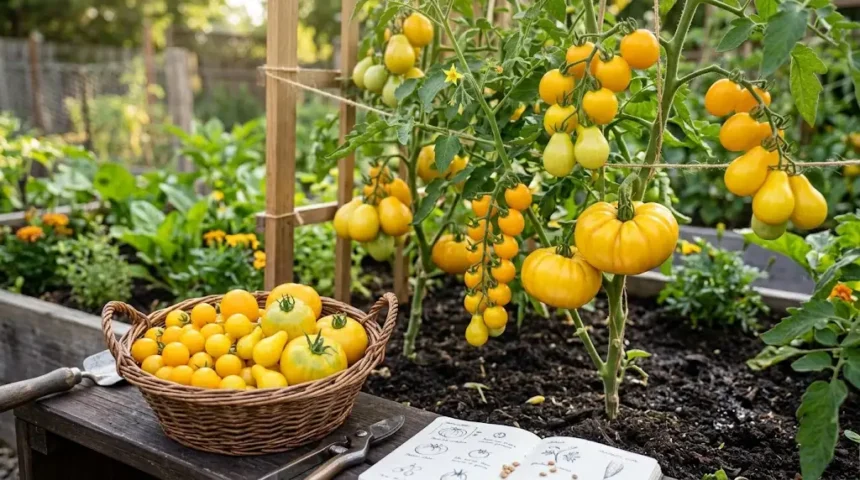
Yellow Tomatoes: Best Varieties, Flavor & Growing Tips
Yellow tomatoes bring a bright, sunny look to gardens, farmers markets, salads, sandwiches, and summer dishes, but their appeal goes well beyond color. These tomatoes come in many shapes and sizes, including tiny cherry tomatoes, elongated plum types, medium slicers, and large beefsteak-style fruits. Depending on the variety, yellow tomatoes can taste sweet, mild, fruity, rich, or pleasantly tangy. Many gardeners choose them because they add variety to a tomato patch while offering flavors that differ from familiar red cultivars. They can be grown in garden beds, raised beds, greenhouses, and containers when the right variety is selected. With enough sunlight, consistent watering, fertile soil, and good plant support, yellow tomato plants can be highly productive.
Although people often group all yellow tomatoes together, there is considerable variation among cultivars. Some produce pale lemon-yellow fruit, while others ripen to deep gold, amber, or yellow-orange shades. Certain heirloom yellow tomatoes are prized for complex flavor and large fruit, while modern hybrids may offer improved disease resistance, uniform production, or easier care. Cherry types are often especially sweet and productive, making them popular with families and beginner gardeners. Larger slicing varieties can provide juicy fruit for sandwiches and fresh eating. Choosing the best yellow tomato variety therefore depends on available space, local climate, desired flavor, harvest timing, and how you plan to use the fruit.
Growing yellow tomatoes is much like growing other garden tomatoes, but variety-specific habits still matter. Some cultivars are determinate, which means they grow to a more compact size and produce much of their crop during a relatively concentrated period. Others are indeterminate and continue producing vines, flowers, and fruit until cold weather or disease ends the season. Indeterminate yellow tomatoes usually require strong stakes, cages, or trellises because their vines can become large and heavy. Container gardeners may prefer smaller determinate or dwarf cultivars. Understanding the growth habit before planting makes watering, spacing, pruning, and support much easier to manage.
Flavor is another reason yellow tomatoes continue to attract attention. Many varieties are described as less sharply acidic in flavor than typical red tomatoes, although actual acidity depends on genetics and growing conditions. Their perceived sweetness may come from the balance between sugars, acids, aroma compounds, and texture rather than simply having more sugar. Warm weather, adequate light, healthy foliage, and allowing fruit to ripen fully on the plant can all improve flavor development. Harvesting too early may result in fruit that looks attractive but tastes bland. For the best eating experience, gardeners should learn the mature color, firmness, and aroma of the specific variety they are growing.
This guide covers the best yellow tomato varieties, yellow tomato flavor, growing requirements, planting techniques, watering, feeding, pruning, harvesting, common problems, and practical care tips. It also explains how yellow tomatoes compare with red tomatoes and how gardeners can select varieties for containers, slicing, snacking, and cooking. Related topics such as heirloom tomatoes, cherry tomatoes, tomato plant spacing, soil preparation, tomato fertilizer, blossom-end rot, cracking, pests, and disease prevention are included naturally throughout the discussion. Whether you are planting your first tomato or expanding an established vegetable garden, yellow varieties can add useful diversity. A little preparation can help you produce sweeter, healthier, and more attractive fruit throughout the growing season.
What Are Yellow Tomatoes?
Yellow tomatoes are tomato cultivars that develop yellow, gold, amber, or yellow-orange skin and flesh as they ripen. They belong to the same general tomato species commonly grown for red, pink, purple, green, and striped fruit. Their distinctive color results from differences in the pigments present in the fruit rather than from a completely different type of plant. Some yellow cultivars contain little of the red pigment that gives conventional tomatoes their familiar appearance. This produces shades ranging from creamy yellow to rich golden orange. The exact color depends on genetics, ripeness, sunlight, temperature, and the characteristics of the individual variety.
Yellow tomatoes can appear in almost every familiar tomato form. Cherry varieties produce small fruits that are convenient for snacking, salads, and container gardens. Grape and pear-shaped yellow tomatoes offer similarly small fruit but differ in shape and texture. Medium-sized salad tomatoes provide a balance between slicing ability and productivity. Large yellow beefsteak tomatoes can weigh substantially more and are often chosen for sandwiches or fresh platters. Plum-style varieties may have thicker flesh and fewer seeds, making them useful for cooking. This diversity means gardeners do not have to sacrifice a preferred tomato shape simply because they want yellow fruit.
Some yellow tomato varieties are heirlooms that have been preserved and passed down because of their flavor, appearance, or regional history. Heirloom tomatoes are often open-pollinated, allowing gardeners to save seeds when plants are kept reasonably isolated from cross-pollination. Modern hybrids are created by crossing selected parent lines to combine particular traits such as disease resistance, productivity, uniformity, or compact growth. Neither type is automatically better for every gardener. Heirlooms may offer unusual flavor and character, while hybrids can provide greater predictability under challenging garden conditions. The best choice depends on what matters most in your growing environment.
The plants themselves generally resemble other tomato plants, with green compound leaves, branching stems, yellow flowers, and familiar tomato growth habits. Fruit color alone does not tell you whether a plant will remain compact or grow into a long vine. Yellow tomatoes may be determinate, indeterminate, semi-determinate, or dwarf depending on the cultivar. Gardeners should therefore read seed packets or plant labels instead of assuming all yellow varieties require identical care. Growth habit determines how much space, support, pruning, and seasonal planning a plant may need. This information is particularly important in small gardens and containers.
Yellow tomatoes are sometimes marketed as sweeter or milder than red tomatoes, but flavor varies widely among varieties. A golden cherry tomato may taste intensely sweet, while a large heirloom could offer a rich blend of sweetness, acidity, and fruity aromas. Growing conditions also influence flavor, meaning the same variety may taste somewhat different from one garden to another. Soil fertility, sunlight, irrigation, harvest timing, and weather all play roles in fruit quality. Rather than choosing by color alone, gardeners should consider flavor descriptions and growth characteristics together. Doing so increases the chance of finding a yellow tomato that matches both culinary preferences and garden conditions.
Best Yellow Tomato Varieties to Grow
Sungold is one of the most recognizable golden cherry tomatoes among home gardeners because of its intensely sweet, fruity flavor and vigorous production. The fruit usually ripens to a deep golden-orange rather than a pale yellow, making it easy to spot among green foliage. Plants are typically indeterminate and can become very large during a long growing season, so strong support is important. The vines often continue producing clusters of fruit until weather conditions deteriorate. Because the tomatoes are small and sweet, many people eat them directly from the garden. Gardeners with limited space can still grow Sungold in a large container if they provide a sturdy cage or trellis.
Lemon Boy is a well-known yellow hybrid that produces smooth, medium-sized fruits suitable for slicing, salads, and general kitchen use. Its bright lemon-yellow appearance makes it visually distinctive without the irregular shapes sometimes associated with large heirlooms. Plants are commonly grown as indeterminate vines and benefit from staking or caging. The flavor is generally mild, balanced, and approachable, making it useful for gardeners who prefer tomatoes without an overly sharp taste. Hybrid vigor can also appeal to growers looking for reliable garden performance. When planted in full sun and fertile soil, Lemon Boy can provide a steady supply of attractive yellow fruit through much of the season.
Yellow Pear is an old-fashioned favorite known for its small, pear-shaped fruits and abundant production. The tomatoes have a bright yellow color and a mild, lightly sweet flavor that works well in salads, lunch boxes, and decorative dishes. Plants are generally vigorous and indeterminate, sometimes growing much larger than gardeners expect. Because they can produce numerous clusters, reliable support helps prevent vines from sprawling across neighboring plants. Yellow Pear is especially attractive in mixed bowls with red, purple, and orange cherry tomatoes. Its unusual shape also makes it popular with children and gardeners who enjoy visually distinctive crops.
For gardeners interested in large yellow heirloom tomatoes, varieties such as Kellogg’s Breakfast and Dr. Wyche’s Yellow are often considered for their substantial fruit and rich flavor. These tomatoes can produce large, meaty slices with golden or orange-yellow flesh. Their taste may combine sweetness with a more complex, full tomato character than some mild yellow types. Large heirlooms generally need a longer growing period and dependable plant support because heavy fruit can strain branches. They can also produce irregular shapes, which is normal for many heirloom beefsteaks. Gardeners who prioritize eating quality over perfectly uniform fruit often find these varieties especially rewarding.
Dwarf and compact yellow tomatoes are useful for patios, balconies, and small raised beds where full-sized vines would be difficult to manage. Several modern dwarf breeding lines produce golden or yellow fruit on shorter, stockier plants while retaining good flavor. Micro-dwarf cherry tomatoes can fit into even smaller containers, although their harvest is naturally more limited than vigorous garden vines. When selecting a compact cultivar, gardeners should check mature height rather than relying only on words such as “patio.” Container suitability depends on root space, plant structure, and fruit load. Choosing a genuinely compact yellow variety makes care easier and reduces the need for constant pruning or oversized supports.
What Do Yellow Tomatoes Taste Like?
The flavor of a yellow tomato is created by a combination of sugars, organic acids, aroma compounds, texture, and ripeness. Color alone cannot predict exact taste, but many yellow varieties are perceived as mild, sweet, fruity, or less sharply tangy than common red tomatoes. Small golden cherry tomatoes can be exceptionally sweet because their sugar-to-acid balance creates an intense flavor in a small package. Large yellow heirlooms may taste richer and more complex, with floral or tropical notes sometimes noticeable in fully ripe fruit. Personal preference plays an important role because some people enjoy bright acidity while others prefer a softer tomato flavor.
Perceived acidity deserves particular attention because it is often misunderstood. A tomato that tastes less acidic does not necessarily contain dramatically less acid than another variety. Sweetness and aromatic compounds can reduce the perception of sharpness by balancing the acids present in the fruit. This explains why two tomatoes with similar measurable acidity may taste quite different. Yellow varieties are often selected for gentler flavor profiles, but gardeners should not assume every yellow tomato is mild. Variety descriptions provide better guidance than fruit color alone when flavor is an important consideration.
Growing conditions can strongly influence how a yellow tomato tastes at harvest. Plants receiving plenty of sunlight generally have better conditions for producing sugars through photosynthesis. Excessive watering close to harvest can sometimes dilute flavor, particularly if plants receive far more moisture than they need. Severe drought is not beneficial either because stressed plants may stop growing properly or develop fruit disorders. Healthy foliage is important because leaves manufacture the carbohydrates that contribute to fruit development. Consistent care usually produces better flavor than deliberately stressing plants in an attempt to make tomatoes sweeter.
Ripeness is equally important. Yellow tomatoes can be slightly harder to judge than red varieties because gardeners may not be familiar with their mature color. A fruit that has only begun turning yellow may still need additional time to develop its best flavor. Fully ripe tomatoes often deepen in color, soften slightly, and release more aroma near the stem. The fruit should feel firm but not hard when gently handled. Learning the mature appearance of each cultivar prevents premature harvesting and helps gardeners enjoy the flavor the variety was bred to provide.
Culinary use also affects how people perceive yellow tomato flavor. Sweet cherry tomatoes often taste best raw because their fresh aroma and natural sugars remain prominent. Large yellow slicers work well in sandwiches where their mild flavor complements herbs, cheese, and vegetables without dominating the dish. Meaty yellow tomatoes can be roasted to concentrate sweetness, while golden sauces can offer a visually unusual alternative to traditional red tomato sauce. Mixing yellow tomatoes with red, green, and purple varieties can create greater flavor complexity. Home gardeners often discover that growing several tomato colors makes meals more interesting than relying on a single type.
How to Plant Yellow Tomatoes Successfully
Yellow tomatoes need a warm, sunny location for strong growth and reliable fruit production. Most tomato plants perform best when they receive at least six to eight hours of direct sunlight, with additional sun often beneficial in climates where excessive heat is not a problem. Shaded plants may become tall and weak while producing fewer flowers and slower-ripening fruit. Choose a location where air can circulate between plants because crowded, damp foliage can encourage disease. Avoid placing tomatoes where large trees or aggressive roots compete heavily for moisture and nutrients. Good site selection solves many growing problems before they begin.
Soil should be fertile, well drained, and rich in organic matter. Tomatoes generally prefer slightly acidic soil rather than extremely acidic or alkaline conditions. Garden compost can improve soil structure, water retention, and nutrient availability, particularly in sandy or compacted beds. Heavy clay may need structural improvement so roots are not sitting in water after rain. Raised beds can provide better drainage where native soil remains wet. A soil test can be useful when gardeners repeatedly experience nutrient problems because adding fertilizer without knowing the existing soil condition can sometimes make imbalances worse.
Seedlings should be planted after the danger of frost has passed and soil has begun warming. Tomatoes are warm-season plants, and cold soil can slow root growth even when daytime temperatures seem pleasant. Harden off seedlings gradually before transplanting by exposing them to outdoor conditions over several days. This helps young plants adjust to wind, brighter sunlight, and temperature changes. When transplanting, tomatoes can usually be planted deeper than they were growing in their original containers because buried portions of the stem can develop additional roots. Remove lower leaves before burying that section so foliage is not trapped beneath the soil.
Spacing depends on variety and support method. Compact determinate plants may fit closer together than sprawling indeterminate tomatoes, but every plant still needs enough airflow and root space. Many gardeners leave roughly two to three feet between standard plants, adjusting according to cultivar size and training system. Closely spaced indeterminate tomatoes can be managed when they are pruned and trained vertically, while unpruned vines require considerably more room. Overcrowding makes harvesting difficult and keeps leaves wet longer after rain. Reading the mature size listed for the cultivar is more reliable than applying one spacing rule to every yellow tomato.
Support should be installed during planting or soon afterward rather than waiting until plants begin collapsing. Tomato cages, stakes, trellises, strings, and vertical support systems can all work when matched to the plant’s growth habit. Large indeterminate yellow tomatoes need particularly strong support because mature vines carrying heavy fruit can become surprisingly heavy. Soft ties should secure stems without cutting into expanding tissue. Supporting plants keeps fruit away from soil and improves access for pruning and harvesting. It can also improve airflow through the canopy, which is helpful in gardens where leaf diseases are common.
Watering and Fertilizing Yellow Tomato Plants
Consistent watering is one of the most important parts of yellow tomato care. Tomato roots need regular access to moisture, especially when plants are flowering and developing fruit. Repeated cycles of extremely dry soil followed by heavy watering can contribute to cracking and other physiological problems. Rather than watering lightly every day, gardeners generally benefit from watering deeply enough to moisten the main root zone. Deep irrigation encourages roots to explore a larger volume of soil. The exact frequency depends on temperature, rainfall, soil type, container size, plant maturity, and local growing conditions.
Watering near the base of the plant is usually preferable to routinely soaking the foliage. Drip irrigation, soaker hoses, or carefully directed hand watering place moisture closer to the roots while allowing leaves to remain relatively dry. Wet foliage does not automatically cause disease, but prolonged leaf moisture can create favorable conditions for several tomato pathogens. Morning watering is often convenient because any splashed foliage has time to dry during the day. Containers require closer monitoring because potting mix can dry much faster than garden soil. During very hot weather, large container tomatoes may need water considerably more often than plants growing in the ground.
Mulch can make irrigation more consistent by slowing evaporation from the soil surface. Straw, shredded leaves, grass clippings that have not been treated with inappropriate chemicals, and other suitable organic mulches can be placed around established plants. Leave a little space around the stem rather than piling wet material directly against it. Mulch also reduces soil splashing onto lower leaves during rain or watering. As organic materials gradually decompose, they can contribute to soil structure. A moderate mulch layer is often especially helpful during hot summer conditions when unprotected soil dries rapidly.
Tomatoes also require adequate nutrition, but more fertilizer is not necessarily better. Nitrogen supports leaf and stem growth, while phosphorus, potassium, calcium, magnesium, and several micronutrients contribute to normal plant development. Excessive nitrogen can encourage lush foliage while delaying or reducing flowering and fruit production. Gardeners should use a balanced soil-building approach rather than repeatedly applying high-nitrogen fertilizer. Compost, appropriate tomato fertilizer, and soil-test recommendations can provide a useful foundation. Container plants often need more frequent feeding because nutrients can wash out of potting mixes during regular watering.
Calcium management deserves special attention because blossom-end rot is commonly blamed entirely on a calcium shortage in the soil. In many gardens, the soil already contains sufficient calcium, but irregular watering prevents the developing fruit from receiving it consistently. Maintaining steady soil moisture is therefore one of the most effective preventive strategies. Adding calcium products without evidence of a deficiency may not solve the problem. Root damage and excessive fertilizer salts can also interfere with water and nutrient uptake. Healthy roots, balanced fertility, and consistent irrigation work together to support strong yellow tomato fruit development.
Pruning, Supporting and Managing Plant Growth
Pruning requirements depend largely on whether the yellow tomato variety is determinate or indeterminate. Determinate tomatoes grow to a genetically limited size and produce many of their fruits during a shorter period, so aggressive pruning can reduce the potential crop. Indeterminate plants continue producing new vines and flowers throughout the season, making selective pruning more useful when gardeners want better airflow or vertical growth. Neither type should be pruned automatically without considering its natural habit. Knowing the cultivar helps prevent gardeners from removing productive growth unnecessarily. Plant labels and seed descriptions usually identify the growth type.
Tomato suckers develop from the junction between a main stem and a leaf branch. On indeterminate plants, these shoots can become full-sized stems producing their own leaves, flowers, and fruit. Some gardeners remove many suckers and train plants to one or two main stems, particularly in narrow spaces or greenhouse systems. Others allow several stems to develop for a larger, bushier plant. Both approaches can work. Heavy pruning may produce larger individual fruit in some situations but can also reduce overall leaf area and expose fruit to intense sunlight.
Lower-leaf removal can be useful as plants mature. Leaves touching soil are easily splashed with soil during rain or irrigation and may be more exposed to certain diseases. Once plants are established, gardeners often remove damaged, yellowing, or heavily shaded lower leaves gradually. Cutting healthy foliage excessively is not beneficial because leaves power fruit development through photosynthesis. Pruning tools should be clean, especially when moving between plants that may show disease symptoms. Avoid pruning heavily while foliage is wet because moisture can help some pathogens move between damaged tissues.
Supporting large yellow tomato varieties prevents branches from breaking under fruit weight. Standard wire cages can work for moderately sized plants, but very vigorous indeterminate tomatoes may outgrow small retail cages quickly. Heavy-duty cages, tall stakes, string trellises, or reinforced structures provide better support for large vines. Add ties as plants grow rather than forcing tangled mature stems into position later. Check ties occasionally because stems expand throughout the season. Soft fabric, reusable plant clips, or flexible garden ties are less likely to damage stems than thin wire or tight string.
Managing growth also means balancing shade and sunlight around the developing fruit. Tomato leaves protect fruits from excessive sun exposure, particularly in regions with intense summer heat. Removing too much foliage can lead to sunscald, which appears as pale or damaged patches on exposed fruit. Conversely, extremely dense canopies may reduce airflow and make harvesting more difficult. The best approach is moderate, purposeful pruning rather than stripping the plant. Remove diseased or unnecessary growth while maintaining enough healthy foliage to feed and protect the developing yellow tomatoes.
Common Yellow Tomato Problems and How to Prevent Them
Blossom-end rot is one of the most recognizable tomato problems because it creates a dark, sunken area on the blossom end of developing fruit. Yellow tomatoes are not immune to the condition. It is associated with inadequate calcium reaching rapidly developing fruit, often because soil moisture fluctuates sharply. Consistent irrigation, healthy root systems, appropriate fertilization, and mulching can reduce risk. Young plants sometimes produce affected early fruits before their root systems become fully established. Removing badly damaged fruit allows the plant to direct resources toward healthier developing tomatoes, although the underlying moisture conditions still need attention.
Fruit cracking is another frequent problem. Radial cracks can extend outward from the stem, while concentric cracks form rings around the upper portion of the tomato. Rapid water uptake after dry conditions can cause fruit to expand faster than the skin can accommodate. Some varieties are naturally more resistant to cracking than others. Keeping soil moisture reasonably consistent helps reduce dramatic changes in fruit water content. Ripe fruit should also be harvested before heavy rainfall when cracking is a recurring issue. Cracked tomatoes may still be usable if they are clean and freshly damaged, but deep splits can invite insects and decay.
Common tomato diseases include early blight, late blight, Septoria leaf spot, Fusarium wilt, Verticillium wilt, and various bacterial or viral problems. The diseases present in a particular garden depend on climate, local pathogens, weather, and variety susceptibility. Starting with healthy plants, spacing properly, rotating crops when practical, removing diseased debris, and avoiding unnecessary leaf wetness can reduce disease pressure. Resistant cultivars are particularly useful when specific soilborne diseases repeatedly occur. Gardeners should identify symptoms carefully before choosing treatment because different diseases can produce somewhat similar leaf damage. Random spraying without diagnosis can waste time and harm beneficial organisms.
Tomato hornworms, aphids, whiteflies, flea beetles, stink bugs, and spider mites can also affect yellow tomato plants. Pest pressure varies greatly by region, so regular inspection is more useful than assuming every plant needs pesticide treatment. Check leaf undersides, growing tips, stems, and developing fruit for unusual damage or insect activity. Small infestations can sometimes be removed manually before they become serious. Beneficial insects such as lady beetles and predatory wasps may help control certain pests naturally. When treatment is necessary, choose the least disruptive effective option and follow product directions carefully.
Environmental stress can cause problems even when pests and diseases are absent. Extremely high temperatures can interfere with flower pollination, causing blossoms to drop without setting fruit. Cold nights can slow growth and delay ripening, while strong winds can damage unsupported stems. Irregular moisture can lead to leaf curling, cracking, or nutrient uptake problems. Yellowing leaves can result from normal aging, nutritional imbalance, root stress, or disease, so context matters. Maintaining healthy soil, reliable irrigation, adequate spacing, and appropriate support creates plants that are better able to tolerate temporary environmental challenges.
Harvesting, Storing and Using Yellow Tomatoes
Knowing when to harvest yellow tomatoes takes a little practice because each cultivar develops its own mature shade. A pale-yellow variety may never become deeply golden, while an orange-yellow tomato may not be fully ripe when it first turns yellow. Check seed descriptions or observe the first few fruits carefully. Ripe tomatoes generally develop even coloration, slight softness, and a characteristic tomato aroma. They should release from the plant with gentle pressure when ready. If birds, pests, cracking, or weather threaten the crop, fruit can be harvested at the breaker stage and allowed to finish ripening indoors.
Tomatoes continue ripening after picking because they produce ethylene, a natural plant hormone involved in the ripening process. Fruit that has started changing from green toward its mature yellow color can often finish successfully at room temperature. Place tomatoes in a dry location away from intense direct sunlight. They do not need to sit on a sunny windowsill to ripen. Extremely hot conditions can reduce quality, while refrigeration slows ripening dramatically. If frost is approaching, mature green fruit can be harvested and allowed to ripen indoors rather than being lost on the vines.
Fully ripe yellow tomatoes are usually best eaten soon after harvesting. Room-temperature tomatoes often provide better aroma and flavor than fruit served directly from a cold refrigerator. However, refrigeration can help slow deterioration when tomatoes are very ripe and cannot be used immediately. Allow chilled tomatoes to return closer to room temperature before eating for a fuller flavor experience. Keep bruised or damaged fruits separate because decay can develop quickly. Do not wash tomatoes until shortly before use if surface moisture would encourage deterioration during storage.
Yellow cherry tomatoes are excellent for fresh snacking, salads, roasting, pasta dishes, and colorful vegetable platters. Large slicers can be used in sandwiches, burgers, salads, bruschetta, and fresh tomato plates. Meaty yellow varieties can be turned into salsa, soups, sauces, roasted tomato dishes, or preserves. When cooked alone, they can produce attractive golden sauces that look very different from conventional red versions. Mixing them with red and purple tomatoes creates both visual contrast and flavor complexity. Fresh herbs such as basil pair particularly well with ripe yellow tomatoes.
Gardeners facing a large harvest can preserve tomatoes through freezing, drying, canning, or sauce making, but safe preservation practices matter. Tomato acidity varies, and color does not reliably indicate whether a variety is suitable for canning without proper acidification. Use established safe canning procedures rather than improvising processing times or acidity levels. Freezing is simpler for gardeners who primarily intend to use tomatoes later in cooked dishes. Roasted yellow tomatoes can also be frozen in portions for soups and sauces. Planning preservation early prevents a productive crop from becoming wasted food during peak summer harvest.
Yellow Tomatoes vs Red Tomatoes
The most obvious difference between yellow tomatoes and red tomatoes is pigmentation. Red tomatoes develop pigments that create familiar deep red colors, while yellow varieties express a different balance of carotenoid pigments. This difference affects visual appearance but does not fundamentally change how tomato plants grow. Both colors can occur in cherry, plum, slicing, beefsteak, determinate, indeterminate, heirloom, and hybrid varieties. Garden requirements are therefore based more on cultivar genetics than fruit color. Gardeners should choose plants according to size, disease resistance, climate adaptation, and desired flavor instead of assuming yellow and red types require separate growing methods.
Flavor differences are more noticeable but still highly dependent on variety. Many yellow tomatoes are perceived as sweeter, milder, or less sharply acidic, while numerous red tomatoes have a familiar balance of sweetness and tang. There are exceptions in both directions. A sweet red cherry tomato may taste milder than a strongly flavored yellow heirloom. Aroma compounds, sugar levels, organic acids, texture, and ripeness all shape what the tongue perceives. Comparing individual cultivars provides much more useful information than making broad assumptions based entirely on color.
Nutritionally, both yellow and red tomatoes can contribute useful vitamins, minerals, water, fiber, and plant compounds to the diet. Their pigment profiles differ, meaning different colors may contain different proportions of carotenoids and related compounds. Red tomatoes are especially known for lycopene, while yellow varieties may contain less of the red form responsible for deep coloration. This does not make one color universally healthier than another. Eating a varied selection of vegetables and fruits is generally more useful than choosing produce based on one nutrient. Yellow tomatoes can add nutritional and visual diversity to everyday meals.
In the garden, productivity can vary dramatically between individual varieties. Some golden cherry tomatoes produce enormous numbers of fruits, while certain large heirloom yellow tomatoes may produce fewer but much heavier tomatoes. Red varieties show the same range. Hybrid disease resistance can influence productivity in gardens with recurring pathogen pressure, regardless of fruit color. Climate compatibility also matters because some cultivars tolerate heat, humidity, or shorter seasons better than others. Gardeners comparing yields should therefore evaluate specific varieties under their own conditions rather than expecting color to determine plant performance.
Growing both yellow and red tomatoes can be a particularly enjoyable strategy. Different varieties can extend the harvest period, provide multiple fruit sizes, and create broader flavor choices in the kitchen. A gardener might combine an early red slicer, a sweet golden cherry, a large yellow heirloom, and a paste tomato in the same garden. This diversification also reduces disappointment if one cultivar struggles during a particular season. Instead of asking whether yellow tomatoes are better than red tomatoes, it is often more useful to appreciate the strengths of both and select varieties for specific uses.
How to Get the Best Harvest From Yellow Tomatoes
A productive yellow tomato season begins with choosing varieties suited to your climate and available growing space. Gardeners with short summers should look for cultivars with relatively early maturity, while those in long warm seasons can experiment with slower-ripening large heirlooms. Hot climates may require varieties capable of setting fruit under higher temperatures. Container growers should prioritize manageable plant size and sufficient root volume. Disease resistance may be particularly valuable where soilborne tomato diseases have occurred repeatedly. Matching genetics to garden conditions is often more effective than trying to force an unsuitable variety to perform.
Healthy transplants also provide a strong start. Choose seedlings with sturdy stems, healthy green leaves, and no obvious pest or disease damage. Extremely tall, thin plants may have received insufficient light and can take time to recover after transplanting. If growing from seed, provide bright light so seedlings remain compact rather than stretching toward a window. Gradually harden plants before moving them permanently outdoors. Avoid allowing seedlings to become severely root-bound before transplanting. Strong early growth helps plants establish quickly once warm weather arrives.
Throughout the season, consistency matters more than constant intervention. Water deeply when needed, maintain mulch, provide balanced nutrition, and check support structures as vines grow. Inspect plants regularly so problems are detected while they are still manageable. Remove damaged or diseased leaves selectively rather than heavily pruning healthy foliage. Harvest ripe fruit frequently because overloaded vines can become difficult to support. Regular harvesting also encourages gardeners to notice changes in plant health that might otherwise be missed.
Pollination usually occurs naturally because tomato flowers are self-fertile, but movement helps release pollen within the flowers. Wind and visiting insects often provide sufficient vibration outdoors. Greenhouse or protected plants may sometimes benefit from gently shaking flower clusters or using other vibration methods. Extreme heat, excessive humidity, or cold weather can interfere with fruit set even when flowers appear healthy. When blossoms repeatedly fall without producing tomatoes, consider temperature conditions before assuming the plant needs more fertilizer. Overfeeding with nitrogen can actually make excessive foliage growth worse.
Finally, allow the plants enough time to develop fully flavored fruit. Gardeners sometimes become impatient when large yellow tomatoes remain green for weeks, especially during the first part of the season. Fruit maturation slows during temperature extremes, and large varieties naturally take longer than cherry tomatoes. Avoid removing large amounts of foliage simply to expose fruit unless the season is nearly ending and there is a specific reason. Healthy leaves are essential for producing carbohydrates that support ripening. With steady care, properly chosen yellow tomato varieties can provide a colorful harvest from midsummer until cooler weather ends production.
Conclusion
Yellow tomatoes offer gardeners an appealing combination of color, flavor, variety, and versatility. They are available as cherry tomatoes, pear-shaped fruits, slicers, beefsteaks, compact varieties, heirlooms, and modern hybrids. Some varieties are intensely sweet, while others provide a mild, balanced, or richly fruity tomato flavor. Their golden appearance can transform ordinary salads and garden harvests into something visually distinctive. Because yellow tomatoes grow much like other garden tomatoes, anyone familiar with basic tomato care can usually add them successfully to an existing vegetable garden.
Choosing the right variety is the first major step toward success. Vigorous cherry tomatoes such as golden types can provide long seasons of small sweet fruit, while larger heirlooms appeal to gardeners who value substantial slices and complex flavor. Hybrid yellow tomatoes may provide useful disease resistance and predictable growth. Container gardeners can select dwarf or compact cultivars instead of trying to manage oversized vines in small pots. Matching variety characteristics with climate, available space, culinary use, and personal taste produces better results than selecting plants based only on attractive fruit color.
Good growing practices remain relatively simple. Provide abundant sunlight, fertile well-drained soil, consistent moisture, and enough space for airflow. Support vigorous plants before they become heavy with fruit, and prune according to growth habit rather than automatically removing every sucker. Mulch can help stabilize moisture and reduce soil splash. Balanced fertility supports healthy fruit production without encouraging excessive leafy growth. Regular observation allows gardeners to recognize pests, disease symptoms, water stress, or structural problems before they seriously reduce the harvest.
Harvest timing has a major influence on the quality of yellow tomatoes. Learn the final color of each cultivar because a fruit can look yellow before reaching full ripeness. A ripe tomato usually becomes more evenly colored, slightly softer, and noticeably aromatic. Harvest regularly and use ripe fruit while its texture and flavor are at their best. Excess tomatoes can be roasted, frozen, dried, cooked, or preserved using appropriate food-safety methods. Few garden crops offer as many useful ways to enjoy a successful harvest.
For gardeners who already grow red tomatoes, adding yellow varieties is an easy way to make the garden and kitchen more interesting. Their diverse flavors demonstrate that tomato color is only one part of a much larger range of genetic variation. Growing several cultivars allows you to compare sweetness, texture, size, productivity, and performance under your own conditions. Over time, you can save space for the varieties that consistently deliver the flavor and reliability you enjoy most. With thoughtful selection and steady care, yellow tomatoes can become one of the most rewarding crops in a summer garden.
Frequently Asked Questions About Yellow Tomatoes
Are yellow tomatoes sweeter than red tomatoes?
Many yellow tomato varieties are perceived as sweeter or milder because their balance of sugars, acids, and aroma compounds differs from that of many red cultivars. However, flavor varies by variety, ripeness, weather, and growing conditions, so not every yellow tomato is sweeter than every red tomato.
What are the best yellow tomatoes to grow?
Popular options include Sungold for sweet golden cherry tomatoes, Lemon Boy for medium-sized slicing fruit, Yellow Pear for small pear-shaped tomatoes, and large golden heirlooms such as Kellogg’s Breakfast. The best variety depends on your climate, space, desired fruit size, and preferred flavor.
How much sun do yellow tomato plants need?
Most yellow tomato plants perform best with at least six to eight hours of direct sunlight each day. Good light supports healthy growth, flowering, fruit development, and flavor, although plants in extremely hot climates may benefit from some protection during intense afternoon heat.
Can yellow tomatoes be grown in containers?
Yes, yellow tomatoes can grow successfully in containers when the pot is large enough for the variety and has excellent drainage. Compact, dwarf, or determinate cultivars are usually easier to manage, although vigorous indeterminate plants can also grow in large containers with strong support.
When are yellow tomatoes ready to pick?
Yellow tomatoes are usually ready when they reach the mature color expected for the variety, become slightly softer, and develop a noticeable tomato aroma. Because mature shades range from pale lemon to deep gold or orange-yellow, learning the appearance of your specific cultivar is the most reliable way to judge ripeness.