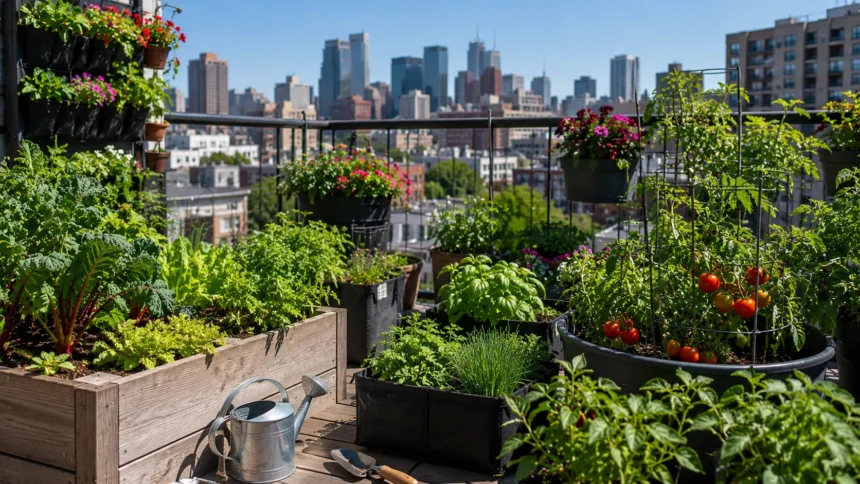
What Is Urban Gardening?
Urban gardening is the practice of growing plants, herbs, vegetables, fruits, and flowers in towns and cities where outdoor space may be limited. Instead of depending on large yards or traditional farmland, city gardeners use balconies, rooftops, patios, windowsills, community plots, courtyards, and other available spaces. The idea is simple: make productive use of small urban areas and bring more greenery into everyday life.
For many people, urban gardening is about more than growing food. It can improve access to fresh produce, create relaxing green spaces, support pollinators, and encourage a stronger connection with nature. In densely populated areas where concrete and buildings dominate the landscape, even a few containers of herbs or vegetables can make a noticeable difference to how a space feels and functions.
Modern urban gardening has also become more flexible because people can choose from many growing methods. Container gardening, vertical gardening, raised beds, hydroponics, balcony gardens, rooftop gardens, and community gardens all make it possible to grow plants in places that would once have seemed unsuitable. This flexibility is one reason city gardening continues to attract beginners as well as experienced growers.
Understanding what urban gardening is starts with recognizing that it does not depend on the size of your home or the amount of land you own. It is essentially about adapting gardening to an urban environment. With appropriate plants, sunlight, water, soil, and planning, even a small corner of a city apartment or shared neighborhood space can become productive and enjoyable.
How Urban Gardening Works
Urban gardening works by adapting traditional growing principles to spaces that are smaller, more built-up, or less conventional than a typical backyard. Plants still need adequate light, water, nutrients, root space, and suitable temperatures, but gardeners often have to provide those conditions using containers, raised systems, or specially designed growing structures.
The first step is usually identifying what kind of space is available. A balcony may support containers and vertical planters, while a rooftop may offer room for larger beds if the structure is suitable. A sunny windowsill can support herbs and small edible plants, while community gardens provide access to larger shared areas for people who do not have private outdoor space.
Urban growers also need to think carefully about environmental conditions. Tall buildings can create shade, wind tunnels, reflected heat, or unusual temperature patterns. These microclimates affect which crops will perform well, so choosing plants based on actual conditions is more important than copying what works in a suburban garden.
Successful urban gardening therefore depends on matching the method to the space. Once gardeners understand how much sunlight they receive, how easily they can access water, and how much weight or space the location can support, they can choose an appropriate growing system and build from there.
Why Urban Gardening Is Becoming More Popular
Urban gardening has become increasingly popular as more people look for practical ways to grow food and create greener living spaces. City residents may have limited access to large gardens, but many still want fresh herbs, vegetables, and flowers close to home. Small-space gardening provides a way to participate without needing a traditional yard.
Interest in local food has also helped increase the popularity of urban agriculture. Growing even a small amount of food at home allows people to understand where their produce comes from and how it was grown. Herbs, salad greens, tomatoes, peppers, and strawberries are especially popular because they can produce useful harvests in containers.
Another reason is the emotional value of green spaces. Gardening can create a calming routine in environments that may otherwise feel crowded or highly developed. Caring for plants, watching them grow, and spending time around greenery can make balconies, rooftops, and courtyards feel more personal and welcoming.
Urban gardening also fits well with broader sustainability goals. Composting, reusing containers, collecting rainwater where appropriate, growing pollinator-friendly plants, and reducing food waste can all become part of a city gardening routine. For many gardeners, the appeal lies in combining practical food production with environmental responsibility.
Different Types of Urban Gardening
Urban gardening can take many forms, which makes it accessible to people with very different living situations. Container gardening is one of the most common methods because pots, grow bags, buckets, and planters can be used on balconies, patios, steps, and rooftops. Containers also allow gardeners to move plants when weather or sunlight conditions change.
Vertical gardening uses walls, trellises, stacked planters, shelves, or hanging systems to grow upward instead of outward. This method is especially useful where floor space is limited. Climbing vegetables, herbs, strawberries, and ornamental plants can often be grown vertically with thoughtful support and irrigation.
Community gardening is another important form of urban gardening. These shared spaces allow people to grow plants in designated plots while interacting with neighbors. Community gardens can provide access to land, tools, knowledge, and social connections that individual city residents may not have on their own.
Rooftop gardens, hydroponic systems, indoor growing setups, and raised-bed gardens also fall within urban gardening. Each method has different requirements and costs, but all share the same basic purpose: using available urban space creatively to grow plants in a way that fits city life.
What Is Container Gardening in Urban Areas?
Container gardening involves growing plants in pots or other suitable containers rather than directly in the ground. It is ideal for apartments, balconies, patios, and rented properties because it does not require permanent changes to the landscape. Gardeners can also control soil quality more easily in containers.
The size of the container matters because roots need enough room to grow. Small herbs may perform well in compact pots, while tomatoes, peppers, eggplants, or dwarf fruit plants generally need larger containers. Drainage holes are essential because waterlogged roots can quickly lead to plant health problems.
Container gardens also dry out faster than in-ground beds, especially during hot or windy weather. This means watering may need to be more frequent. Mulch can help reduce moisture loss, while self-watering containers can make maintenance easier for busy urban gardeners.
A major advantage of container gardening is flexibility. Plants can be moved into better sunlight, protected from extreme weather, or rearranged as seasons change. For beginners asking what urban gardening looks like in practice, a few well-chosen containers are often the simplest place to begin.
How Vertical Gardening Saves Space
Vertical gardening helps urban gardeners grow more plants without needing additional floor area. Instead of spreading crops horizontally, plants are trained upward using trellises, wall-mounted systems, shelves, hanging planters, or stacked containers. This is particularly useful on narrow balconies and small patios.
Climbing plants such as beans, peas, cucumbers, and some tomatoes naturally benefit from vertical support. Herbs, lettuce, strawberries, and flowers can also be grown in stacked or wall-mounted planters. Choosing plants based on mature size prevents overcrowding and makes the system easier to maintain.
Vertical gardens need careful watering because containers positioned at different heights may dry out at different rates. Water can also drain from upper planters onto lower ones. Designing the system so moisture is distributed evenly helps prevent some plants from becoming too dry while others remain overly wet.
Strong supports are equally important. A vertical garden may become significantly heavier after watering and as plants mature. Attach structures securely and consider wind exposure, especially on high balconies or rooftops. When designed properly, vertical gardening can turn unused walls into productive growing areas.
What Is a Community Garden?
A community garden is a shared urban space where individuals or groups grow vegetables, flowers, herbs, and other plants. Some gardens divide the land into individual plots, while others operate as collective growing spaces. They are particularly valuable in neighborhoods where residents have little or no private outdoor area.
Community gardens provide more than physical growing space. They can become places where beginners learn from experienced gardeners, families participate in outdoor activities, and neighbors build stronger relationships. Shared tools, composting areas, water access, and educational workshops may also be available.
These gardens can contribute to local food production, although the amount varies depending on their size and organization. Some community projects donate surplus produce or operate educational programs, while others focus primarily on providing personal growing space for members.
Anyone interested in joining one should check local rules, plot availability, membership fees, and maintenance expectations. Community gardening requires cooperation because shared spaces depend on participants respecting common areas and completing agreed responsibilities.
How Rooftop Gardening Works
Rooftop gardening uses the top surfaces of buildings to grow plants in containers, raised beds, or specially designed green roof systems. In dense cities, rooftops can offer valuable growing space that would otherwise remain unused. They may also receive more sunlight than street-level gardens surrounded by tall buildings.
However, rooftop gardening requires careful planning because weight is a major concern. Soil, containers, water, structures, and mature plants can become extremely heavy. Before creating a substantial rooftop garden, structural suitability and building regulations should be confirmed.
Wind exposure is another challenge because rooftops may experience stronger and more consistent winds. Plants can dry out quickly, and tall crops may need support or protection. Windbreaks can help, but they should be designed so they do not create unsafe pressure or block necessary airflow.
Rooftop gardeners also need convenient access to water and safe drainage. Carrying water manually to a large roof garden can become difficult, while poor drainage can create structural problems. With appropriate planning, however, rooftops can support vegetables, herbs, flowers, and attractive green spaces in crowded urban environments.
Can You Garden on a Balcony?
Yes, balcony gardening is one of the most practical forms of urban gardening. Even a small balcony can support herbs, flowers, leafy greens, strawberries, and compact vegetables if it receives suitable light. Containers, railing planters, hanging baskets, and vertical supports can help maximize the available area.
Before choosing plants, observe how many hours of direct sunlight the balcony receives. Tomatoes and peppers generally prefer stronger sunlight, while some leafy greens and herbs can tolerate more limited light. Understanding this difference helps prevent frustration from trying to grow sun-loving crops in unsuitable conditions.
Wind and heat should also be considered. Upper-floor balconies may dry out very quickly, while enclosed balconies can become unusually hot because walls and glass reflect heat. Plants may require additional watering or temporary shade during extreme weather.
Always consider safety as well. Containers and hanging planters should be secured so they cannot fall, and the balcony should not be overloaded with excessive weight. With careful planning, balcony gardening can produce both food and flowers in surprisingly small spaces.
Best Plants for Urban Gardening
The best urban garden plants are usually those that match the available sunlight, container size, climate, and gardener’s goals. Herbs such as basil, parsley, mint, chives, thyme, and cilantro are popular because many grow well in small containers and can be harvested repeatedly.
Leafy vegetables are another good choice. Lettuce, spinach, arugula, kale, and similar crops can be productive in relatively shallow containers when conditions are suitable. They also tend to grow faster than many fruiting vegetables, which can make them rewarding for beginners.
Tomatoes, peppers, beans, cucumbers, and strawberries can also perform well in urban gardens if they receive sufficient sunlight and root space. Compact or dwarf varieties are particularly useful because plant breeders increasingly offer options designed for containers and smaller gardens.
Flowers should not be overlooked. Marigolds, nasturtiums, calendula, and other suitable blooms can add color and help attract pollinators. Combining edible plants with ornamental species can create a more attractive and ecologically diverse city garden.
How Much Sunlight Does an Urban Garden Need?
Sunlight requirements vary widely between plants, so there is no single number that applies to every urban garden. Fruiting crops such as tomatoes, peppers, cucumbers, and many berries usually perform best with several hours of direct sunlight. Leafy greens and some herbs may tolerate partial shade more successfully.
Urban environments can make sunlight patterns complicated because nearby buildings, trees, walls, and balconies may block or reflect light. A location that receives strong morning sun might become completely shaded in the afternoon. Observing the space throughout the day provides more useful information than making assumptions.
Seasonal changes matter too. The angle of the sun changes throughout the year, meaning a balcony that receives good spring light may be much more shaded later, or the opposite may occur. Keeping notes about these patterns can improve future crop selection.
If sunlight is limited, choose plants adapted to lower-light conditions rather than trying to force highly demanding vegetables into unsuitable spaces. Matching plants to available light is one of the simplest ways to improve urban gardening success.
Choosing the Right Soil for City Gardening
Urban gardeners frequently rely on containers or raised beds, making soil selection especially important. Garden soil taken directly from the ground is often too dense for containers and may drain poorly. A high-quality potting mix is usually better because it provides a balance of moisture retention, drainage, and aeration.
Raised beds may use a combination of suitable topsoil, compost, and other growing materials depending on local recommendations. The goal is to create a medium that supports root growth while holding enough moisture and nutrients. Excessively heavy or compacted mixtures can make container gardening difficult.
Urban growers should also be cautious when using existing city soil. Older properties may contain contaminants such as lead or other pollutants depending on historical land use. If soil quality is uncertain, testing can help determine whether it is appropriate for food gardening.
Using containers or raised beds with clean growing media can be a practical solution where native soil is unsuitable. Healthy soil remains one of the foundations of urban gardening, even when that soil is contained inside a pot several floors above the ground.
How to Water an Urban Garden Efficiently
Water management is especially important in urban gardens because containers can dry quickly. Small pots have limited soil volume, and wind or reflected heat may accelerate evaporation. Gardeners should check soil moisture regularly instead of following a fixed watering schedule regardless of conditions.
Water thoroughly enough to moisten the root zone, then allow excess water to drain appropriately. Frequent shallow watering can encourage roots to remain near the surface, while standing water can cause root problems. Containers should always have suitable drainage unless they are part of a specialized growing system.
Mulch can help reduce evaporation around larger container plants and raised beds. Organic materials such as shredded leaves or appropriate bark can also moderate soil temperature. Self-watering planters may provide additional convenience in locations where containers dry rapidly.
If rainwater collection is permitted and practical, it can support sustainable urban gardening. However, stored water should be managed safely and used appropriately. Efficient watering is not simply about using less water but ensuring that the water you use reaches plant roots effectively.
How Urban Gardens Support Pollinators
Urban gardens can provide valuable feeding and resting areas for pollinators, especially in neighborhoods with limited flowering vegetation. Bees, butterflies, moths, beetles, flies, and other insects may use balcony planters, rooftop gardens, and community plots when suitable flowers are available.
Plant diversity improves habitat value. Growing several flowering species with different shapes and bloom periods can provide food for a wider range of pollinators. Native plants may be particularly helpful because local insect species often have established relationships with them.
Avoid unnecessary pesticide use, especially on flowering plants. Even products marketed as natural can affect beneficial insects when used incorrectly. Urban gardeners can often manage minor pest problems through hand removal, plant health, barriers, and other low-impact strategies.
Providing pollinator-friendly plants adds another purpose to city gardening beyond food production. A small balcony filled with flowers may seem insignificant, but multiple gardens across a neighborhood can collectively create useful pockets of habitat.
Benefits of Urban Gardening for Food Production
One of the most obvious benefits of urban gardening is access to freshly harvested food. Herbs, salad greens, tomatoes, peppers, and other crops can often be picked shortly before use, reducing the time between harvest and eating.
Home growing also allows gardeners to choose unusual varieties that may not be widely available in stores. Compact tomatoes, specialty herbs, colorful lettuce, and unique peppers can make a small garden more interesting while expanding the range of foods available at home.
Urban gardening will not necessarily provide all the food a household needs, particularly in a small space. However, even modest harvests can supplement grocery shopping and make fresh ingredients more accessible. Herbs are particularly useful because store-bought bunches often spoil before they are completely used.
Growing food also increases awareness of seasonality. Gardeners quickly learn that different crops thrive at different times and that weather influences growth. This connection can create a stronger appreciation for how food is produced.
Environmental Benefits of Urban Gardening
Urban gardening can contribute to greener city environments by replacing small areas of hard surfaces with living plants. Vegetation can provide shade, support biodiversity, and create habitat for insects and birds. The impact of one garden may be small, but many green spaces across a city can add up.
Plants can also help manage heat around buildings by shading surfaces and releasing moisture through transpiration. Rooftop and balcony gardens may reduce some direct heating of nearby surfaces, although their effects depend on size, design, and local conditions.
Composting suitable food and garden waste can reduce the amount of organic material discarded by households. Finished compost can then be returned to urban gardens, creating a local nutrient cycle rather than constantly importing new soil amendments.
Urban gardening can also encourage more conscious resource use. Gardeners become more aware of water, soil, seasonal weather, food waste, and biodiversity. These habits can influence how they think about sustainability beyond the garden itself.
Social Benefits of Community Gardening
Urban gardens often create opportunities for people to interact with neighbors who might otherwise have little reason to meet. Community gardens provide shared tasks, common goals, and informal spaces where people can exchange knowledge and produce.
Children can also benefit from community gardening because it gives them direct experience with plants and food production. Planting seeds, watering, observing insects, and harvesting vegetables can make environmental concepts easier to understand than learning about them only through books.
Older adults and experienced gardeners may share practical knowledge with newer members, creating informal learning networks. This exchange can be especially valuable in culturally diverse neighborhoods where people grow crops connected to different food traditions.
The social value of an urban garden often becomes as important as the vegetables themselves. A productive garden can also become a gathering place, educational space, and community project that strengthens local connections.
Challenges of Urban Gardening
Limited space is the most obvious challenge, but it is not the only one. Urban gardeners may also deal with shade, wind, heat, restricted water access, poor-quality soil, building rules, pests, and limited storage for tools and supplies.
Container gardens require more frequent attention because soil dries quickly and nutrients can be depleted faster than in large in-ground beds. Gardeners may need to water often during hot weather and provide balanced nutrition throughout the growing season.
Urban pests can also become a problem. Aphids, caterpillars, birds, rodents, and other animals may find food crops quickly. Preventive methods such as barriers, healthy plants, sanitation, and regular inspection can help reduce damage without relying heavily on pesticides.
The best way to manage these challenges is to start small. A few successful containers are easier to maintain than an ambitious rooftop garden created without experience. Urban gardening becomes more enjoyable when the size of the project matches the time and resources available.
How to Start Urban Gardening as a Beginner
Begin by evaluating the space you already have. Look for windowsills, balconies, patios, rooftops, entryways, or shared garden opportunities that receive suitable light. Measure the area and observe how sun and shade move across it during the day.
Next, choose a small number of easy plants. Herbs, lettuce, radishes, leafy greens, and compact tomato varieties are common beginner choices, depending on climate and sunlight. Growing plants you actually enjoy eating or looking at makes the project more rewarding.
Use containers with drainage and a suitable potting mix rather than filling pots with dense garden soil. Start with simple watering and feeding routines and resist the temptation to buy large amounts of specialized equipment before you know what the space requires.
Most importantly, treat the first season as an experiment. Some plants will perform better than expected, while others may struggle. Keep notes, adjust your methods, and expand gradually as you learn what works in your particular urban environment.
How to Build a Small Balcony Vegetable Garden
A balcony vegetable garden starts with making efficient use of limited space. Place larger containers where they will receive adequate sunlight without blocking walkways. Vertical supports can allow climbing vegetables to grow upward and leave more floor area available.
Choose compact vegetables suited to containers. Cherry tomatoes, peppers, lettuce, radishes, herbs, dwarf beans, and some cucumbers can work well when provided with appropriate pot size and conditions. Avoid overcrowding because closely packed plants compete for light, water, and airflow.
Group plants with similar watering needs whenever possible. This makes maintenance easier and reduces the risk of giving drought-tolerant plants the same frequent watering as moisture-loving vegetables.
Pay attention to the mature size of each plant rather than its size at the nursery. A tiny tomato seedling can eventually become large and heavy. Planning for full-grown plants keeps the balcony organized and prevents overcrowding later in the season.
Can Urban Gardening Save Money?
Urban gardening can reduce spending on certain foods, particularly herbs and crops that produce repeatedly. A healthy basil plant, for example, may provide many harvests from a relatively small investment. Lettuce, green onions, and some leafy greens can also provide useful value.
However, gardening is not automatically cheaper than buying food. Containers, potting mix, irrigation supplies, seeds, tools, and fertilizers can create significant startup costs. Purchasing expensive equipment for a tiny harvest may take years to recover financially.
Costs can be reduced by starting small and reusing suitable materials. Composting household scraps, saving appropriate containers, sharing tools, and growing from seed can make urban gardening more economical.
The financial value also includes factors beyond direct savings. Freshness, enjoyment, access to unusual varieties, and the experience of growing food have value for many people even when the garden does not dramatically reduce grocery bills.
Urban Gardening and Hydroponics
Hydroponics is a method of growing plants without conventional soil by supplying roots with water containing dissolved nutrients. It can be used in urban environments because systems can be designed for balconies, rooftops, indoor rooms, or commercial city farms.
Leafy greens and herbs are commonly grown hydroponically because they can develop quickly and perform well in controlled systems. More complex crops can also be grown, although they may require larger equipment and more careful management.
Hydroponic gardening can use space efficiently, but it is not necessarily simpler than soil gardening. Growers must monitor nutrient concentrations, water quality, oxygen levels, temperature, and sometimes artificial lighting.
For beginners, a basic container garden may be easier to learn. Hydroponics becomes a useful option for people interested in controlled growing systems or locations where suitable soil-based gardening space is extremely limited.
Urban Gardening vs. Urban Farming
Urban gardening and urban farming overlap, but they are not always the same. Urban gardening usually describes smaller-scale growing for personal use, recreation, education, or community purposes. Urban farming often refers to larger or more commercially focused food production within a city.
An apartment balcony with herbs and vegetables would typically be considered an urban garden. A rooftop operation producing large quantities of greens for restaurants might be described as an urban farm.
Community projects can fall somewhere between the two depending on their scale and purpose. Some produce food mainly for participants, while others sell or donate significant amounts to the surrounding community.
Both approaches contribute to urban agriculture more broadly. The main difference is usually scale, organization, and whether food production is primarily personal or commercial.
How to Make Urban Gardening More Sustainable
Sustainable urban gardening begins with reducing unnecessary inputs. Choose durable containers, compost suitable organic waste, avoid overwatering, and grow plants that are well adapted to your climate and light conditions.
Reuse materials whenever practical, but make sure containers and building materials are safe for growing food. Avoid using materials that previously held hazardous chemicals or may release contaminants into soil.
Plant diversity can make an urban garden more resilient and wildlife-friendly. Combine edible crops with flowers, herbs, and pollinator plants rather than creating a single-crop space whenever room allows.
Most importantly, focus on building a system you can maintain over time. A small productive garden cared for consistently is more sustainable than an oversized project that consumes excessive water, materials, and effort before eventually being abandoned.
Is Urban Gardening Worth It?
Urban gardening can be worthwhile even when the growing space is extremely small. It allows city residents to produce some of their own food, create attractive green spaces, spend time outdoors, and develop practical gardening skills.
The benefits do not depend entirely on harvest size. A few containers of herbs and flowers can still provide enjoyment, support pollinators, and improve the atmosphere of a balcony or patio. For many people, these benefits are just as important as food production.
Challenges such as limited sunlight, watering demands, and space restrictions are real, but they can usually be managed by selecting appropriate plants and keeping expectations realistic. Starting small makes it easier to learn without turning gardening into a burden.
Ultimately, urban gardening is the practice of making productive and creative use of city space to grow plants. Whether it happens on a balcony, rooftop, windowsill, community plot, or courtyard, it shows that meaningful gardening does not require acres of land—only thoughtful planning and a suitable place for plants to grow.
Frequently Asked Questions
What is urban gardening in simple words?
Urban gardening means growing vegetables, herbs, fruits, or flowers in city environments. It can take place on balconies, rooftops, patios, windowsills, community plots, or other small spaces.
What are the best plants for urban gardening?
Herbs, lettuce, spinach, radishes, cherry tomatoes, peppers, strawberries, beans, and compact vegetables are popular options. The best choice depends on sunlight, container size, and climate.
Can I start an urban garden without a balcony?
Yes. Sunny windowsills, indoor growing systems, community gardens, and shared outdoor spaces can all provide alternatives when a balcony or private yard is unavailable.
Is urban gardening expensive?
It can be inexpensive if you start small, reuse suitable containers, compost organic waste, and grow from seed. Costs increase when purchasing elaborate planters, irrigation systems, or indoor growing equipment.
What are the main benefits of urban gardening?
Urban gardening can provide fresh food, greener living spaces, pollinator habitat, outdoor activity, and stronger community connections. It can also encourage sustainable habits such as composting and efficient water use.