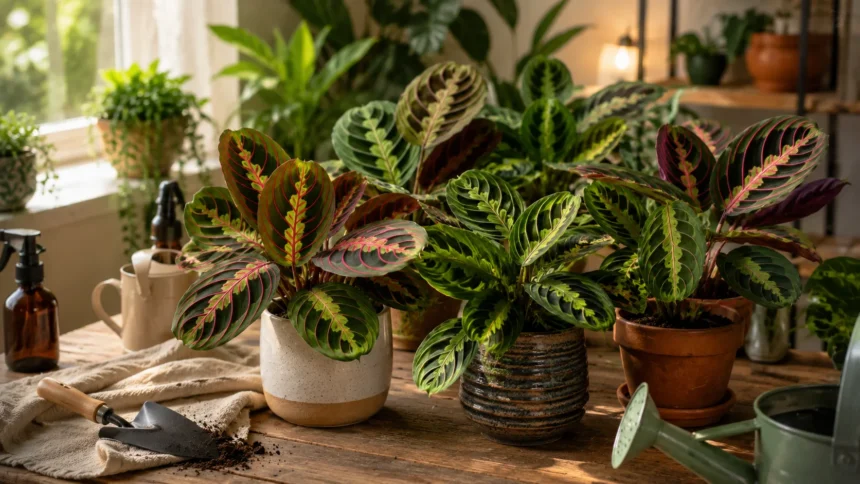
Prayer Plants: Types, Care Tips & Growing Guide
What Are Prayer Plants?
Prayer plants are tropical houseplants known for their colorful patterned leaves and distinctive daily movement. The name usually refers most directly to plants in the Maranta genus, especially Maranta leuconeura, although related members of the Marantaceae family are sometimes grouped under the same common name. Their leaves often lie flatter during the day and rise upward at night, creating a shape that resembles hands folded in prayer. This natural movement is one of the features that makes prayer plants especially interesting indoor plants. Their foliage can display combinations of green, red, cream, silver, pink, and purple. With the right environment, they can become attractive trailing or spreading plants for shelves, tables, and indoor plant displays.
Prayer plants originate from warm, humid tropical environments where they generally grow beneath taller vegetation rather than in intense direct sunlight. This background explains many of their indoor care requirements, including their preference for bright but indirect light, consistent moisture, and higher humidity. They tend to appreciate warm conditions and can react quickly to cold drafts or dry indoor air. Their thin leaves can lose moisture more readily than the thick foliage of drought-tolerant plants. As a result, prayer plant care requires somewhat more attention than caring for succulents or snake plants. However, understanding the plant’s natural environment makes its needs much easier to predict.
One reason prayer plants remain popular is the extraordinary appearance of their foliage. Some varieties have dark green leaves marked with bright red veins, while others show silvery centers, lime-green markings, or deep purple undersides. The leaf patterns are often symmetrical and can make each plant look highly decorative even when it is not producing flowers. Prayer plants can bloom indoors, usually producing small delicate flowers, but the foliage remains the main attraction. Their leaves also move in response to light and environmental rhythms, which gives the plant a dynamic quality. People who enjoy observing changes in houseplants often find prayer plants particularly rewarding.
Prayer plants are usually compact compared with large indoor trees and can fit well in smaller homes, apartments, and office spaces. Their stems may gradually spread outward or trail over the edges of containers, making them suitable for hanging baskets and elevated shelves. They can also be grouped with other humidity-loving tropical plants to create a lush indoor display. Because the foliage grows relatively close to the soil, a wide pot may sometimes suit their growth habit better than an unnecessarily deep container. Regular pruning can help maintain a fuller shape if stems become long or uneven. Their manageable size makes prayer plants versatile additions to many indoor growing spaces.
Despite their dramatic appearance, prayer plants are not impossible to grow successfully. The main challenge is consistency because they generally dislike sudden changes in moisture, temperature, lighting, and humidity. Many common problems such as brown leaf tips, curling leaves, or yellowing foliage can be connected with environmental stress rather than serious disease. Once a stable routine is established, the plant often becomes much easier to manage. Learning how to read the leaves can also provide useful clues about what the plant needs. A healthy prayer plant typically rewards consistent care with vibrant foliage, active growth, and the characteristic movement that makes this houseplant so distinctive.
Popular Types of Prayer Plants to Grow Indoors
The red prayer plant is one of the most recognizable varieties and is commonly associated with Maranta leuconeura var. erythroneura. Its leaves usually feature dark green areas, a lighter green central section, and striking red or pinkish veins that extend across the foliage. The undersides of the leaves may have deeper reddish or purplish tones, adding visual interest when the leaves rise at night. This variety performs well in the same warm, humid conditions preferred by most Maranta plants. It can spread outward as it matures, creating an attractive low-growing display. The bold red veining makes it especially popular among people seeking colorful indoor foliage without needing flowers.
The lemon lime prayer plant offers a brighter variation on the classic Maranta appearance. Instead of red veins, its foliage usually includes vivid lime-green or yellow-green patterns against deeper green sections. This contrast gives the plant a fresh, almost glowing appearance when it receives appropriate indirect light. Like other prayer plant varieties, it prefers evenly moist soil without constantly sitting in water. Humidity can help keep leaf edges looking healthier, particularly in heated or air-conditioned homes. The lemon lime type works well alongside darker foliage plants because its bright markings create visual contrast. Its care requirements are similar enough that experienced Maranta growers can usually manage it without learning an entirely new routine.
The black prayer plant, sometimes sold under names associated with darker Maranta cultivars, is valued for its deep and dramatic foliage. Leaves can feature dark green to nearly blackish areas with silver or lighter central markings and colorful veins. The exact appearance varies among cultivars and growing conditions, particularly according to light levels. Very low light may reduce the strength of some markings, while excessive direct sunlight can fade or scorch the foliage. Maintaining bright filtered light usually provides a good balance between color and leaf health. Dark-leaved prayer plants can make attractive statement plants even though their overall size remains relatively compact.
Some plants commonly called prayer plants actually belong to related genera such as Calathea, Goeppertia, Ctenanthe, and Stromanthe. These plants belong to the same broader family and may also move their leaves according to day and night cycles. However, their care requirements can differ slightly, which is why identifying the plant accurately is useful. Calathea-type plants are often more upright, while many Marantas tend to spread or trail. Ctenanthe varieties frequently have elongated patterned leaves, and Stromanthe plants can show combinations of green, cream, and pink. Although gardeners sometimes use the term prayer plant broadly, knowing the genus can make care recommendations more precise.
When choosing among prayer plant types, it is usually better to focus on the conditions you can provide rather than simply selecting the rarest variety available. Most Maranta cultivars appreciate similar levels of humidity, warmth, and indirect light, making them manageable for growers who already maintain tropical houseplants. Healthy roots and leaves matter more at purchase than perfect cosmetic appearance because minor leaf damage can occur during transport. Look for plants with active growth, firm stems, and no obvious signs of pests. Avoid plants that are severely wilted, waterlogged, or covered with yellowing leaves unless you are comfortable with rehabilitation. Starting with a healthy plant makes establishing a successful prayer plant care routine much easier.
Best Light, Temperature, and Humidity for Prayer Plants
Prayer plants generally perform best in bright indirect light that resembles the filtered conditions found beneath tropical forest canopies. A location near an east-facing window can work well because morning sunlight is often gentler than intense afternoon sun. South- or west-facing windows may also be suitable when the plant is placed farther back or protected by a sheer curtain. Direct midday sunlight can scorch the thin leaves, fade colorful markings, and create dry brown patches. Extremely low light, on the other hand, may slow growth and reduce the intensity of foliage patterns. The ideal position provides enough light for active growth without exposing the leaves to prolonged harsh sunlight.
Artificial lighting can also support prayer plant growth when natural light is limited. A quality grow light positioned at an appropriate distance can provide consistent illumination in offices, darker rooms, or homes with unfavorable window exposure. The plant does not need intense light designed for sun-loving crops, so extremely powerful lamps may be unnecessary. Observe the foliage after introducing artificial light because pale patches or curling can indicate excessive intensity or heat. Gradual adjustment is useful whenever the plant’s lighting conditions change significantly. Consistency matters more than constantly moving the plant between brighter and darker locations in response to daily weather.
Temperature is another important part of prayer plant care because these plants prefer warm indoor conditions. A range commonly comfortable for people is generally suitable, with roughly 65 to 80 degrees Fahrenheit being a practical target for many homes. Prayer plants can become stressed when exposed to cold drafts, sudden temperature drops, or prolonged chilly conditions. Keep them away from frequently opened winter doors, cold window glass, and powerful air-conditioning vents. Heating vents can create the opposite problem by producing extremely dry, hot air around the leaves. A stable room temperature with minimal extremes usually encourages more reliable growth.
Humidity is particularly important because dry air frequently contributes to brown tips and crispy leaf margins. Prayer plants are adapted to humid tropical environments and often appreciate indoor humidity levels higher than those found in heavily heated or air-conditioned homes. A room humidifier is one of the most effective ways to raise humidity consistently around several plants. Grouping tropical plants together can also create a slightly more humid microenvironment as water evaporates from their soil and leaves. Pebble trays may provide limited local benefit but are usually less effective than an actual humidifier. The goal is steady moderate-to-high humidity rather than making the leaves constantly wet.
Bathroom and kitchen environments can sometimes work well for prayer plants when they provide enough natural or artificial light. These rooms may have higher humidity than bedrooms or living areas, especially during showers or cooking. However, high humidity cannot compensate for inadequate light, so a dark bathroom without a window may still require a grow light. Good airflow is also important because stagnant moisture around leaves can encourage fungal problems. Avoid crowding plants so tightly that leaves remain damp for long periods. The best environment combines gentle light, warmth, humidity, and adequate air circulation rather than maximizing only one of these factors.
How to Water Prayer Plants the Right Way
Prayer plants prefer soil that remains lightly and consistently moist without staying saturated. Instead of following a rigid schedule such as watering every seven days, check the soil because drying speed changes with temperature, light, pot size, humidity, and season. When the upper layer begins to feel slightly dry, it may be time to water thoroughly. Allow water to flow through the potting mix and drain from the container rather than adding only tiny amounts to the surface. Good drainage prevents water from remaining trapped around the roots. Consistency is important because repeated cycles of severe drying and heavy soaking can stress the plant.
The quality of water can also affect sensitive prayer plant leaves. Some Marantas develop brown tips when exposed repeatedly to water containing high levels of certain dissolved minerals or treatment chemicals. This does not happen in every home because tap-water quality varies considerably between regions. If the plant consistently develops brown edges despite appropriate humidity and watering, trying filtered, distilled, or rainwater may be helpful. Allowing ordinary tap water to stand does not remove every type of dissolved mineral, so this method may not solve all water-quality issues. Changing water source should be treated as one troubleshooting step rather than assuming tap water is always the problem.
Overwatering is one of the most serious mistakes in prayer plant care because roots need access to oxygen as well as moisture. Constantly saturated soil can create conditions that encourage root rot, particularly when the pot lacks drainage holes or the potting mix is dense. Early signs may include yellow leaves, soft stems, persistent wilting despite wet soil, or an unpleasant smell from the root zone. If root rot develops, damaged roots may need to be removed before repotting the plant into fresher, better-draining soil. Watering less frequently is only part of the solution. Proper pot size and suitable soil structure are equally important for preventing excessive moisture retention.
Underwatering creates a different set of symptoms and often causes leaves to curl inward, droop, or develop dry crispy edges. The pot may feel unusually light, and the soil can pull away from the edges of the container when it becomes extremely dry. A severely dehydrated plant should be watered thoroughly so the entire root ball becomes evenly moist. If dry peat-based soil repels water, applying water gradually or briefly soaking from below may help it rehydrate. Do not leave the pot sitting indefinitely in standing water after the soil is saturated. Restoring a consistent watering pattern is generally more useful than repeatedly rescuing the plant after extreme wilting.
Seasonal changes should influence how often you check the soil. Prayer plants may use water more quickly during warm, bright periods when they are actively growing and producing new leaves. During darker winter months, growth may slow and the soil can remain wet longer between waterings. Automatically using a summer watering schedule throughout winter can therefore create overwatering problems. Indoor heating may complicate this pattern because warm dry air can still increase moisture loss even when daylight is limited. Checking the actual soil remains the most reliable approach. Good watering is ultimately about responding to the plant’s environment rather than following a fixed calendar.
Best Soil, Pots, Fertilizer, and Repotting Routine
Prayer plants generally grow well in a loose, moisture-retentive potting mix that still allows excess water and air to move through the root zone. A high-quality indoor plant mix can work as a base, especially when combined with ingredients that improve drainage and structure. Materials such as perlite, fine orchid bark, coco coir, or similar amendments may be used depending on the original mix. The goal is not to create extremely dry cactus soil because prayer plants appreciate regular moisture. At the same time, dense soil that stays soggy for long periods can suffocate roots. A balanced mix should feel airy while still holding enough moisture between waterings.
Containers should have drainage holes so excess water can escape after watering. Decorative planters without drainage can still be used as outer covers if the prayer plant remains in a separate nursery pot that can be removed for watering. Pot size matters because a very large container holds more wet soil around a relatively small root system. This can increase the time required for the mix to dry and make root problems more likely. When repotting, moving only one reasonable pot size larger is generally sufficient. Prayer plants often grow horizontally, so slightly wider containers can sometimes suit their spreading habit better than extremely deep pots.
Fertilizer can support healthy growth during the active growing season, but prayer plants do not need heavy feeding. A balanced houseplant fertilizer applied at a diluted strength can usually provide adequate nutrients when used according to the product instructions. Overfertilization may cause salt buildup in the soil and contribute to damaged roots or brown leaf edges. Plants growing in bright conditions may use nutrients more actively than those growing slowly in low light. Feeding can usually be reduced during periods of slower winter growth. Fertilizer should supplement appropriate light and watering rather than being used to force a struggling plant to grow.
Signs that a prayer plant may need repotting include roots circling heavily around the container, roots emerging through drainage holes, extremely rapid drying, or a plant that has clearly outgrown its current space. Repotting every year is not automatically necessary if the root system still has adequate room and the soil remains in good condition. When repotting is needed, gently remove the plant and inspect the roots before placing it into fresh potting mix. Healthy roots are generally firm rather than black, mushy, or foul-smelling. Avoid disturbing the root system more than necessary because excessive root damage can temporarily slow growth. Watering after repotting helps settle the new mix around the roots.
Refreshing old potting soil can also improve long-term prayer plant health because organic mixes gradually break down and become more compact. Compacted soil may drain poorly, stay wet unevenly, or make root aeration more difficult. Repotting provides an opportunity to remove damaged material, check for hidden pests, and reset the plant in a healthier growing medium. However, unnecessary repotting can itself create stress, so there is no need to change containers every time a leaf develops a cosmetic problem. Evaluate the root system and soil condition before deciding. Healthy prayer plants often prefer stability, making careful maintenance more useful than constant intervention.
How to Propagate a Prayer Plant
Stem cuttings are one of the easiest ways to propagate many Maranta prayer plants. Choose a healthy stem that includes at least one node, which is the area where leaves and roots can develop. Use clean scissors or pruning shears to make the cut below the node while avoiding heavily damaged or diseased growth. A cutting with a few healthy leaves is usually sufficient, although very large leaves may lose moisture more quickly. Removing unnecessary lower foliage can keep leaves from sitting in water or wet soil. Propagation is often most successful during active growth when warmth and light support faster root development.
Water propagation is popular because it allows you to watch new roots develop. Place the cut end in a clean container of water while keeping at least one node submerged and most leaves above the surface. Position the container in bright indirect light rather than direct sunlight, which can overheat the water or stress the cutting. Change the water when it becomes cloudy and keep the container reasonably clean. Roots may begin appearing within a few weeks, although timing varies according to temperature, plant health, and season. Once a healthy network of roots has formed, the cutting can be transferred carefully into an appropriate potting mix.
Prayer plant cuttings can also be rooted directly in soil. Insert a healthy node into lightly moist potting mix and keep the container in a warm location with indirect light. Higher humidity can reduce moisture loss while the cutting lacks an established root system, although completely sealed wet environments can encourage rot. A transparent cover can sometimes help maintain humidity if it is ventilated regularly. Keep the soil slightly moist rather than saturated during the rooting period. Soil propagation avoids the transition from water-grown roots to potting mix, which some growers prefer for convenience.
Division is another effective propagation method when a mature prayer plant has developed several rooted sections. This technique is usually easiest during repotting because the root system is already exposed. Gently separate natural clumps while trying to preserve healthy roots and stems on each section. Some plants divide readily with minimal force, while tightly connected root systems may require careful cutting with a clean tool. Plant each division into a suitably sized pot rather than placing a small section into an oversized container. Divisions may temporarily droop after separation but often recover as the roots adjust to their new soil.
After propagation, young prayer plants need stable conditions while establishing themselves. Keep them away from harsh sunlight, cold drafts, and sudden changes in moisture. Newly rooted cuttings do not need heavy fertilizer immediately because tender roots can be more sensitive to excess salts. Wait until the plant shows established growth before beginning a gentle feeding routine. Some leaf loss or temporary drooping can occur during the transition, particularly when moving water-rooted cuttings into soil. Consistent humidity, moderate warmth, and careful watering usually provide the best environment for recovery and new growth.
Common Prayer Plant Problems and How to Fix Them
Curling prayer plant leaves often indicate that the plant is trying to conserve moisture, although several environmental factors can create the same appearance. Dry soil, low humidity, excessive heat, cold drafts, or intense light may all contribute. Begin troubleshooting by checking the soil rather than immediately adding more water. If the soil is dry throughout, watering thoroughly may help the leaves recover. If the soil is already wet, additional water could make the problem worse, so investigate temperature, roots, and humidity instead. Leaf movement at night should not be confused with unhealthy curling because normal prayer plant leaves naturally change position throughout the day.
Brown leaf tips are another extremely common concern and can result from dry air, inconsistent watering, mineral buildup, excess fertilizer, or natural aging. Increasing humidity may help when the indoor environment is particularly dry. If fertilizer has been applied heavily, flushing the soil with appropriate water can sometimes remove accumulated salts. Trying filtered or low-mineral water may also be worthwhile if local tap water is particularly hard. Brown tissue will not turn green again, but damaged tips can be trimmed carefully for appearance if desired. Focus on improving future growth rather than trying to repair tissue that has already dried.
Yellow leaves can indicate overwatering, natural leaf aging, root stress, or sometimes insufficient light. A single older leaf near the base turning yellow occasionally is not necessarily a cause for concern. Several leaves yellowing rapidly, especially when the soil remains constantly wet, deserves closer investigation. Check whether the pot drains properly and whether the roots smell unpleasant or feel soft. If the plant sits in very low light, the soil may also dry too slowly even if watering frequency has not changed. Correcting the underlying environment is more effective than applying fertilizer automatically whenever foliage becomes yellow.
Prayer plants can attract common houseplant pests such as spider mites, mealybugs, thrips, and other sap-feeding insects. Spider mites are particularly troublesome in dry indoor environments and may create fine webbing or tiny pale marks across the leaves. Inspect both sides of the foliage regularly, especially when the plant begins looking dull or distorted without an obvious watering problem. Isolate affected plants from the rest of the collection while treatment is underway. Depending on the pest, washing foliage and using an appropriate insecticidal soap or other labeled houseplant treatment may help. Repeated inspection is important because one treatment may not remove every life stage.
Fungal and bacterial problems can develop when leaves remain wet for long periods or airflow is poor. Dark spots, spreading lesions, or rapidly deteriorating tissue may suggest a problem beyond ordinary dry-tip damage. Avoid keeping foliage constantly damp through frequent misting, particularly in rooms with limited airflow. Remove badly damaged leaves with clean tools and avoid splashing contaminated water onto healthy foliage. Root diseases are more likely when soil stays saturated, reinforcing the importance of drainage and appropriate watering. If several plants develop similar symptoms, review the overall growing environment rather than treating each damaged leaf as an isolated cosmetic issue.
A Simple Prayer Plant Growing Guide for Year-Round Care
Spring is often a period of renewed growth for indoor prayer plants as daylight increases. This can be a good time to evaluate whether the plant needs repotting, pruning, propagation, or a return to light feeding. New leaves may appear more frequently when temperatures remain warm and light is sufficient. Check older stems and trim damaged growth to encourage a tidier shape. Plants that became sparse during winter can sometimes fill out better after receiving improved spring light and consistent care. Avoid immediately increasing fertilizer heavily because growth should respond naturally to improved environmental conditions rather than being forced.
Summer growth can be vigorous, but increased heat and brighter light mean watering may need closer attention. Soil may dry more quickly, especially near bright windows or in rooms with active air conditioning. Protect leaves from strong direct afternoon sunlight, which can become much more intense during summer. Higher natural humidity may benefit the plant in some climates, although indoor cooling systems can still create dry conditions. Regular pest checks are particularly useful because insects can reproduce quickly in warm weather. This is also a convenient season for taking cuttings because active growth can support faster rooting.
Autumn is a useful time to gradually adjust care as daylight begins decreasing. A plant that needed frequent summer watering may require less moisture as growth slows. Moving it slightly closer to a brighter window can help compensate for weaker seasonal light, provided cold drafts are avoided. Reduce fertilizer if the plant is clearly growing more slowly. Inspect the leaves before bringing any outdoor plants back indoors because pests can spread rapidly once plants are grouped together. Stable conditions are especially valuable during seasonal transitions because sudden changes in light, temperature, and watering can stress prayer plants.
Winter care usually focuses on maintaining warmth, adequate light, and balanced moisture. Indoor heating can lower humidity dramatically, causing leaf edges to become dry even when soil moisture is appropriate. A humidifier may therefore be more useful during winter than frequent misting. Keep the plant away from radiators, heaters, and cold window glass. Water only when the soil indicates the plant needs it because lower light can reduce water consumption. If winter daylight is extremely limited, supplemental grow lighting can help maintain healthier foliage until natural light improves.
Throughout the year, the best prayer plant growing strategy is consistency rather than perfection. Check soil moisture regularly, observe new leaves, watch for pests, and make small adjustments instead of reacting dramatically to every cosmetic imperfection. Prayer plants naturally lose older leaves, change growth direction, and occasionally develop minor brown edges even under good care. A plant producing healthy new foliage is often doing reasonably well despite a few damaged older leaves. Learning the difference between normal aging and widespread stress prevents unnecessary repotting, fertilizing, or watering. With steady light, moisture, warmth, humidity, and basic maintenance, prayer plants can remain attractive indoor companions for many years.
Frequently Asked Questions
Why is it called a prayer plant?
Prayer plants get their common name from the way many varieties raise or fold their leaves upward at night. The movement can make the foliage resemble hands positioned in prayer.
How much light does a prayer plant need?
Prayer plants generally prefer bright indirect light. Strong direct sunlight can scorch or fade the leaves, while extremely low light can slow growth and reduce colorful markings.
How often should I water a prayer plant?
Water when the upper layer of soil begins to feel slightly dry rather than following a strict weekly schedule. Keep the soil lightly moist but never permanently waterlogged.
Do prayer plants like humidity?
Yes. Prayer plants generally appreciate moderate to high humidity because they originate from tropical environments, and dry air can contribute to crispy leaf tips.
Why are my prayer plant leaves curling?
Curling may be caused by dry soil, low humidity, temperature stress, intense light, or root problems. Check soil moisture and the surrounding environment before automatically adding more water.
Why does my prayer plant have brown tips?
Brown tips can result from dry air, inconsistent watering, excess fertilizer salts, mineral-heavy water, or natural aging. Improving humidity and reviewing watering and fertilizer practices can help prevent new damage.
Can prayer plants grow in low light?
They can tolerate moderately lower light than many sun-loving houseplants, but very dark conditions usually reduce growth and color. Bright filtered light generally produces healthier foliage.
Can I propagate a prayer plant in water?
Yes. Maranta stem cuttings containing a healthy node can often root successfully in water before being transferred to potting soil.
Are prayer plants difficult to care for?
They can be more sensitive than drought-tolerant houseplants, but they become manageable once you provide consistent moisture, humidity, warmth, and indirect light. Most problems occur when environmental conditions fluctuate significantly.
Should I mist my prayer plant every day?
Daily misting is not necessary and usually raises humidity only briefly. A room humidifier, suitable plant grouping, and stable indoor conditions generally provide more consistent humidity.