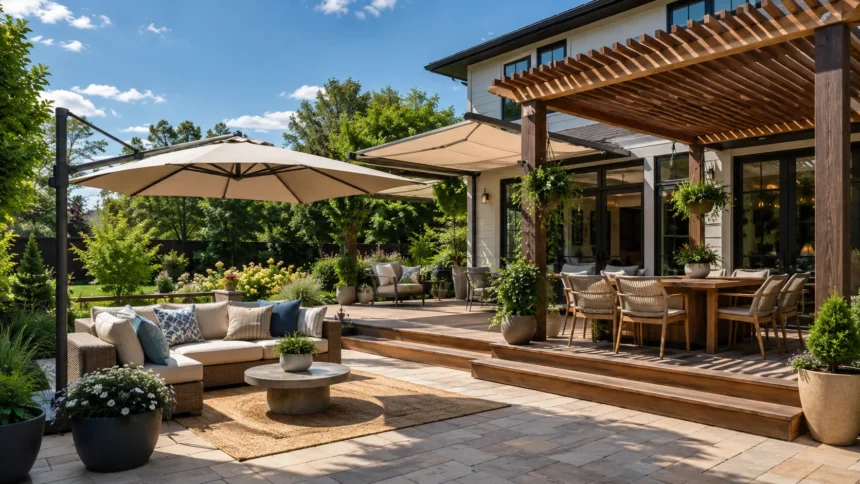
Best Shade Solutions for Patios and Decks
A comfortable patio or deck can quickly become unusable when direct sunlight makes the space too hot. The right outdoor shade solution can reduce glare, create a cooler seating area, protect furniture from excessive sun exposure, and make your outdoor living space more enjoyable throughout the warmer months.
Choosing the best shade solutions for patios and decks depends on more than appearance. You need to consider the direction of the sun, the size of the area, wind exposure, available mounting points, local weather, maintenance requirements, and whether you want permanent or adjustable shade.
Homeowners now have more options than a basic patio umbrella. Pergolas, retractable awnings, shade sails, cantilever umbrellas, gazebos, outdoor curtains, motorized screens, and adjustable louvered roofs can all provide different levels of sun protection while enhancing the appearance of an outdoor space.
The best solution is one that matches how you actually use your patio or deck. A dining area may need broad overhead coverage, while a small reading corner may only require a movable umbrella. This guide compares practical patio shade ideas so you can choose the right option for your space, budget, and lifestyle.
1. Pergolas for Stylish and Lasting Patio Shade
A pergola is one of the most popular permanent shade structures for patios and decks. It usually consists of vertical posts supporting overhead beams or rafters, creating partial shade while maintaining an open-air feeling. Pergolas work particularly well over outdoor dining areas, lounge spaces, and larger decks.
Traditional pergolas provide filtered rather than complete shade because sunlight can pass between the overhead slats. You can increase coverage by adding a fabric canopy, climbing plants, bamboo screening, outdoor curtains, or adjustable roof panels depending on the level of protection you want.
Wood pergolas create a warm and natural appearance that works well with traditional and rustic outdoor spaces. Aluminum and vinyl pergolas usually require less maintenance and can suit contemporary patios where homeowners prefer clean lines and long-lasting materials.
A pergola is a strong choice if you want an architectural feature as well as shade. It can visually define an outdoor room, support lighting and fans, and provide a structure for additional weather protection, making it one of the most flexible long-term deck shade solutions.
2. Retractable Awnings for Adjustable Shade
Retractable awnings provide shade when you need it while allowing you to expose the patio to sunlight when conditions are cooler. They are usually mounted to an exterior wall above a deck, patio, doorway, or window and extend outward to create overhead coverage.
Manual awnings use a hand-operated crank, while motorized models can extend or retract at the push of a button. Some advanced systems can also include wind or sunlight sensors that automatically adjust the awning depending on weather conditions.
One major advantage is flexibility. A fixed roof permanently blocks some sunlight, but a retractable awning lets you control the amount of shade throughout the day. This can be particularly useful during spring and autumn when occasional direct sunlight may actually make the patio more comfortable.
Retractable awnings work best in locations where secure wall mounting is available. They should normally be retracted during strong winds or severe weather unless the system is specifically designed for those conditions. Proper installation helps protect both the awning and the structure supporting it.
3. Shade Sails for Modern Outdoor Spaces
Shade sails are fabric panels stretched between secure anchor points to create overhead sun protection. Their triangular, square, or rectangular shapes can give patios and decks a contemporary appearance while covering areas that may be difficult to shade with conventional structures.
One of the biggest benefits of a patio shade sail is flexibility in placement. Multiple sails can be installed at different angles and heights to create visual interest while protecting seating areas, pools, play spaces, gardens, or outdoor dining zones.
Shade sails are often more affordable than permanent structures such as pergolas or covered roofs. However, proper tensioning and strong anchor points are essential. Poorly installed sails may sag, collect water, or place excessive stress on posts and building attachments.
The fabric should also be selected according to your weather needs. Some shade fabrics are designed primarily to block sunlight while allowing rain to pass through, while waterproof versions offer additional rain protection but require careful installation so water can drain effectively.
4. Patio Umbrellas for Flexible and Affordable Shade
Patio umbrellas are one of the easiest ways to add shade without making permanent changes to your outdoor space. They are available in many sizes, colors, materials, and styles, making them suitable for apartment balconies, small decks, dining tables, and large patios.
Market umbrellas usually position the pole through the center of a table or freestanding base. Cantilever umbrellas position the support pole to the side, allowing the canopy to extend over seating areas without placing a pole directly in the middle of the space.
A tilting or rotating umbrella provides even greater control over moving sunlight. Because the sun changes position throughout the day, adjustable designs can provide better afternoon shade than a fixed umbrella that only blocks sunlight from directly overhead.
The main limitation is wind. Large umbrellas can behave like sails during strong gusts, so a stable weighted base and proper storage are essential. For homeowners seeking inexpensive and movable deck shade ideas, however, umbrellas remain one of the most practical options.
5. Cantilever Umbrellas for Large Seating Areas
A cantilever umbrella, sometimes called an offset umbrella, uses a side-mounted support arm rather than a central pole. This leaves the space beneath the canopy unobstructed, making it ideal for outdoor sofas, dining sets, hot tubs, and larger conversation areas.
Many cantilever models can rotate or tilt, helping you follow the movement of the sun throughout the day. This makes them particularly useful for west-facing patios where strong afternoon sunlight enters from an angle rather than directly overhead.
The larger canopy can provide impressive coverage without requiring construction work. You can reposition some models when furniture arrangements change, making them considerably more flexible than permanent patio roof structures.
Because the canopy extends away from its support point, a cantilever umbrella needs a very secure base. Wind resistance varies considerably between models, so homeowners should choose appropriate weights and close the umbrella when weather conditions become too strong.
6. Louvered Pergolas for Maximum Shade Control
A louvered pergola uses adjustable roof slats that can open, close, or tilt depending on weather conditions. When the louvers are open, sunlight and ventilation can enter. When they are closed, the structure can provide substantially more shade and, in many designs, protection from rain.
Manual louvered roofs are available, but motorized systems make adjustment much easier. With the push of a button, homeowners can change the angle of the louvers as the sun moves or close the roof when unexpected rain begins.
This type of structure works particularly well for homeowners who use their patio frequently and want greater control over the outdoor environment. Lighting, fans, heaters, screens, and drainage systems can sometimes be integrated to create a more complete outdoor room.
The main disadvantage is cost. Adjustable louvered pergolas are generally more expensive than shade sails, umbrellas, or simple fabric canopies. However, their durability, versatility, and polished appearance can make them worthwhile for heavily used outdoor living areas.
7. Gazebos for Full-Coverage Outdoor Shade
A gazebo provides substantial overhead coverage and usually has a solid or durable canopy supported by posts. Unlike an open pergola, a gazebo can create a more protected outdoor area suitable for dining, relaxing, entertaining, or housing an outdoor kitchen.
Permanent gazebos can be built from wood, metal, composite materials, or combinations of different materials. Their solid roofs provide dependable shade and can often provide better rain protection than fabric-based patio shade options.
Portable and soft-top gazebos offer a more affordable alternative. These structures can provide seasonal shade without the cost of permanent construction, although they generally require more attention during strong wind, heavy rain, or winter conditions.
Gazebos are particularly useful when your goal is creating a defined outdoor room rather than simply blocking sunlight. The structure can support curtains, screens, lighting, fans, and decorative features that make a patio or deck feel more like an extension of the home.
8. Outdoor Curtains for Side Shade and Privacy
Overhead coverage does not solve every sun problem. Morning and evening sunlight often enters patios from the side, particularly on east- and west-facing spaces. Outdoor curtains can help block low-angle sunlight while also creating additional privacy.
Curtains work especially well with pergolas, gazebos, porches, and covered patios because these structures already provide suitable mounting points. You can open the fabric when you want an unobstructed view and close it when sunlight becomes uncomfortable.
Choose outdoor-rated materials designed to handle sunlight and moisture. Ordinary indoor fabrics may fade, absorb water, or develop mildew when exposed continuously to outdoor conditions. Breathable and fade-resistant fabrics generally provide better long-term performance.
Outdoor curtains can also soften the appearance of hard structures such as metal pergolas. When combined with overhead shade, they create a comfortable enclosed feeling without permanently closing the patio, making them useful for both privacy and sun protection.
9. Retractable Outdoor Screens for Low-Angle Sun
Retractable screens provide another effective solution for sunlight entering from the sides of a covered patio. They can be mounted between posts or openings and lowered when direct sun, glare, wind, or insects become uncomfortable.
Mesh screens allow some airflow and visibility while reducing the intensity of sunlight. Depending on the material, they can also provide varying levels of privacy without making the outdoor space feel completely enclosed.
Motorized screens are especially convenient for larger patios because several openings can be controlled without manually adjusting each panel. Homeowners creating high-end outdoor living spaces sometimes combine screens with louvered roofs for almost complete control over shade and exposure.
The cost is higher than simple outdoor curtains, but retractable screens generally provide a cleaner appearance and more structured performance. They are especially useful when your patio already has a roof but still receives uncomfortable afternoon or evening sunlight.
10. Natural Shade With Trees and Climbing Plants
Plants can provide some of the most attractive natural patio shade while also making outdoor spaces feel cooler and more inviting. Trees, vines, and climbing plants create filtered shade that changes naturally with the seasons and can soften hard landscaping.
A well-positioned deciduous tree can provide valuable summer shade while allowing more sunlight through after leaves fall in cooler months. However, tree placement requires long-term planning because roots, mature height, branches, and distance from structures all need consideration.
Climbing plants can be trained across pergolas, trellises, or arbors to form a living canopy. The right species can create dense seasonal shade while adding flowers, fragrance, or greenery to the patio environment.
Natural shade takes longer to establish than installing an umbrella or awning. Plants also require watering, pruning, and routine maintenance, but homeowners who enjoy landscaping may find that living shade creates a more comfortable and visually appealing outdoor environment.
11. Canopies for Simple Deck Shade
A fabric canopy provides straightforward overhead protection without the complexity of a permanent roof. Canopies can be attached to pergolas, supported by frames, or installed as freestanding structures depending on the patio layout.
Fixed fabric canopies work well when consistent shade is needed throughout the season. Retractable versions offer more flexibility, allowing the fabric to slide open when sunlight is desirable and close when the patio becomes too hot.
Outdoor canopy fabrics should be designed to resist fading, moisture, and mildew. Breathability also matters in hot climates because trapped heat beneath an impermeable canopy can sometimes make the covered area uncomfortable.
Canopies can provide an effective middle ground between umbrellas and fully constructed roof systems. They offer broader coverage than most umbrellas without necessarily requiring the investment associated with permanent structures such as gazebos or louvered pergolas.
12. Covered Patio Roofs for Permanent Protection
A permanent patio roof provides the highest level of consistent shade. It can be attached directly to the house or constructed as a freestanding structure, creating reliable protection over dining spaces, outdoor kitchens, seating areas, or entire decks.
Solid roofing offers greater weather protection than most fabric solutions. Depending on the design, homeowners can continue using the outdoor area during light rain and potentially incorporate ceiling fans, lighting, heaters, televisions, or other outdoor features.
The trade-off is reduced flexibility. Unlike a retractable awning or louvered system, a fixed roof blocks sunlight continuously. Homeowners should consider how the roof may affect natural light entering nearby windows and interior rooms before construction.
Building permits, structural requirements, drainage, snow loads, wind exposure, and local regulations may also apply. Professional design and installation are often worthwhile because the roof becomes a permanent extension of the property’s structure.
How to Choose the Best Shade Solution
Start by watching how sunlight moves across your patio throughout the day. Morning, midday, and afternoon sun arrive at different angles, and an overhead structure that works perfectly at noon may provide little protection against low western sunlight later in the day.
Next, decide whether you want fixed or adjustable shade. Permanent roofs and gazebos offer dependable coverage, while retractable awnings, umbrellas, curtains, and louvered systems allow you to respond to changing weather and seasonal conditions.
Your budget will narrow the options considerably. Umbrellas and simple sails generally provide affordable shade, while custom pergolas, louvered roofs, and permanent patio covers require greater investment. Remember to consider installation and long-term maintenance as well as the initial purchase price.
Finally, match the shade structure to your lifestyle. Frequent entertainers may value a permanent covered area, while occasional patio users may prefer a flexible umbrella. The best shade solution is not necessarily the most expensive one—it is the one that makes your outdoor space easier to use.
Best Shade Solutions for Small Patios
Small patios benefit from solutions that provide coverage without occupying valuable floor space. Wall-mounted retractable awnings are particularly useful because their supporting mechanism remains attached to the building rather than consuming seating space.
A compact cantilever umbrella can also work well because its support pole can be positioned beside furniture. This allows the canopy to extend over a dining or conversation area without creating an obstacle in the center.
Shade sails are another good option when suitable anchor points are available. A carefully sized sail can provide broad overhead coverage without installing bulky permanent posts throughout a small patio.
Keep proportions in mind when choosing any shade structure. A large gazebo or heavy pergola can visually overwhelm a compact space, while a simpler awning, sail, or umbrella can maintain an open feeling while still providing meaningful sun protection.
Best Shade Solutions for Large Decks
Large decks usually require multiple shade zones rather than one small source of coverage. You may want full shade over the dining table, adjustable coverage above lounge furniture, and an open section where people can enjoy direct sunlight.
Pergolas work especially well because they visually organize larger decks into outdoor rooms. A pergola over the primary seating area can become the architectural centerpiece while umbrellas or shade sails cover secondary areas.
Louvered roof systems are another excellent choice for large outdoor living areas. Their adjustable coverage allows homeowners to control sunlight without permanently turning the entire deck into a fully enclosed structure.
Combining different shade solutions often produces better results than relying on one oversized structure. A pergola with curtains, for example, can provide overhead and side protection while leaving other parts of the deck flexible and open.
Budget-Friendly Patio Shade Ideas
A basic patio umbrella is usually one of the fastest and least expensive ways to create useful shade. Choose the largest canopy that your available space and base can safely support, and consider a tilting model if sunlight enters from an angle.
DIY shade sails can also provide relatively affordable coverage when secure mounting locations already exist. The cost can increase if new structural posts or reinforced anchor points are required, so installation conditions should be evaluated before choosing this option.
Outdoor curtains can improve an existing covered patio without requiring major construction. They are particularly effective for blocking late-afternoon sunlight and can provide privacy at the same time.
You can also combine inexpensive solutions. An umbrella above a dining table and outdoor curtains along one exposed side may solve your sun problem without requiring a permanent structure, making layered shade one of the most practical approaches for smaller budgets.
How to Keep a Shaded Patio Cooler
Shade dramatically improves comfort, but airflow is equally important. A covered patio can still feel hot when warm air becomes trapped underneath a roof or dense canopy, particularly during humid summer weather.
Outdoor ceiling fans or portable fans can help circulate air around seating and dining spaces. Covered structures such as pergolas and gazebos may provide suitable locations for permanent outdoor-rated fans when electrical installation is completed correctly.
Light-colored fabrics and roofing materials can also help reduce heat absorption compared with darker surfaces that become extremely hot in direct sunlight. Furniture cushions and outdoor rugs should likewise be selected with heat and sun exposure in mind.
Plants can provide additional cooling benefits around the edges of the patio. Combining shade, airflow, and greenery usually creates a more comfortable outdoor environment than relying exclusively on a single overhead canopy.
Common Patio Shade Mistakes to Avoid
One common mistake is choosing a shade structure based only on how the patio looks at midday. Afternoon sun often comes from a much lower angle and can pass beneath a roof, pergola, or umbrella that provided excellent protection several hours earlier.
Another mistake is underestimating wind exposure. Umbrellas, sails, canopies, and retractable fabrics experience significant forces during gusty weather. Anchoring systems and manufacturer wind guidelines should always be taken seriously.
Homeowners also sometimes select structures that are too small. A tiny umbrella may cover the center of a table while leaving everyone seated around it in direct sunlight. Measure the entire usable seating area rather than only the furniture footprint.
Finally, do not ignore drainage and weather resistance. Fabric canopies need appropriate slope and tension, while permanent roofs require safe water management. A shade system should remain practical during changing weather rather than creating additional maintenance problems.
Final Thoughts on the Best Shade Solutions for Patios and Decks
The best shade solutions for patios and decks range from simple umbrellas to sophisticated motorized louvered roofs. Each option offers a different balance of cost, coverage, flexibility, weather protection, and visual impact.
Pergolas and gazebos are excellent for homeowners seeking permanent outdoor structures, while retractable awnings and louvered roofs provide greater control over sunlight. Shade sails and umbrellas work particularly well when affordability and flexibility matter most.
The direction of sunlight should play a major role in your decision. Overhead shade handles midday sun, while curtains and screens are often necessary for low-angle morning or afternoon exposure. Combining solutions can create more complete protection.
Before purchasing anything, observe your outdoor space, measure the area, consider local weather, and decide how frequently you use the patio. A well-chosen shade system can transform an uncomfortable deck into a cooler, more functional outdoor living space.
Frequently Asked Questions
What is the best way to shade a patio?
The best option depends on your budget and desired coverage. Pergolas and louvered roofs provide lasting shade, while awnings, shade sails, and umbrellas offer greater flexibility.
What is the cheapest way to add shade to a deck?
A patio umbrella is usually one of the cheapest and easiest options. Shade sails and outdoor curtains can also provide affordable coverage when suitable mounting points already exist.
Are pergolas good for patio shade?
Yes, but traditional pergolas provide partial rather than complete shade. Adding a canopy, climbing plants, shade fabric, or adjustable louvers can significantly increase coverage.
What is the best shade option for strong afternoon sun?
Adjustable awnings, tilting umbrellas, outdoor curtains, and retractable screens work well because afternoon sunlight often enters from a low angle rather than directly overhead.
How can I shade my patio without building a roof?
Use a patio umbrella, shade sail, retractable awning, freestanding canopy, or pergola with fabric coverage. These options can provide significant shade without constructing a permanent solid roof.