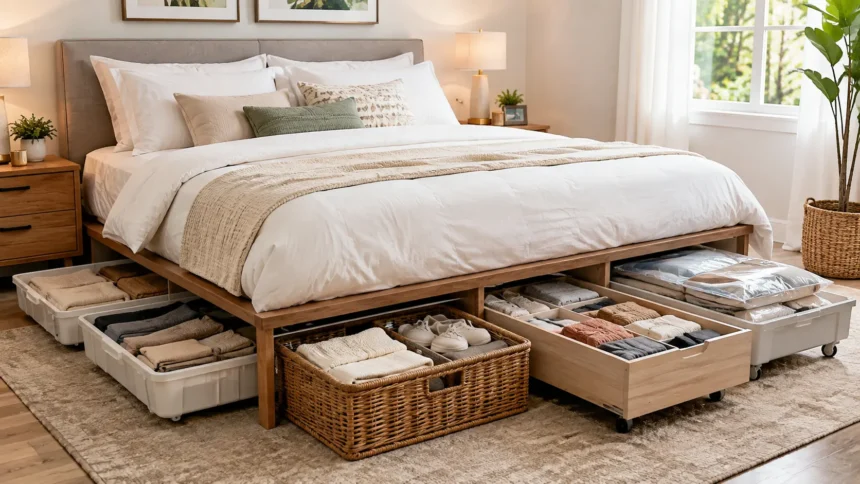
Under Bed Storage Ideas to Maximize Every Inch
Under bed storage is one of the easiest ways to create extra organization in a bedroom without adding another cabinet, shelf, or bulky piece of furniture. The space beneath a bed often goes unused even though it can hold clothing, shoes, bedding, books, seasonal items, toys, and household essentials. With the right containers, this overlooked area can function like a hidden horizontal closet that keeps everyday rooms cleaner and less crowded. Under bed storage is especially useful in apartments, dorm rooms, children’s bedrooms, guest rooms, and small homes where floor space is limited. The key is choosing storage solutions that fit the available clearance while keeping items protected and easy to reach. A little planning can turn several wasted square feet into practical storage.
The best under bed storage ideas are not necessarily the most expensive or complicated. Simple rolling bins, low-profile boxes, fabric organizers, baskets, vacuum storage bags, or DIY drawers can work extremely well when matched to what you actually need to store. Frequently used items should be easier to access, while seasonal belongings can be placed deeper beneath the bed in sealed containers. Labeling, measuring, and grouping similar belongings together can prevent the space from becoming another clutter zone. Dust protection and ventilation also matter, especially when storing clothing, linens, or shoes for long periods. This guide covers practical ways to maximize every inch beneath a bed while keeping the bedroom organized, attractive, and functional.
Measure Your Under Bed Space Before Buying Storage
The first step toward successful under bed storage is measuring the space accurately before purchasing bins or drawers. Measure from the floor to the lowest part of the bed frame rather than assuming the visible gap represents the full clearance. Slats, center support beams, brackets, or decorative side rails can reduce usable height in certain areas. Measure width and length as well so you know whether containers can slide in from the side or foot of the bed. A storage bin that is only half an inch too tall can be frustrating and may scrape against the frame every time it is moved. Accurate measurements help you choose containers that use the available space efficiently without forcing them into place.
It is helpful to measure several points beneath the bed because flooring and bed frames are not always perfectly level. The clearance near the headboard may differ slightly from the space near the foot, particularly if the bed sits on a rug or uneven floor. If you plan to use rolling containers, include the height of wheels or casters in your calculation. Handles and raised lids can also increase the total height beyond what product descriptions emphasize. A bin described as six inches tall may require additional room to remove its lid comfortably. Leaving a small amount of extra clearance usually makes storage easier to access and protects the bed frame and containers from unnecessary wear.
Next, think about how much of the under bed area you can realistically access. A bed pushed tightly against two walls may provide entry from only one side, which changes the type of storage that works best. Long rolling drawers can be practical when you can pull them straight out, while smaller boxes may be easier when access is limited. If a bedside table blocks part of the bed, leave that area for items you rarely need. Frequently used belongings should be stored near the easiest access points. Designing storage around how the room is arranged prevents you from creating a system that technically fits but is inconvenient in daily life.
The bed height itself can sometimes be adjusted to create more usable storage. Bed risers can lift certain frames several inches, creating enough clearance for taller bins or stacked low-profile containers. However, risers should be suitable for the weight and design of the bed and should create a stable sleeping surface. Raising the bed too high can make getting in and out less comfortable, particularly for children, older adults, or people with mobility limitations. A taller bed may also look visually awkward in a small room if the proportions are not considered. Use risers only when the additional storage capacity solves a meaningful problem and the bed remains secure.
Once measurements are complete, sketch a simple storage layout before buying anything. Divide the under bed footprint into zones for clothing, shoes, linens, seasonal items, or other categories. This helps prevent purchasing several mismatched containers that leave awkward gaps between them. Matching bins often use space more efficiently because they have predictable dimensions and stack or align consistently. A planned layout also makes it easier to know how many containers the space can actually hold. Treating the area beneath the bed like a small storage room rather than a place to push random objects can dramatically improve long-term organization.
Use Rolling Under Bed Storage Bins
Rolling storage bins are among the most convenient solutions for items you need to access regularly. Small wheels allow the container to slide out with less effort than a heavy plastic box resting directly on the floor. This can be particularly useful for storing shoes, workout clothing, children’s toys, extra linens, or frequently rotated seasonal clothes. Rolling containers also reduce the need to kneel and pull a heavy bin across carpet or hardwood. Look for low-profile designs with sturdy frames and wheels that move smoothly in both directions. A front handle makes the bin even easier to retrieve without reaching far underneath the bed.
Hard-sided rolling bins provide useful protection from dust, accidental spills, and crushing. Transparent plastic designs allow you to see what is inside without opening every box, which can save time when several containers look identical. Solid-colored bins provide a cleaner appearance if they remain slightly visible beneath the bed. Lids should close securely but still be easy to remove after the bin is pulled out. Avoid containers with overly complicated locking mechanisms if you plan to open them frequently. Convenience matters because storage systems that are difficult to use often become cluttered within a few months.
Metal-framed rolling drawers can be especially practical for heavier items because they tend to remain rigid when moved. Some designs use wire baskets, fabric inserts, or wooden drawer boxes mounted on wheels. These can hold books, shoes, folded jeans, bags, or hobby supplies without bending in the middle. If the floor is hardwood, choose smooth wheels that will not scratch the finish. A thin protective mat beneath the bed may also reduce wear in areas where drawers travel repeatedly. For carpet, larger wheels often roll more easily than very small casters that sink into the fibers.
Rolling bins work best when items are grouped by category rather than mixed randomly. One drawer could hold workout clothes, another could contain shoes, while a third stores spare pillowcases and sheets. Labels on the front edge allow you to identify contents before pulling anything out. If several family members share a room, color-coded labels or bins can make ownership obvious. Keeping one category per container also makes it easier to notice when a bin becomes overfilled. This prevents the common problem of forcing everything into one drawer until it becomes impossible to open smoothly.
One limitation of rolling storage is that wheels and frames reduce the amount of vertical space available inside the container. In very low-clearance spaces, simple flat boxes may provide more usable capacity. Rolling drawers can also move slightly when pushed under the bed if the floor is uneven. Choose models with enough weight or wheel resistance to remain in place. Despite these limitations, rolling storage is ideal when ease of access matters more than maximum capacity. For everyday storage, the convenience of pulling out a drawer in seconds can be more valuable than squeezing a few extra items into a stationary bin.
Store Seasonal Clothing in Low-Profile Boxes
Seasonal clothing is one of the best categories to store beneath a bed because it can remain out of the main closet for several months at a time. Sweaters, coats, scarves, swimwear, holiday pajamas, or off-season sportswear can take up significant closet space when they are not currently needed. Low-profile storage boxes keep these items organized while freeing wardrobe shelves and hanging space for current clothing. Choose boxes with secure lids so fabrics remain protected from dust. Transparent lids can help you identify contents quickly when seasons change. Keeping clothing folded neatly also allows more pieces to fit without creating permanent wrinkles.
Wash and completely dry clothing before placing it into long-term storage. Body oils, food stains, perfumes, and moisture can attract pests or create unpleasant odors during storage. Damp fabric can also develop mildew, particularly in humid homes. Avoid packing clothes so tightly that air cannot move at all around them unless you are using a properly sealed vacuum storage system. Natural fibers such as wool may require particular care because moths can damage them. Clean storage containers and a dry environment provide a much better foundation than relying entirely on scented products or moth repellents.
Sort seasonal clothes by type before storing them. One container might hold winter knitwear, while another contains summer shorts and lightweight tops. If several people share storage space, separate belongings by person as well as season. Labels such as “Winter Sweaters,” “Summer Clothes,” or “Kids Size 8 Winter” make future rotation much faster. Place the next season’s clothing near the front or side of the bed so it can be retrieved easily. Items that will not be needed for a year or longer can be placed deeper toward the center.
Soft-sided under bed organizers can also work well for seasonal clothing because they are lightweight and often collapse when empty. Many have zippered tops that protect against dust while allowing the sides to flex slightly around bulky sweaters. Reinforced handles are important because a full fabric organizer can become heavy. Choose a design with a structured base if you want the bag to slide easily rather than bunching on carpet. Clear top panels are useful because they let you see contents without opening the zipper. Fabric organizers can also create a softer appearance than hard plastic bins in bedrooms where containers may occasionally remain visible.
When the seasons change, use the clothing swap as an opportunity to declutter. Before returning stored garments to the closet, ask whether each item still fits, is in good condition, and was actually worn during the previous season. Donate or recycle clothing that no longer serves a purpose rather than automatically storing it again. This prevents under bed containers from becoming permanent archives of unused clothing. Seasonal storage works best as a rotating system rather than a hiding place for items you are reluctant to make decisions about. Keeping only useful clothes allows the same storage space to remain effective year after year.
Use Under Bed Storage for Shoes and Accessories
Shoes can consume a surprising amount of closet floor space, making the area under the bed an excellent alternative storage location. Low-profile shoe organizers with individual compartments keep pairs together and prevent them from piling on top of one another. Clear covers are especially useful because you can identify the pair you need without opening the entire organizer. Everyday shoes should remain near the easiest access point, while special-occasion or seasonal footwear can be placed farther underneath the bed. Shoes should be clean and dry before storage to prevent dirt and odors from spreading. Proper organization also helps preserve their shape and prevents scratches.
Compartment-style shoe organizers work best for flats, sneakers, sandals, and other relatively low-profile footwear. Boots may require deeper containers or a separate storage solution because folding them can damage their shape. If bed clearance is limited, store boots horizontally with lightweight supports inside the shafts to prevent creasing. Expensive leather shoes may benefit from individual cloth bags within a larger under bed container. Avoid sealing damp shoes in airtight plastic because trapped moisture can encourage mildew and odors. Let footwear dry completely after use before placing it beneath the bed.
Accessories such as handbags, scarves, belts, hats, and small travel bags can also fit efficiently under the bed. Use separate sections or smaller boxes inside a larger bin to keep categories from becoming mixed. Handbags can be lightly stuffed with tissue or clean fabric so they maintain their shape during storage. Belts can be rolled loosely rather than tightly folded. Scarves can be folded or placed inside breathable fabric pouches. When storage protects both organization and item condition, the space becomes more useful than simply piling accessories into a closet corner.
Jewelry and very small accessories are usually better stored in dedicated organizers rather than loose under bed bins. However, larger jewelry cases or accessory boxes can be placed beneath the bed if they are not used daily. Keep valuable items in secure locations appropriate to their worth rather than assuming hidden storage provides meaningful security. The area under a bed is easy to overlook visually but not difficult for someone to access. It is best suited to ordinary household belongings rather than important documents, cash, or irreplaceable valuables. Storage convenience should not be confused with security.
Using under bed space for shoes and accessories can also simplify getting dressed. Keeping less frequently used items outside the primary closet reduces visual clutter and makes everyday options easier to see. A closet containing only current-season shoes and favorite bags feels more spacious even when the overall room has not changed. Under bed organization therefore improves more than storage capacity; it can also make existing wardrobes more functional. The best systems support the way you actually use your belongings. Items you reach for weekly should be accessible, while occasional accessories can remain hidden until needed.
Store Bedding, Towels and Linens Under the Bed
Extra bedding is bulky but does not always need prime closet space. Spare sheet sets, duvet covers, pillowcases, mattress protectors, and lightweight blankets can be folded into low-profile under bed containers. Storing bedroom linens beneath the bed where they are used can also make household organization more intuitive. Instead of keeping every sheet set in a distant hallway closet, each bedroom can hold its own extras. This reduces the time spent searching for the correct size when changing bedding. Label containers clearly with sizes such as queen, king, twin, or guest bedding to prevent confusion between similar-looking folded linens.
Keep sheet sets together so individual pillowcases or fitted sheets do not disappear into the bottom of a storage box. One useful method is folding the fitted sheet, flat sheet, and one pillowcase together and placing them inside the remaining pillowcase. This creates a compact bundle that can be stacked neatly inside the container. Another approach is using fabric dividers to separate different sets. Avoid stuffing linens loosely into oversized bins because they will quickly become difficult to identify. Organized folding allows the same under bed area to hold considerably more while keeping every set easy to retrieve.
Blankets and comforters require more space and may benefit from compression storage. Vacuum bags can reduce the volume of synthetic comforters, quilts, and seasonal blankets substantially. However, compression should be used carefully with delicate or loft-dependent materials. Down-filled bedding can lose loft when compressed for long periods, while certain handmade quilts may develop deep creases. For these items, breathable storage bags with enough room to remain loosely folded may be better. Always check care recommendations for expensive bedding before placing it under pressure for months. Saving space is useful only if the stored item remains in good condition.
Towels can also be kept under a guest bed, especially in homes with limited bathroom storage. A dedicated bin containing guest towels, extra washcloths, and spare bath mats can turn a guest room into useful household storage when no visitors are present. Keep linens completely dry before storage because even slight moisture can create mildew and musty odors. A sealed plastic box offers good dust protection, but breathable fabric storage can be appropriate in very dry environments. Whichever system you choose, open the containers occasionally if items remain stored for long periods. This gives you an opportunity to check for moisture, pests, or odors before problems become severe.
Under bed linen storage is especially effective when combined with a regular rotation system. Keep the newest or least frequently used sheets deeper beneath the bed and place current sets near the front. When washing bedding, rotate sets rather than always using the same one. This distributes wear and prevents a rarely used set from sitting untouched for years. Periodically discard or repurpose sheets that are heavily worn, stained, or no longer fit any bed in the home. Storage should support active household use rather than preserving unnecessary clutter simply because space exists beneath the bed.
Try Vacuum Storage Bags for Bulky Items
Vacuum storage bags can dramatically reduce the volume of soft bulky items by removing much of the air trapped between fibers. They are especially useful for seasonal jackets, synthetic comforters, spare pillows, winter blankets, and clothing that would otherwise require tall bins. Once compressed, the flat bags can slide under beds with very limited clearance. This makes them attractive in small apartments and dorm rooms where every inch matters. Choose bags designed for repeated use with strong seals and valves that connect securely to a vacuum hose or compatible pump. Cheap bags that slowly leak air can expand beneath the bed and become difficult to remove.
Items should be clean and completely dry before vacuum sealing. Compression does not prevent moisture-related problems if damp fabric is placed inside the bag. Any trapped moisture can create unpleasant smells or mildew during long storage periods. Fold garments loosely and avoid sharp buckles, zippers, or hardware pressing directly against the plastic because they can puncture the bag. Placing a thin layer of fabric around sharp areas can provide extra protection. Do not overfill bags beyond the manufacturer’s recommended line, since excessive pressure on seams makes leaks more likely.
Vacuum storage works best for resilient synthetic textiles rather than every type of fabric. Down jackets, down comforters, feather pillows, and items filled with delicate insulation can lose loft when heavily compressed for long periods. Natural wool can also develop stubborn creases if packed extremely tightly. Instead of compressing these materials completely flat, use breathable or lightly compressed storage when possible. Wedding dresses, heirloom textiles, leather goods, and highly structured garments should not be treated like ordinary seasonal sweaters. Consider the value and construction of each item before prioritizing maximum space reduction.
Label compressed bags clearly because once several soft items are flattened, they can look almost identical. Write the category and season on a removable label or place a paper inventory inside the clear section of the bag. Group similar bags together beneath the bed and keep those needed first near the easiest access point. A shallow plastic bin can also hold several vacuum bags and provide protection against punctures. This creates two layers of organization: compression for saving space and a rigid container for easier handling. The approach is particularly useful when a low bed leaves only a few inches of clearance.
Avoid using vacuum bags simply to keep more items than you actually need. Compression can make clutter less visible without reducing the total number of possessions. Before sealing a bag, ask whether the contents are likely to be used again. Clothes that no longer fit, worn bedding, or unused pillows may be better donated, recycled, or discarded. Under bed space becomes most effective when it holds useful belongings rather than compressed decisions. Vacuum storage is a powerful space-saving tool, but it works best after decluttering rather than as a substitute for it.
Create DIY Under Bed Drawers and Storage
DIY under bed drawers can provide customized storage when standard bins do not fit the available dimensions or bedroom style. Old dresser drawers can often be repurposed by adding small casters underneath and simple handles to the front. This creates sturdy rolling storage with relatively little construction work. Sanding and painting the drawer can make it coordinate with the bed frame or other furniture. A thin plywood bottom may be needed if the original drawer base is weak. Reusing existing furniture also reduces waste and can cost far less than purchasing a set of specialized under bed drawers.
Wooden crates offer another simple DIY solution. Several shallow crates can be placed side by side and fitted with furniture casters or felt pads depending on the floor surface. Crates provide ventilation and are useful for shoes, books, toys, or folded textiles. Adding a fabric liner prevents small items from falling through openings and gives the storage a more finished appearance. If you want the crates completely hidden, paint them the same color as the bed frame or use a bed skirt. Wooden storage can look more intentional than clear plastic when part of the container remains visible.
Custom plywood drawers can maximize space more precisely because they can be built to match the exact height and depth available beneath the bed. A long drawer extending almost the full depth of the bed can provide significant capacity. Divide the interior with removable sections for shoes, clothing, hobby supplies, or children’s toys. Heavy-duty low-profile casters make large drawers easier to move, while recessed handles prevent protruding hardware from catching on bedding or ankles. Sand every edge carefully so rough wood does not damage fabrics or flooring. If woodworking experience is limited, simple rectangular drawer boxes are usually sufficient without complicated joinery.
A platform bed with built-in drawers is a more permanent version of DIY under bed storage. Drawers can be incorporated into one or both sides of the base, creating furniture that functions simultaneously as a bed and storage cabinet. This approach is particularly valuable in small bedrooms where there is not enough space for a separate dresser. However, built-in drawers require clear floor space beside the bed so they can open fully. In very narrow rooms, lift-up storage beds may work better because the mattress platform lifts from above rather than requiring side clearance. Choosing the opening direction according to room layout is essential.
DIY storage should still prioritize safety and ease of use. Avoid adding heavy drawers beneath a bed if the frame is unstable or the flooring cannot support the added movement comfortably. Casters should be securely attached and should not extend above the available clearance. If children will use the drawers, avoid sharp corners and heavy lids that can trap fingers. Keep very heavy items closer to the floor and use smaller containers so they are easier to pull out safely. A successful DIY system should feel easier to use than the storage problem it was created to solve.
Organize Kids’ Rooms With Under Bed Storage
Children’s bedrooms often accumulate toys, books, clothing, craft supplies, and school materials quickly, making under bed storage particularly valuable. Rolling bins allow children to pull out toys independently and return them when playtime ends. Low-profile containers can hold building blocks, dolls, puzzles, cars, or dress-up accessories without requiring additional toy cabinets. Assigning one category to each bin helps children understand where belongings belong. Picture labels are especially useful for younger children who cannot yet read. An organized system makes cleanup simpler because each object has a clear destination.
Choose containers that children can handle safely. Heavy wooden drawers may be difficult for a young child to pull and can pinch fingers if they move abruptly. Lightweight plastic or fabric organizers with smooth handles can be easier to manage. Avoid bins with sharp edges or lids that require significant force to open. Rolling storage should move easily but not so freely that drawers slide across the room when pulled. If the bed is high, make sure children are not encouraged to crawl underneath it to retrieve containers. Storage should be accessible from the outside rather than creating a play space beneath an unstable frame.
Seasonal clothing is another useful category for children’s under bed storage because kids often have multiple sizes and seasonal wardrobes. Store next-season clothing in clearly labeled containers and review it before bringing it into the active closet. Children grow quickly, so items stored for six months may no longer fit when the season returns. Separate clothing that is being saved for younger siblings from items intended for the current child. Labels with size and season prevent confusion. This approach can keep closets manageable while still preserving useful hand-me-downs.
School supplies, artwork, and memory items can also be organized beneath the bed. Use shallow document boxes for certificates, drawings, school projects, or photographs you want to keep. Avoid mixing sentimental items with everyday toys because papers can be bent or damaged during frequent access. One archive-style box per school year can prevent memorabilia from spreading throughout the room. At the end of each year, review the box with the child and choose a manageable number of favorite items. This teaches organization while preventing every worksheet from becoming permanent storage.
As children grow, the same under bed system can evolve with their needs. Toy bins can later become storage for sports equipment, shoes, clothing, electronics accessories, or school books. Standardized containers make this transition easier because the storage system does not need to be replaced every few years. Encourage older children to decide which categories deserve the most accessible spaces. Giving them responsibility for organizing their own belongings can make the system more likely to remain functional. Under bed storage is most successful in kids’ rooms when it simplifies cleanup rather than becoming a secret place where clutter disappears.
Keep Under Bed Storage Clean and Dust-Free
Dust is one of the main disadvantages of storing items beneath a bed because the area naturally collects lint, hair, and debris. Open baskets can become dirty surprisingly quickly, especially in homes with pets. For clothing, bedding, and other fabrics, covered containers provide much better protection than open bins. Zippered fabric organizers and plastic boxes with fitted lids both work well. Shoe storage may benefit from ventilation, but the container should still limit direct dust exposure. Choosing the right level of closure according to the stored item reduces cleaning and protects belongings.
Clean the floor thoroughly before setting up a new storage system. Vacuum or mop beneath the bed so existing dust is not immediately trapped around fresh containers. Once bins are in place, schedule periodic cleaning rather than waiting until the area becomes visibly dirty. Rolling drawers make this easier because they can be pulled out quickly while the floor is vacuumed. Stationary boxes may require more effort, which is another reason not to pack the space so tightly that nothing can move. Leaving a little room between containers can make routine cleaning more realistic.
Pet owners should pay particular attention to hair and dander. Cats and small dogs may also crawl beneath beds, potentially pushing bins out of place or scratching fabric organizers. Covered plastic containers can protect textiles better in this environment. If pets regularly hide under the bed, filling the area with storage may also discourage them from accessing a dusty space. However, do not block ventilation around heating vents or other building systems located beneath the bed. Storage should never interfere with electrical outlets, floor registers, or necessary airflow.
Moisture is another concern, particularly in humid climates or rooms with limited ventilation. Avoid pushing cardboard boxes directly against damp exterior walls or storing textiles beneath a bed where condensation occurs. Plastic containers protect against external moisture but can also trap moisture already present inside. Clothing and linens must therefore be completely dry before being sealed. If the room has persistent dampness or mold, address the moisture problem before relying on under bed storage. Hiding belongings in sealed boxes does not make an unhealthy room environment disappear.
Review stored items every few months and clean both the containers and surrounding floor. This is also a useful time to check for insects, moisture, damaged packaging, or belongings you no longer need. Wipe the outside of plastic bins and vacuum fabric organizers when appropriate. Keeping an inventory can help prevent forgotten objects from remaining under the bed for years. Hidden storage works best when it remains part of the active organization system. A clean, regularly reviewed space is far more useful than a dark area where containers are pushed out of sight and never opened.
Make Under Bed Storage Look Neat and Intentional
Even practical storage can affect the appearance of a bedroom if containers are visible from the doorway. Matching bins create a cleaner look than a collection of unrelated cardboard boxes and bags. Choose containers in similar materials, colors, and heights so the area beneath the bed feels organized rather than improvised. Neutral fabric organizers can blend with most bedroom styles, while wooden drawers can coordinate with furniture. Clear plastic is extremely functional but may look less polished when exposed. If appearance matters, use clear boxes beneath a bed skirt or choose opaque containers with labels.
A bed skirt is one of the easiest ways to conceal under bed storage completely. Traditional gathered designs create a softer look, while tailored bed skirts can feel more modern. Choose a drop length that reaches close to the floor without dragging heavily because excess fabric collects dust. Split corners may be useful on beds with posts or specific frame designs. Bed skirts also allow you to use highly practical storage containers without worrying whether every bin matches the room. The hidden space can remain functional while the bedroom looks visually calm.
Storage beds with built-in drawers provide the most integrated appearance because the storage is part of the furniture itself. Drawer fronts match the bed frame and eliminate visible plastic or fabric bins. Platform storage beds are particularly useful in minimalist bedrooms where hidden organization is a priority. They can also reduce the need for a dresser, freeing additional floor space. However, integrated drawers usually increase the cost and weight of the bed. They are less flexible than removable bins if you move frequently or want to rearrange the room.
Labels can also be attractive rather than purely functional. Small uniform labels on the front edges of boxes create a consistent appearance and make categories easy to identify. Use removable labels if container contents change throughout the year. Avoid overly detailed labeling that becomes difficult to maintain. Broad categories such as “Winter Clothes,” “Guest Bedding,” or “Shoes” are usually sufficient. The goal is to help you find items quickly without turning every container into a complicated inventory system. Simple organization tends to survive longer than a system requiring constant maintenance.
The neatest under bed storage setup is ultimately one that does not extend beyond the bed frame or interfere with walking. Containers should slide completely beneath the bed when not in use. Avoid stacking loose objects beside bins simply because there is technically space. If belongings no longer fit within the planned containers, treat that as a sign to declutter or change the storage system. Defined limits help hidden storage remain organized. Maximizing every inch does not mean filling every inch with possessions; it means using the available space intentionally while keeping the room comfortable and visually balanced.
Frequently Asked Questions About Under Bed Storage
What is the best thing to store under a bed?
Under bed storage works especially well for seasonal clothing, shoes, spare bedding, towels, accessories, toys, and infrequently used household items. Frequently needed items should be stored near the easiest access points, while long-term items can go deeper beneath the bed.
How do I keep things under my bed from getting dusty?
Use storage bins with fitted lids or zippered fabric organizers instead of open baskets. Regularly vacuum beneath the bed and wipe or clean the outside of the containers so dust does not build up around them.
Are vacuum bags good for under bed storage?
Yes, vacuum bags can save significant space when storing bulky synthetic clothing, blankets, or bedding. Avoid heavily compressing delicate materials such as down, structured garments, or valuable textiles for long periods because compression can affect their shape and loft.
How can I create more space under a low bed?
You can use extra-low storage boxes or, if the bed frame allows it safely, raise the bed with appropriate bed risers. Always make sure the bed remains stable and comfortable to use after increasing its height.
Is under bed storage good for small bedrooms?
Yes. It is one of the most effective small bedroom storage ideas because it uses existing floor space without adding more furniture. Rolling drawers, low-profile boxes, and built-in storage beds can significantly increase organization while keeping the room visually uncluttered.