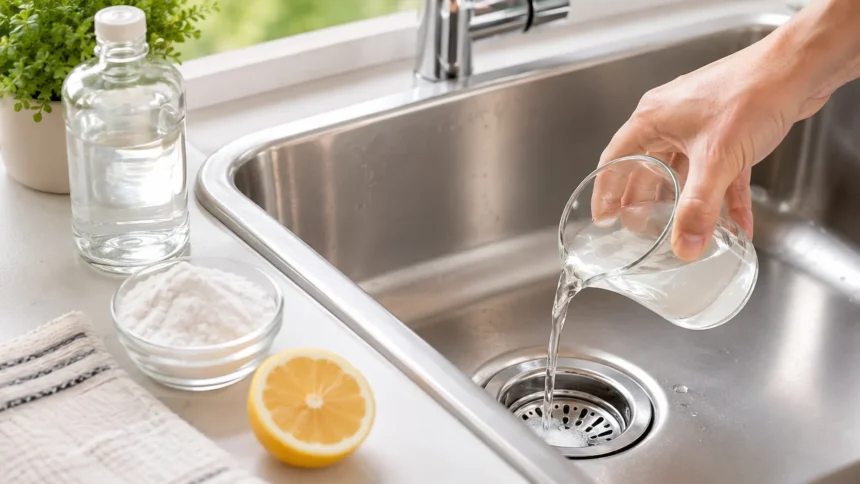
How to Clean a Sink Drain Fast Without Harsh Scrubbing
A sink drain can become slow, smelly, or grimy long before it develops a complete clog. Soap residue, grease, toothpaste, food particles, hair, mineral deposits, and other debris gradually collect around the stopper and inside the pipe. Fortunately, most routine drain cleaning does not require aggressive scrubbing or powerful chemicals. A few targeted methods can loosen buildup, remove trapped debris, and freshen the drain with much less effort. The key is choosing the method according to what is causing the problem. Kitchen drains commonly collect grease and food residue, while bathroom drains are more likely to trap hair, soap film, and personal-care products.
Cleaning a drain quickly is easiest when you address buildup before water stops flowing completely. Warm water and dish soap can help loosen greasy residue, while a simple drain tool can remove hair that chemical cleaners may not solve effectively. Enzyme-based drain cleaners can also help break down organic material gradually when used according to the label. The best results usually come from combining light mechanical removal with regular rinsing and preventive maintenance. Avoid mixing random household chemicals because some combinations can release dangerous gases or damage plumbing. A fast drain-cleaning routine should improve flow without creating a bigger safety or plumbing problem.
This guide explains how to clean a sink drain fast without harsh scrubbing, whether you are dealing with a kitchen sink, bathroom basin, unpleasant drain odor, or early signs of a slow clog. You will learn practical methods that require minimal physical effort, when to remove the stopper, how to use hot water safely, and when enzyme cleaners make sense. The article also covers common mistakes, prevention tips, and signs that the problem may require a plumber. The goal is not simply to make the visible drain look cleaner. It is to remove the residue and debris inside the drain that causes odors, slow drainage, and recurring buildup.
Why Sink Drains Get Dirty and Slow
Sink drains become dirty because almost everything washed into the basin eventually passes through a relatively narrow pipe. In a kitchen, oils, sauces, food particles, coffee residue, and dishwashing grease can cling to the interior walls of the drain. These materials may not cause an immediate blockage, but layers can build gradually and catch additional debris. Even small amounts of cooking fat can become sticky as they cool inside plumbing. Over time, the available opening becomes narrower and water drains more slowly. This is why a sink can appear to work normally for weeks before the first obvious signs of trouble suddenly become noticeable.
Bathroom sink drains collect a different mixture of debris. Hair, shaving residue, toothpaste, soap, skincare products, and body oils can become trapped around the stopper mechanism or immediately below the drain opening. Hair is especially troublesome because it can form a net that catches softer residue passing through the pipe. The resulting mass may stay hidden while water continues draining around it. Eventually, drainage becomes noticeably slower and unpleasant odors may develop. Because the buildup is often close to the surface, removing the stopper and pulling out trapped debris can sometimes improve the drain dramatically without requiring heavy scrubbing or chemical treatment.
Odor is another sign that organic material is collecting inside the drain. Food particles in kitchen plumbing can begin decomposing, while soap and biological residue in bathroom drains may create a slimy film. A drain can therefore smell bad even when water still moves through it relatively well. Cleaning the visible metal opening alone rarely solves this problem because the odor usually comes from material farther inside. A useful drain-cleaning routine needs to reach the first section of the pipe, stopper assembly, or trap where residue is likely to accumulate. Freshening the surface without removing organic buildup often produces only a temporary improvement.
Mineral deposits can also contribute to dirty-looking drains, particularly in homes with hard water. Calcium and other minerals may leave whitish or chalky deposits around the drain opening and on metal components. These deposits are different from grease or hair because they are created by dissolved minerals left behind as water evaporates. Mild household cleaners may remove light surface deposits, but significant mineral buildup can require a product specifically designed for the material involved. Strong acidic cleaners should never be mixed with bleach or other chemicals. If the plumbing is old or delicate, aggressive descaling may also be inappropriate without knowing which pipe materials are present.
Poor habits can accelerate almost every type of sink buildup. Pouring grease down a kitchen sink, allowing food scraps to wash into the drain, or ignoring loose hair around a bathroom stopper makes clogs more likely. Some people also rely heavily on chemical drain openers whenever the sink slows, which may mask recurring debris without correcting the habits causing it. Prevention is easier than repeatedly clearing a major blockage. Small changes such as scraping dishes thoroughly, using a sink strainer, removing visible hair, and flushing the drain periodically can significantly reduce buildup. A clean drain is usually the result of routine maintenance rather than one extremely aggressive cleaning session.
Fastest Way to Clean a Sink Drain Without Scrubbing
Start by removing anything sitting directly over the drain opening. Take out the sink strainer, removable stopper, or drain cover if the design allows it. Wear gloves if the area contains visible residue because the material can be unpleasant even when it is not dangerous. Wipe away loose debris with paper towels or a disposable cloth rather than forcing it deeper into the pipe. This simple step often removes a surprising amount of grease, hair, and soap film. It also gives water and cleaning products direct access to the drain instead of making them work through a layer of material trapped at the opening.
Next, run hot tap water through the drain for a short period. Very hot water can soften soap residue and some greasy buildup, making the next cleaning step more effective. Avoid automatically pouring boiling water into every sink because extremely high temperatures can damage certain plastic plumbing components, seals, or sink materials. Hot tap water is usually a safer routine option when you do not know exactly what type of pipes are installed. If the drain is already completely blocked, do not keep adding large amounts of water because the sink may overflow. Slow-but-moving drains respond much better to flushing than fully blocked ones.
Add a small amount of grease-cutting dish soap to the drain, particularly if you are cleaning a kitchen sink. Let the soap move into the pipe, then follow it with another round of hot water. Dish soap helps loosen oily residue so it can travel farther through the drainage system instead of sticking to the pipe walls. This method is inexpensive, low effort, and useful for routine maintenance. It will not remove a dense hair clog or a solid object, however. If drainage remains slow after the grease has been flushed, the blockage probably contains debris that needs to be physically removed rather than dissolved with more soap.
For bathroom sinks, use a flexible plastic drain-cleaning strip or similar simple tool if hair is the likely problem. Insert it gently into the drain according to the tool instructions, then pull it back slowly. Hair and soap residue often come out together in one unpleasant but effective bundle. This takes only a few minutes and generally requires far less scrubbing than trying to clean the pipe surface manually. Do not force a tool deeply into plumbing if it becomes stuck or encounters strong resistance. The goal is to remove debris near the drain opening, not damage internal parts or push a blockage farther down.
Finish by rinsing the drain again and checking how quickly water disappears from the basin. If flow improves noticeably, wipe the sink surface and clean the stopper before reinstalling it. If the odor remains, an enzyme-based drain maintenance product may help break down residual organic material over time. Use only one product at a time and follow the label carefully. Do not add bleach, acid, ammonia, or another drain chemical after using a different cleaner unless the manufacturer specifically says the combination is safe. The fastest safe method is usually simple: remove debris, loosen residue, flush, and then maintain the drain before another clog develops.
How to Clean a Kitchen Sink Drain
Kitchen sink drains usually need treatment aimed at grease and food residue. Begin by emptying the sink and removing the strainer or basket. Discard any food particles trapped around the opening instead of washing them down the pipe. Then run hot tap water for a short period to warm the pipe and soften greasy residue. Add a small amount of dishwashing liquid directly into the drain and allow it to sit briefly. Follow with more hot water so the soap can carry loosened grease through the plumbing. This approach is particularly useful when the sink drains slowly after washing oily cookware but is not completely clogged.
A sink strainer is one of the simplest tools for reducing future kitchen drain problems. Choose a design with openings small enough to catch rice, vegetable pieces, coffee grounds, eggshell fragments, and other food scraps. Empty it into the trash or compost system where appropriate rather than dumping the captured material back into the sink. Even homes with garbage disposals benefit from limiting the amount of solid food entering the plumbing. A disposal can grind food into smaller pieces, but those particles can still combine with grease farther inside the drain. Preventing debris from entering is easier than trying to remove it after it has accumulated.
Cooking grease deserves special attention because it can create persistent drain buildup. Oils may appear liquid when warm, but many fats cool and become thicker inside the plumbing. They can then trap food particles and form sticky deposits that narrow the drain. Let cooking grease cool and place it into a suitable waste container instead of pouring it directly into the sink. Wipe greasy pans with a paper towel before washing when practical. Small amounts of ordinary dishwashing residue are unavoidable, but deliberately pouring frying oil or melted fat down the drain creates an unnecessary clog risk. Regular hot-water flushing cannot reliably compensate for repeated grease disposal.
If a kitchen sink has a garbage disposal, clean the disposal according to the manufacturer’s instructions rather than inserting hands or tools into the grinding chamber. Turn off power before performing any maintenance that requires access near moving parts. Many disposal odors come from food residue on the splash guard or inside the chamber rather than from the drainpipe itself. Cleaning accessible rubber components and flushing with water can often reduce odors. Avoid placing hard objects, fibrous materials, grease, or large food quantities into the unit simply because the disposal appears powerful. A garbage disposal is designed to manage limited food residue, not function as a substitute for a trash bin.
For persistent kitchen drain odors, consider an enzyme or bacterial drain-maintenance product designed for organic buildup. These products generally work more slowly than aggressive chemical drain openers but can be useful for routine maintenance when food residue is the main issue. Follow the label exactly, including recommendations about water temperature and how long the product should remain in the pipe. Do not combine an enzyme product with bleach or strong chemical cleaners because those substances may deactivate the biological ingredients or create unsafe reactions. If odor or slow drainage repeatedly returns despite good cleaning habits, the trap or deeper drain line may need professional inspection.
How to Clean a Bathroom Sink Drain
Bathroom sink drains are usually affected more by hair, soap film, toothpaste, and grooming products than by grease. Start by removing the stopper if it is designed to come out easily. Many pop-up stoppers collect a thick ring of hair and residue underneath the visible surface. Put on gloves, pull away the debris, and wipe the stopper with a damp disposable cloth. You may discover that the drain itself is not badly blocked once this material has been removed. Because the buildup is concentrated around the stopper, this simple cleaning step can restore water flow immediately without any harsh scrubbing or drain chemicals.
If hair remains inside the drain, use a flexible plastic hair-removal tool. These inexpensive strips usually have small barbs designed to catch hair when pulled upward. Insert the tool gradually, avoiding excessive force, and remove whatever it collects. Dispose of the debris in the trash rather than rinsing it back into the sink. Repeat once or twice if necessary, then flush the drain with hot tap water. Hair-removal tools are especially useful because many chemical cleaners are less effective against dense tangles than people expect. Removing the physical obstruction directly often provides a faster and more predictable result.
Soap and toothpaste residue can remain after the hair has been removed. Add a small amount of mild dish soap or a bathroom-safe cleaner near the drain opening and rinse with hot water. A soft cloth or old toothbrush can be used around the visible stopper if needed, but vigorous scrubbing inside the pipe is rarely necessary. The objective is to remove the film that traps additional debris. If the sink has an overflow opening, keep that area clean as well because stagnant residue can sometimes contribute to odor. Follow the sink manufacturer’s recommendations when cleaning specialty finishes or stone surfaces.
A persistent bathroom drain smell can indicate organic material deeper in the plumbing or a problem with the trap. The P-trap beneath the sink normally holds water that blocks sewer gases from entering the room. If a sink is rarely used, that water can evaporate and allow odors to rise through the drain. Running water for a minute may restore the trap seal. If the smell resembles sewage and continues despite regular use and cleaning, do not simply cover it with fragrance or stronger drain chemicals. Plumbing issues involving venting, leaks, or an improperly functioning trap may require professional attention.
Bathroom sinks benefit from frequent small maintenance steps because hair buildup develops gradually. Remove visible strands before they enter the drain, clean the stopper every few weeks, and avoid washing thick cosmetic products into the basin when they can be wiped away first. If several people share the bathroom, a drain catcher can significantly reduce the amount of hair entering the plumbing. These habits take less time than dealing with a slow sink later. A bathroom drain that receives regular light cleaning rarely needs aggressive treatment. Prevention also reduces the temptation to reach for harsh chemicals every time drainage becomes slightly slower.
How to Remove Sink Drain Odors Fast
Drain odor is usually caused by something inside the plumbing rather than the visible sink surface. Organic residue can remain on the pipe walls, stopper, garbage disposal, or trap and produce unpleasant smells as it breaks down. Start by removing visible debris and cleaning the stopper thoroughly. Then flush the drain with hot tap water and a small amount of dish soap. This is often enough for mild kitchen odors caused by grease or food film. Avoid immediately masking the smell with fragrance because that makes it harder to tell whether the actual source has been removed. A clean drain should smell neutral rather than heavily perfumed.
Enzyme drain cleaners can be helpful when organic material is the suspected source. These products are designed to break down certain residues gradually rather than producing an immediate aggressive chemical reaction. They are commonly used at night so the product can remain in contact with the drain for several hours without being flushed away. Follow the exact instructions on the bottle because formulas differ. Never assume that adding more product will work faster. If you previously used another drain chemical, check the label before adding anything else. Mixing cleaners can be dangerous and may create fumes, splashing, or damage to plumbing.
Baking soda is often used as a mild deodorizer around household drains. A small amount can help reduce surface odors when followed by warm water, but it should not be treated as a powerful clog remover. Vinegar is also commonly recommended online, yet mixing baking soda and vinegar mainly produces a temporary foaming reaction as the acid and base neutralize each other. The foam may help loosen light debris near the opening, but it is not a substitute for removing hair, grease, or solid buildup physically. If you use either household ingredient, keep expectations realistic and never combine them with bleach or commercial drain chemicals.
Garbage disposal odors require attention to the disposal itself. Food residue can accumulate underneath the rubber splash guard and around internal surfaces where normal rinsing does not remove it completely. With the disposal turned off and safe to access according to the manufacturer’s instructions, clean reachable rubber surfaces using dish soap and a cloth or brush. Never place your hand inside the grinding chamber. After cleaning, run water through the unit as directed. If odor returns quickly, review what is being placed into the disposal and whether food is being flushed long enough to move through the drain line effectively.
If a sewer-like odor persists after cleaning, the problem may not be ordinary grime. A dry trap, leaking pipe, blocked vent, deteriorated seal, or deeper plumbing problem can allow sewer gases to enter the room. This type of smell deserves more attention than a mild food odor because repeatedly adding cleaners may not address the cause. Run water in rarely used sinks first to refill the trap. If the smell continues, inspect for visible leaks and contact a plumber when necessary. A strong persistent sewage odor is a plumbing diagnostic issue rather than simply a signal that the drain needs stronger cleaning.
Drain-Cleaning Mistakes to Avoid
The most important mistake to avoid is mixing drain-cleaning chemicals. Bleach should never be combined with ammonia, vinegar, acids, toilet cleaners, or unknown drain products. Some combinations can release toxic gases that are dangerous to breathe, while others may cause violent reactions or splashing. If you have already added one chemical to a drain, do not immediately follow it with something different unless the product instructions explicitly say the combination is safe. Rinse only according to the label. When in doubt, stop using chemicals and choose physical removal or professional help instead. A clogged sink is inconvenient, but chemical exposure can become an emergency.
Another mistake is assuming boiling water is safe for every plumbing system. Very hot water can help loosen greasy residue, but boiling water may damage certain plastic drainpipes, seals, composite sinks, or older plumbing components. Hot tap water is generally a safer routine option when you do not know what materials are installed. If you have metal plumbing and understand its limitations, hotter water may be appropriate, but there is rarely a reason to take unnecessary risks for ordinary maintenance. The objective is to soften residue, not shock the plumbing with extreme heat. Always protect yourself from burns when carrying or pouring hot liquids.
Do not keep pouring chemical drain opener into a sink that is already completely blocked. The liquid may remain trapped in the basin or pipe, creating a hazardous situation for anyone who later attempts mechanical removal. A plumber working on the line can also be exposed to the chemical unexpectedly. If the sink will not drain at all, mechanical methods such as a plunger, drain snake, or trap inspection are often more appropriate. Tell a plumber if you have already used a chemical cleaner. This information helps the professional take proper safety precautions before opening the plumbing.
Avoid forcing tools aggressively into the drain. Plastic hair-removal strips are useful near the opening, but metal objects, knives, wire, or improvised tools can scratch fixtures, puncture seals, or become stuck inside the pipe. A proper drain snake should be used according to its instructions and matched to the plumbing configuration. If the blockage is deeper than a simple household tool can reach, forcing the tool farther may compact the clog rather than remove it. A professional plumber has equipment designed for longer lines and more complex obstructions. Knowing when to stop is part of safe DIY maintenance.
Finally, do not ignore recurring slow drainage. If you need to clean the same sink every few weeks despite good habits, something deeper may be wrong. The line could contain a larger grease deposit, incorrect slope, damaged pipe, venting issue, or obstruction farther downstream. Repeated temporary fixes can hide the pattern without correcting it. Pay attention to whether other fixtures are draining slowly at the same time. Multiple affected sinks, tubs, or toilets may indicate a broader plumbing blockage. Regular maintenance is useful, but repeated problems deserve diagnosis rather than increasingly aggressive cleaning.
How to Prevent Sink Drain Buildup
Preventing a kitchen drain clog begins with keeping grease and food out of the plumbing. Scrape plates into the trash or compost before washing them, and use a strainer to catch solid particles. Pour cooled cooking oil into an appropriate waste container instead of the sink. Wipe heavily greased pans before washing when practical. These habits reduce the sticky material that eventually coats drainpipes and traps food debris. Prevention is especially important in households that cook frequently because small quantities of fat add up over time. A clear drain begins with controlling what enters it rather than depending on cleaners to remove everything later.
Bathroom prevention focuses mainly on hair and product residue. Remove loose hair from the basin before rinsing, and clean the stopper regularly. A small drain screen can catch hair without affecting normal water flow significantly. Thick shaving creams, masks, oils, and cosmetic products should be wiped away when possible rather than washed into the drain in large quantities. These substances may combine with hair and soap to form dense buildup. Cleaning the visible drain opening every week or two takes only a minute and helps you notice developing problems early. A small amount of maintenance prevents a much larger mess.
Periodic hot-water flushing can help reduce soft residue in drains that are still flowing normally. Run hot tap water after washing greasy dishes or after cleaning the stopper. A little dish soap can be added occasionally in kitchen sinks to help emulsify oily material. This is preventive maintenance rather than a method for solving major clogs. If water already drains extremely slowly, simply adding more hot water may fill the sink instead of clearing the blockage. Routine flushing works best when used before serious buildup occurs. It should complement good waste habits rather than compensate for pouring unsuitable materials into the drain.
Enzyme drain-maintenance products may also be useful in homes that experience recurring organic buildup. Choose a product designed for your type of plumbing and follow its schedule rather than using it randomly. These products usually work gradually, so they are better suited to prevention and mild buildup than emergency clog removal. Keep them away from children and pets and store them in their original containers. Avoid combining them with disinfectants or strong drain chemicals unless the instructions explicitly permit it. A regular maintenance routine should remain simple enough that you can follow it consistently without constantly introducing different products into the plumbing.
Pay attention to early warning signs such as gurgling, slow drainage, recurring odors, or water backing up into another fixture. These symptoms can indicate that a blockage is developing farther down the line. Addressing the issue early may prevent a complete clog and possible overflow. If several drains begin slowing at once, contact a plumber rather than treating each sink separately. That pattern can point to a main drain or venting issue beyond routine sink maintenance. Prevention is not only about keeping the drain clean; it also means recognizing when an apparently small symptom is actually part of a larger plumbing problem.
When to Call a Plumber
Call a plumber when the sink remains completely blocked after simple debris removal and normal household methods. A deep clog may be located beyond the trap where short plastic tools cannot reach it. Professional drain snakes and inspection equipment can access farther into the plumbing without relying on repeated chemical treatments. If you have already used a commercial drain opener, tell the plumber before work begins. The product may still be sitting inside the pipe and could expose the technician during disassembly. Professional help is particularly valuable when you are unsure about the plumbing layout or do not feel comfortable removing the trap yourself.
Multiple slow drains are another strong reason to seek professional help. When a kitchen sink, bathroom sink, shower, or toilet begins draining poorly around the same time, the problem may involve a larger branch line or main drain. Cleaning one fixture will not solve a blockage located farther downstream. Gurgling sounds and water appearing in another fixture can also indicate a shared drainage problem. These symptoms may worsen suddenly if the blockage becomes complete. Addressing the underlying line early can reduce the chance of wastewater backing up into the home. A plumber can determine where the obstruction is located and choose an appropriate clearing method.
Recurring sewage odors should also be investigated. A strong drain smell that returns immediately after cleaning may indicate a dry trap, damaged seal, leaking pipe, blocked vent, or another plumbing defect. These problems cannot usually be solved by pouring stronger cleaners into the drain. Sewer gases can also be unpleasant and potentially hazardous in enclosed spaces when plumbing defects are significant. If the odor is strong, ventilate the room and avoid attempting random chemical combinations. Professional inspection is the safer choice when basic trap refilling and cleaning do not resolve the smell.
Leaks under the sink require prompt attention because water can damage cabinets, flooring, walls, and nearby materials. Tightening a loose connection may solve a minor leak, but cracked traps, deteriorated seals, or damaged pipes should be repaired correctly. Do not assume a leak is harmless simply because it appears only when the sink drains. Water escaping during every use can create hidden moisture problems over time. If the leak began after you attempted to clear a clog, stop using the sink until the connection is inspected. Continuing to run water may turn a small plumbing problem into a much larger home repair.
Finally, seek professional help when the drain problem keeps returning despite good maintenance. Repeated clogs may indicate an issue with pipe design, grease accumulation, root intrusion, damaged plumbing, or a deeper obstruction. Constantly clearing the same symptom is rarely the most efficient long-term solution. A plumber may recommend camera inspection or another diagnostic method when ordinary clearing does not explain the recurrence. Professional evaluation costs more than a basic home-cleaning method, but it can save money if it prevents repeated clogs, leaks, or emergency service. DIY drain cleaning works best for ordinary buildup, not persistent plumbing faults.
Conclusion
Knowing how to clean a sink drain fast without harsh scrubbing starts with identifying what is causing the buildup. Kitchen drains usually collect grease and food particles, while bathroom sinks are more likely to trap hair, soap, toothpaste, and grooming residue. Removing visible debris first makes every other cleaning step more effective. Hot tap water and dish soap can loosen soft residue, while a simple plastic drain tool can remove hair quickly. Enzyme cleaners may help with organic buildup when used correctly. Most routine drain problems can therefore be handled with light cleaning rather than aggressive chemicals or hours of scrubbing.
The fastest method is often surprisingly simple. Remove the stopper or strainer, pull out debris, flush the pipe with hot tap water, and use a small amount of dish soap when grease is present. Bathroom hair clogs respond best to physical removal rather than repeated liquid treatments. If unpleasant odor remains after debris has been removed, focus on organic film inside the drain rather than adding fragrance to the sink. The goal is to eliminate the material causing the smell. A clean, free-flowing drain should not require heavy chemical perfumes to appear fresh.
Safety matters whenever drain products are involved. Never mix bleach with vinegar, ammonia, acids, or other cleaners, and do not combine commercial drain chemicals unless the manufacturer explicitly says it is safe. Avoid using boiling water blindly when you do not know whether your pipes or sink materials can tolerate extreme heat. Chemical drain openers should not be treated as the first solution for every slow sink. Mechanical removal is often faster for hair and less likely to create dangerous chemical residue inside a blocked pipe. Simple methods work best when they target the actual source of the problem.
Prevention can dramatically reduce how often a sink needs deep cleaning. Keep grease, food scraps, coffee grounds, and other solids out of kitchen drains. Catch hair before it enters bathroom plumbing and clean stoppers before thick residue develops underneath them. Periodically flush normally flowing drains with hot tap water and monitor for early signs of slowing. Enzyme maintenance products can be useful for some households when used according to their instructions. Small habits repeated regularly are more effective than relying on a powerful cleaner only after the sink is nearly blocked.
Most homeowners can manage routine drain cleaning with basic tools and a sensible maintenance routine. However, complete blockages, multiple slow fixtures, persistent sewage odors, recurring clogs, and plumbing leaks deserve professional attention. These symptoms can indicate problems deeper in the drainage system that surface cleaning cannot correct. Knowing when a DIY method is appropriate is just as important as knowing how to perform it. Clean the drain gently, prevent unnecessary buildup, and escalate recurring problems before they become expensive repairs. That approach keeps sinks flowing efficiently without harsh scrubbing or excessive chemical use.
Frequently Asked Questions
What is the fastest way to clean a sink drain?
Remove visible debris and the stopper first, then flush the drain with hot tap water. For kitchen grease, add a small amount of dish soap, while bathroom hair is usually removed fastest with a flexible plastic drain tool.
Can I clean a sink drain without chemicals?
Yes. Hot water, dish soap, physical debris removal, a plunger, and drain-cleaning tools can solve many routine drain problems without harsh chemicals. These methods are especially useful for hair, soap residue, and light grease buildup.
Is baking soda and vinegar good for sink drains?
Baking soda and vinegar create a foaming reaction that may loosen light surface residue, but they are not a powerful solution for major clogs. Physical removal and proper drain cleaning are usually more effective for hair or heavy grease buildup.
Can I pour boiling water down a sink drain?
Boiling water is not suitable for every sink or plumbing system because extreme heat can damage some plastic pipes, seals, or surface materials. Hot tap water is generally a safer routine option when you are unsure what type of plumbing is installed.
Why does my sink drain still smell after cleaning?
Persistent odor may come from organic material deeper in the drain, a dirty stopper or garbage disposal, a dry P-trap, or another plumbing problem. If a strong sewage smell continues after cleaning and running water, consider having the plumbing inspected.