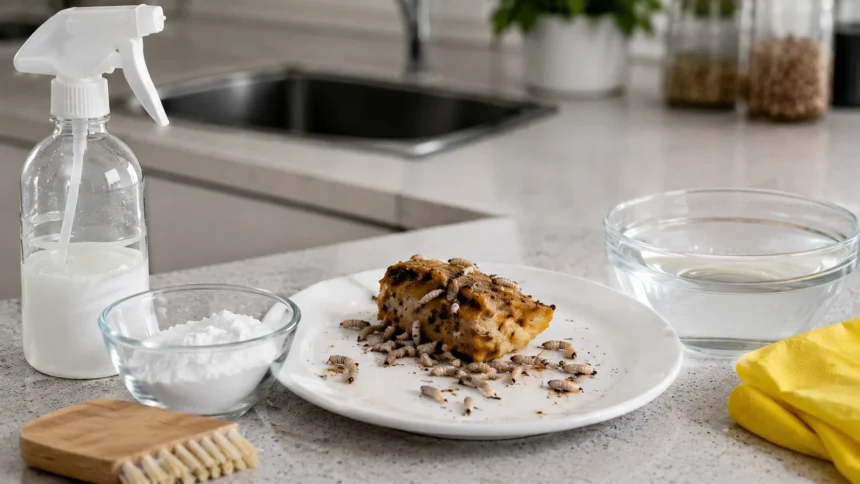
How to Kill Maggots Fast: 7 Effective Methods
Finding maggots in a trash can, kitchen, drain, garage, or outdoor waste area can be unpleasant, but the problem is usually manageable once you locate the source. Maggots are the larval stage of flies, and they typically develop where adult flies have access to moist, decaying organic material. Garbage, spoiled food, animal waste, rotting produce, and dead animals are common breeding sources. Simply killing the visible larvae may provide temporary relief, but the infestation can return if eggs, pupae, or contaminated material remain nearby. The fastest approach combines immediate removal with thorough cleaning. Eliminating the breeding source is ultimately more important than choosing the strongest chemical product.
Most household maggot problems do not require complicated pest-control treatments. Hot water, soap, physical removal, steam, thorough sanitation, and correctly selected pest-control products can all be useful depending on where the larvae are located. University extension guidance consistently emphasizes sanitation and removal of decaying organic matter as the foundation of fly control because adult flies need suitable breeding material to continue producing larvae. Chemical treatment may temporarily reduce pest numbers, but it cannot compensate for garbage, food residue, or other breeding material that remains accessible. The goal should therefore be to kill or remove the current maggots and make the location unsuitable for another generation.
This guide explains how to kill maggots fast using seven effective methods, along with the safest approach for garbage cans, drains, kitchens, floors, and outdoor areas. It also explains how to clean after an infestation, what mistakes to avoid, and how to prevent maggots from returning. The methods focus on ordinary household infestations rather than larvae found in human or animal wounds, which require professional medical or veterinary attention. Safety is especially important when using heat or pesticides because stronger treatment does not automatically mean better control. By identifying where the flies are breeding and removing what attracted them, you can usually solve the underlying problem instead of repeatedly treating visible larvae.
What Are Maggots and Why Do They Appear?
Maggots are immature flies that hatch from eggs laid by adult female flies in suitable breeding material. House flies and several other so-called filth flies commonly lay eggs in moist, decaying organic matter where newly hatched larvae have immediate access to food. University of Minnesota Extension notes that fly eggs develop in materials such as garbage and animal waste before hatching into pale, legless larvae. Depending on the fly species and environmental conditions, development can happen quickly during warm weather. That is why a trash bag that seemed normal one day can sometimes contain noticeable larvae shortly afterward. Heat and moisture generally make organic waste more attractive and support faster fly development.
Trash cans are among the most common locations because they provide food, moisture, warmth, and relative protection in one container. Meat scraps, fish packaging, spoiled produce, pet food, dirty diapers, and other organic waste can attract adult flies if bags or lids do not seal properly. Liquid leaking from garbage bags can remain at the bottom of a bin even after the main trash is removed. Flies may then continue laying eggs in the residue. Penn State Extension recommends removing garbage and keeping outdoor trash in tightly sealed containers as part of effective house-fly control. A clean-looking bin can therefore continue producing flies if sticky organic material remains underneath or around its edges.
Indoor maggots can also point to a hidden food source. A forgotten bag of potatoes, food spilled under an appliance, pet waste, or an animal carcass inside a wall or attic can provide enough material for flies to reproduce. Larvae sometimes crawl away from the original breeding material when they are ready to pupate, so finding maggots on a clean floor does not always mean the eggs were laid there. The breeding source may be several feet away. Following the direction from which larvae appear can help locate it. Look underneath garbage containers, appliances, shelves, pet feeding areas, and other places where organic material could have accumulated unnoticed.
Drains can produce larvae from specific fly species when a layer of moist organic material develops inside the plumbing. Penn State Extension explains that drain or moth flies deposit eggs in wet, decomposing organic material and that larvae can develop within the gelatinous buildup inside drains. In that situation, simply pouring a chemical into the opening may not solve the problem because the breeding film can remain attached to the pipe. Physical cleaning, brushing, steam, or suitable biological drain-cleaning products may be needed to remove the material itself. Identifying whether the larvae are ordinary filth-fly maggots or drain-fly larvae can therefore change the most effective treatment.
Whatever the location, the presence of maggots usually means that flies found a suitable place to reproduce. Killing the larvae is only one part of control because adult flies may already have laid additional eggs nearby. Pupae can also survive after the visible food source has been removed and later produce adult flies. For that reason, successful treatment should combine immediate elimination, sanitation, drying, and exclusion. Tight-fitting garbage lids, repaired screens, cleaner waste areas, and removal of decaying material make it harder for adult flies to restart the cycle. Prevention works because it targets the conditions flies need rather than repeatedly reacting after larvae become visible.
How to Kill Maggots Fast: 7 Effective Methods
Method 1 — Remove and seal the breeding material immediately. This is often the fastest and most effective action because it eliminates both visible maggots and the food supporting them. Put spoiled food, contaminated garbage, or other infested disposable material into a sturdy bag, seal it tightly, and move it to an appropriate outdoor waste container. If the original trash bag has leaked, remove residue from the surrounding area rather than simply replacing the liner. Wear disposable gloves when handling heavily contaminated waste and wash your hands afterward. Removing the source also prevents newly hatched larvae from continuing to feed. Sanitation and waste removal are consistently emphasized as the foundation of filth-fly control.
Method 2 — Use very hot water on suitable, heat-resistant surfaces. Hot or boiling water can kill exposed larvae rapidly through heat and is particularly useful for some outdoor trash cans, concrete surfaces, and other areas that can safely tolerate high temperatures. Pour slowly to reduce splashing and keep children and pets away while treating the area. Do not assume every surface or plumbing system is safe for boiling water, because certain plastics, seals, finishes, and temperature-sensitive materials can be damaged. For a trash bin, removing loose waste first allows the water to contact the larvae more effectively. After treatment, drain the water appropriately and allow the container to dry before replacing the liner.
Method 3 — Wash larvae and contaminated surfaces with hot soapy water. Dish detergent or another suitable household cleaning soap helps loosen grease, food residue, and organic films that allow flies to keep breeding. This method works especially well after the bulk of the infestation has already been removed from trash cans, hard floors, outdoor containers, and washable surfaces. Scrub corners, lid hinges, rims, handles, and the bottom of the bin because small amounts of residue can remain hidden there. Soap also makes it easier to physically remove larvae that remain attached to contaminated material. Rinse when appropriate and dry the area thoroughly. The cleaning step matters because removing food and moisture makes another infestation much less likely.
Method 4 — Use steam and physical scrubbing where organic buildup is hidden, especially in appropriate drains. Method 5 — Remove drain biofilm with an enzyme or bacterial drain-cleaning product designed for that purpose. Penn State Extension recommends physically removing the organic material supporting drain-fly larvae and notes that brushing, steam, or products containing bacteria or enzymes can help break down the gelatinous scum. These methods address the breeding source rather than only larvae near the drain opening. Follow product directions carefully and avoid combining drain products with bleach, acids, or other cleaners. Repeated cleaning may be necessary when buildup extends farther into the drain or trap.
Method 6 — Physically collect or vacuum scattered maggots and dispose of them in a sealed bag. Method 7 — Use an appropriately labeled insecticide only when nonchemical methods are insufficient. A vacuum with a disposable collection bag can help remove larvae and pupae from dry floors or cracks after the original source has been eliminated, while manual collection can work in small areas. Empty or discard the collection material promptly according to the appliance design. For severe fly activity, an insecticide labeled for the exact pest and treatment location may provide short-term control, but always follow the label exactly. EPA guidance stresses using pesticides only as directed and warns against using outdoor chemicals indoors or applying more than recommended.
Best Ways to Remove Maggots From Different Areas
For maggots in a garbage can, start by removing every bag, food scrap, disposable liner, and loose piece of contaminated material. Seal the waste rather than carrying an open container through the home, which can spread larvae or residue. Once the bin is empty, use hot soapy water and scrub the interior, underside of the lid, rim, handles, wheels, and drainage areas. Heat-resistant outdoor bins may also be treated carefully with very hot water if their manufacturer allows it. Allow the container to dry fully before inserting a fresh bag. Keeping garbage bags tightly tied and using a bin with a close-fitting lid helps prevent flies from reaching future waste.
For maggots in a kitchen, removing contaminated food is the first priority. Inspect produce baskets, potatoes and onions, recycling containers, pet food, garbage disposals, forgotten grocery bags, and spaces under refrigerators or cabinets. Do not spray insecticide around exposed food, dishes, or food-preparation surfaces unless a product label specifically allows that use and all directions can be followed safely. In most kitchens, physical removal followed by thorough cleaning is more appropriate. Wash hard surfaces with a suitable cleaner, remove crumbs and spills, and dry moisture-prone areas. If larvae continue appearing after all visible food sources have been eliminated, investigate less obvious places such as underneath appliances or inside inaccessible waste gaps.
For maggots or fly larvae in drains, focus on the material inside the drain rather than the visible larvae alone. Drain-fly larvae can develop in organic film lining sinks, floor drains, traps, and similar wet areas. A stiff drain brush, appropriate steam treatment, or an enzyme or bacterial drain cleaner can help remove the buildup supporting development. Repeatedly pouring harsh chemicals into a drain without cleaning the film may provide disappointing results. Never mix cleaning chemicals, particularly bleach with acids, ammonia, vinegar, or unknown drain products. If several drains are affected or sewage odors accompany the infestation, a plumbing or pest-management problem may need professional investigation.
For maggots on floors, carpets, or around baseboards, locate the nearby breeding source before concentrating on the scattered larvae. Larvae may travel away from garbage or decaying material as they mature, so treating the floor alone can miss the actual origin. Hard floors can usually be vacuumed or swept, followed by cleaning with hot soapy water or another surface-appropriate cleaner. Carpets may require careful vacuuming and cleaning according to the manufacturer’s instructions if contamination has occurred. Dispose of vacuum contents promptly and inspect underneath furniture. Continued appearance of larvae from one wall, ceiling opening, or fixed location can indicate a concealed organic source that requires deeper inspection.
For outdoor maggots, determine whether the source is household waste, animal feces, compost, spoiled feed, fallen fruit, or a dead animal. University extension guidance emphasizes removing manure, garbage, dead animals, and other decaying material when controlling filth flies outdoors. Compost should be managed so that wet food waste is not left openly available to flies, and animal-waste areas should be cleaned regularly. Outdoor insecticides may be appropriate for certain situations, but only products labeled for that location should be used. Do not apply pesticides near waterways, food-growing areas, pets, or wildlife unless the label specifically permits the intended use.
How to Clean and Disinfect After Killing Maggots
Once the visible maggots are gone, remove every remaining piece of organic material from the affected area. This includes food fragments, liquid from decomposing waste, used packaging, animal waste, and absorbent materials that cannot be cleaned effectively. Disposable gloves can make cleanup more hygienic, particularly when dealing with garbage or animal material. Place contaminated disposable items inside a sealed bag before moving them through the house. Check seams, corners, cracks, and undersides because larvae or pupae can be surprisingly easy to miss. Thorough physical removal comes before disinfection because cleaners work more effectively on surfaces that are not covered with grease, dirt, or organic debris.
Wash hard surfaces using hot water and an appropriate household detergent or cleaner. Scrubbing is important because it physically removes food films that can continue attracting flies even after the container appears empty. Pay special attention to garbage-can rims, lids, floor edges, cabinet corners, and any area where liquid may have collected. After cleaning, rinse when the product instructions require it. Food-contact surfaces should be cleaned using products appropriate for that purpose and according to label directions. Allowing cleaned areas to dry helps remove the moisture that many fly larvae require. A visibly clean and dry location is far less suitable for another round of egg laying.
Disinfection can be useful when an infestation has involved decomposing food, garbage, or animal waste, but it should be approached carefully. Use a household disinfectant that is suitable for the specific surface and follow its instructions regarding dilution, contact time, ventilation, and rinsing. More disinfectant is not automatically more effective, and combining products can create hazardous gases. In particular, never mix bleach with ammonia, acids, vinegar, or other cleaners. If you have already used one cleaning chemical, rinse and ventilate the area as directed before considering another. The purpose of disinfection is reducing microbial contamination after physical cleaning, not creating the strongest possible chemical mixture.
After cleaning, inspect the surrounding area for fly pupae, which can look different from pale moving maggots. Mature larvae commonly move toward drier locations before pupating, and the resulting pupal cases may be brown or darker in color. University of Minnesota Extension notes that maggots search for a dry place to pupate after completing their larval development. Check cracks, wall edges, underneath containers, and nearby sheltered spaces. Vacuum or physically remove any suspicious pupae you find. Otherwise, adult flies may emerge later even though the original larvae and food source were eliminated. A short period of continued fly monitoring after cleanup can reveal whether the breeding cycle has truly been interrupted.
Finally, clean or replace the equipment that helped create the problem. A cracked trash bin that leaks organic liquid may need replacement, while a loose lid should be repaired or upgraded. Mop heads, brushes, or cleaning cloths contaminated with decomposing waste should be washed appropriately or discarded. Inspect recycling bins as well because food containers can contain enough residue to attract flies when they are stored for long periods. If pet food or animal waste was involved, review how those materials are stored and removed. Cleanup is most effective when it changes the conditions that allowed the infestation to develop rather than returning the area to exactly the same routine.
What Not to Do When Trying to Kill Maggots
Do not rely on random chemical mixtures simply because online advice claims they kill maggots instantly. Mixing household cleaners can expose people and pets to dangerous fumes without improving pest control. Bleach should never be mixed with ammonia, acids, vinegar, toilet cleaners, or unknown chemicals. Likewise, combining several pesticides or doubling the recommended concentration can create unnecessary exposure and may damage surfaces. EPA guidance specifically advises consumers not to assume that using twice as much pesticide produces a better result. Cleaning, sanitation, and physical removal are usually safer foundations for household fly control than improvising powerful chemical combinations.
Do not spray outdoor pesticides inside the home. Pest-control products are registered and labeled for particular pests, surfaces, and environments, and those restrictions matter. An outdoor residual spray may not be appropriate around kitchen counters, bedrooms, food-storage areas, or indoor air. EPA advises against using chemicals intended for outdoor use inside buildings. If an insecticide is genuinely necessary, choose a product whose label includes the location and pest you need to treat. Follow ventilation, protective-equipment, reentry, and storage instructions carefully. Keep pesticides in their original labeled containers and away from children and pets rather than transferring leftovers into bottles or unmarked containers.
Do not pour boiling water indiscriminately onto every infested surface. High temperatures can damage certain plastics, adhesives, laminates, seals, flooring, disposal components, and plumbing materials. Sudden temperature changes can also crack some materials. Hot water is useful only where the surface can safely tolerate it. If you are unsure about a drain, appliance, or container, use a safer cleaning temperature and physical removal instead of risking damage. Steam equipment should be handled with similar care because steam can cause serious burns. Heat is effective against exposed larvae, but the safest treatment is always one compatible with the material and environment being treated.
Do not kill visible larvae and then ignore the source. This is probably the most common reason infestations return. If flies can still reach rotting food, garbage liquid, animal waste, drain biofilm, or another breeding material, a new generation can appear. University extension recommendations consistently place sanitation and breeding-source removal ahead of long-term reliance on insecticides. Take a few minutes after treatment to inspect nearby areas and ask what the larvae were feeding on. Removing that material may prevent far more flies than repeatedly treating the maggots themselves. Persistent infestations almost always deserve another search for a missed source.
Do not treat maggots found in a human or animal wound as though they were ordinary household pests. Larvae in human tissue can represent myiasis and require medical assessment. CDC guidance says people who see or feel maggots in or on a wound should contact a healthcare provider rather than attempting self-treatment. Likewise, current veterinary guidance advises professional veterinary removal when maggots infest wounds in dogs or cats. Do not pour bleach, insecticide, boiling water, salt, or household cleaning products onto a person or pet. This situation requires healthcare, not DIY pest control.
How to Prevent Maggots From Coming Back
The most effective prevention strategy is controlling garbage and food waste. Tie garbage bags securely before placing them into bins and remove household trash regularly, especially during warm weather. Outdoor containers should have tight-fitting lids that prevent flies from reaching food scraps. University of Minnesota Extension recommends tightly tied garbage bags, regular bin cleaning, and close-fitting lids as core measures for preventing filth flies. Meat packaging, fish scraps, and other strongly odorous waste may attract flies particularly quickly when left in hot containers. Households that cannot dispose of certain food waste immediately may consider temporary sealed storage according to local waste-management practices until collection day.
Clean garbage bins before thick residue develops. Waiting until maggots appear means flies have already found enough organic material to reproduce. After collection day, inspect the bottom of outdoor cans for leaking liquids or loose food and wash the container when necessary. Drying is just as important because moist residue supports fly development more readily than clean, dry surfaces. Pay attention to recycling containers as well. Beverage cans, food jars, pet-food containers, and takeaway packaging can retain enough residue to attract flies. Rinsing recyclable containers when appropriate and following local recycling rules can reduce odors and food buildup inside storage bins.
Control indoor food sources by storing produce properly and disposing of spoiled items promptly. Potatoes, onions, fruit, and other foods can become forgotten in cabinets or storage areas, eventually producing strong odors that attract flies. Clean underneath refrigerators, cookers, and garbage containers where food can fall unnoticed. Pet feeding areas deserve regular attention because wet food can spoil quickly in warm conditions. Keep dry pet food in suitable sealed containers and remove uneaten wet food according to safe feeding practices. Penn State Extension recommends eliminating sources of attraction, removing overripe produce, and keeping areas clean and dry as basic fly-control measures.
Reduce adult fly access to the home. Repair damaged window and door screens, close gaps around entry points where practical, and avoid leaving doors open unnecessarily during periods of heavy fly activity. University of Minnesota Extension recommends screening windows and doors as part of filth-fly prevention. Fly traps can reduce adult numbers, but they should support sanitation rather than replace it. If flies continue appearing in large numbers despite good screening, investigate whether they are breeding indoors. Adult flies emerging repeatedly from one room may indicate an unseen waste source, drainage problem, or dead animal that requires attention.
Finally, deal quickly with animal waste and outdoor organic matter. Pick up pet feces, manage livestock or poultry waste appropriately, and remove dead animals according to local regulations and safe handling practices. Rotting grass clippings, badly managed compost, and decaying fallen fruit can also support some fly populations. Extension guidance emphasizes moisture management, sanitation, and manure removal in environments where filth flies reproduce heavily. Compost piles should be maintained according to sound composting practices rather than allowed to become exposed collections of wet food waste. Preventing access to breeding material interrupts the fly lifecycle before eggs become the maggots you eventually notice.
When a Maggot Infestation Needs Professional Help
Consider a pest-control professional when large numbers of maggots repeatedly return despite thorough cleaning. Persistent activity suggests that the true breeding material may be hidden somewhere you cannot easily access. Professionals can inspect voids, crawl spaces, attics, waste areas, drainage systems, and other locations where flies might be reproducing. They can also identify the adult fly species, which may provide clues about whether the source is garbage, drains, animal material, or something else. University of Minnesota Extension notes that licensed pest-control operators may be appropriate for heavy fly infestations when ordinary measures are insufficient. Identification is valuable because different flies require different control strategies.
A professional inspection is particularly useful when larvae appear from walls, ceilings, vents, or inaccessible structural areas. A dead rodent, bird, or other animal can support a burst of fly development inside a building, and larvae may later crawl outward seeking places to pupate. Simply spraying the visible maggots will not remove the carcass. Locating and safely removing the source can solve the infestation more effectively. Wildlife-entry points may also need sealing afterward to prevent recurrence. If you suspect an animal is trapped or living inside the structure, wildlife-control requirements and local regulations may affect how the problem should be handled. Avoid opening walls randomly without understanding what may be behind them.
Recurring drain-related larvae may justify help from a plumber or pest-management professional, especially when several drains are involved. Drain fly control depends on eliminating the organic film in which larvae develop, and some buildup may be difficult to reach with ordinary household tools. Penn State Extension notes that pest-management companies may provide treatment aimed at removing drain scum and breeding material. Persistent sewage odors, slow drains, leaks, or backup problems may indicate a plumbing issue rather than a simple insect problem. Fixing the moisture or drainage problem can be much more effective than repeatedly treating the insects that benefit from it.
Commercial kitchens, restaurants, food-processing facilities, healthcare buildings, and similar environments should respond to recurring maggot activity especially seriously. Fly breeding can indicate sanitation, waste-management, drainage, structural, or operational problems that may affect food safety and regulatory requirements. A formal pest-management program can combine inspections, monitoring, sanitation improvements, exclusion, and carefully selected treatments. Records help determine whether fly activity is decreasing and which areas repeatedly create problems. Pest control should coordinate with cleaning and facility teams rather than operate as a separate spray-only program. The most reliable long-term results come from correcting the environmental conditions that support breeding.
Maggots on or inside a wound, body opening, person, or animal require an entirely different response. CDC describes myiasis as infestation of human tissue by fly larvae and advises people who suspect it to seek professional healthcare. Current CDC guidance regarding New World screwworm specifically advises immediate healthcare contact if maggots are seen or felt in a wound or body area and warns against attempting removal independently. For pets and livestock, contact a veterinarian. Household methods such as hot water, pesticides, bleach, or other cleaners should never be applied to living tissue.
Conclusion
Knowing how to kill maggots fast begins with recognizing that visible larvae are only one part of a fly infestation. Maggots develop because adult flies found moist organic material where they could lay eggs and their larvae could feed. The quickest lasting solution is therefore removing that breeding material while eliminating the larvae already present. Garbage, spoiled food, animal waste, drain buildup, and dead animals are among the most common household sources. Once the source disappears, the fly lifecycle becomes much harder to continue. Treating only the larvae may improve the appearance of an area immediately, but the problem can return if contaminated material remains.
The seven practical methods covered here include removing and sealing infested material, carefully using hot water on suitable surfaces, washing with hot soapy water, using steam and physical cleaning, removing drain biofilm with suitable products, physically collecting scattered larvae, and using correctly labeled insecticides when necessary. Not every method is appropriate for every location. A trash bin can tolerate cleaning methods that may damage carpet, plumbing, or food-preparation surfaces. Always match the treatment with the material being cleaned. When uncertain, physical removal and ordinary cleaning are often safer starting points than aggressive chemical treatment. The goal is effective control without creating burns, fumes, damaged surfaces, or pesticide exposure.
Sanitation is what turns a quick kill into a lasting solution. After removing the maggots, scrub away grease and food residue, clean leaking garbage containers, eliminate standing moisture, and inspect nearby cracks for larvae or pupae. A few minutes of careful cleanup can prevent another wave of adult flies from emerging. Keeping garbage bags tied, using containers with tight lids, storing food properly, and removing animal waste regularly make the environment far less attractive to flies. These prevention measures may seem simple, but extension guidance repeatedly identifies sanitation as the most important foundation of fly management.
Safety should remain part of every treatment decision. Do not mix household chemicals, use outdoor pesticides indoors, apply more pesticide than the label recommends, or pour boiling water onto unsuitable materials. Stronger treatment is not automatically faster or more effective when the breeding source remains untouched. If an insecticide is necessary, choose one labeled for the pest and treatment location and follow every instruction carefully. When infestations repeatedly return, professional pest control can often locate hidden sources more efficiently than repeated DIY treatment. Plumbing professionals may also be needed when drain flies are connected with inaccessible buildup, leaks, or drainage problems.
Most ordinary household maggot infestations can be controlled quickly once you find what the larvae are feeding on. Remove the source first, eliminate the exposed maggots using a location-appropriate method, clean thoroughly, and then make the area difficult for adult flies to access again. This sequence is usually more reliable than trying one dramatic home remedy after another. Persistent infestations are a signal to investigate more deeply rather than simply increasing the amount of chemical treatment. And if larvae are associated with a human or animal wound, do not use household pest-control methods at all. Seek appropriate medical or veterinary help because that situation involves health care rather than ordinary sanitation.
What kills maggots instantly?
Very hot water can kill exposed maggots quickly on surfaces that can safely tolerate heat. Physical removal and sealed disposal are also immediate ways to eliminate larvae without leaving chemical residue.
Does bleach kill maggots?
Bleach may kill exposed larvae under some conditions, but it is usually unnecessary for ordinary household infestations and can create hazards if misused. Never mix bleach with ammonia, vinegar, acids, or other cleaners, and use it only according to the product label.
Will vinegar kill maggots?
Vinegar is often recommended in home remedies, but it should not be relied on as the primary fast-control method for a significant infestation. Removing the breeding material, cleaning thoroughly, and using proven heat, physical, or appropriately labeled pest-control methods is more dependable.
Why do maggots keep coming back?
Recurring maggots usually mean flies still have access to a breeding source such as garbage residue, spoiled food, animal waste, drain buildup, or a hidden dead animal. Finding and removing that source is essential for stopping repeated infestations.
Can maggots be dangerous to people or pets?
Maggots in household garbage are mainly a sanitation concern, but larvae found in wounds or living tissue can represent myiasis and require professional attention. Contact a healthcare provider for a person or a veterinarian for an animal instead of attempting DIY removal.