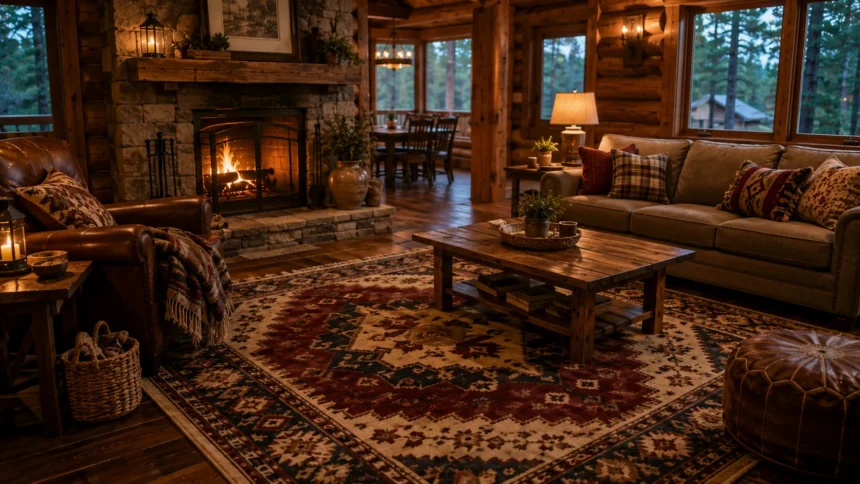
Cabin Rugs: Cozy Rustic Ideas for a Warm Interior
Cabin rugs can completely change how a rustic interior feels. Timber walls, stone fireplaces, leather seating, and exposed beams already create character, but without enough softness underfoot, a cabin can still feel hard, cold, or unfinished. The right cabin rug adds warmth, improves comfort, absorbs sound, defines furniture zones, and introduces color or pattern without requiring major changes to the room. A large wool rug can make an open-plan living area feel more intimate, while a smaller woven runner can instantly soften a hallway or kitchen. Because rugs cover such a large visual area, they often influence the mood of a cabin more than smaller decorative accessories.
The best rustic rugs do not all look the same. Some cabins suit traditional Persian-inspired patterns and rich earth tones, while others feel better with simple wool textures, plaid designs, flatweaves, jute, or neutral geometric patterns. Modern cabins can use understated rugs in oatmeal, charcoal, cream, or warm gray, while lodge-style interiors may benefit from deeper red, brown, olive, or navy. The key is choosing a rug that supports the architecture rather than competing with it. When size, material, pattern, and placement are right, a rug makes the entire cabin feel more comfortable and connected.
Why Rugs Matter So Much in a Cabin Interior
Cabins often contain a large amount of hard material, including timber floors, stone walls, wood paneling, and exposed architectural surfaces. These materials are beautiful, but they can create an interior that feels visually heavy and acoustically hard. Rugs introduce softness immediately and balance the harder surfaces without hiding the natural character of the cabin. They also make walking areas more comfortable, especially during colder months when timber or stone floors can feel chilly underfoot. In living rooms and bedrooms, that physical comfort contributes directly to the sense of coziness people expect from a retreat.
Rugs also help control sound. Open-plan cabins with vaulted ceilings and hard floors can create echoes, particularly when there are few upholstered surfaces. A large area rug absorbs some reflected sound and can make conversation feel more comfortable. The effect becomes stronger when rugs are combined with curtains, upholstered furniture, blankets, and cushions. This acoustic role is easy to overlook, but it can significantly change how relaxing a room feels. A cabin that sounds softer often feels warmer even before the temperature changes.
Another major benefit is visual zoning. Many cabins combine living, dining, and kitchen functions in one open room. Without clear boundaries, furniture can appear to float randomly across the floor. A rug under the living-room seating instantly defines that area, while another under the dining table can establish a separate zone. This creates structure without walls and helps a large cabin feel more intimate. In smaller cabins, one carefully positioned rug can organize the room without making it feel crowded.
Color and pattern are also easier to introduce through rugs than through permanent finishes. If the cabin is dominated by brown timber, gray stone, and neutral upholstery, a rug can add rust, olive, navy, burgundy, or muted gold without overwhelming the room. Likewise, a patterned rug can introduce movement into an otherwise plain interior. Because rugs can eventually be replaced, they are a lower-risk way to experiment with stronger color than painting walls or replacing furniture.
Finally, rugs can connect unrelated materials. A room may contain a black metal coffee table, tan leather sofa, gray fireplace, and honey-colored timber. A rug that includes several of those tones can visually pull the pieces together. This is why choosing a rug based only on whether you like the pattern can be less successful than considering the entire room. The best rug becomes a bridge between materials rather than an isolated decorative feature.
Best Rug Materials for a Cozy Cabin
Wool rugs are among the best choices for cabin interiors because they combine warmth, durability, texture, and natural visual appeal. Wool feels comfortable underfoot and works especially well in living rooms and bedrooms where softness matters. It can also hide small amounts of dirt relatively well compared with very flat synthetic fibers. High-quality wool rugs can last many years when maintained properly, making them suitable for cabins used regularly. The main disadvantages are cost and the possibility of temporary shedding, particularly with new hand-tufted or thick-pile rugs.
Jute and sisal rugs create a more casual natural look. Their golden and tan tones pair beautifully with timber and neutral cabin furniture. They work particularly well in dining rooms, sunrooms, or living areas where the goal is texture rather than plush softness. Jute is generally softer than sisal, although neither feels as cushioned as wool. Natural-fiber rugs can also be more sensitive to moisture and staining, so they may not be ideal for wet entrances or areas prone to spills.
Cotton rugs and flatweaves are useful when easy handling and casual style are priorities. They can introduce stripes, checks, kilim-inspired patterns, or muted colors without creating a thick pile. Smaller cotton rugs may also be washable, which is practical in kitchens, guest rooms, and compact cabins. However, lightweight rugs need a nonslip rug pad because they can move easily on timber floors. Their thinner construction may also provide less insulation than wool.
Synthetic rugs made from polypropylene, polyester, or similar fibers can be practical in high-traffic cabins. They are often less expensive than wool and may resist staining or moisture more effectively. This makes them useful for families, rental cabins, entry areas, or rooms where muddy boots and pets are common. Modern synthetic rugs are available in convincing vintage and rustic patterns, although some still lack the depth and texture of natural fibers. Quality varies considerably, so touch and construction matter.
Hide and faux-hide rugs can also suit rustic interiors, particularly when used as smaller accents. A cowhide-style rug beside a fireplace or layered over a larger neutral rug can introduce shape and character. Real hides create a strong lodge aesthetic, while faux versions provide a similar appearance for people who prefer synthetic materials. Because irregular shapes do not define furniture zones as clearly as rectangular rugs, hides often work best as accent layers rather than the only floor covering in a large seating area.
Cabin Rug Ideas for the Living Room
The living room is usually the most important place to use a large cabin area rug because it brings seating together visually. Ideally, the rug should be large enough for at least the front legs of the sofa and main chairs to sit on it. In a larger room, placing all furniture legs on the rug can create an even more generous and grounded appearance. A rug that is too small can make the furniture look disconnected and can actually make the room feel smaller. Always measure the seating arrangement before choosing a size.
Wool rugs work particularly well in living rooms because they soften the room without looking overly casual. A muted traditional pattern in rust, brown, cream, olive, or navy can complement leather sofas and stone fireplaces beautifully. If the room already contains strong timber grain and patterned cushions, a simpler textured rug may create better balance. The rug does not need to be the main focal point. Sometimes its most important role is quietly connecting everything else.
For modern cabins, consider rugs with subtle geometric designs. Broken lines, large-scale diamonds, tonal stripes, and abstract patterns can feel contemporary without losing warmth. Neutral colors such as charcoal, taupe, cream, and warm gray work especially well with black metal fixtures and clean-lined furniture. Adding texture through a thick weave prevents these simpler rugs from feeling flat. Modern rustic style often depends more on material contrast than obvious rustic motifs.
A fireplace can influence rug placement. Keep the rug at a safe distance from open flames, sparks, and intense heat, particularly if the fireplace does not have a substantial hearth. Fire-resistant hearth protection should never be replaced by a decorative rug. In rooms with wood-burning stoves, practical safety clearances matter more than achieving perfect symmetry. Position the rug to define seating while respecting the appliance requirements.
Layering can add even more warmth. A smaller vintage-style rug can be placed over a large neutral jute or wool base to create depth and personality. This is particularly effective in open living rooms where one oversized natural rug provides structure but feels too plain by itself. Layered rugs should overlap enough to look intentional rather than accidentally misaligned. Keeping one rug simple allows the smaller patterned layer to stand out.
Rustic Rugs for Cabin Bedrooms
A bedroom rug should prioritize comfort because this is where people are most likely to walk barefoot. Placing a large rug beneath the bed allows softness to extend along both sides and at the foot. The rug should project far enough beyond the bed that the user actually steps onto it when getting up. A small rug hidden almost entirely under the mattress offers little functional value. Measure the bed and room rather than choosing based only on standard rug sizes.
Wool is an excellent bedroom material because it feels warm and substantial. A thick neutral rug in oatmeal, ivory, warm gray, or camel can make timber bedrooms feel calm and luxurious. If the room is already dark, choosing a slightly lighter rug can prevent the overall palette from becoming too heavy. The contrast also helps define the bed area against darker flooring. Soft texture can be more important than bold pattern in a restful space.
Patterned rugs work beautifully in simple cabin bedrooms. A vintage-inspired rug in burgundy, faded blue, olive, or warm red can introduce color beneath neutral bedding. Because much of the rug may sit under the bed, only the outer portions need to coordinate strongly with the rest of the room. This makes a bedroom a good place to experiment with a slightly richer pattern. Keeping the duvet and curtains calmer prevents visual overload.
For smaller rooms, runners can be placed along one or both sides of the bed instead of using one large area rug. This can be more affordable and still provides softness where it is needed. Matching runners create symmetry, while one long runner works well beside a bed pushed closer to one wall. Use nonslip pads so lightweight rugs remain secure on smooth floors.
Guest bedrooms can use rugs to make a simple space feel more welcoming. Even if the furniture is minimal, a soft rug immediately adds warmth and reduces the feeling of an empty room. Coordinate it with a throw, cushion, or artwork to create a complete palette. A rug is often one of the fastest ways to make a basic cabin bedroom feel intentionally designed.
Cabin Rugs for Dining Rooms
Dining-room rugs need to be large enough that chairs remain on the rug when pulled away from the table. This usually means extending the rug substantially beyond every edge of the table. A rug that is too small causes chair legs to catch repeatedly on the edge, which becomes frustrating and can damage the rug over time. Before buying, pull a chair into a comfortable dining position and measure the total footprint. This practical step matters more than matching the table shape perfectly.
Low-pile or flatwoven rugs are generally easier to use beneath dining furniture than very thick shaggy designs. Chair legs move more smoothly, and crumbs are easier to clean. Wool flatweaves, synthetic vintage-style rugs, and tightly woven natural-fiber rugs can all work. If young children use the dining area regularly, stain resistance and ease of maintenance deserve extra attention. A beautiful rug that makes every meal stressful is not a good long-term choice.
Color can help hide ordinary dining wear. Very pale solid rugs may show every spill, while rugs with subtle patterns or mid-tone colors are often more forgiving. Rustic patterns containing brown, rust, olive, navy, or faded red naturally disguise small marks. This does not mean stains should be ignored, but practical color selection can make maintenance less demanding. Pattern is useful as well as decorative.
Round tables can work with round or rectangular rugs depending on the room. A round rug emphasizes the table shape and creates a distinct dining zone, while a rectangular rug may connect more naturally with the architecture. The surrounding room matters more than following a rigid rule. In a narrow cabin, a rectangular rug can sometimes make better use of available floor area even under a round table.
Avoid using a highly delicate rug in a space where food and drink spills are likely. Antique rugs can look beautiful under dining tables, but consider their condition and cleaning requirements first. A modern washable or stain-resistant reproduction may offer a similar appearance with less worry. The goal is to enjoy meals, not constantly protect the floor covering.
Cabin Rug Ideas for Kitchens
Kitchen rugs and runners can soften a cabin kitchen while providing comfort in areas where people stand for long periods. A runner placed between an island and counter can reduce the hard feeling of timber or stone flooring. Choose a low-profile rug so cabinet doors and appliances can open freely. Nonslip backing or a quality rug pad is essential because kitchens are active spaces. The rug should stay flat and secure.
Washable rugs are especially practical in kitchens. Spills, crumbs, grease, and moisture are unavoidable, so a rug that can be cleaned easily is far more useful than a delicate handwoven piece. Many washable rugs now come in vintage, plaid, stripe, and traditional patterns that suit rustic interiors. Choose colors that complement cabinetry and flooring without showing every small mark. Mid-tone patterns usually perform better visually than very pale solid designs.
Rust, olive, navy, warm beige, and muted red work particularly well in cabin kitchens. These colors complement timber cabinetry and can introduce warmth beside stone or metal appliances. A runner with a subtle border can also make a narrow kitchen feel longer. If the cabinetry is already dark, use a lighter rug to create contrast. If the kitchen is pale, a deeper runner can help ground the space.
Avoid thick rugs near sinks and cooking areas if they hold moisture or create tripping hazards. Flatweaves and washable synthetics are easier to manage. The rug should also be positioned so edges do not sit directly beneath frequently moving stools or doors. Function should guide placement before aesthetics. A slight shift in position can sometimes improve safety significantly.
For very small cabin kitchens, one narrow runner may be enough. Adding several separate mats can break the floor visually and make the room feel more crowded. One continuous piece creates a cleaner line and can connect the entire work zone. Simple styling often works best in compact spaces.
Entryway and Mudroom Rugs for Cabins
Cabin entryways often deal with more dirt, moisture, snow, and outdoor debris than other areas, so rug durability matters enormously. A decorative wool rug can look beautiful but may not be the best first surface inside a heavily used door. Consider a durable washable runner, indoor-outdoor rug, or tightly woven synthetic option that can tolerate repeated cleaning. The entry rug should protect the main flooring while still supporting the cabin’s rustic atmosphere. Darker patterns are generally more forgiving.
A mudroom can use more than one layer of floor protection. A practical scraper mat directly at the exterior door can remove heavy dirt, while a decorative runner farther inside provides warmth and style. This combination prevents the prettier rug from absorbing the worst of the moisture. It also allows each product to perform the job it does best. Practicality does not have to eliminate good design.
Traditional striped runners suit cabin entryways particularly well. Muted red, charcoal, tan, green, or navy stripes create character without showing dirt easily. Vintage-style patterns are another strong choice because variation in color naturally disguises wear. Avoid very deep pile, which can trap mud and become difficult to clean. Flat surfaces are generally easier in high-traffic zones.
Make sure doors can clear the rug. Thick rugs positioned directly beside an exterior door may catch every time the door opens. Measure the door clearance before buying. Nonslip pads are also especially important because entry floors can become wet. A rug that slides on damp timber or tile creates a safety problem.
If the entry is narrow, use a long runner to draw the eye inward. This can make the space feel more generous while connecting the entrance visually with the main cabin interior. A runner that repeats one color from the living room can create continuity. Small transitional details like this help a cabin feel cohesive rather than divided into unrelated rooms.
Best Colors for Cabin Rugs
Earth tones are a natural starting point because they coordinate easily with timber and stone. Brown, rust, olive, tan, camel, beige, and muted gold can make a cabin feel warm without creating extreme contrast. These shades also reflect colors commonly found outdoors, helping the interior feel connected to the surrounding landscape. Earth tones work particularly well in traditional and lodge-style cabins. The challenge is avoiding a room where every surface becomes the same brown.
Introducing cooler colors can provide balance. Navy, slate blue, dusty teal, and forest green work beautifully with warm timber. These shades prevent rustic rooms from feeling overly orange or yellow. A navy-and-rust vintage rug, for example, can connect blue upholstery with a brown leather chair and wood flooring. Cool accents often make warm materials look richer by contrast.
Red is a classic cabin color, especially in plaid and traditional rugs. Burgundy, brick, and faded crimson can create strong warmth without looking overly bright. Deep red works particularly well with dark wood, leather, and stone. However, large amounts of vivid red can dominate a small room. Muted or distressed versions are generally easier to combine with modern furniture.
Neutral rugs are ideal when other elements already provide plenty of color and texture. Cream, oatmeal, warm gray, taupe, and charcoal can ground the room while allowing artwork, upholstery, and wood grain to stand out. Neutral does not have to mean plain. Bouclé-like textures, chunky wool weaves, or subtle patterns can create interest without introducing another strong color.
Black can also work in rustic interiors, particularly as part of a pattern rather than one large solid field. Black details connect with metal lighting, window frames, stove doors, and cabinet hardware. A cream-and-black geometric rug can make a modern cabin feel more structured. Balance black with warm materials so the result does not become too severe.
Plaid Cabin Rugs and Classic Lodge Style
Plaid is one of the most recognizable patterns associated with cabins and lodges. A plaid rug can instantly introduce a relaxed traditional mood, especially in red, green, navy, or neutral combinations. It works well in living rooms, bedrooms, and entryways where a straightforward pattern complements timber architecture. However, plaid becomes overwhelming when repeated excessively. If the rug is strongly patterned, keep nearby blankets and cushions more restrained.
Buffalo check provides a bolder version of the look. Large black-and-white or red-and-black checks can make a strong statement in smaller doses. Because the pattern is visually dominant, it works best in relatively simple rooms. A black-and-cream check can suit modern farmhouse cabins, while red-and-black creates a more traditional lodge atmosphere. Consider using this style in an entryway or bedroom rather than across an enormous open-plan living room.
Tartan-inspired rugs offer more color complexity. These patterns can contain several tones, which makes them useful for tying a room together. A rug with forest green, navy, burgundy, and tan can connect multiple furniture and textile colors at once. The pattern also hides ordinary wear well. Traditional tartan works particularly well beside leather upholstery and antique-style timber furniture.
For a modern interpretation, choose plaid with softer contrast. Tonal beige checks, gray-and-cream patterns, or oversized muted grids create the familiarity of plaid without looking overly themed. These styles work well in contemporary cabins where the architecture is rustic but the furniture is minimal. Pattern scale can completely change the character of the rug. Large subtle checks often feel more modern than dense traditional tartan.
Plaid should support the room rather than announce “cabin” in every direction. One strong checked rug can be enough. Pair it with solid upholstery, simple curtains, and natural textures. Restraint makes the pattern look intentional rather than decorative shorthand.
Vintage and Persian-Style Rugs in Rustic Cabins
Vintage-inspired rugs can add history and depth to a cabin without relying on obvious lodge motifs. Persian-style patterns in faded red, navy, rust, olive, cream, and brown pair beautifully with timber and stone. Their intricate designs create visual richness while disguising wear, which makes them practical for living rooms and dining spaces. Even modern reproductions can create a collected appearance when colors are muted. The effect is sophisticated rather than overtly rustic.
A distressed pattern can prevent a new rug from feeling too perfect in an informal cabin. Slightly faded motifs blend naturally with weathered timber, leather furniture, and antique pieces. This is particularly useful in rooms where everything else has texture and age. A pristine highly formal rug may sometimes look disconnected. Softly worn-looking patterns create an easier visual relationship.
Persian-style rugs also work in modern cabins. A clean black sofa and minimalist coffee table can feel warmer when placed on a vintage-patterned rug. The contrast between modern furniture and traditional pattern makes both elements more interesting. This prevents modern rustic interiors from becoming too predictable. One old-looking textile can provide character without requiring vintage furniture throughout the room.
Color selection remains important. If the wood has strong orange undertones, a rug containing only red and brown may intensify the warmth excessively. Adding navy, green, or charcoal within the pattern can create balance. If the cabin is very dark, choose a vintage rug with some cream or faded beige areas so the floor does not disappear visually. The rug should relate to the wood rather than match it exactly.
True antique rugs can be beautiful investments, but condition should be assessed carefully. Cabins used by pets, children, or large groups may be hard environments for fragile textiles. A high-quality reproduction may provide the same aesthetic with less concern about wear. Choose according to how the cabin is actually used rather than how it appears in photographs.
Jute Rugs for a Natural Cabin Look
Jute rugs bring strong natural texture and work especially well in cabins with light or medium timber. Their warm tan color creates a relaxed base without introducing a complicated pattern. This can be useful when the room already contains stone, wood grain, patterned cushions, and artwork. A jute rug calms the floor visually while reinforcing the connection to natural materials. It is particularly effective in modern rustic, coastal cabin, and Scandinavian-inspired interiors.
Jute is generally softer than sisal but still has a firmer texture than wool. It may feel perfectly comfortable in a living room with shoes or slippers but less luxurious beside a bed where barefoot softness is important. The exact weave affects comfort considerably. Chunkier braided rugs have a more pronounced texture, while finer woven versions feel smoother. If softness matters, test the material in person when possible.
Layering a smaller wool or vintage rug over jute is a popular approach. The jute provides a large affordable base while the top rug adds pattern and softness. This works especially well when an oversized wool rug would be expensive. The combination also creates the layered, informal look that suits cabins. Keep enough of the jute visible around the edges so the layering appears intentional.
Jute is not ideal for wet rooms or entryways exposed to heavy moisture. Natural plant fibers can absorb water, stain, or develop odor when they remain damp. Use synthetic or outdoor-rated alternatives in mudrooms where snow and rain are common. Jute performs better in relatively dry interior spaces. Placement should reflect the material’s limitations.
Regular vacuuming helps prevent dust from settling within the weave. Some jute rugs naturally shed small fibers, particularly when new. Avoid aggressive wet cleaning unless the manufacturer specifically allows it. Natural fiber care is generally easiest when stains are prevented and small spills are addressed quickly.
Modern Cabin Rug Ideas
Modern cabins often benefit from rugs that are quieter in pattern but strong in texture. A thick wool rug in cream, charcoal, or warm gray can soften architectural timber without competing with large windows or dramatic views. Geometric patterns can also work, especially when the shapes are oversized and the contrast is subtle. The goal is to add warmth while preserving clean lines. Busy patterns are not necessary to make a rug feel interesting.
Black-and-cream rugs can create a particularly strong modern rustic look. Simple diamonds, broken grids, or abstract lines connect naturally with black metal window frames and light fixtures. The cream background keeps the room from feeling too dark. This style works well with tan leather, pale timber, and stone. Repeating black elsewhere helps the rug feel integrated.
Monochromatic textured rugs are another option. Rather than relying on printed pattern, use loops, raised lines, or contrasting pile heights to create depth. These details become more noticeable as light moves across the floor. Texture keeps a neutral rug from appearing plain. It is especially effective in bedrooms and living rooms where comfort is important.
Abstract rugs can work in cabins if the colors relate to the natural palette. Designs that resemble stone, landscape, or weathered surfaces can feel surprisingly appropriate. Avoid overly bright artificial colors unless the rest of the room deliberately uses them. Muted abstract patterns provide modernity without breaking the connection to nature. A subtle design can also hide everyday wear.
The best modern cabin rugs usually avoid obvious wildlife or novelty motifs. Deer, bears, pine trees, and mountain graphics may suit some traditional lodges, but modern interiors often feel stronger with more abstract references. Natural color, texture, and material can communicate rustic warmth without literal imagery. This keeps the room sophisticated and easier to update later.
Small Cabin Rug Ideas
Small cabins require careful rug sizing because too many little rugs can visually break up the floor and make the space feel fragmented. One appropriately sized rug often creates a calmer and more spacious effect. In a combined living and dining room, a single living-area rug may be enough to define the main seating zone. Leave some visible floor around it so the room does not feel completely covered. Balance is more important than maximizing rug quantity.
Light or medium-toned rugs can help compact spaces feel more open. Cream, taupe, muted gray, pale rust, and soft patterned rugs reflect more light than very dark solid designs. This is particularly useful in cabins with dark timber walls. However, the rug does not need to be white. Mid-tone vintage patterns can remain practical while still brightening the room.
Stripes can influence the perceived proportions of a room. A runner with lengthwise stripes can make a narrow hallway appear longer, while subtle horizontal patterning may visually widen a compact room. The effect is not dramatic enough to overcome poor furniture layout, but it can contribute. Choose low-contrast stripes for a calmer appearance. Strong black-and-white stripes create a more graphic effect.
Round rugs can work in small reading corners or beneath compact dining tables. Their lack of corners allows more floor to remain visible and can soften boxy rooms. However, they should not be used simply because the room is small. A rectangular rug may still define a sofa arrangement more effectively. Shape should relate to furniture rather than floor area alone.
Avoid tiny rugs floating in the middle of a room. This is one of the most common mistakes in small interiors. A rug that connects furniture visually can make the room feel larger than one that sits isolated between pieces. When budget limits size, a simple larger natural-fiber rug may be more effective than a smaller premium rug that does not fit the layout.
How to Choose the Right Cabin Rug Size
Rug size should be determined by the furniture arrangement rather than simply the overall room dimensions. In a living room, measure the footprint of the sofa and chairs first. The rug should ideally extend beneath at least the front legs of the main seating pieces. Leaving the rug several inches short of every item creates a disconnected “floating island” effect. Larger rugs generally make living areas feel more generous and finished.
In dining rooms, allow enough space for chairs to remain on the rug when pulled back from the table. This prevents repeated catching on the rug edge. Measure the table and add generous clearance around it. If the rug is only slightly larger than the tabletop, it is probably too small for practical dining use. Function should guide the dimension.
Bedroom rugs can either sit beneath most of the bed or begin farther down so they extend generously along the sides and foot. The best arrangement depends on bed size and room layout. What matters is that the visible portions are large enough to feel intentional. Tiny bedside mats can work, but they create a very different look from one large grounding rug. Decide whether the goal is softness or full visual structure.
Entryway runners should leave a border of visible flooring around them. A runner that is almost wall-to-wall can feel cramped and may interfere with doors. Measure door clearance as well as hallway width. The rug should guide movement rather than obstruct it. Long runners often work better than several short mats.
Use painter’s tape to mark the proposed rug dimensions before buying. This lets you see whether the rug will connect furniture properly and whether walkways remain comfortable. Online product images can make rugs appear much larger than they are. Measuring in the actual room prevents one of the most common decorating mistakes.
How to Layer Rugs in a Cabin
Layering rugs can create extra warmth and make a cabin feel more relaxed. A common method is placing a smaller patterned rug over a larger neutral base. Jute, sisal, or flatwoven wool works well underneath because the texture remains visible around the edges. The top rug can then introduce richer color or a vintage pattern. This combination is particularly effective in living rooms and bedrooms.
The bottom rug should be noticeably larger than the top layer. If the two rugs are almost the same size, the arrangement can look accidental. Leaving a substantial visible border creates a clear hierarchy. The top rug does not always have to be centered. Slightly offset placement can feel more informal and work well near a reading chair or bed.
Color connection helps the layers feel intentional. A neutral jute rug works with almost anything, while a colored base requires more careful coordination. At least one tone should appear in both rugs or connect with nearby furniture. The patterns do not need to match. In fact, contrast often creates the most interesting result.
Texture can also be layered. A flat natural-fiber base with a thicker wool top rug provides both visual and physical depth. Avoid stacking several very thick rugs because the edges can become unstable and create trip hazards. Rug pads may still be needed depending on the surfaces and materials. Safety should not be sacrificed for the layered appearance.
Layering is especially useful when you own a beautiful rug that is too small for the room. Instead of replacing it, place it on a larger inexpensive base. This allows the decorative rug to remain visible while the overall arrangement achieves the correct scale. It is both a design solution and a practical budget strategy.
Cabin Rugs for Homes With Pets and Kids
Durability becomes a higher priority when pets or children use the cabin regularly. Low- and medium-pile rugs are generally easier to vacuum and less likely to trap crumbs, fur, or outdoor debris. Synthetic fibers can provide strong stain resistance and may be easier to clean than delicate natural rugs. Washable rugs are another practical option, particularly in family rooms and kitchens. Choose convenience before luxury in the most heavily used spaces.
Patterned rugs are highly useful in active households. Vintage-style or multicolored designs hide small marks, pet hair, and everyday wear better than solid pale rugs. This does not replace cleaning, but it keeps the room looking presentable between cleanings. Mid-tone colors are usually more forgiving than very dark or very light extremes. Consider the pet’s fur color as well.
Looped rugs can sometimes catch pet claws, depending on weave size and the animal. A cut-pile or tightly woven rug may perform better for pets that scratch or run indoors. Check construction rather than focusing only on fiber. A durable wool rug can sometimes outperform a cheap synthetic product when weave quality is higher. Material alone does not determine longevity.
A quality rug pad helps prevent movement during play and running. It also adds cushioning and can extend rug life by reducing friction against the floor. Choose a pad suitable for the specific flooring material so it does not discolor or stick to the surface. This matters particularly with finished timber floors. Rug pads are a small investment that can make large rugs safer and more comfortable.
Avoid using extremely precious rugs in spaces where accidents are likely. A cabin should feel comfortable enough to live in rather than creating constant anxiety about damage. Place valuable vintage pieces in lower-traffic bedrooms or formal areas and use durable alternatives in family zones. Practical design usually creates a more enjoyable home.
How to Care for Cabin Rugs
Regular vacuuming is the most important maintenance step for most rugs. Dirt particles can settle deep within fibers and gradually cause wear as people walk across them. Vacuum frequency depends on traffic, pets, and rug construction. Entry rugs may need attention several times per week, while bedroom rugs can often be cleaned less frequently. Follow the manufacturer’s recommendation regarding brush rollers because aggressive settings can damage some natural fibers.
Rotate area rugs periodically to promote more even wear and sun exposure. Rugs near large cabin windows may fade more strongly on one side, especially in rooms receiving intense daylight. Rotating them every few months can make this change more gradual. Furniture pressure marks will also shift when the rug orientation changes. This is particularly useful for wool rugs expected to last many years.
Address spills quickly. Blot rather than aggressively rubbing, which can spread stains and damage fibers. The correct cleaning method depends on material, so avoid applying random household chemicals to expensive wool, jute, or handmade rugs. Test cleaning products in an inconspicuous area first when permitted. Professional cleaning may be worth the cost for valuable or difficult rugs.
Protect rugs from persistent moisture. Entry rugs should be allowed to dry after exposure to snow or rain, and jute should not remain damp. Moisture trapped beneath rugs can also harm timber flooring. Lift and inspect rugs occasionally in cabins that remain closed for long periods or experience humidity changes. Air circulation can prevent hidden problems.
Use rug pads appropriate to the floor and rug type. Pads reduce slipping, provide cushioning, and can prevent abrasive backing from rubbing directly against timber. Replace pads when they break down or become sticky. Proper support can make both the rug and the floor beneath it last longer. Good rug care involves the entire system rather than only the visible surface.
Common Cabin Rug Mistakes to Avoid
The most common mistake is choosing a rug that is too small. A tiny rug placed only under the coffee table can make a large living room look disconnected. The rug should relate to the seating arrangement and visually connect the main furniture. When in doubt, slightly larger is often more successful than slightly smaller. Use actual measurements rather than guessing.
Another mistake is making every rug obviously rustic. Bear motifs, plaid, antlers, pine trees, and dark lodge colors used together can make the cabin feel more like a themed rental than a personal home. One strong rustic reference is usually enough. Natural fibers, warm colors, and vintage patterns can create cabin character without literal imagery. Subtlety often ages better.
Choosing the wrong material for the location can also create problems. A delicate wool rug at a muddy entrance or absorbent jute beside a wet door may require constant maintenance. Match durability to traffic and moisture. Save softer and more valuable rugs for living rooms and bedrooms. Use washable or weather-resistant options where practical conditions demand them.
Ignoring the rug pad is another common issue. Rugs can slide, wrinkle, and wear unevenly without adequate support. This is particularly dangerous on smooth wood floors. A good pad improves safety, comfort, and appearance. It can also prevent dye or backing problems depending on the rug construction.
Finally, avoid matching the rug too perfectly to the timber. A medium-brown rug on medium-brown flooring beside medium-brown furniture can make everything blend together. Introduce contrast through value, color, or pattern. A cream rug can lighten dark wood, while a navy or green rug can balance warm timber. The floor covering should complement the room rather than disappear into it.
The Bottom Line on Cabin Rugs
The best cabin rugs make rustic interiors feel warmer, softer, and more complete without competing with the natural architecture. They provide physical comfort, reduce echoes, define furniture areas, and help connect materials such as timber, stone, metal, and upholstery. Whether you prefer traditional lodge style, modern rustic design, or a simple natural look, the right rug can establish the mood of the entire room. Size and material should come before pattern when making the final choice.
Wool remains one of the strongest all-around options for living rooms and bedrooms because it combines softness with durability. Jute works well for natural texture, while synthetic and washable rugs are practical for kitchens, mudrooms, pets, children, and rental cabins. No single material is best everywhere. Matching the rug to the room’s actual use produces better long-term results than choosing based only on appearance.
Color should complement rather than copy the cabin’s existing palette. Earth tones create warmth, while navy, green, and charcoal can balance orange or golden timber. Vintage-style patterns introduce character and hide everyday wear, while neutral textured rugs suit cleaner modern interiors. Plaid can work beautifully when used with restraint. The goal is to create connection without making every element obviously “rustic.”
Correct sizing is equally important. Living-room rugs should connect seating, dining rugs should accommodate pulled-out chairs, and bedroom rugs should extend far enough to provide useful softness. Use painter’s tape to test dimensions before buying. A properly sized simple rug usually looks more expensive and intentional than a beautiful rug that is visibly too small.
Ultimately, a good cabin rug should make the room feel easier to live in. It should be comfortable, appropriate for the traffic level, easy enough to maintain, and visually connected to the rest of the interior. Choose texture, color, and pattern based on the atmosphere you want, but let scale and function guide the decision first. With the right rug, even a simple cabin can feel warmer, quieter, more layered, and far more inviting.
Frequently Asked Questions
What type of rug is best for a cabin?
Wool is one of the best choices for living rooms and bedrooms because it is warm, durable, and naturally suited to rustic interiors. Jute, washable synthetics, flatweaves, and vintage-style rugs are also useful depending on the room.
What rug colors look best with wood walls?
Cream, oatmeal, rust, olive, navy, charcoal, burgundy, and muted blue all work well with timber. Cooler shades such as navy and green can help balance very warm orange or honey-colored wood.
Are plaid rugs good for cabins?
Yes. Plaid rugs can create a classic lodge or farmhouse atmosphere, especially in red, green, navy, or neutral combinations. Keep surrounding textiles simpler if the rug pattern is strong.
Should a cabin living-room rug go under the sofa?
Ideally, at least the front legs of the sofa and main chairs should sit on the rug. In larger rooms, placing all furniture legs on the rug can create an even more grounded and luxurious look.
Are jute rugs good for cabins?
Yes, particularly in dry living and dining spaces where natural texture is desired. Jute is less suitable for damp mudrooms or entrances because prolonged moisture can damage natural plant fibers.