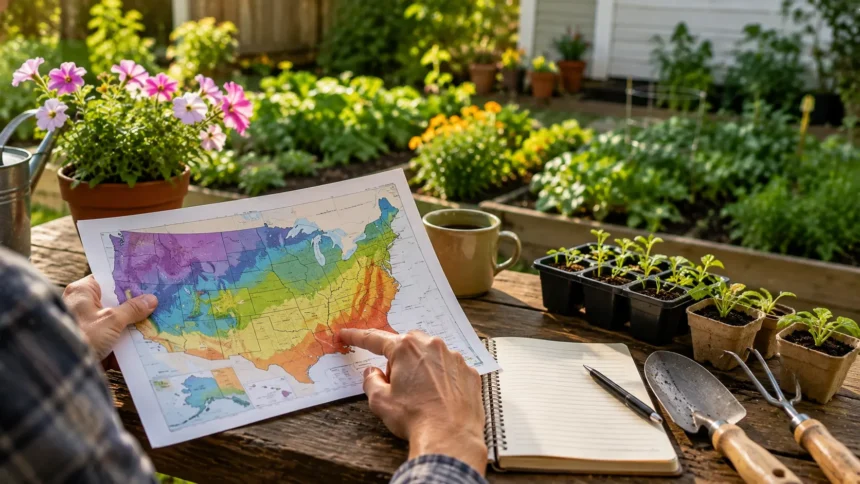
What Zone Am I In for Gardening?
If you have ever looked at a plant label and seen something like “Zones 5–9,” you may have wondered, what zone am I in for gardening? Gardening zones are a practical way to understand how cold your location typically becomes and whether perennial plants are likely to survive winter outdoors. Knowing your zone can make choosing trees, shrubs, flowers, herbs, and other long-lived plants much easier.
In the United States, gardeners commonly use the USDA Plant Hardiness Zone Map. It divides locations according to their average annual extreme minimum winter temperature. Each major zone covers a 10°F temperature range and is further divided into “a” and “b” subzones covering 5°F each. The lower the zone number, the colder the average winter extremes tend to be.
Your hardiness zone is useful, but it does not tell you everything about gardening in your area. Frost dates, summer heat, rainfall, humidity, soil conditions, elevation, wind, and local microclimates can all influence plant performance. Two locations within the same hardiness zone may still have noticeably different growing conditions and planting schedules.
The best way to use gardening zones is as one part of a broader planning system. First identify your hardiness zone, then consider local weather and the requirements of individual plants. This article explains how gardening zones work, how to determine yours, what the numbers mean, and how to use that information to make better planting decisions.
What Is a Gardening Zone?
A gardening zone, often called a plant hardiness zone, is a geographical classification that helps gardeners estimate which perennial plants can survive winter temperatures in a particular area. In the United States, the most familiar system is the USDA Plant Hardiness Zone Map, which divides the country into temperature-based zones.
The system is based primarily on the average annual extreme minimum temperature rather than the average temperature throughout winter. In simple terms, it looks at how cold your location typically becomes during its coldest periods. Plants are then assigned hardiness ratings based on the minimum temperatures they can generally tolerate.
Each full USDA zone covers a range of 10 degrees Fahrenheit. Zones are also divided into “a” and “b” sections, with each subzone covering 5 degrees. For example, Zone 7a is colder than Zone 7b, even though both belong to the broader Zone 7 category.
Gardening zones are particularly helpful when choosing perennial flowers, shrubs, fruit plants, and trees that remain outdoors year after year. Annual vegetables and flowers are usually influenced more directly by frost dates, seasonal temperatures, and the length of the growing season than by winter hardiness zones alone.
How Do I Find My Gardening Zone?
The easiest way to determine your gardening zone in the United States is to use the USDA Plant Hardiness Zone Map and search by ZIP code or location. The tool identifies the hardiness zone associated with your area based on long-term minimum winter temperature data.
You may also see gardening zones listed by local nurseries, cooperative extension resources, plant sellers, and gardening websites. However, using an official or location-specific zone lookup is generally more accurate than relying on a broad state-level map because many states contain several hardiness zones.
Your exact location matters because gardening zones can change over relatively short distances. Elevation, proximity to large bodies of water, urban development, and regional topography can all influence minimum winter temperatures. A nearby town may therefore fall into a different subzone.
Once you know your zone, write it down or save it with your gardening information. When shopping for perennial plants, compare your zone with the hardiness range shown on the label. Choosing plants rated for your location provides a useful starting point for determining whether they can survive winter outdoors.
What Do USDA Gardening Zone Numbers Mean?
USDA hardiness zone numbers represent increasingly warmer minimum winter temperature ranges. Lower numbers correspond to colder climates, while higher zone numbers indicate areas with milder winters. This allows gardeners to quickly compare a plant’s cold tolerance with their local climate.
For example, a perennial rated for Zones 4–8 is generally expected to tolerate the winter conditions associated with Zone 4 and warmer conditions through Zone 8. A gardener living in Zone 6 would therefore normally fall within the plant’s recommended hardiness range.
The “a” and “b” subdivisions provide more precision. A Zone 6a location has lower average annual extreme minimum temperatures than Zone 6b. This difference can matter for plants growing near the edge of their cold tolerance.
Hardiness ratings should still be viewed as guidelines rather than guarantees. A plant rated for your zone may struggle because of poor drainage, winter wind, unusual cold snaps, or unsuitable soil. Likewise, a protected microclimate may occasionally allow a borderline plant to survive outside its recommended range.
What Are USDA Hardiness Zones Based On?
USDA plant hardiness zones are based on average annual extreme minimum winter temperatures calculated from long-term weather data. This means the classification focuses on the coldest temperatures a location experiences over time rather than daily or monthly averages.
The system does not measure summer heat, rainfall, humidity, snowfall, wind, soil type, or growing-season length. That is why two places sharing the same hardiness zone can still support very different gardening conditions.
This distinction is particularly important when choosing plants. A species may tolerate the winter temperatures in two different Zone 8 locations but perform poorly in one because summers are excessively hot, humid, dry, or wet.
Think of the USDA hardiness zone as a winter survival guide rather than a complete climate description. It answers one important question—how cold does this location typically become?—but successful gardening requires several additional pieces of information.
What Changed With the Updated USDA Hardiness Zone Map?
The USDA released an updated Plant Hardiness Zone Map in 2023, replacing the previous 2012 version. The newer map uses a larger amount of weather station data and updated temperature information to provide more detailed estimates of average annual extreme minimum temperatures.
Many locations appeared approximately half a zone warmer on the updated map, although changes were not uniform everywhere. This does not mean that every winter suddenly became warmer or that extreme cold can no longer occur. Hardiness zones are based on long-term averages rather than predictions for any specific winter.
Improved mapping technology also allows gardeners to examine local variations more precisely. Elevation, terrain, coastal influences, and urban areas can create relatively small pockets of different hardiness conditions.
If you have been gardening for many years and still rely on an older zone number, checking the current map is worthwhile. However, your own long-term garden observations remain valuable because plants experience the actual conditions in your yard rather than the average represented by a regional map.
What Is Zone 1 Gardening Like?
Zone 1 represents some of the coldest gardening conditions in the USDA hardiness system. Winters can reach extremely low temperatures, making plant selection particularly important for trees, shrubs, and perennial flowers.
Gardeners in very cold zones need plants with exceptional winter hardiness. Native and regionally adapted species are often valuable because they have evolved to tolerate severe cold and short growing seasons.
Annual vegetable gardening is still possible in cold climates, but gardeners may depend heavily on seed starting, greenhouses, row covers, cold frames, and other season-extension techniques. The frost-free growing period can be relatively short.
Winter protection also becomes an important part of landscape management. Mulching roots, reducing exposure to harsh winds, and choosing protected planting locations can improve the survival of certain perennial plants.
What Is Zone 2 Gardening Like?
Zone 2 also experiences extremely cold winters, although minimum temperatures are somewhat milder than those found in Zone 1. Gardeners still need to prioritize hardy perennial species capable of surviving prolonged freezing conditions.
Vegetable gardening usually focuses on crops that mature relatively quickly because the frost-free season may be limited. Lettuce, radishes, peas, leafy greens, carrots, and other cool-season crops can be useful choices depending on local conditions.
Warm-season crops such as tomatoes and peppers may require indoor seed starting well before outdoor planting becomes possible. Choosing early-maturing varieties can help gardeners achieve a harvest before autumn temperatures fall.
Perennial selection should focus strongly on cold tolerance. Trees, berries, flowers, and shrubs rated for Zone 2 or colder are generally safer choices than plants positioned at the warmer edge of their hardiness range.
What Is Zone 3 Gardening Like?
Zone 3 gardeners experience cold winters but can grow a surprisingly wide range of vegetables, fruits, flowers, shrubs, and trees when appropriate varieties are selected. Timing becomes especially important because spring can arrive relatively late and autumn frost may return early.
Cool-season vegetables often perform well because they tolerate lower temperatures. Peas, cabbage, kale, lettuce, carrots, radishes, and potatoes are common choices, although exact planting dates vary by location.
Warm-season crops require more planning. Starting seeds indoors allows tomatoes, peppers, and similar vegetables to gain several weeks of growth before outdoor conditions become suitable.
Many hardy ornamental plants and fruiting shrubs can survive Zone 3 winters. Gardeners should still pay attention to snow cover, winter wind, and drainage because these factors can influence whether borderline plants survive successfully.
What Is Zone 4 Gardening Like?
Zone 4 supports a wider range of hardy perennials and edible crops than the coldest zones, although winter temperatures remain low enough to limit tender plants. Gardeners usually work with a relatively defined frost-free growing season.
Spring planting often begins with cool-weather vegetables, while warm-season crops are transplanted after frost danger has decreased. Starting certain vegetables indoors remains an important strategy for maximizing the growing season.
Perennial flowers such as coneflowers, daylilies, peonies, and many regionally adapted plants may perform well depending on local conditions. Hardy fruit trees and berry bushes can also be grown when appropriate cultivars are selected.
Winter protection can still benefit newly planted perennials. Mulch, proper watering before the ground freezes, and suitable plant placement can help roots survive challenging winter conditions.
What Is Zone 5 Gardening Like?
Zone 5 offers gardeners a broad range of plant options while still experiencing significant winter cold. Many popular perennial flowers, shrubs, fruit trees, and vegetables can be grown successfully in this zone.
The growing season is generally long enough for many warm-season vegetables, particularly when gardeners start tomatoes, peppers, and similar crops indoors. Cool-season vegetables can often be planted in both spring and later in the year.
Perennial gardening becomes particularly diverse in Zone 5. Many commonly available landscape plants are hardy here, although tropical and frost-sensitive species normally need to be grown as annuals or moved indoors.
Gardeners should still pay close attention to late spring and early autumn frosts. Hardiness zone alone cannot tell you when it is safe to transplant tender vegetables, making local frost dates essential for seasonal planning.
What Is Zone 6 Gardening Like?
Zone 6 has moderately cold winters and generally supports a long enough growing season for a diverse vegetable and ornamental garden. Many gardeners can grow both cool-season and warm-season crops without extensive season-extension equipment.
Spring may begin with peas, lettuce, spinach, radishes, and brassicas, followed later by tomatoes, peppers, cucumbers, squash, beans, and other heat-loving vegetables. Fall gardening may also be possible with proper timing.
A broad range of perennial plants is hardy in Zone 6. Flowering shrubs, fruit trees, herbs, bulbs, and perennial flowers provide many options for landscape design.
Microclimates remain important because one section of a Zone 6 garden may behave more like a slightly warmer or colder area. Walls, slopes, shade, and wind protection can noticeably influence plant survival.
What Is Zone 7 Gardening Like?
Zone 7 offers relatively mild winters compared with colder regions, giving gardeners a long and flexible growing season. Many vegetables can be grown in spring and fall, while warm-season crops typically have enough time to mature during summer.
Gardeners may grow cool-season vegetables before summer heat arrives and plant another round as temperatures decline. Succession planting can therefore increase the productivity of vegetable beds.
Many perennial herbs, flowers, shrubs, and fruiting plants can overwinter successfully in Zone 7. Some plants that require protection in colder zones may survive outdoors with minimal additional care.
Summer heat can become an important limitation, especially for crops such as lettuce, spinach, and peas. Gardeners may need to shift their attention from winter hardiness to heat management during the middle of the growing season.
What Is Zone 8 Gardening Like?
Zone 8 typically experiences mild winters and a long growing season, making it suitable for a wide range of edible and ornamental plants. Gardeners can often grow vegetables across several seasons rather than limiting most production to summer.
Cool-season vegetables may thrive during autumn, winter, or early spring depending on local conditions. Tomatoes, peppers, melons, cucumbers, and other warm-season crops can take advantage of a relatively lengthy frost-free period.
A variety of herbs and ornamental plants can survive outdoors year-round. However, individual species should still be checked for both cold hardiness and heat tolerance because Zone 8 climates can vary considerably.
Hot summers may create challenges with watering, heat stress, and bolting in cool-season crops. Mulching, irrigation management, and selecting heat-tolerant varieties become increasingly important in warmer regions.
What Is Zone 9 Gardening Like?
Zone 9 has mild winters and an extended growing season, allowing gardeners to grow vegetables and flowers during periods when colder climates are largely dormant. Winter gardening can be particularly productive.
Leafy greens, carrots, radishes, peas, broccoli, and other cool-season vegetables may be grown during cooler months. Warm-season crops can occupy the garden during spring, summer, and sometimes well into autumn.
Many subtropical plants may perform well in Zone 9, although occasional freezes can still occur. Gardeners should not assume that mild winters completely eliminate the possibility of cold damage.
Summer heat can become one of the biggest challenges. Shade cloth, careful irrigation, mulch, and seasonal planting schedules help gardeners avoid exposing heat-sensitive crops to the most stressful conditions.
What Is Zone 10 Gardening Like?
Zone 10 experiences very mild winters, and freezing temperatures are relatively uncommon compared with most USDA zones. This makes it possible to grow many tropical and subtropical plants outdoors.
Traditional vegetable gardening schedules may differ significantly from colder climates. Instead of planting everything in spring, gardeners may grow certain vegetables during autumn and winter to avoid extreme summer heat.
Warm-season plants can often grow for extended periods, although humidity, pests, intense sunlight, and high nighttime temperatures may present challenges. Choosing varieties adapted to warm climates becomes especially important.
Hardiness ratings still matter because occasional cold events can damage highly tropical plants. Gardeners should also pay close attention to heat tolerance, which the USDA zone system itself does not measure.
What Is Zone 11 Gardening Like?
Zone 11 has a tropical or near-tropical winter climate with very little exposure to freezing conditions. Gardeners can grow many plants outdoors year-round that would require indoor protection in colder zones.
Fruit trees, tropical ornamentals, herbs, and warm-season vegetables can all be possibilities depending on local rainfall, heat, and soil conditions. Seasonal planting may revolve more around wet and dry periods than around frost.
High temperatures can limit some traditional cool-season vegetables. Gardeners may need to choose heat-tolerant varieties or schedule crops during the coolest portion of the year.
Even in Zone 11, the zone number is not enough to determine what will grow successfully. Humidity, rainfall, salt exposure, tropical storms, and local soil conditions may have a major influence on plant performance.
Are Gardening Zones the Same as Growing Zones?
The terms “gardening zone,” “growing zone,” and “plant hardiness zone” are often used interchangeably in everyday gardening conversations. In most cases, people using these phrases are referring to USDA hardiness zones.
However, “growing zone” can sometimes be used more loosely to describe a region’s overall climate or growing conditions. This can create confusion because true USDA hardiness zones specifically measure average annual extreme minimum temperatures.
When reading plant labels, look for wording such as “USDA Hardiness Zones 5–9.” This provides a clearer indication that the rating refers to winter cold tolerance.
Understanding the terminology helps prevent mistakes when comparing gardening advice from different sources. A plant’s hardiness zone tells you whether it can generally survive winter, not necessarily whether every part of your climate is ideal for it.
Hardiness Zone vs. Frost Date: What Is the Difference?
Hardiness zones and frost dates are related to temperature, but they answer very different gardening questions. Your hardiness zone helps estimate whether perennial plants can survive winter, while frost dates help determine when seasonal planting can safely begin or end.
The average last spring frost is particularly important for tender vegetables and annual flowers. Tomatoes, peppers, cucumbers, and similar crops can be damaged by frost even when they are perfectly suitable for your hardiness zone.
The average first autumn frost helps gardeners estimate how much growing time remains late in the season. This is especially useful when planning fall vegetables or determining whether another succession crop has enough time to mature.
For vegetable gardening, frost dates can often be more immediately useful than the hardiness zone. For perennial landscaping, both pieces of information matter, but winter hardiness usually plays a larger role in long-term survival.
Hardiness Zone vs. Growing Season
The growing season generally describes the period when environmental conditions allow plants to grow successfully, often approximated by the time between spring and autumn frosts. This period can vary widely even among locations within the same USDA hardiness zone.
A region with mild winter extremes may still experience a relatively short growing season because of elevation, unusual seasonal weather, or other climate factors. Another location in the same zone might remain frost-free for much longer.
Days to maturity become especially important when growing vegetables. If your frost-free season is short, choosing fast-maturing tomatoes, melons, squash, or corn can improve your chances of harvesting before autumn cold arrives.
Use your hardiness zone to choose perennial plants and your growing-season length to plan annual crops. Combining both gives you a more complete understanding of what your climate can support.
Why Your ZIP Code Matters for Gardening Zones
Searching by ZIP code provides a much more precise hardiness estimate than using a state-wide gardening zone. Large states can contain several climate regions, elevations, and temperature patterns.
Mountain areas, coastal areas, valleys, and major cities may all fall into different hardiness zones despite belonging to the same state. Even neighboring ZIP codes can occasionally have different subzone classifications.
Urban areas can sometimes remain warmer than surrounding rural locations because roads, buildings, and other surfaces absorb and release heat. This phenomenon contributes to localized temperature differences.
Using your ZIP code gives you a useful starting point, but remember that the map still cannot identify every tiny microclimate. Your individual property may contain warmer and colder pockets within the same officially mapped zone.
How Microclimates Can Change Your Gardening Conditions
A microclimate is a small area where conditions differ from the surrounding region. Gardens commonly contain several microclimates created by walls, slopes, trees, buildings, pavement, fences, and wind exposure.
A south-facing wall may absorb heat during the day and create a warmer location for nearby plants. In contrast, a low section of the yard can collect cold air and experience frost more frequently.
Urban courtyards can sometimes remain warmer than exposed suburban gardens, while windy balconies may feel much colder during winter. These differences explain why the same plant may survive perfectly in one part of a property but struggle in another.
Learning your microclimates comes from observation. Record where frost appears first, where snow melts fastest, and where plants emerge earliest in spring. These patterns can help you make more precise planting decisions than hardiness zones alone.
Does Your Gardening Zone Affect Vegetable Planting?
Gardening zones can provide some climate context for vegetables, but they should not be the main tool used to determine planting dates. Most vegetables are annual crops that complete their life cycle within one growing season.
Frost dates, soil temperature, air temperature, and days to maturity are more useful for deciding when vegetables should be planted. Tomatoes, for example, need warm conditions regardless of whether they are grown in Zone 5 or Zone 8.
The zone can still help you understand your overall climate. A gardener in Zone 4 will generally have different seasonal challenges from someone in Zone 9, and planting calendars will reflect those differences.
For accurate vegetable planning, combine your hardiness zone with local frost dates and crop-specific recommendations. This provides a much stronger schedule than choosing planting dates based only on your zone number.
Does Your Zone Matter for Annual Flowers?
Annual flowers usually grow, flower, set seed, and die within one growing season, so winter hardiness zones are less important for them than for perennials. Many annuals are naturally tender and are not expected to survive freezing temperatures.
Your local frost dates are usually more helpful when determining when annual flowers can be planted outdoors. Tender plants such as zinnias and impatiens should typically wait until damaging frost risk has passed.
Some annuals tolerate cool weather better and can be planted earlier. Pansies, snapdragons, and certain other flowers may perform well during cooler periods depending on local conditions.
Hardiness zones can still help describe your general climate, but always check specific planting instructions. For annuals, seasonal temperature requirements usually matter more than long-term winter survival.
Why Gardening Zones Matter for Perennials
Perennial plants return for multiple growing seasons, which means they must survive whatever winter conditions occur in your garden. This makes hardiness zones especially valuable when choosing perennial flowers, shrubs, vines, and trees.
A perennial rated for Zones 3–7 may struggle in Zone 8 because excessive heat or insufficient winter chilling could become an issue. Similarly, a plant rated for Zones 7–10 may be damaged by the winter cold of Zone 5.
Selecting plants comfortably within your zone often provides better reliability than always choosing species at the edge of their tolerance. Newly established plants can be especially vulnerable during severe winters.
Hardiness ratings should be combined with proper planting, watering, drainage, and soil preparation. A zone-compatible plant can still fail if its roots remain waterlogged or if it is placed in unsuitable light.
How Gardening Zones Affect Trees and Shrubs
Trees and shrubs represent long-term investments, making hardiness zones especially important when selecting them. A tree may live for decades, so choosing one adapted to local winter temperatures can prevent expensive losses.
Check both the minimum and maximum recommended hardiness zones before purchasing. A tree suited for Zones 4–7 may tolerate your winter in Zone 8 but perform poorly because summers or winters are too warm for its natural growth cycle.
Fruit trees may also have chilling requirements, meaning they need a certain amount of cool winter weather to flower and fruit successfully. Hardiness alone therefore does not determine whether a fruit tree is suitable.
Consider mature size, soil drainage, sunlight, rainfall, disease pressure, and local climate along with the zone rating. Good tree selection involves matching the entire site rather than focusing only on one number.
Can Climate Change Affect Gardening Zones?
Hardiness zones can shift over time because they are based on long-term temperature records. As average extreme minimum temperatures change, the zone assigned to a particular location can also change.
A warmer zone designation does not mean extreme cold events are impossible. Individual winters can still bring temperatures significantly different from long-term averages, which may damage plants positioned near the edge of their tolerance.
Warmer conditions can also create new gardening challenges. Plants that previously performed well may experience increased heat stress, changing pest pressure, earlier flowering, or altered water requirements.
Gardeners can respond by choosing resilient plant varieties, improving soil health, conserving water, and maintaining diversity. Keeping detailed garden records also makes it easier to recognize how local growing conditions change over time.
What If a Plant Is One Zone Warmer Than My Location?
If you live in Zone 6 and a plant is rated only for Zones 7–10, it may not reliably survive your winter outdoors. Some gardeners still experiment with borderline plants, especially when they can provide protection.
A warm microclimate near a building or sheltered courtyard may improve survival. Mulching the root zone and reducing exposure to winter wind can also help certain plants.
However, winter protection does not guarantee success during unusually severe cold. If a plant is valuable or difficult to replace, growing it in a container that can be moved to a protected location may be safer.
Treat out-of-zone planting as an experiment rather than an expectation. For dependable landscaping, choose plants officially hardy to your zone or colder whenever possible.
Can You Grow Plants Rated for Colder Zones?
A plant rated for a colder zone can often survive the winter in a warmer zone, but that does not automatically mean it will thrive. Excessive heat may become the limiting factor.
Some cold-climate plants require cool summers or significant winter chilling. Growing them in warmer zones can result in weak growth, poor flowering, or limited fruit production.
Humidity can also affect plant performance. A perennial adapted to cool, dry conditions may struggle with disease in a warm, humid climate even though winter temperatures are not a problem.
Always consider the full recommended zone range. If a plant is listed for Zones 3–7 and you live in Zone 9, the upper limit is just as meaningful as the lower limit.
How to Read a Plant Hardiness Label
Plant labels often include a hardiness statement such as “USDA Zones 4–8.” This means the plant is generally considered suitable for locations ranging from Zone 4 through Zone 8.
If your zone falls inside that range, the plant has a reasonable chance of surviving normal winter conditions when properly planted and cared for. It is still important to check sunlight, water, soil, and mature size.
Some labels show only a minimum zone, particularly for plants sold in local nurseries. Ask for additional information if you are unsure whether summer conditions are appropriate.
Do not confuse hardiness zones with recommended planting dates. A plant may be hardy in your climate but still need to be planted during a particular season to establish successfully.
How to Use Your Gardening Zone When Buying Plants
Before visiting a nursery, know your hardiness zone and keep it available on your phone or gardening notes. This makes it easier to compare plant labels quickly.
Focus primarily on perennial plants because winter survival matters most for species expected to return year after year. Annual plants can be selected more according to seasonal conditions.
If you are choosing an expensive tree or shrub, consider selecting something hardy to a zone slightly colder than your own. This can provide extra protection during unusually cold winters.
Local nurseries can be valuable because their stock is often selected for regional conditions. However, always verify the label yourself rather than assuming every plant being sold locally will survive permanently in your garden.
What Else Should You Know Besides Your Gardening Zone?
Your average frost dates should be one of the next things you learn. They help determine when tender plants can safely go outdoors and when autumn cold may end the vegetable-growing season.
Soil conditions are equally important. Test drainage, texture, pH, and fertility when necessary because plants cannot thrive solely because their hardiness rating matches your zone.
Sunlight should also be measured realistically. A plant labeled “full sun” may struggle in a shaded yard even when the climate is perfect.
Finally, learn about rainfall, humidity, summer heat, wind, and common regional pests. Combining these details with your gardening zone creates a much clearer picture of what plants will perform well.
Build a Planting Plan Around Your Zone
Once you know your zone, separate your garden planning into perennial and seasonal decisions. Use the hardiness zone primarily to select long-lived trees, shrubs, herbs, and flowers.
Next, identify your expected spring and fall frost dates. These will form the foundation of your annual vegetable and flower planting calendar.
Add information about soil temperatures and the requirements of individual crops. Cool-season vegetables can often be planted earlier than heat-loving vegetables, regardless of the overall zone.
Finally, record what actually happens in your garden each year. Over time, your own observations will show whether particular plants perform better or worse than the general zone recommendations suggest.
Common Mistakes When Using Gardening Zones
One common mistake is assuming that everyone in the same state belongs to the same gardening zone. States often contain several zones because of elevation, latitude, coastlines, and local geography.
Another mistake is using the zone number as an exact planting calendar. Hardiness zones describe winter minimum temperatures, not the precise date when tomatoes or flowers should be planted.
Gardeners also sometimes ignore the upper end of a plant’s recommended range. A plant can be too poorly adapted to a warm climate even if winter temperatures are not a threat.
Finally, relying entirely on the zone can cause gardeners to overlook soil, sunlight, moisture, heat, and microclimate conditions. Hardiness is important, but it represents only one part of successful plant selection.
So, What Zone Am I In for Gardening?
To answer “what zone am I in for gardening?”, start by finding your location on the current USDA Plant Hardiness Zone Map or entering your ZIP code into its zone lookup. This will provide the hardiness zone and subzone associated with your area.
Use that zone primarily when selecting perennial plants, trees, and shrubs. If a plant’s recommended range includes your zone, it has a reasonable chance of surviving typical winter temperatures when other growing conditions are suitable.
For vegetables and annual flowers, go one step further by finding your local frost dates and understanding your growing-season length. These details will help you determine when to sow seeds, move seedlings outdoors, and plan autumn crops.
Most importantly, remember that a gardening zone is a starting point rather than a complete rulebook. Combine your zone with local weather, soil conditions, sunlight, and personal observations, and you will be much better equipped to choose plants that can thrive in your garden.
Frequently Asked Questions
How do I know what gardening zone I live in?
Use your location or ZIP code with the USDA Plant Hardiness Zone Map. It will identify your zone based on average annual extreme minimum winter temperatures.
What gardening zone is best?
There is no single best gardening zone. Every zone supports different plants, and successful gardening depends on choosing species and planting schedules suited to your local climate.
Is my gardening zone the same as my planting zone?
Usually, people use “gardening zone” and “planting zone” to mean USDA hardiness zone. However, actual planting dates should also consider frost dates, soil temperature, and seasonal weather.
Does my gardening zone tell me when to plant vegetables?
Not exactly. Hardiness zones describe winter cold, while frost dates and soil temperatures are more useful for determining when vegetables should be planted.
Can my gardening zone change over time?
Yes. Zone boundaries can shift as long-term temperature data changes and maps are updated. Local microclimates may also make your individual garden behave slightly warmer or colder than the mapped zone.