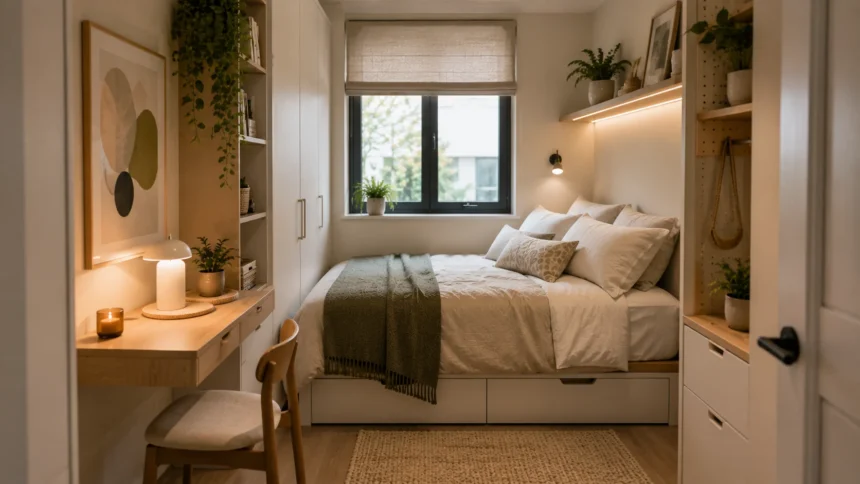
Tiny Very Small Bedroom Ideas to Maximize Every Inch
Designing an extremely compact bedroom can feel difficult when the bed alone seems to consume most of the available floor area. The best tiny very small bedroom ideas focus on making every surface, corner, and vertical space work harder without making the room feel packed with furniture. Smart layouts, multifunctional pieces, hidden storage, thoughtful lighting, and visual tricks can transform even a tiny bedroom into a comfortable and stylish place to sleep, relax, and store everyday belongings.
The key is to stop thinking about the room only in terms of floor space. Walls, the area beneath the bed, spaces above doors, corners, and even the wall behind the headboard can all provide valuable opportunities. When storage moves upward or becomes integrated into furniture, more of the floor remains visible. That extra breathing room can make a bedroom feel noticeably larger even though the physical dimensions have not changed.
Small bedrooms also benefit from careful editing. Adding more organizers is not always the solution because too many cabinets, shelves, baskets, and decorative accessories can create visual noise. A better approach is to identify what you genuinely need in the bedroom and then create efficient storage specifically for those belongings. The result feels cleaner, calmer, and easier to maintain throughout daily life.
This guide explores practical small bedroom layouts, storage solutions, compact furniture, lighting ideas, color strategies, and decorating techniques for extremely limited spaces. Whether you are working with a box room, studio apartment, narrow bedroom, attic space, or tiny guest room, these ideas can help you maximize every inch without sacrificing comfort, personality, or style.
Start With the Most Efficient Tiny Bedroom Layout
The first step in designing a very small bedroom is understanding exactly how much usable space you have. Measure every wall, doorway, window, radiator, closet, and architectural feature before buying or moving furniture. Even a difference of a few inches can determine whether a bedside table fits, whether wardrobe doors can open properly, or whether you have enough room to walk comfortably beside the bed.
Once you have the measurements, decide where the bed can sit without blocking essential movement. In extremely compact bedrooms, placing the bed against one wall may be more practical than centering it. Although symmetrical layouts often look attractive, sacrificing symmetry can free enough room for a wardrobe, narrow desk, storage unit, or more comfortable walking path.
Pay special attention to doors and drawers because furniture needs space to function, not just fit. A wardrobe that technically fits against a wall is useless if its doors cannot fully open. Sliding wardrobe doors, shallow drawers, floating shelves, and open storage can solve these problems when traditional furniture needs more clearance than the room provides.
Before finalizing the arrangement, mark furniture footprints with painter’s tape on the floor. This gives you a realistic sense of how much space each piece will occupy and whether the remaining pathways feel comfortable. Testing the layout first can prevent expensive mistakes and help you choose furniture according to actual dimensions rather than photographs.
Choose the Right Bed for an Extremely Small Bedroom
The bed is usually the largest object in a compact bedroom, making its dimensions especially important. Choose a size that provides comfortable sleep without consuming unnecessary space around the mattress. If you sleep alone, a smaller bed may create significantly more room for storage or movement, while couples should prioritize sufficient sleeping width without choosing an excessively bulky frame.
Look beyond mattress dimensions when comparing beds. Thick upholstered frames, wide side rails, oversized headboards, and footboards can add several inches to the overall footprint. A simple platform bed or slim metal or wooden frame may provide the same sleeping area while fitting far more comfortably within a tiny room.
Beds without footboards are particularly helpful in narrow spaces because they preserve visual openness and make it easier to walk past the lower end of the mattress. A high or heavy footboard can make a compact bedroom feel enclosed, especially when the distance between the bed and opposite wall is already limited.
Consider how the bed interacts with the rest of the room rather than choosing it in isolation. The ideal bed should leave enough space to access storage, open the bedroom door, and move without constantly bumping into furniture. A slightly simpler frame can make the whole room function better without compromising sleep quality.
Use a Storage Bed to Make the Bed Work Harder
A storage bed is one of the most practical space-saving bedroom solutions because it uses the large area beneath the mattress for something useful. Built-in drawers can store clothing, bedding, shoes, bags, or seasonal items, reducing the need for a separate dresser or additional cabinets.
Lift-up storage beds are especially useful when there is not enough space beside the bed for drawers to open. The mattress platform rises to reveal a large compartment underneath, making almost the entire bed footprint available for storage. This works particularly well in narrow bedrooms where side clearance is extremely limited.
Organize the storage according to how frequently items are used. Everyday clothing should remain easy to reach, while extra blankets, seasonal clothing, and luggage can be stored deeper underneath the mattress. Using fabric bags or labeled containers prevents the compartment from becoming a random collection of belongings.
Storage beds can also improve the visual appearance of the room because they eliminate exposed boxes underneath the frame. Hidden organization keeps surfaces and floors clearer, helping the bedroom feel calmer. In a tiny space, concealed storage usually creates a more spacious impression than multiple freestanding storage pieces.
Take Storage All the Way to the Ceiling
Vertical space is one of the most valuable resources in a tiny bedroom because it allows you to increase storage without sacrificing additional floor area. Tall wardrobes, floor-to-ceiling cabinetry, and high shelves can hold significantly more than short furniture while using roughly the same footprint.
Use the lower sections of tall storage for everyday clothing and belongings. Upper cabinets can hold luggage, seasonal bedding, rarely worn clothes, and other items that do not need frequent access. This creates a practical hierarchy where the most accessible areas contain the things you use most often.
Cabinetry that matches the wall color can make tall storage feel less visually dominant. When large wardrobes blend with surrounding surfaces, the eye notices fewer contrasting boundaries and the furniture can appear more architectural rather than like a bulky freestanding object.
Avoid leaving the top of wardrobes unused if the ceiling is significantly higher. Adding fitted cabinets, baskets, or storage boxes above can use awkward space efficiently. However, keep the arrangement visually organized because random items stacked near the ceiling can make a small bedroom appear cluttered.
Turn the Wall Behind the Bed Into Storage
The wall surrounding the headboard can provide substantial storage without requiring another piece of floor-standing furniture. Built-in cabinets around the bed can include overhead cupboards, open shelves, side storage, lighting, and even integrated bedside surfaces.
This approach works particularly well when the room does not have enough width for two traditional nightstands. Narrow shelves or built-in niches on either side of the bed can hold a phone, books, water, or other essentials while using far less space.
Overhead cupboards can store belongings that are not needed every day, such as extra bedding or seasonal clothing. Their position uses wall space that is often left completely empty, making them especially valuable in box rooms and very small apartments.
Safety and proportion are essential. Cabinets should be securely installed and positioned so they do not feel uncomfortably low over the bed. Keeping the fronts simple and similar in color to the walls can help the storage feel integrated rather than overwhelming the sleeping area.
Replace Nightstands With Floating Shelves
Traditional bedside tables can consume more floor area than they provide in useful storage. A small floating shelf offers enough room for essentials while leaving the floor completely open underneath. This can make even the narrowest side of a bed more functional.
Floating bedside shelves can be installed at exactly the right height for your mattress. A slim shelf may be enough for a phone, glass of water, and small book, while a wall-mounted drawer can provide hidden storage without becoming visually bulky.
Keeping the floor visible beneath the shelf improves the sense of openness. It also makes cleaning easier because there are no furniture legs or bases blocking the area. In tiny rooms, these seemingly minor details can significantly improve how spacious the bedroom feels.
Combine floating bedside storage with wall-mounted lighting for an even more efficient setup. Removing the table lamp means the shelf can remain smaller and clearer, allowing the wall itself to support functions that would normally require larger furniture.
Install Wall-Mounted Lights to Free Bedside Space
Wall sconces are ideal for tiny bedrooms because they provide reading and ambient lighting without occupying nightstand surfaces. Adjustable lights can be aimed toward the bed for reading and repositioned when softer general illumination is needed.
Pendant lights hung beside the bed offer another space-saving alternative. They draw attention upward, create a stylish vertical feature, and eliminate the footprint of traditional table lamps. Simple shades work especially well when you want the room to feel visually uncluttered.
Plug-in sconces can provide similar benefits when electrical rewiring is not practical. Their cords should be neatly secured so they do not create visual clutter or become a safety concern. Cable covers painted to match the wall can create a cleaner finish.
Position bedside lighting carefully so it is comfortable to reach without forcing you to stretch awkwardly. Small bedrooms work best when practical details are planned around everyday habits rather than simply copying decorative ideas from larger spaces.
Try a Wall-Mounted or Fold-Down Desk
A home office can seem impossible in a tiny bedroom, but a wall-mounted desk can create a practical workspace without permanently consuming much floor area. Shallow floating desks provide enough room for a laptop while projecting far less than standard office furniture.
Fold-down desks are even more flexible because the work surface can be closed when not in use. Once folded, the floor area feels more open and the bedroom can return to its primary purpose as a place for rest.
Mount shelves above the desk to store stationery, books, and work equipment vertically. Avoid adding bulky drawer cabinets underneath unless they are genuinely necessary, because legroom and floor visibility help the workstation feel less intrusive.
If you do not work from home frequently, a narrow console can serve as both desk and dressing table. Multifunctional furniture allows one small area to perform several roles and reduces the number of separate pieces required.
Choose a Narrow Wardrobe With Sliding Doors
A wardrobe does not need to be extremely deep to provide useful clothing storage. Slimmer wardrobes can work well for folded clothes, shelves, accessories, or hanging systems designed around the available dimensions.
Sliding doors are especially valuable because they do not need clearance in front of the wardrobe. This means the bed or other furniture can sit closer to the storage without preventing access, making the room easier to arrange.
Mirrored sliding doors offer an additional benefit because they combine storage with a full-length mirror. The reflective surface can distribute light and visually increase depth, eliminating the need to find wall or floor space for a separate mirror.
Organize the interior carefully to maximize capacity. Double hanging rails, drawers, baskets, hooks, and adjustable shelves can make a relatively small wardrobe perform far better than a larger unit with inefficient internal space.
Use the Area Above the Bedroom Door
The wall above a bedroom door is commonly ignored because it is difficult to reach, but it can be useful for items that are rarely needed. A sturdy shelf can hold storage boxes, spare bedding, books, or seasonal accessories.
Keeping the shelf the same color as the wall can help it visually disappear. This prevents the storage from drawing too much attention in a room where maintaining a calm appearance is important.
Use attractive matching boxes or baskets rather than loose items. Consistent containers make high storage look intentional and prevent the bedroom from feeling as though objects have simply been placed wherever space was available.
Because this area is harder to access, avoid storing everyday necessities there. Reserve it for lightweight belongings you retrieve only occasionally and make sure the shelf is securely installed.
Make Use of Awkward Corners
Small bedrooms often contain narrow corners or recesses that standard furniture cannot use efficiently. Instead of leaving these areas empty, consider custom shelves, narrow cabinets, corner desks, hooks, or vertical storage designed specifically for the available dimensions.
A tiny corner beside a wardrobe may be wide enough for a tall stack of shelves. The area behind an open door might hold hooks for bags or clothing, while a shallow recess could accommodate books or personal accessories.
Corner shelving is especially useful because it creates storage without projecting deeply into the room. Open shelves can also make awkward architecture feel intentional rather than like wasted space.
Do not force furniture into every corner simply because space exists. The objective is to use overlooked areas when they solve a real problem while preserving enough open space for the bedroom to feel comfortable.
Keep the Color Palette Visually Simple
Color has a powerful effect on how a tiny bedroom feels. A cohesive palette reduces visual interruptions and allows the eye to move more smoothly around the room. Warm whites, soft beige, pale gray, muted green, and gentle blue are popular choices for compact spaces.
You can use one main wall color and repeat related tones through bedding, curtains, and furniture. This does not mean everything needs to match exactly. Subtle variation adds depth while maintaining an overall sense of calm.
Dark colors can also work in tiny bedrooms when used intentionally. Deep blue, charcoal, olive, or chocolate can create a cozy atmosphere, particularly on the wall behind the bed. Balance deeper shades with effective lighting and simpler furniture so the room does not become visually heavy.
The best color scheme depends on natural light as much as room size. Test paint under morning, afternoon, and evening lighting because a shade that appears warm in daylight can look much cooler once artificial lights are switched on.
Use Mirrors to Visually Double the Space
Mirrors are especially effective in extremely small bedrooms because they create an illusion of additional depth. A large mirror can make a wall appear to continue beyond its actual boundaries, helping the room feel less enclosed.
Position a mirror near or opposite a window when possible. It can reflect natural light into darker parts of the bedroom and give the impression of another opening, which is particularly useful when the room has only one small window.
Mirrored wardrobe doors maximize this effect because they cover a large vertical surface. They also provide a practical dressing mirror while removing the need for a separate floor-standing piece that would occupy additional space.
Use mirrors thoughtfully rather than scattering several small ones across every wall. One large mirror often creates stronger visual impact while keeping the room cleaner and more sophisticated.
Hang Curtains Close to the Ceiling
Curtains can influence how tall a small bedroom appears. Mounting the curtain rod higher than the window frame creates a longer vertical line, drawing the eye toward the ceiling rather than emphasizing the limited width of the room.
Floor-length curtains usually produce a more polished appearance than short panels. When fabric extends from near the ceiling toward the floor, the window appears larger and the entire wall can feel more substantial.
Allow the rod to extend slightly beyond the window frame if space permits. This allows open curtains to sit farther away from the glass, exposing more daylight and making the window appear wider.
Choose lightweight or visually simple fabrics in extremely small rooms. Heavy patterned curtains can dominate limited wall space, while linen blends, sheers, or streamlined blackout panels maintain softness without overwhelming the room.
Use Light Strategically Instead of Relying on One Fixture
A single central ceiling light can leave corners in shadow, making a tiny bedroom feel smaller. Layering several light sources creates greater depth and makes the entire room feel more balanced.
Combine overhead lighting with wall sconces, bedside pendants, shelf lighting, or a compact desk lamp. Different sources allow you to adjust the atmosphere depending on whether you are getting dressed, working, reading, or preparing to sleep.
Lighting directed upward can emphasize ceiling height, while illumination around shelves or wardrobes helps reduce dark areas that visually close in the room. Soft reflected light usually feels more comfortable than harsh illumination concentrated in one location.
Choose fixtures that remain proportionate to the room. Oversized chandeliers can become visually dominant unless deliberately used as a focal point, while slim fixtures provide practical illumination without taking attention away from the limited architecture.
Keep More of the Floor Visible
Visible floor area contributes significantly to the perception of space. Furniture that sits on raised legs or mounts directly to walls exposes more flooring, allowing the eye to see farther across the room.
Floating shelves, elevated bedside tables, wall-mounted desks, and slim-legged furniture can all contribute to this effect. They reduce the number of solid blocks touching the floor and make the bedroom feel visually lighter.
Avoid leaving bags, storage boxes, laundry, or miscellaneous belongings around the edges of the room. Even small objects can make limited floor area appear significantly more crowded.
If under-bed storage is necessary, use hidden or matching containers rather than random boxes that remain visible. The cleaner the floor looks, the more organized and spacious the entire bedroom tends to feel.
Choose Furniture With More Than One Purpose
Multifunctional furniture is particularly useful when every square inch matters. A bed with storage, bench with hidden compartments, desk that doubles as a vanity, or ottoman that works as seating can reduce the total number of pieces required.
Consider how frequently each function will actually be used. A desk-bed combination may sound impressive, but it is only worthwhile if the mechanism is convenient enough to use regularly. Complicated furniture can become frustrating in a room where movement is already limited.
A narrow stool that fits under a desk is another simple example. It provides seating when required but can disappear completely afterward, preserving valuable walking space.
Whenever possible, choose pieces that solve two genuine needs rather than furniture packed with unnecessary features. Small rooms become easier to live in when functionality is simple and intuitive.
Use a Murphy Bed in Multipurpose Tiny Rooms
A Murphy bed can dramatically change the usability of a tiny bedroom that also needs to function as an office, studio, or living space. The mattress folds vertically into a wall unit when not needed, freeing a large amount of floor area during the day.
Modern wall-bed systems can incorporate shelving, cabinets, desks, or sofas, allowing one wall to perform several functions. This can be particularly valuable in studio apartments where sleeping and daytime activities happen within the same limited area.
A Murphy bed requires careful installation because the system must support considerable weight and operate safely. The surrounding floor also needs to remain clear enough for the bed to open fully.
This solution generally costs more than a standard bed, but it can provide exceptional value when reclaiming daytime floor space is more important than keeping the mattress permanently accessible.
Consider a Loft Bed When Ceiling Height Allows
A loft bed moves the sleeping area upward and frees the floor beneath for a desk, storage, seating, or wardrobe. This approach can effectively double the functionality of a very small room when ceiling height is sufficient.
The space underneath can become a study zone, dressing area, reading corner, or compact lounge. Because the largest furniture piece is elevated, the rest of the room can support activities that would otherwise be impossible.
Loft beds work particularly well in children’s rooms, student bedrooms, studio spaces, and extremely compact apartments. Adults can also use them when the design is structurally appropriate and provides comfortable access.
Consider head clearance carefully. The mattress should not sit so close to the ceiling that the sleeping area feels uncomfortable. Safe access through stairs or a sturdy ladder is equally important.
Build Storage Into Window Areas
Windows often occupy valuable wall space that cannot support traditional tall furniture, but the area beneath them can still provide storage. A low built-in cabinet, bench, or drawer unit can transform unused space without blocking daylight.
A window seat with hidden storage can create a comfortable reading area while providing room for bedding, books, shoes, or seasonal belongings underneath. Adding a cushion creates function without requiring a separate chair.
Keep the furniture lower than the window sill so natural light continues to enter freely. Overly tall cabinets may make the bedroom darker and visually reduce the size of the window.
If heating equipment sits beneath the window, make sure any furniture placement respects airflow and safety requirements. Practical limitations should always take priority over maximizing every possible storage area.
Choose a Headboard That Does More
A headboard can become useful storage rather than existing only as decoration. Designs with narrow shelves, integrated lighting, hidden compartments, or side niches can reduce the need for additional furniture.
A slim shelf along the top can hold books, small artwork, or personal items. Side storage may replace nightstands, making this solution particularly useful when there is almost no clearance beside the mattress.
Avoid overly deep headboard storage because it pushes the bed farther into the room. In tiny bedrooms, even a few extra inches of depth can affect the walkway at the foot of the bed.
Simple built-in headboards painted in the wall color can provide functionality without becoming visually heavy. The best designs add storage while maintaining a streamlined appearance.
Use Pegboards and Wall Organizers
Pegboards provide flexible vertical storage for small objects while occupying almost no floor space. Hooks, shelves, baskets, and containers can be rearranged whenever your storage requirements change.
They work well above desks, beside wardrobes, or near dressing areas. Accessories, stationery, headphones, jewelry, small bags, and frequently used belongings can remain visible and accessible.
Choose a pegboard color that blends with the surrounding wall if you want a calmer appearance. Alternatively, a contrasting design can become a decorative feature in a modern or creative bedroom.
Do not overload the board. Keeping only useful or attractive objects visible maintains the organizational benefits without turning the wall into visual clutter.
Keep Surfaces as Clear as Possible
Open surfaces make tiny bedrooms feel less crowded. Nightstands, desks, dressers, and shelves quickly become cluttered when there is no designated storage for everyday belongings.
Give frequently used objects specific homes. Chargers can go inside drawers, cosmetics can sit in organizers, and paperwork can be stored vertically rather than spread across the desk.
Decorative objects should be limited to pieces that genuinely add personality. A lamp, photograph, plant, or small collection may be enough to make the room feel lived-in without covering every surface.
Regularly clearing surfaces also makes cleaning easier. In a very small bedroom, reducing visual clutter often produces a greater improvement than adding more decorative furniture.
Create One Strong Focal Point
A tiny bedroom can feel chaotic when every wall competes for attention. Instead, choose one clear focal point, usually the bed wall, and allow the rest of the room to remain visually quieter.
Artwork, a painted accent area, subtle wallpaper, or an attractive headboard can establish the focal point without requiring additional floor space. This gives the room character while keeping the overall design organized.
If the room already includes distinctive architecture, such as an angled ceiling or exposed brick wall, consider allowing that feature to become the visual focus rather than adding another bold element.
A controlled focal point helps guide the eye and creates a stronger sense of structure. This can make a tiny bedroom feel intentionally designed rather than simply filled with necessary furniture.
Use Bedding to Keep the Room Visually Calm
Because the bed occupies such a large percentage of a tiny room, bedding has a significant impact on the overall appearance. A coordinated color palette can make the largest surface feel calmer and less visually dominant.
Choose bedding in related shades rather than combining many unrelated colors and patterns. Neutral foundations can be layered with one or two accent tones through cushions or throws.
Avoid excessive decorative pillows if there is nowhere to store them at night. In extremely small bedrooms, accessories that need to be removed and placed on the floor every evening create unnecessary clutter.
Texture can provide interest without complicated patterns. Linen, cotton, quilted fabrics, and knitted throws can make a simple bed feel warm and inviting while maintaining visual order.
Add Personality Without Adding Clutter
A small bedroom should still feel personal. The goal of maximizing space is not to create a completely empty or characterless room, but to choose decorations that provide impact without occupying valuable surfaces.
Wall art is especially useful because it adds personality without using floor space. One meaningful print or photograph can be more effective than several small objects spread across shelves.
Books, plants, ceramics, and personal mementos can also work when displayed intentionally. Grouping a few related items together often looks calmer than distributing individual objects throughout the room.
Think of decoration as editing rather than accumulation. Keep pieces that contribute beauty, memory, or comfort, and allow enough empty space around them so each one can be appreciated.
Choose a Rug That Does Not Fragment the Floor
A rug can make a tiny bedroom feel softer and more comfortable, but its proportions matter. Very small rugs placed randomly around the bed can visually divide the limited floor area into even smaller sections.
A larger rug extending beneath the bed can create one unified zone. Even when much of the rug is hidden, the visible sections along the sides and foot of the bed make the arrangement feel more intentional.
Choose colors and patterns that complement the bedding and walls. Soft neutrals and understated patterns can create texture without making the floor feel visually crowded.
If the bedroom already has comfortable carpet, an additional rug may not be necessary. Removing unnecessary layers can sometimes make the space feel cleaner and more open.
Use Plants Without Sacrificing Floor Area
Plants bring color and life into tiny rooms, but large pots can consume precious floor space. Small plants on shelves, window ledges, or wall-mounted holders provide the same natural character without creating obstacles.
Hanging plants can draw attention upward and create visual height. Position them away from sleeping areas and pathways so leaves and containers do not interfere with movement.
Choose plants suited to the room’s actual natural light conditions. A plant struggling in an unsuitable location can become more maintenance than enjoyment.
One healthy, well-positioned plant is usually more effective than many small pots covering every surface. Simplicity helps preserve the calm feeling that tiny bedrooms need.
Small Bedroom Ideas for Couples
Sharing a very small bedroom requires careful planning because two people need access to clothing, personal items, and the bed. Start by creating the clearest possible routes around essential furniture.
Perfect symmetry may not be practical. One person might use a floating shelf while the other has a narrow drawer unit depending on available wall space. Function should take priority over matching furniture.
Divide wardrobe storage intentionally rather than allowing belongings to mix randomly. Separate baskets, drawers, hanging areas, or shelves can help each person maintain organization despite limited capacity.
Choose the room layout together based on daily habits. If one person wakes earlier, works from the bedroom, or needs more hanging storage, the arrangement should accommodate those differences rather than following a generic bedroom design.
Tiny Guest Bedroom Ideas
A very small guest bedroom can remain comfortable without containing the same amount of furniture as a primary bedroom. Prioritize a good bed, bedside lighting, accessible power outlets, and somewhere for visitors to place clothing or luggage.
Wall hooks can replace a full wardrobe for short stays. A narrow luggage rack, small rail, or a few hangers may provide everything guests realistically need while leaving more room around the bed.
A floating shelf beside the mattress can hold a phone, glass of water, or book without consuming floor space. Wall-mounted lighting makes the setup even more compact.
Keep decoration simple but welcoming. Fresh bedding, one mirror, soft lighting, and a small piece of artwork can make an extremely limited guest room feel thoughtful rather than cramped.
Tiny Bedroom Ideas for Kids
Children’s bedrooms need to accommodate sleeping, clothes, toys, books, and sometimes homework within a limited footprint. Storage beds and vertical organization can make this combination much easier.
Use accessible baskets and drawers for frequently used toys so children can put belongings away themselves. Higher shelves can hold seasonal items or things that require adult supervision.
A loft bed may create room underneath for a desk or play area when ceiling height allows. This can dramatically increase usable floor space without expanding the room.
Leave some open space whenever possible. A child’s bedroom should provide room for movement and play rather than becoming completely filled with cabinets and furniture.
Tiny Bedroom Ideas for Renters
Renters may be unable to install permanent cabinetry or change doors, but there are still many ways to improve a tiny bedroom. Freestanding vertical storage, tension systems, removable hooks, and compact furniture can create more capacity without major alterations.
Choose pieces that can move easily to another property. Modular wardrobes, folding desks, lightweight shelves, and flexible storage beds can adapt to different room dimensions later.
Mirrors can be leaned securely or mounted using approved methods where appropriate, while plug-in sconces can create wall-style lighting without electrical rewiring.
Focus on reversible changes such as paint where permitted, textiles, lighting, bedding, and furniture placement. A tiny rental can still feel highly personalized without permanent construction.
Avoid Oversized Furniture
One oversized piece can dominate an extremely small bedroom and restrict every other design decision. Deep wardrobes, massive bed frames, wide dressers, and oversized armchairs should be evaluated especially carefully.
Furniture displayed in spacious showrooms can appear much smaller than it will inside your bedroom. Always compare exact measurements with the room rather than judging by photographs.
Slim-profile furniture often provides almost the same function within a much smaller footprint. Narrow nightstands, shallow desks, and compact wardrobes can dramatically improve circulation.
Proportion is more important than quantity. A few correctly scaled pieces generally make a tiny bedroom feel more complete than several large items squeezed against every wall.
Avoid Filling Every Wall With Shelves
Vertical storage is valuable, but using every wall for shelving can make a small bedroom feel busy and enclosed. The eye needs some areas without objects in order to experience visual rest.
Concentrate storage on one or two walls rather than distributing it everywhere. A large organized wardrobe may be more effective than many small shelves covering different parts of the room.
Keep open shelves carefully edited because everything displayed becomes part of the visual design. Closed cabinets are often better for items with varied shapes, packaging, or colors.
Allow some blank wall space around artwork or furniture. Negative space is an important design element and can make compact interiors feel significantly calmer.
Declutter Before Buying New Organizers
Adding storage does not solve overcrowding when the real issue is owning more belongings than the bedroom can comfortably contain. Before purchasing organizers, review clothing, accessories, furniture, books, and decorative items.
Remove duplicates, unused possessions, and items that belong elsewhere in the home. This can create surprising amounts of space without adding a single shelf or storage box.
Once you know what actually needs to remain, you can choose storage specifically for those categories. This creates a more efficient system than buying containers first and then filling them simply because space is available.
Regular decluttering is especially valuable in tiny rooms because even modest accumulation becomes noticeable quickly. Maintaining fewer useful belongings can make the bedroom easier to organize over the long term.
Make a Tiny Bedroom Look More Expensive
Small bedrooms can feel sophisticated when materials and colors are carefully coordinated. Instead of adding many inexpensive decorative pieces, focus on a few visually important elements such as bedding, lighting, curtains, and hardware.
Floor-length curtains hung high can make the walls appear taller, while good-quality bedding gives the largest visual surface a more polished appearance. Replacing basic drawer handles can also update inexpensive furniture.
One large artwork or mirror often looks more intentional than several small decorations. Larger visual statements reduce clutter while giving the room a stronger sense of design.
Organization also plays a major role. Clear surfaces, neatly arranged bedding, hidden cables, and consistent storage containers can make even affordable furniture feel considerably more refined.
Budget-Friendly Ideas for a Very Small Bedroom
You do not need a full renovation to improve a tiny bedroom. Start with free changes such as decluttering, rearranging furniture, clearing the floor, and removing pieces that no longer serve a useful purpose.
Affordable floating shelves, wall hooks, under-bed boxes, and wardrobe organizers can increase storage without requiring expensive custom cabinetry. Choose improvements according to actual storage problems rather than buying organizers randomly.
Paint can also transform the room at relatively low cost. A fresh cohesive color can make mismatched furniture feel more connected and give the bedroom a cleaner appearance.
Spend more only where the improvement provides meaningful everyday value. A better storage bed, efficient wardrobe, comfortable mattress, or improved lighting will usually contribute more than expensive decorative accessories.
Common Tiny Bedroom Design Mistakes
One of the biggest mistakes is trying to fit every traditional bedroom furniture piece into a space that cannot support them. A bed, two nightstands, dresser, wardrobe, bench, and desk may be standard in larger rooms but unnecessary in a tiny one.
Another mistake is ignoring unused vertical space. When storage remains concentrated near the floor, homeowners often add more furniture even though the upper walls remain completely empty.
Poor lighting can also make the bedroom feel more confined. Dark corners visually reduce depth, while properly distributed lighting reveals more of the room and creates a stronger sense of openness.
Finally, avoid prioritizing style over usability. A beautiful furniture arrangement is not successful if wardrobe doors cannot open or if you constantly bump into the bed. Tiny rooms need practical planning before decoration.
How to Make a Tiny Bedroom Feel Bigger
Keep the overall layout simple and preserve as much visible floor area as possible. Wall-mounted furniture, raised legs, hidden storage, and fewer freestanding pieces can make the room feel physically and visually lighter.
Use mirrors and natural light strategically. Reflecting a window or bright section of the room can create additional depth and help dark corners feel less enclosed.
Draw attention upward through high curtains, vertical artwork, tall storage, and lighting. Emphasizing height helps counteract limited floor dimensions and creates more balanced proportions.
Finally, maintain a cohesive visual palette. When walls, furniture, curtains, and bedding relate naturally to one another, there are fewer harsh visual boundaries and the entire room can feel larger and calmer.
Final Thoughts on Tiny Very Small Bedroom Ideas
The best tiny very small bedroom ideas are not about squeezing more objects into a limited space. They are about identifying what matters most and designing the room so every major element performs efficiently without interfering with comfort or movement.
Start with the bed and walking routes, then build storage vertically rather than spreading it across the floor. Use hidden compartments, floating furniture, wall-mounted lighting, and multifunctional pieces to solve practical problems with minimal visual bulk.
Color, mirrors, curtains, and layered lighting can then improve how large the bedroom feels. These visual strategies work best when the underlying layout is already simple, organized, and proportionate to the room.
A tiny bedroom may never have unlimited storage or floor space, but it can still feel comfortable, attractive, and highly functional. When every inch is used thoughtfully instead of simply filled, even the smallest bedroom can become an organized and genuinely relaxing retreat.
Frequently Asked Questions
How do you maximize space in a very tiny bedroom?
Use vertical storage, under-bed compartments, floating furniture, slim wardrobes, and multifunctional pieces while keeping essential walking routes clear.
Where should a bed go in a tiny bedroom?
Place the bed where it leaves the clearest access to doors and storage. In extremely narrow rooms, putting one side against a wall may save valuable space.
How can I add storage without making a small bedroom crowded?
Use floor-to-ceiling cabinets, under-bed storage, wall shelves, overhead cupboards, hooks, and furniture with concealed compartments instead of extra floor units.
What colors make a tiny bedroom look bigger?
Warm whites, cream, beige, pale gray, muted green, and soft blue can create an open appearance, especially when walls, curtains, and furniture use related tones.
Can a tiny bedroom still have a desk?
Yes. Choose a shallow floating desk, fold-down wall desk, or narrow console that doubles as a workspace without permanently taking up too much floor area.