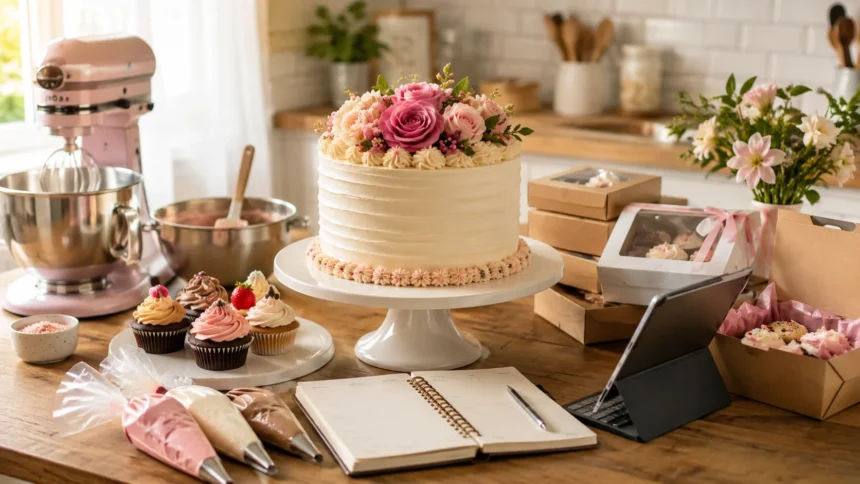
How to Start a Cake Business from Home
Starting a cake business from home can turn a creative baking hobby into a flexible source of income without the expense of opening a traditional bakery. Birthdays, weddings, anniversaries, graduations, baby showers, corporate events, and seasonal celebrations continually create demand for custom cakes. With the right planning, even a small home kitchen can become the foundation of a recognizable local baking brand.
However, knowing how to bake a beautiful cake is only one part of running a successful home bakery. You also need to understand food costs, pricing, legal requirements, packaging, marketing, customer service, and production capacity. Treating your cake business professionally from the beginning can prevent common problems such as underpricing orders, taking on too much work, or struggling to make consistent profits.
The good news is that you do not need a huge menu, expensive commercial storefront, or dozens of employees to begin. Many successful bakers start with a few signature products, basic decorating tools, a social media presence, and orders from people in their local community. They gradually reinvest profits into equipment, branding, professional photography, and better ingredients as demand increases.
This guide explains how to start a cake business from home step by step. You will learn how to choose your cake niche, research customers, understand home bakery requirements, calculate startup costs, price cakes correctly, create a menu, market your services, manage orders, and build a cake business that can grow sustainably.
Decide What Type of Cake Business You Want to Start
Before buying equipment or creating a business logo, decide what type of cakes you want to specialize in. Trying to offer birthday cakes, wedding cakes, cupcakes, cheesecakes, cookies, desserts, cake pops, and pastries immediately can make a new business difficult to manage. Starting with a focused product range helps you improve quality while creating a recognizable identity.
Think about the cakes you genuinely enjoy making and the designs customers around you frequently request. You might specialize in custom birthday cakes, buttercream cakes, wedding cakes, minimalist cakes, children’s cakes, vintage-style cakes, cupcakes, celebration cakes, or premium dessert cakes. A clear niche makes your marketing much easier because potential customers quickly understand what you offer.
Your niche should also match your skills, available equipment, kitchen space, and pricing goals. Highly detailed fondant cakes, for example, can require many hours of decorating and specialized tools, while simpler buttercream cakes may allow you to handle more orders. Choosing products that fit your working style can protect both profitability and your personal schedule.
You can expand your menu later once your core products become profitable and your workflow becomes efficient. A home baker who becomes known for elegant birthday cakes might eventually add wedding cakes, cupcakes, or dessert tables. Beginning with a focused cake business gives you room to learn without overwhelming yourself with too many recipes and production processes.
Research Your Local Cake Market
Market research helps you understand whether people are willing to pay for the cakes you want to sell. Start by looking at local bakeries, home bakers, cake decorators, social media sellers, and businesses appearing in local search results. Compare their products, designs, prices, customer reviews, delivery options, and overall brand presentation.
Pay close attention to gaps rather than simply copying competitors. Perhaps many local bakers sell elaborate fondant cakes, but few offer modern minimalist buttercream designs. You might find strong demand for eggless cakes, small celebration cakes, premium wedding cakes, themed children’s cakes, or affordable cake-and-cupcake packages. These gaps can become valuable opportunities.
Customer reviews can provide particularly useful insights. Look for complaints about late delivery, poor communication, overly sweet frosting, incorrect designs, confusing ordering processes, or high delivery charges. Solving problems that customers repeatedly mention can help your home cake business stand out even before you have a large marketing budget.
Your research should ultimately answer three questions: who will buy from you, what type of cake they want, and why they should choose your business instead of another baker. A clear understanding of your target customer will influence your cake menu, pricing, branding, photography, packaging, advertising, and social media strategy.
Understand Home Bakery Laws and Food Regulations
One of the most important steps when learning how to start a cake business from home is understanding the rules that apply where you live. Home food businesses may be regulated differently depending on your country, state, province, city, or local authority. Requirements can include business registration, food safety training, labeling standards, inspections, permits, or restrictions on certain ingredients.
Some areas have cottage food laws or similar regulations that allow specific low-risk foods to be produced inside a residential kitchen. Cakes may qualify under some rules, while products containing ingredients requiring strict refrigeration can face additional restrictions. Because regulations differ significantly, never assume another home baker’s legal setup automatically applies to your own business.
Contact the relevant local health department, food authority, municipality, or business licensing office before accepting paid orders. Ask whether home-based cake businesses are permitted, which foods you can sell, whether you need a food handler certificate, how products must be labeled, and whether customers are allowed to collect orders from your home.
Taking care of legal requirements early protects both your customers and your business. It can also make customers more comfortable ordering from you because professional food handling creates trust. Keep copies of required permits, certifications, ingredient information, allergen policies, and other records organized so they are easy to access whenever necessary.
Create a Simple Cake Business Plan
A cake business plan does not need to be a complicated document filled with financial terminology. Its purpose is to help you define what you will sell, who you will sell it to, how customers will discover your business, and how much money you need to operate. Even a simple plan can prevent expensive decisions made without clear goals.
Begin by describing your ideal customer and your main products. For example, your business might specialize in premium birthday cakes for families, affordable celebration cakes for local customers, or luxury wedding cakes for couples. Write down your average expected order price, production capacity, ingredient costs, monthly expenses, and realistic sales targets.
Next, decide how customers will order. You might accept inquiries through your website, Instagram, Facebook, WhatsApp, email, or an online order form. Establish how much notice customers need to give, whether deposits are required, what payment methods you accept, and whether you offer delivery, pickup, or both.
Your plan should also include your longer-term goals. You may want to earn additional monthly income, eventually leave another job, move into a commercial kitchen, open a bakery, or build a team of decorators. Knowing where you want the business to go helps you make decisions that support growth instead of simply reacting to individual orders.
Calculate Your Home Cake Business Startup Costs
A home cake business generally requires less capital than opening a retail bakery, but startup costs can still add up. Common expenses include cake pans, mixers, decorating tools, turntables, piping bags, spatulas, storage containers, ingredients, cake boards, packaging, labels, photography supplies, licenses, insurance, and marketing materials.
You probably do not need to buy every professional baking tool immediately. Begin by identifying the equipment required for the cakes you actually intend to sell. If your kitchen already has a reliable oven, mixer, refrigerator, and basic baking equipment, your initial investment may be significantly lower than someone starting completely from scratch.
Packaging should also be included in your startup budget. Strong cake boxes, boards, inserts, labels, and transport materials protect your products and contribute to the overall customer experience. Cheap packaging can become costly if a beautiful cake is damaged while being carried or delivered to a customer’s event.
Create separate lists for essential purchases and items that can wait. Buy what you need to produce consistent, safe, professional cakes first, then reinvest revenue into upgrades. This disciplined approach helps prevent the common mistake of spending heavily on attractive equipment before the business has generated enough orders to justify it.
Develop a Cake Menu That Is Easy to Manage
Your first cake menu should be exciting for customers but manageable for you. Instead of offering dozens of flavors, consider beginning with several reliable options such as vanilla, chocolate, red velvet, lemon, or another specialty flavor. A smaller menu simplifies ingredient purchasing, recipe testing, inventory management, and customer decision-making.
You can also create different product levels. A basic menu may include simple celebration cakes with standard designs, while custom cakes can be priced separately according to size and complexity. Cupcakes, mini cakes, or cake-and-cupcake packages can provide additional options without forcing you to create completely different production systems.
Standardizing cake sizes is especially useful. Decide which diameters, heights, and serving sizes you regularly provide so pricing and production become more predictable. Customers frequently struggle to know what cake size they need, so providing clear serving estimates can make the ordering experience easier and reduce unnecessary back-and-forth communication.
Every recipe should also be tested repeatedly before appearing on your menu. A cake that works once is not necessarily ready to sell professionally. Test consistency, texture, stability, storage, frosting compatibility, transport performance, and shelf life so customers receive the same quality regardless of when they place an order.
Calculate the True Cost of Every Cake
Many new home bakers price cakes by looking at what competitors charge or by multiplying ingredient costs by a random number. This approach can result in extremely low profits because ingredients represent only one part of the cost. Your pricing needs to reflect everything required to produce and deliver the finished cake.
Start by calculating ingredients accurately, including flour, sugar, butter, eggs, chocolate, cream, fillings, flavorings, decorations, and other components. Then add cake boards, boxes, dowels, toppers, ribbons, labels, and any other packaging or decorating materials. Small expenses may seem insignificant individually but can add up across many orders.
Labor is equally important. A custom cake might require several hours of baking, cooling, filling, decorating, cleaning, communication, shopping, and preparation. If you only charge for ingredients, you are essentially giving away your time. Decide what your working hours are worth and build that amount into your pricing structure.
Finally, account for overhead expenses such as electricity, gas, water, equipment replacement, marketing, software, insurance, licensing, and kitchen supplies. Calculating your complete cake cost allows you to set prices that support the business instead of simply covering grocery expenses. Sustainable pricing is essential if you want your home bakery to grow.
Learn How to Price Cakes for Profit
Once you know your costs, you can build a pricing structure that protects your profit margin. A useful starting approach is to combine ingredients, supplies, labor, overhead allocation, and desired profit. Custom decorations, complex structures, handcrafted figures, edible flowers, specialty fillings, or urgent orders should generally cost more because they require additional resources.
Avoid competing entirely on price. There will almost always be someone willing to sell a cake for less, especially in local online marketplaces. Instead, compete through taste, design quality, reliability, communication, packaging, customization, and customer experience. Customers planning meaningful celebrations often value confidence and professionalism as much as the lowest possible price.
Creating starting prices can help customers understand your range before requesting a quote. For example, you might display prices beginning from a certain amount for standard cakes while explaining that elaborate designs are individually quoted. This filters unrealistic inquiries and reduces the amount of time spent preparing quotes for people with completely different budgets.
Review your cake prices regularly because ingredient costs, packaging expenses, electricity, and other operating costs can change. A price that generated a healthy margin one year may not remain profitable later. Successful bakers treat pricing as an ongoing business decision rather than something they establish once and never revisit.
Choose a Memorable Cake Business Name
Your business name should be easy to remember, easy to pronounce, and suitable for the type of cakes you want to sell. You could build the brand around your own name, your location, a creative baking term, or a distinctive concept. Avoid names that are extremely difficult to spell because customers may struggle to find you online.
Before settling on a name, search for existing bakeries and food businesses using something similar. You should also check relevant domain names and social media usernames if you plan to build an online presence. Creating a consistent name across your website and social profiles makes the business easier for customers to recognize.
Think about whether the name will still fit if the business grows. A very narrow name such as one focused only on cupcakes might feel limiting if you later specialize in wedding cakes or dessert tables. Choosing a slightly broader bakery brand can give you more flexibility while still communicating your personality.
Once you choose the name, build a simple and consistent visual identity around it. You do not need expensive branding at the beginning, but using consistent fonts, photography, packaging, and messaging can immediately make your home cake business appear more established and trustworthy.
Set Up a Professional Home Baking Workspace
Running a cake business from home becomes much easier when your workspace is organized for production. Keep ingredients, cake pans, decorating tools, packaging, and finished products arranged so you can work efficiently. A cluttered kitchen increases preparation time and makes mistakes more likely during busy periods.
Create dedicated storage for business ingredients whenever possible. Label containers clearly and monitor expiration dates so you know exactly what is available before accepting orders. Keeping a simple inventory list can prevent last-minute shopping trips and reduce waste caused by buying ingredients you already have.
Food safety should always remain a priority. Follow appropriate storage temperatures, cleaning procedures, cross-contamination prevention, handwashing practices, and allergen management. Customers are trusting you to prepare food for important celebrations, so cleanliness and consistency should be treated as essential parts of the business rather than optional extras.
As your order volume grows, watch for production bottlenecks. You may discover that your refrigerator is too small, your oven limits how many cakes you can bake, or decorating space becomes crowded. Upgrade equipment according to actual business needs instead of purchasing expensive tools simply because other professional bakers use them.
Build a Cake Portfolio Before Looking for Customers
Customers usually want to see what you can create before placing a custom cake order. A strong cake portfolio demonstrates your decorating skills, style, and product quality. If you do not have customer orders yet, create several sample cakes specifically for photography rather than waiting for your first paid clients.
Choose designs that reflect the type of work you want to attract. If you want wedding cake customers, include elegant tiered or wedding-inspired designs. If children’s cakes are your specialty, show colorful themes and creative decorations. Your portfolio communicates what you want people to hire you to make.
Good photography is extremely important because most people encounter your cakes through a screen before tasting them. Use natural light when possible, clean backgrounds, attractive angles, and uncluttered styling. You do not necessarily need an expensive camera because modern smartphones can create excellent cake photos with careful lighting and composition.
Show close-up details along with full cake images so customers can appreciate your decorating quality. Over time, replace early sample photographs with stronger images from real orders. A consistent portfolio can become one of the most powerful marketing assets for your home cake business.
Create Social Media Accounts for Your Cake Business
Social media can be particularly valuable for home bakers because cakes are highly visual products. Platforms such as Instagram, Facebook, Pinterest, TikTok, and other locally popular channels allow you to show your designs, reach potential customers, and demonstrate the personality behind your business without requiring a large advertising budget.
Do not post only finished cakes. Share decorating videos, behind-the-scenes preparation, packaging, flavor combinations, customer celebrations, cake-cutting clips, design details, and occasional baking tips. This variety makes your content more interesting while helping customers understand the amount of skill and work involved in producing custom cakes.
Make your ordering information easy to find. Your profile should clearly explain your location or service area, what you specialize in, how customers can contact you, and how much notice you require. If people have to search through dozens of posts to understand how to order, many may simply choose another baker.
Consistency matters more than posting constantly. Create a realistic schedule that allows you to share high-quality content without taking too much time away from baking. Over time, your social media page can function like a visual storefront where customers discover your work, check your credibility, and decide whether to request a quote.
Build a Simple Website for Your Home Cake Business
Social media is useful, but a website gives you more control over how customers experience your cake brand online. A basic website can include your cake portfolio, available flavors, starting prices, service area, ordering process, contact information, customer reviews, and frequently asked questions.
A website can also improve your visibility when people search for phrases such as “custom cakes near me,” “birthday cake baker,” “wedding cakes,” or similar local searches. Creating useful pages around the products you offer can help potential customers discover your business when they are actively looking for someone to make a cake.
Make the ordering process especially clear. Explain what information customers should provide, including event date, cake size, flavor, theme, design inspiration, delivery location, and budget. A structured inquiry form can save significant time because customers provide important details before you begin discussing the project.
Your website does not need dozens of pages when you are starting. A professional homepage, gallery, menu or services page, about page, FAQs, and contact page may be enough. You can expand later with individual service pages, local SEO content, wedding cake information, and additional galleries as the business grows.
Use Local SEO to Find Cake Customers Near You
A home cake business usually depends heavily on customers within a realistic pickup or delivery area, making local SEO especially valuable. Use your website and online profiles to clearly communicate the cities, neighborhoods, or regions you serve. This gives search engines and customers a better understanding of where your cake business operates.
Create content around services people actually search for. Instead of relying only on a general “cakes” page, you may eventually create pages for birthday cakes, custom cakes, wedding cakes, cupcakes, baby shower cakes, or other specialties. Each page should genuinely help customers understand the product rather than simply repeating keywords.
Customer reviews are another powerful local marketing asset. After successfully completing an order, politely ask satisfied customers whether they would be willing to share feedback. Positive reviews can reassure new customers who have never ordered from you before and are deciding between several local bakers.
Keep your business name, contact information, service area, ordering process, and opening information consistent wherever customers find you. Local search visibility often grows gradually, so focus on maintaining accurate information, collecting genuine reviews, publishing useful content, and building a strong reputation in your community.
Create an Easy Cake Ordering Process
A professional ordering system prevents misunderstandings and saves both you and the customer time. Begin every inquiry by collecting essential details such as event date, number of servings, cake flavor, design requirements, theme, delivery or pickup preference, and estimated budget. These details allow you to confirm whether you can realistically fulfill the request.
Once you understand the order, provide a written quote rather than relying entirely on verbal conversations. Clearly state what the customer will receive, total price, deposit amount, payment deadline, pickup or delivery details, and any design limitations. Written confirmation reduces confusion when orders involve multiple decorative elements.
Consider requiring a non-refundable deposit or another payment arrangement that complies with your local practices and policies before reserving a date. Custom cakes require preparation and may prevent you from accepting another order, so holding dates indefinitely without commitment can create problems for a small home business.
Keep all confirmed orders in one calendar or order-management system. Record payment status, event dates, flavors, design notes, customer contact details, and delivery information. A reliable organization system becomes increasingly valuable as you move from several monthly orders to multiple cakes every week.
Develop Clear Cake Business Policies
Business policies help establish expectations before problems occur. Your policies might cover deposits, cancellations, date changes, refunds, design alterations, late pickups, delivery conditions, cake storage, allergy information, and customer-supplied decorations. Customers should have access to these policies before finalizing an order.
Cancellation policies are particularly important because custom cakes often require advance preparation and special materials. If someone cancels shortly before an event, you may already have purchased ingredients, custom toppers, or decorations that cannot be reused. A clear policy protects you while showing customers exactly what happens in different situations.
Design expectations should also be communicated carefully. Customers often send photographs from Pinterest, Instagram, or other bakers and request an identical cake. Explain whether inspiration images will be recreated exactly or adapted to your own decorating style, available materials, cake size, and budget.
Professional policies do not need to sound unfriendly. Write them in simple, respectful language that focuses on creating a smooth experience for everyone. Customers generally appreciate knowing how ordering works because it reduces uncertainty and makes your home cake business feel organized and reliable.
Package Cakes Safely and Professionally
Cake packaging serves two purposes: protecting the product and presenting your brand professionally. Use sturdy boards and boxes appropriate for the cake’s size and weight. A box that bends, shifts, or provides insufficient clearance can damage hours of decorating work during transportation.
Think about temperature and movement as well. Buttercream, chocolate, whipped toppings, and other decorations can react differently to heat, humidity, and long journeys. Provide customers with clear transport and storage instructions, especially when cakes need refrigeration or will be carried significant distances.
Simple branding can make packaging more memorable. Stickers, thank-you cards, care instructions, business cards, or branded labels can transform an ordinary box into a more polished customer experience. The goal is not expensive packaging but consistent presentation that reinforces your identity.
Your cake should look impressive when the customer opens the box. Clean boards, neat finishing, securely attached decorations, and professional packaging communicate attention to detail. Customers frequently photograph celebration cakes before cutting them, meaning your presentation can indirectly generate additional social media exposure.
Decide Whether to Offer Cake Delivery
Offering delivery can make your business more convenient for customers, particularly for wedding cakes, large celebration cakes, and people who are uncomfortable transporting delicate designs. However, delivery also creates additional responsibility because traffic, weather, road conditions, and handling can affect the cake before it reaches the venue.
Calculate delivery fees rather than automatically including transportation for free. Consider travel distance, fuel, time, parking, tolls, loading, unloading, and the complexity of moving the cake. Large tiered cakes may require substantially more preparation and setup than small birthday cakes.
If customers collect cakes themselves, provide clear pickup instructions and advice about safe transportation. Cakes usually travel best on a flat, stable surface rather than being held by a passenger. Inform customers about refrigeration requirements and encourage them to drive carefully, especially during warm weather.
You can also establish a maximum delivery area to prevent transportation from consuming too much of your working day. A home bakery makes money primarily from producing cakes, so spending several hours delivering one low-value order may not make financial sense unless the delivery fee reflects the true cost.
Market Your Cake Business Without Spending Much Money
You do not need a large advertising budget to attract your first customers. Begin with people already connected to your local community, including friends, neighbors, colleagues, parent groups, event planners, photographers, decorators, and local businesses. Word-of-mouth can be particularly powerful because cakes are often purchased for social events.
Encourage satisfied customers to tag your business when sharing cake photos online. User-generated content gives potential customers social proof and helps your work reach people who may be planning similar celebrations. Always ask permission before reposting photographs involving customers or private events.
Local partnerships can also generate business. Build genuine relationships with wedding planners, venues, photographers, florists, balloon decorators, party planners, and event companies. Businesses serving the same customer base can refer clients to one another when there is trust in the quality of each other’s work.
Paid advertising can be introduced later when you understand which products and customer groups generate the strongest profits. Before spending money on ads, make sure your portfolio, ordering process, pricing, and customer communication are ready. Advertising weak systems usually creates more inquiries rather than better business results.
Use Seasonal Events to Increase Cake Sales
Celebrations throughout the year create natural opportunities for home bakers. Valentine’s Day, Mother’s Day, Father’s Day, graduations, religious celebrations, Halloween, Christmas, New Year, and other local occasions can create increased demand. Developing limited seasonal products can help you generate additional orders without relying entirely on custom cakes.
Pre-designed products are especially useful during busy seasons. Instead of allowing every customer to request a completely unique design, create several fixed cake or cupcake options with specific flavors, sizes, and prices. Standardized products reduce communication and allow you to produce orders much more efficiently.
Promote seasonal collections several weeks before the event instead of waiting until customers begin asking. Share sample photographs, order deadlines, available pickup dates, quantities, and payment requirements. Early promotion gives customers time to decide and allows you to purchase supplies according to confirmed demand.
Set a maximum number of orders based on your actual production capacity. Seasonal demand can be exciting, but accepting too many orders risks late pickups, decorating mistakes, exhaustion, and dissatisfied customers. A sold-out collection completed successfully is better for your reputation than unlimited orders delivered poorly.
Manage Your Time and Avoid Overbooking
Home cake businesses can quickly become overwhelming because production often occurs alongside family responsibilities, another job, or other commitments. Calculate how many hours each type of cake genuinely requires, including shopping, baking, cooling, decorating, communication, packaging, cleaning, and delivery.
Build preparation timelines for common orders. You might prepare certain decorations several days ahead, bake layers on one day, assemble cakes later, and complete final decorations before pickup. Planning backward from the customer’s event date prevents last-minute work from accumulating.
Do not accept every inquiry simply because you want to grow. If several complex cakes are already booked for one weekend, another high-detail order can create unnecessary pressure. Establishing weekly capacity helps maintain product quality and prevents burnout as your reputation grows.
Charging appropriately also reduces the need to accept excessive order volume. If your cakes are significantly underpriced, you may need to work constantly just to generate modest income. Better pricing allows you to concentrate on profitable orders while providing every customer with the attention their cake deserves.
Track Your Cake Business Income and Expenses
Keep business finances organized from the first paid order. Record revenue, ingredients, packaging, equipment, marketing, delivery expenses, licenses, platform fees, and other business costs. Accurate records help you understand whether the business is actually profitable instead of judging success only by the amount of money entering your account.
Where appropriate, consider keeping business money separate from personal spending. A dedicated business bank account or another suitable system can make financial tracking easier. Check the banking, tax, and business requirements in your jurisdiction to determine the most appropriate setup for your situation.
Review your numbers monthly. Look at total revenue, total expenses, profit, average order value, bestselling products, and unusually expensive ingredients. These figures can reveal whether a certain product is highly profitable or whether a seemingly popular cake actually requires too much labor for the price charged.
Good financial records also make future decisions easier. If you eventually want to purchase a larger mixer, rent commercial kitchen space, hire help, or open a bakery, understanding your historical revenue and profit gives you a much stronger foundation for evaluating whether expansion is financially realistic.
Provide Customer Service People Remember
Great cakes attract customers, but great experiences create referrals. Respond professionally to inquiries, communicate deadlines clearly, and avoid promising designs or delivery times you cannot realistically achieve. Customers ordering celebration cakes are often managing stressful events, so clear communication can make your service particularly valuable.
Small details can make the experience feel personal. Remember the customer’s requested colors, confirm important spelling on cake messages, provide storage instructions, and send clear collection information before the event. These actions require little money but demonstrate professionalism and care.
If something goes wrong, respond calmly and focus on resolving the issue fairly. Mistakes can happen in any food business, but how you handle them influences whether a disappointed customer becomes permanently negative or appreciates your effort to solve the problem.
After a successful order, thank the customer and consider asking for a review or photograph from their celebration. Repeat customers and referrals are often more valuable than continuously finding strangers because people who already trust your cake quality need less convincing to order again.
Know When It Is Time to Grow Your Cake Business
Growth does not necessarily mean immediately opening a storefront. Your first expansion might involve buying a larger mixer, adding refrigerator space, increasing prices, improving your website, hiring occasional assistance, or renting commercial kitchen space for particularly busy periods.
Pay attention to repeated signs that your current setup is limiting the business. Regularly turning away profitable orders, running out of storage, working excessive hours, or being unable to produce larger cakes may indicate that additional capacity could generate worthwhile returns.
Before investing heavily, calculate how the upgrade will improve revenue or efficiency. Buying equipment simply because it appears professional does not guarantee growth. A larger oven makes financial sense when oven capacity is genuinely preventing you from accepting profitable orders.
Expansion should support the business you want to build. Some bakers prefer a small premium home-based operation with limited weekly orders, while others want employees, commercial kitchens, or retail bakeries. Success does not require choosing the largest possible model; it requires building one that meets your financial and lifestyle goals.
Common Mistakes New Home Cake Businesses Should Avoid
Underpricing is one of the biggest mistakes new bakers make. Charging only enough to cover ingredients may attract customers quickly, but it does not create a sustainable business. Your time, skill, equipment, packaging, utilities, and overhead all have financial value and need to be reflected in your prices.
Taking every possible custom request can also cause problems. Attempting advanced designs before you have the necessary skills may result in disappointment for both you and the customer. Choose projects that challenge you reasonably while maintaining the quality people expect when paying for professional cakes.
Another common mistake is operating without written policies or order confirmations. Casual conversations through social media can easily lead to confusion about cake size, colors, pickup times, pricing, and payments. Creating a repeatable ordering system protects you as the volume of inquiries increases.
Finally, avoid measuring success only through followers and likes. A cake business with a modest online audience but consistent profitable orders can be far healthier than an account with thousands of followers and few paying customers. Focus on customer satisfaction, repeat orders, referrals, profit, and sustainable growth.
Is Starting a Cake Business from Home Worth It?
A home cake business can be worthwhile for someone who enjoys baking, has strong attention to detail, and is willing to learn the business side of selling food. Home-based operations can provide flexibility and lower overhead compared with establishing a complete retail bakery.
The business still requires significant work. Custom cakes are time-intensive products involving planning, shopping, baking, decorating, communication, cleaning, and sometimes delivery. The most successful home bakers respect their time and create prices and production systems that make those hours financially worthwhile.
It can also be an excellent way to test entrepreneurship before making a larger investment. You can learn which products customers want, how much they are willing to pay, which marketing channels generate orders, and whether you genuinely enjoy producing cakes commercially.
Ultimately, starting a cake business from home works best when baking talent is combined with smart pricing, reliable systems, legal compliance, effective marketing, and excellent customer service. Approach it as a real business from the beginning, and a small home kitchen can become the starting point for a valuable long-term brand.
Final Thoughts
Learning how to start a cake business from home involves much more than creating attractive desserts. You need to understand your market, choose profitable products, follow local food regulations, calculate costs, develop strong pricing, and create an ordering experience customers can trust.
Begin small enough that you can protect quality. A focused menu, dependable recipes, professional photography, clear pricing, and straightforward policies are more valuable than launching dozens of products immediately. You can always expand once your processes become consistent.
Keep reinvesting strategically as the business grows. Better equipment, improved packaging, professional branding, stronger online visibility, and additional kitchen capacity can all support future growth when they solve genuine business problems.
Most importantly, build your reputation one order at a time. Customers remember cakes that taste excellent, look beautiful, arrive on time, and come with professional service. Consistently delivering that experience gives your home cake business the strongest possible foundation.
Frequently Asked Questions
How much money do I need to start a cake business from home?
Startup costs depend on the equipment you already own, local licensing requirements, and the cakes you plan to sell. Starting with existing kitchen equipment and a focused product range can significantly reduce your initial investment.
Do I need a license to sell cakes from home?
Possibly. Home bakery and cottage food regulations vary by location, so check with your local food safety, health, business licensing, or municipal authority before accepting paid orders.
How should I price homemade cakes?
Calculate ingredients, packaging, decorations, labor, overhead expenses, and your desired profit. Avoid pricing cakes based only on ingredient costs because your time and business expenses also need to be covered.
How can I get customers for my home cake business?
Build a strong cake portfolio, use social media, optimize your online presence for local searches, collect genuine customer reviews, encourage referrals, and develop relationships with local event professionals.
Can a home cake business be profitable?
Yes, a home cake business can become profitable when products are priced correctly, waste is controlled, customers return, and production remains efficient. Profitability depends more on strong business fundamentals than simply generating many orders.