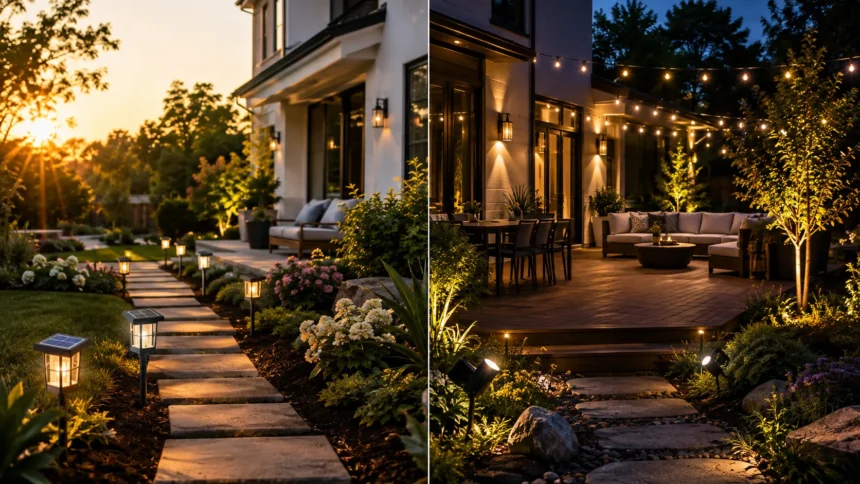
Solar vs Wired Outdoor Lighting: Pros and Cons
Outdoor lighting can completely change how a yard, patio, driveway, or garden feels after sunset. The right lights improve visibility, highlight landscaping, make outdoor entertaining more comfortable, and help people move safely around pathways and steps. Before choosing fixtures, however, homeowners usually face one important decision: should they use solar or wired outdoor lighting?
The solar vs wired outdoor lighting debate is not simply about which technology is better. Solar lights are easy to install and use free energy from sunlight, while wired systems generally provide more predictable brightness and longer operating times. The best option depends on your property, lighting goals, available sunlight, budget, and willingness to install electrical wiring.
Modern outdoor lighting has also become considerably more efficient because LED technology can produce useful illumination while consuming relatively little electricity. At the same time, improvements in solar panels, rechargeable batteries, motion sensors, and controls have made solar landscape lights more practical for many decorative and low-demand applications.
This guide compares the pros and cons of solar and wired outdoor lighting so you can choose confidently. We will look at installation, cost, brightness, reliability, maintenance, weather performance, security lighting, landscape design, and long-term value before deciding which system works best for different parts of your outdoor space.
What Is Solar Outdoor Lighting?
Solar outdoor lighting uses sunlight as its primary energy source. Each fixture normally contains a small solar panel that captures sunlight during the day and converts it into electrical energy, which is stored inside a rechargeable battery for use after dark.
Most solar landscape lights also contain a light sensor that automatically activates the LED when surrounding light levels fall. This allows pathway lights, garden accents, fence lights, and similar fixtures to operate without being connected to household electrical wiring.
Because every fixture can operate independently, solar lights are particularly easy to place around gardens and landscapes. Homeowners can often install them in soil, attach them to fences, or mount them on walls without digging trenches for electrical cables.
Their performance, however, depends on available sunlight and battery condition. A solar fixture placed beneath dense trees or beside a shaded wall may not collect enough energy during the day to provide reliable illumination throughout the night.
What Is Wired Outdoor Lighting?
Wired outdoor lighting receives electricity through cables connected to an electrical power source. Residential landscape systems commonly use low-voltage lighting, although other permanent outdoor fixtures may connect to household electrical circuits depending on their design and installation requirements.
A typical low-voltage landscape lighting system uses a transformer to reduce household voltage before electricity reaches fixtures around the property. Cables can then supply pathway lights, spotlights, deck lights, uplights, and other landscape fixtures.
Because the system does not depend on daily solar charging, wired outdoor lights can provide more consistent performance regardless of cloud cover or shade. They can also support larger numbers of fixtures and stronger illumination across extensive outdoor spaces.
Installation is usually more involved than placing solar lights. Cables must be planned and routed correctly, and some systems may require professional electrical work. That added installation effort is one of the biggest differences between wired and solar landscape lighting.
Solar vs Wired Outdoor Lighting: The Main Difference
The biggest difference between solar and wired outdoor lights is where they receive their power. Solar lights collect and store energy individually during daylight, whereas wired lights continuously draw electricity from a connected electrical system whenever they are switched on.
That difference affects almost everything else. Solar fixtures can generally be positioned without electrical cables, making installation and relocation easy. Wired fixtures require planning for cable routes but can provide predictable power whenever lighting is needed.
Performance also differs. A solar fixture’s nighttime brightness and operating duration may change according to sunlight, panel orientation, battery capacity, temperature, and weather. A properly installed wired fixture can usually deliver more consistent output from night to night.
Rather than thinking of one technology as universally superior, consider what each area needs. Decorative garden lighting may work perfectly with solar fixtures, while steps, driveways, entryways, and security-sensitive locations may benefit from the greater consistency of wired lighting.
Pros of Solar Outdoor Lighting
Easy installation is one of the biggest advantages of solar outdoor lights. Many products require little more than placing a stake in the ground or attaching the fixture to a surface. There is usually no need to run long electrical cables through garden beds.
Solar lights also do not consume household electricity while operating because their batteries are charged through sunlight. This can make them attractive for homeowners who want simple landscape illumination without adding another electrical load to the property.
Flexibility is another important advantage. A garden layout may change from year to year, and solar lights can usually move with it. If a fixture is not lighting the correct area, repositioning it may take only a few minutes.
Solar lighting can also work well in remote parts of a property where supplying electrical power would be inconvenient. Fence lines, garden corners, sheds, pathways, or landscape features located far from the house can often be illuminated without extending cables across long distances.
Cons of Solar Outdoor Lighting
The biggest disadvantage of solar landscape lighting is its dependence on sunlight. A fixture that receives several hours of strong direct sun may perform well, while the same fixture placed beneath trees or beside a north-facing obstruction may provide much weaker nighttime performance.
Weather can also influence charging. Several cloudy or rainy days may reduce the amount of energy stored in the battery, potentially shortening how long the light remains on after sunset. Performance varies considerably among products because panel and battery quality differ.
Rechargeable batteries eventually lose capacity and may need replacement. Outdoor exposure can also affect inexpensive fixtures, particularly when moisture enters housings or solar panels become dirty, scratched, or degraded.
Solar lights may therefore be less suitable where dependable illumination is essential throughout the night. If a dark stairway, primary entrance, or security area must remain predictably illuminated, depending exclusively on small solar fixtures may not provide the reliability you need.
Pros of Wired Outdoor Lighting
Consistency is one of the strongest arguments for wired landscape lighting. When properly installed and supplied with electricity, the lights are not dependent on how sunny the previous afternoon happened to be.
Wired systems also offer greater flexibility in brightness and fixture selection. Homeowners can use subtle pathway lighting, focused spotlights, deck lights, wall fixtures, and stronger security lighting while controlling how different areas of the property are illuminated.
Timers, photocells, motion sensors, dimmers, and smart controls can make a wired system highly customizable. Lights can operate only during particular hours, respond to movement, or turn on automatically when darkness arrives.
A professionally planned wired system can also create a more cohesive landscape design. Instead of treating every fixture as a separate device, lighting can be layered throughout pathways, trees, walls, architectural features, and outdoor living areas to produce a balanced nighttime environment.
Cons of Wired Outdoor Lighting
Installation is the most obvious disadvantage. Outdoor electrical cables need to be routed safely, and landscape wiring may need to cross lawns, planting beds, walkways, or other areas. Planning becomes more complicated than simply placing independent solar fixtures.
Initial costs can also be higher. Fixtures, cable, transformers, connectors, controls, and professional installation can make a wired landscape lighting project more expensive at the beginning than purchasing a handful of solar lights.
Once installed, fixtures are also less convenient to relocate. Changing a landscape design may require rerouting or extending cable instead of simply moving a stake-mounted light from one flower bed to another.
Wired systems consume electricity as well, although efficient LED fixtures can keep consumption relatively low. For most homeowners, the decision should therefore consider installation cost and reliability rather than assuming that wired lighting automatically creates a large electricity expense.
Solar vs Wired Outdoor Lighting Cost
Solar lighting typically has the lower entry cost for small projects because each fixture operates independently. You can purchase a few lights and install them yourself without paying for wiring, transformers, trenching, or extensive electrical labor.
The cost advantage becomes especially noticeable when you need only decorative pathway or garden lighting. Adding several stand-alone solar fixtures can be inexpensive compared with building a new wired system solely for a small planting area.
Wired lighting usually requires greater upfront investment but may offer better long-term value for large or heavily used areas. Higher-quality fixtures can provide dependable output, while replaceable LED lamps or serviceable components may allow the system to remain useful for years.
When comparing costs, avoid looking only at the purchase price. Consider expected lifespan, replacement batteries, fixture quality, installation, maintenance, electricity use, and how much usable light you actually receive from each system.
Which Option Is Brighter?
Wired outdoor lighting generally provides an advantage when you need higher or more consistent brightness. A connected power supply allows fixtures to deliver predictable light output without needing to conserve a limited amount of energy stored during daylight.
Solar lights have improved substantially, and some larger products can deliver useful illumination. However, many inexpensive solar pathway lights are intentionally designed for gentle accent lighting rather than illuminating a large working or security area.
Brightness should not be treated as a competition to produce the largest possible number of lumens. Excessive outdoor lighting creates glare, wastes energy, can disturb neighbors, and may reduce nighttime visibility by creating very bright and very dark areas together.
The better goal is appropriate illumination. Use enough light for the task, direct it where people need it, and avoid unnecessary spill. A lower-output fixture positioned correctly can often provide better functional lighting than a brighter fixture aimed poorly.
Which Lighting Is More Reliable?
For consistent nightly operation, wired lighting usually wins. Electricity remains available whether the previous day was sunny, cloudy, or rainy, allowing the system to operate on a predictable schedule throughout changing seasons.
Solar light reliability depends heavily on location. A high-quality fixture exposed to strong sunlight can perform well, but a shaded unit may struggle even when the product itself is functioning correctly.
Battery age also affects reliability. As rechargeable batteries lose capacity, a solar fixture that originally operated for much of the night may begin shutting off earlier, particularly after days with weaker sunlight.
If reliable illumination affects safety, consider wired lighting or a robust dedicated solar system designed for the task. Small decorative solar lights are better treated as accent lighting than as the only illumination for areas where darkness could create hazards.
Solar vs Wired Lights for Pathways
Pathways are one of the best applications for solar landscape lights because they typically need gentle guidance rather than intense illumination. Small solar fixtures can mark edges and help people understand where a walkway continues after dark.
Installation is particularly convenient along garden paths because cables are unnecessary. Homeowners can adjust spacing easily and move fixtures when plants grow or landscape beds are redesigned.
Wired pathway lighting becomes preferable when the path is used frequently or must remain reliably visible every night. This is especially relevant near stairs, changes in elevation, retaining walls, or routes leading between important parts of the property.
Whichever system you use, space fixtures according to useful visibility rather than trying to flood the entire path. Well-positioned downward light can guide movement while creating a more attractive landscape and reducing unnecessary glare.
Solar vs Wired Lighting for Security
Security lighting needs are different from decorative landscaping because reliability becomes more important. Entrances, garages, gates, side passages, and other areas may need dependable illumination when people approach after dark.
Wired motion-sensor lighting is often a strong choice for these locations because it has predictable access to power. A properly aimed fixture can remain off or dim until movement is detected and then provide useful illumination where needed.
Solar motion lights can still be useful where wiring is difficult, particularly around detached sheds, fences, or remote property areas. Larger panels and batteries can make these products considerably more capable than small decorative garden lights.
Before relying on solar security lighting, make sure the panel receives sufficient sunlight throughout the year. A location that charges well in summer may receive much less sunlight during winter as days shorten and shadows from buildings or trees change.
Solar vs Wired Lighting for Patios and Decks
Patios and decks usually benefit from layered lighting rather than one bright fixture. Ambient lighting creates atmosphere, while task lighting may be needed around steps, cooking areas, tables, doors, and outdoor kitchens.
Solar lights can work beautifully as decorative accents. Solar string lights, rail lights, lanterns, and small tabletop fixtures can add warmth without requiring complicated electrical installation.
Wired lighting is generally better for permanent functional areas. Stair lights, wall sconces, overhead fixtures, and lighting around outdoor kitchens benefit from predictable output whenever the space is being used.
Combining both systems often provides the best experience. Wired lights can handle essential visibility while solar fixtures add flexible decorative accents around planters, railings, garden edges, or other areas where perfect reliability is less important.
How Weather Affects Solar and Wired Lighting
Outdoor lights need to withstand rain, humidity, temperature changes, dust, and other environmental conditions regardless of how they receive power. Products intended for outdoor installation should therefore have appropriate weather-resistant construction for their location.
Solar lights face the additional challenge of maintaining battery performance across temperature extremes. Rechargeable batteries may deliver less usable capacity in cold conditions, while sustained high temperatures can also affect battery and electronic lifespan.
Snow, dirt, pollen, or leaves covering a solar panel can reduce charging efficiency. Routine cleaning may therefore be necessary, particularly during seasons when debris accumulates quickly.
Wired fixtures avoid the solar-charging issue, but connections and cables still need protection from moisture and physical damage. Quality installation and outdoor-rated components are essential for maintaining safe, dependable performance.
Maintenance: Which One Is Easier?
Solar lighting usually requires little electrical maintenance because fixtures have no external wiring. Routine tasks may include cleaning the solar panel, checking for water intrusion, repositioning fixtures, and replacing rechargeable batteries when performance declines.
Cheap fixtures sometimes become uneconomical to repair because batteries or LEDs are difficult to access. Purchasing serviceable products can reduce waste and make it easier to replace individual components instead of discarding the complete fixture.
Wired systems may require less frequent attention once professionally installed, but problems can involve cables, connections, transformers, controls, or individual fixtures. Troubleshooting can therefore be more involved when something stops working.
Landscape changes can affect both technologies. Growing shrubs may cover wired fixtures, while tree canopies can shade solar panels. Reviewing your outdoor lighting once or twice each year helps maintain good performance regardless of the system you choose.
Energy Efficiency and Outdoor LEDs
LED technology has made both solar and wired outdoor lighting more practical. LEDs generate useful light with much lower electricity consumption than older incandescent technologies and can provide long service lives when properly designed and managed.
Solar fixtures rely heavily on this efficiency because their batteries store limited amounts of energy. A low-power LED can provide practical illumination for much longer than an older inefficient light source could using the same stored energy.
Wired lighting benefits for similar reasons. An outdoor landscape containing multiple LED fixtures can provide substantial illumination while using relatively modest electrical power compared with older lighting technologies.
Energy efficiency should still be combined with thoughtful controls. Timers, photocells, motion sensors, and dimming can prevent lights from operating unnecessarily, reducing energy consumption while also limiting excess nighttime illumination.
How to Choose the Right Outdoor Light Color
Color temperature influences how outdoor lighting feels. Very cool, blue-white illumination can create a harsh appearance, while warmer light often produces a more comfortable atmosphere around gardens, patios, and residential architecture.
Warm outdoor lighting can also reduce the amount of short-wavelength blue light introduced into the nighttime environment. This is useful when homeowners want lighting that feels softer and less intrusive.
Consistency matters when multiple fixtures are visible together. Mixing extremely cool and warm lights randomly throughout one patio or landscape can make the design feel disconnected unless the contrast is intentional.
Rather than selecting color temperature based only on maximum brightness, consider the surroundings. Warm lighting often complements wood, brick, stone, plants, and outdoor seating, while carefully selected neutral light can work well in certain contemporary designs.
Responsible Outdoor Lighting Matters
Choosing between solar and wired power is only part of designing effective exterior lighting. The direction, brightness, timing, and color of the light can matter just as much as the fixture’s energy source.
Aim fixtures toward the surface that actually needs illumination instead of allowing light to shine upward or directly into someone’s eyes. Shielded fixtures can help reduce glare and limit unwanted light reaching neighboring properties or the night sky.
Use the lowest brightness that comfortably performs the task. A pathway requires a different amount of illumination from a driveway or outdoor cooking space, so using the same high-output fixture everywhere is rarely necessary.
Controls can make either solar or wired lighting more responsible. Motion sensors, timers, photocells, and dimming allow lights to operate when useful instead of producing unnecessary illumination throughout the entire night.
Can You Combine Solar and Wired Outdoor Lighting?
Yes, and for many homes a hybrid outdoor lighting system is more practical than choosing only one technology. Each power source can be used where its strengths matter most.
For example, wired lighting can illuminate steps, main pathways, entrances, patios, and security areas where dependable performance is important. Solar fixtures can then cover decorative garden beds, fence lines, planters, or distant landscape features.
This approach can also control installation costs. Instead of extending electrical wiring to every corner of a large yard, homeowners can reserve permanent wiring for high-priority locations and use solar lights where occasional variation in performance is acceptable.
A mixed system gives you flexibility as the landscape evolves. You can experiment with solar fixtures before deciding whether a particular area receives enough use to justify adding permanent wired lighting later.
Which Outdoor Lighting Is Better for Small Yards?
Small yards can work well with either system because cable distances and the number of required fixtures are limited. The decision often depends more on sunlight exposure and how frequently the outdoor space is used.
If the yard receives abundant sunlight and you mainly want decorative garden or pathway lights, solar fixtures can provide an easy and affordable solution without altering existing landscaping.
A small wired system may be worthwhile when the patio, path, or entrance is used every evening. With only a handful of fixtures, installation can remain manageable while providing consistent light across the most important areas.
Avoid overlighting compact spaces. Closely spaced bright fixtures can produce uncomfortable glare and make a small yard feel more artificial. A few well-positioned lights generally create a better nighttime environment.
Which Outdoor Lighting Is Better for Large Yards?
Large properties make solar lighting attractive because installing cables across long distances can become expensive and complicated. Independent solar fixtures can illuminate secondary paths, garden features, gates, and remote landscape areas relatively easily.
However, a large yard may also contain areas where dependable lighting is essential. Main walkways, entertainment spaces, stairs, driveways, and entrances can benefit from permanent wired lighting with centralized controls.
Large properties particularly benefit from zoning. Instead of switching every light on simultaneously, divide the landscape into functional areas and illuminate only the zones being used.
A combination of wired and solar fixtures often provides the most practical balance. Permanent wiring can support the core lighting system while solar fixtures extend coverage into lower-priority areas without greatly increasing installation complexity.
Common Outdoor Lighting Mistakes to Avoid
One common mistake is placing solar fixtures where they receive little direct sunlight. Homeowners sometimes choose locations based entirely on where light is needed at night without considering whether the solar panel can charge effectively during the day.
Another mistake is purchasing fixtures based only on price. Extremely inexpensive outdoor lights may use smaller batteries, weaker weather sealing, or less durable materials, resulting in frequent replacements that reduce any initial savings.
With wired lighting, poor planning can create overly bright areas and dark gaps. Fixtures should be selected according to specific tasks rather than simply placing identical lights at regular intervals throughout the property.
Finally, avoid treating maximum brightness as the goal. Good landscape lighting creates visibility, depth, and atmosphere without unnecessary glare. Appropriate aiming and spacing usually matter more than simply choosing the highest-output fixture available.
Solar vs Wired Outdoor Lighting: Which Is Better?
Choose solar outdoor lighting when easy installation, flexibility, and freedom from electrical cables matter most. It works especially well for decorative gardens, low-demand pathways, temporary arrangements, and remote areas receiving good sunlight.
Choose wired outdoor lighting when reliability, predictable brightness, control, and long-term landscape design are more important. It is particularly suitable for primary walkways, stairs, patios, entrances, architectural lighting, and frequently used outdoor spaces.
Neither option is automatically best for an entire property. Sunlight, landscape layout, nighttime use, security requirements, installation budget, and maintenance expectations can vary dramatically from one area of the yard to another.
For many homeowners, the strongest solution is therefore not solar or wired lighting but solar and wired lighting. Using each technology strategically allows you to balance convenience, reliability, energy efficiency, cost, and visual appeal.
Final Thoughts on Solar vs Wired Outdoor Lighting
The solar vs wired outdoor lighting decision ultimately depends on what you need the light to accomplish. Solar fixtures provide convenient, cable-free illumination, while wired systems offer consistent power and greater control.
Solar lights are ideal when you want quick installation or decorative lighting in sunny locations. Their main disadvantages are variable charging, battery maintenance, and reduced reliability during poor weather or heavy shade.
Wired landscape lights require more installation work and upfront expense, but they are usually better suited to areas where dependable illumination matters. Efficient LEDs and intelligent controls can also make modern wired systems practical to operate.
Before buying fixtures, map your outdoor space and identify which areas need decorative, functional, or security lighting. Once you understand those priorities, you can choose solar, wired, or a combination of both to create a safer and more inviting landscape.
Frequently Asked Questions
Is solar or wired outdoor lighting better?
Solar is better for simple installation and decorative lighting, while wired lighting is generally better for reliable brightness and permanent applications. Many properties benefit from using both.
Are wired outdoor lights brighter than solar lights?
Wired fixtures generally offer more consistent and potentially higher light output because they are not limited by daily battery charging. High-quality solar lights can still provide useful brightness for many applications.
Do solar outdoor lights work on cloudy days?
Yes, solar panels can still collect some energy under cloudy conditions, but charging may be reduced. Several low-sunlight days can shorten nighttime operating time, depending on the fixture and battery.
Is wired landscape lighting expensive to run?
Modern LED landscape lighting can use relatively little electricity compared with older incandescent systems. Actual operating cost depends on total wattage, operating hours, electricity prices, and controls.
Can I use solar and wired outdoor lights together?
Yes. Wired fixtures can handle important pathways, steps, patios, and entrances, while solar lights can provide decorative or remote landscape lighting where running electrical cable is inconvenient.