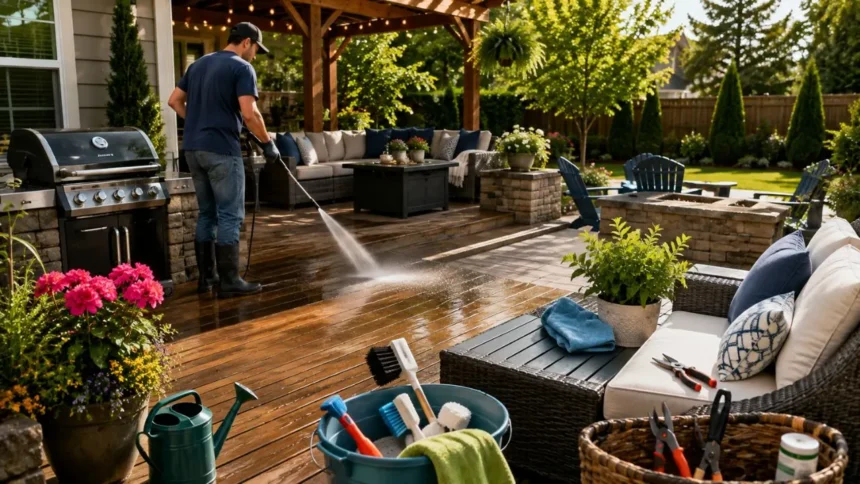
Outdoor Living Space Maintenance Checklist
An outdoor living space can extend your home, create room for entertaining and make everyday relaxation more enjoyable. However, constant exposure to sunlight, rain, wind, moisture and temperature changes can gradually damage surfaces and furnishings. A practical outdoor living space maintenance checklist helps you protect each feature before small problems become expensive repairs.
Your maintenance routine should cover more than sweeping the patio or wiping down a table. Decks, pavers, furniture, cushions, lighting, grills, fire features and drainage systems all require attention. Plants and surrounding landscaping also affect the area because overgrowth, standing water and fallen debris can stain surfaces or attract unwanted pests.
The best approach is to divide maintenance into weekly, monthly and seasonal tasks. Frequent light cleaning prevents dirt from building up, while scheduled inspections reveal cracks, loose fittings, rust and water damage. Seasonal care prepares the space for changing weather and reduces the amount of restoration required when outdoor entertaining begins again.
This guide provides an actionable checklist for maintaining patios, decks, outdoor kitchens, furniture and decorative features. You can adapt each step according to your climate, materials and lifestyle. Always check manufacturer instructions before applying cleaners, sealers or protective treatments because unsuitable products may discolour or weaken outdoor materials.
Inspect the Entire Space
Begin each season with a slow inspection of the complete outdoor area. Walk around the patio, deck, furniture and permanent structures during daylight so defects are easier to notice. Look for cracks, movement, loose hardware, peeling finishes, rust, damaged wires, standing water and signs of mould or pest activity.
Pay close attention to areas that receive limited sunlight or airflow. Shaded corners, spaces beneath furniture and sections near walls often remain damp for longer periods. These conditions can encourage mildew, algae and surface deterioration. Move lightweight items temporarily so you can examine the flooring and walls underneath them.
Check whether steps, railings and walking surfaces feel secure. A loose board, raised paver or unstable handrail can become a safety hazard, particularly when children or older adults use the area. Mark repairs that require tools or professional assistance instead of relying on memory after completing the initial inspection.
Take photographs of developing cracks, fading finishes or areas of water damage. Comparing images over several months helps you determine whether a problem is stable or becoming worse. Create a short maintenance record containing dates, completed tasks and products used so future care becomes more consistent and easier to manage.
Clean Patios and Pavers
Sweep the patio regularly to remove leaves, soil, food crumbs and other debris. Organic material can trap moisture and leave stains when it remains on concrete, stone or pavers. Pay extra attention to corners, furniture legs and spaces beside planters where dirt often collects without being noticed.
Wash the surface with water and a cleaner approved for the specific material. Concrete, natural stone, porcelain and brick may require different products because acidic or harsh cleaners can damage certain finishes. Test any new solution on a hidden section before applying it across the entire outdoor living area.
Pressure washing can remove stubborn grime, but excessive force may damage joints, surface coatings or softer stone. Use the lowest effective pressure and maintain a safe distance from the material. Avoid directing a strong stream into loose paver joints because it can remove sand and weaken the stability of the surface.
Inspect the joints after cleaning and replace missing jointing material when necessary. Remove weeds by the roots instead of only cutting the visible growth. If the patio has been sealed, check for dull or unprotected sections and follow the sealer manufacturer’s recommended schedule before applying another coat.
Maintain a Wooden Deck
Sweep a wooden deck frequently because leaves and dirt hold moisture against the boards. Clean the gaps between boards so water can drain freely rather than collecting on the surface. Move planters occasionally, especially those without raised feet, because trapped moisture can cause dark marks and accelerate wood deterioration.
Wash the deck with a wood-safe cleaning product and a soft brush. Scrub in the direction of the grain and rinse thoroughly so cleaning residue does not remain behind. Strong bleach solutions and aggressive pressure washing may damage wood fibres, so begin with a gentle method and increase intensity only when necessary.
Check for splintered boards, protruding screws, loose nails and unstable railings. Replace severely damaged boards and tighten loose fasteners before they create a larger structural problem. Examine the areas where the deck meets stairs, posts and the house because these connections experience significant movement and moisture exposure.
Apply stain or protective sealer when the existing finish no longer repels water effectively. Choose a product suitable for the wood species and local climate. Allow the deck to dry completely before treatment, and follow the required preparation and curing time before returning furniture or allowing heavy foot traffic.
Care for Composite Decking
Composite decking usually needs less maintenance than natural wood, but it is not maintenance-free. Sweep it regularly and remove spills before they dry. Dirt, grease, pollen and organic debris can still create stains, encourage surface growth and make the deck slippery during damp weather.
Use warm water, mild soap and a soft-bristle brush for routine cleaning. Scrub along the board pattern and rinse the surface well. Avoid using solvents or abrasive tools unless the decking manufacturer specifically approves them because they may damage the protective outer layer or permanently change its appearance.
Inspect the boards for scratches, heat damage, movement and loose fasteners. Composite boards expand and contract as temperatures change, so correct spacing remains important. Check that gaps are not blocked by dirt and that hidden fastening systems remain secure throughout the complete deck area.
Never place a grill, fire pit or portable heater directly on composite decking without an approved protective barrier. High heat and grease can damage the material. Use heat-resistant mats where permitted, maintain safe clearances and follow both the decking manufacturer’s instructions and the safety guidance supplied with the appliance.
Clean Outdoor Furniture
Remove loose dirt from outdoor tables, chairs, benches and loungers before washing them. Use a soft brush or vacuum attachment to clean joints, frames and decorative details. Regular cleaning prevents pollen, food residue and bird droppings from becoming difficult stains that require stronger treatment later.
Match the cleaning method to the furniture material. Mild soap and water work for many metal, plastic and resin pieces, while wood may require a specialised cleaner. Avoid abrasive pads on powder-coated metal and painted surfaces because scratches can expose the material underneath and allow rust or moisture damage to begin.
Inspect frames, legs, welds, screws and moving parts while cleaning. Tighten loose fittings and replace missing hardware with weather-resistant alternatives. Lubricate hinges or adjustable mechanisms when the manufacturer permits it, then wipe away extra lubricant so it does not attract dust or transfer to clothing.
Protect furniture when it will not be used for extended periods. Choose breathable, correctly fitted covers that prevent water from collecting on top. During severe weather, store lightweight furniture indoors or secure it properly so strong winds cannot move it into windows, vehicles or neighbouring properties.
Wash Cushions and Fabrics
Shake or vacuum outdoor cushions each week to remove dust, crumbs and pollen. Clean both sides because moisture and dirt often collect underneath. If the cushion covers are removable, read their care labels before washing because some fabrics require hand cleaning, cold water or air drying.
Treat stains promptly with a cleaner designed for outdoor fabric. Blot liquids rather than rubbing them deeper into the fibres, and test the solution on an inconspicuous area. Rinse soap residue thoroughly because remaining detergent can attract dirt and create visible marks after the fabric dries.
Allow cushions to dry completely before stacking, covering or placing them into storage. Damp filling can develop unpleasant smells and encourage mould growth even when the outer fabric feels dry. Stand cushions upright in a sunny, well-ventilated location so air can move around every side.
Store fabrics in a clean and dry container during prolonged rain, freezing conditions or periods of non-use. Avoid sealing damp cushions inside airtight plastic bags. Use breathable storage solutions and inspect stored items periodically for moisture, insects or rodents that may damage the fabric and filling.
Check Pergolas and Fences
Inspect pergolas, privacy screens, fences and shade structures for movement, cracks and loose connections. Pay particular attention to posts, anchors and areas where horizontal beams meet supports. Strong winds and seasonal expansion can gradually loosen fittings even when the structure appears stable from a distance.
Clean wood, metal or vinyl surfaces using an appropriate method. Remove leaves and climbing plants that trap moisture around joints or roof sections. Trim vines when they become too heavy because uncontrolled growth can bend lightweight structures, hide damage and make future repairs more difficult.
Look for peeling paint, rust spots, rot and insect damage. Sand and treat small affected areas before deterioration spreads beneath the surrounding finish. Replace weakened boards or corroded hardware rather than covering serious damage with another coat of paint or stain.
Examine retractable shades, curtains and canopy fabrics for tears, fading and damaged fasteners. Clean and dry fabric completely before storing it for winter or severe weather. Retract awnings during strong winds unless the manufacturer has specifically designed and rated the system to remain extended.
Maintain the Outdoor Kitchen
Clean an outdoor kitchen after every use so grease and food residue do not attract pests. Wipe countertops, handles, sinks and appliance exteriors with products suitable for each surface. Natural stone, stainless steel, tile and concrete may react differently to acidic foods and harsh household cleaners.
Empty outdoor refrigerators and inspect food regularly. Check door seals, ventilation openings and drainage areas for dirt or blockages. If an appliance will be shut down for winter, clean and dry the interior, disconnect it according to its manual and leave the door slightly open when recommended.
Inspect plumbing connections, taps and drains for leaks. A slow drip beneath a cabinet can cause mould, corrosion and structural damage before it becomes visible from the outside. Turn off seasonal water lines before freezing weather and drain them properly to reduce the risk of cracked pipes.
Keep cabinets organised and avoid storing paper goods, food or flammable materials near cooking appliances. Check that storage doors close securely and that insects or rodents cannot enter through gaps. Review local safety requirements before installing or modifying gas, electrical or plumbing components.
Clean the Grill
Brush grill grates after cooking while they are still warm enough for residue to loosen safely. Empty grease trays regularly and remove accumulated food particles from the cooking chamber. Heavy grease buildup can create smoke, unpleasant flavours and an increased risk of flare-ups during later use.
Perform a deeper cleaning according to the grill manufacturer’s instructions. Turn off and disconnect the fuel supply before removing internal components. Clean burners carefully, check that openings remain clear and avoid damaging ignition wires or sensors while working inside the appliance.
Inspect gas hoses, connections and the regulator for cracks, corrosion or wear. Never test for leaks with an open flame. Follow the approved leak-testing procedure in the appliance manual, and stop using the grill when you smell gas or discover damaged components requiring replacement.
Place the grill on a stable, non-combustible surface with appropriate clearance from walls, railings, trees and overhead structures. Use a fitted cover after the appliance cools and dries. Secure the cover properly so wind cannot remove it or trap standing water against the grill.
Protect Fire Features
Remove cooled ash and debris from wood-burning fire pits according to local disposal requirements. Store ashes in a metal container with a secure lid until you are certain no heat remains. Never place warm ash into plastic bins, bags or compost piles where hidden embers may start a fire.
Inspect fire pit bowls, burners, screens and supporting structures for corrosion or cracks. Gas fire features also require checks of ignition components, fuel lines and control valves. Stop using the unit if flames behave unusually, gas smells are present or the structure has become unstable.
Maintain clear space around every fire feature. Remove dry leaves, cushions, umbrellas and decorative items that could ignite. Position seating at a safe distance and keep a suitable fire extinguisher, water source or other recommended emergency equipment accessible whenever the feature is operating.
Cover the fire pit after it has cooled and dried completely. Avoid allowing rainwater to remain inside metal bowls because standing moisture encourages corrosion. During extended periods of non-use, disconnect portable fuel sources as directed and store components in a safe, ventilated location.
Check Outdoor Lighting
Walk through the space after dark to identify failed bulbs, dark pathways and lights aimed in uncomfortable directions. Adequate lighting improves visibility around steps, cooking areas and seating zones. Replace damaged bulbs with the type and wattage approved for the fixture rather than choosing a brighter option automatically.
Clean lenses and solar panels so dirt does not reduce light output. Trim plants that block fixtures or prevent solar units from receiving enough daylight. Reposition movable lights when landscaping changes, but avoid creating glare that shines into windows or neighbouring properties.
Inspect cables, plugs, transformers and fixture housings for cracks or exposed wiring. Outdoor electrical components must be rated for their location and weather exposure. Stop using damaged equipment and contact a qualified electrician when water has entered a fixture or connections appear burnt or corroded.
Test timers, motion sensors and smart-lighting schedules at the beginning of each season. Adjust activation times as daylight hours change. Confirm that cables do not cross walking areas and that extension cords are not being used as permanent wiring for outdoor appliances or decorative lighting.
Improve Drainage
Check the outdoor area after heavy rain to identify puddles and slow drainage. Water should move away from the house, outdoor kitchen and structural posts. Repeated pooling can stain surfaces, weaken soil, encourage mosquitoes and allow moisture to enter materials that were not designed for constant exposure.
Clear leaves and debris from drains, channels, gutters and downspouts. Make sure water outlets are not blocked by soil, mulch or furniture. Redirect downspouts when they discharge directly onto a patio section that repeatedly becomes wet or develops algae and surface damage.
Inspect the slope around patios and decks. Settled soil or moving pavers may create low areas where water collects. Small problems may be corrected by resetting individual pavers or improving nearby grading, while widespread settlement should be evaluated by an experienced contractor.
Avoid placing planters directly over drains or against wooden walls without allowing airflow. Use raised feet and saucers appropriately, but empty standing water after irrigation. Select containers with suitable drainage holes so plant care does not create permanent wet spots across the outdoor living space.
Control Mould and Algae
Mould, mildew and algae are more likely to appear in shaded, damp or poorly ventilated areas. Inspect the underside of furniture, north-facing walls, deck corners and spaces beside planters. Early treatment is easier than removing a thick, slippery layer that has spread across a large surface.
Choose a cleaning product approved for the affected material and surrounding plants. Protect nearby fabrics and test the solution on a hidden area. Scrub gently and rinse thoroughly, taking care not to wash strong chemicals into lawns, ponds or garden beds.
Reduce the conditions that allow growth to return. Improve drainage, increase airflow and trim dense vegetation that keeps surfaces shaded throughout the day. Move furniture slightly away from walls and avoid storing wet covers or cushions directly on the patio.
Wear gloves and appropriate eye protection during cleaning, especially when working overhead or using concentrated solutions. Do not mix household cleaning chemicals because dangerous fumes may result. Hire a professional when growth covers a large area, repeatedly returns or appears connected to a building moisture problem.
Manage Pests
Food crumbs, standing water, overflowing bins and dense storage areas can attract insects and rodents. Clean cooking and dining spaces after use, seal rubbish containers and avoid leaving pet food outside overnight. Regular sanitation is usually more effective than waiting until a visible infestation develops.
Inspect furniture, cushions, cabinets and storage boxes for droppings, nests or chewing damage. Shake out folded umbrellas and covers carefully before opening them. Wear gloves when cleaning pest-contaminated areas and follow local health guidance for safe handling and disposal.
Reduce mosquito breeding by emptying water from plant saucers, toys, tarps and decorative containers. Clean water features and maintain circulation when required. Even a small amount of standing water can remain unnoticed beneath furniture or inside a folded cover after rainfall.
Seal gaps around outdoor kitchens and storage cabinets where practical. Choose pest-control products carefully when children, pets, pollinators or edible plants are nearby. Contact a licensed professional when you discover aggressive stinging insects, termites, repeated rodent activity or a nest in a structural area.
Maintain Plants and Borders
Trim plants that extend across paths, seating areas or cooking zones. Overgrown branches can block lighting, scratch furniture and restrict airflow. Keep thorny plants away from areas where people walk or sit, and remove dead growth before it falls onto surfaces or becomes a fire hazard.
Check irrigation systems for leaks, blocked emitters and overspray. Water aimed continuously at walls, fences or wooden decks can create stains and moisture damage. Adjust the watering schedule according to the season instead of allowing the system to run at the same frequency throughout the year.
Refresh mulch when needed, but keep it away from wooden posts, siding and outdoor kitchen structures. Thick mulch placed against building materials can hold moisture and hide insect activity. Maintain a visible inspection gap so developing problems are easier to identify.
Use planters that suit the mature size of each plant and provide enough drainage. Rotate containers occasionally to prevent uneven sun exposure and floor staining. Place protective feet beneath heavy pots so air can circulate and trapped moisture does not remain against the patio or deck.
Spring Maintenance Tasks
Spring is the time to uncover the outdoor space and assess winter damage. Remove covers, sweep surfaces and inspect decks, patios, furniture and structures. Check for frost movement, cracked materials, loose fasteners and moisture damage before arranging furniture or beginning major outdoor activities.
Deep-clean flooring and wash furniture before reinstalling cushions. Clean grills, outdoor refrigerators and sinks, then test utilities carefully. Replace expired fire extinguishers, damaged lighting and worn appliance components before the outdoor cooking season becomes busy.
Prune damaged plants and confirm that irrigation systems operate correctly. Clear drainage channels and direct runoff away from foundations. Apply sealers or protective finishes only when temperatures, surface moisture and weather forecasts meet the product instructions.
Review the layout for comfort and safety. Confirm that walking paths remain clear, rugs lie flat and furniture does not block doors or stairs. Updating the arrangement in spring can improve traffic flow and reveal sections that require repair before entertaining begins.
Summer Maintenance Tasks
During summer, focus on frequent cleaning and protection from heat, sunlight and heavy use. Wipe tables after meals, clean spills promptly and sweep cooking areas. Inspect the grill and fire features regularly because grease and fuel systems are used more often during warm months.
Protect fabrics from prolonged ultraviolet exposure by using covers or storing cushions when they are not needed. Rotate furniture and rugs to encourage more even fading. Check wooden surfaces for dryness, splitting or peeling finishes, particularly in areas exposed to strong afternoon sun.
Water container plants carefully and inspect irrigation for overspray. Empty standing water after summer storms and keep drains clear. Watch for algae in shaded areas and pest activity near dining spaces, rubbish bins and storage cabinets.
Test fans, shade structures and lighting throughout the season. Tighten loose umbrella bases and retract canopies before severe weather. Summer thunderstorms and strong winds can damage unsecured furniture quickly, so create a simple routine for preparing the space when storms are forecast.
Autumn Maintenance Tasks
Autumn maintenance focuses on debris removal and preparation for colder weather. Sweep fallen leaves before they become wet and stain surfaces. Clean gutters, drains and spaces beneath decks so autumn debris does not trap moisture throughout winter.
Wash and dry cushions, rugs and removable fabrics before storage. Clean furniture and apply protective products when required. Use breathable covers for items that remain outdoors and make sure water cannot collect in deep folds or low sections.
Service the grill, outdoor kitchen and fire features before temperatures fall. Turn off and drain seasonal water lines where freezing is possible. Remove food, liquids and cleaning products that could spoil, freeze or attract pests inside outdoor cabinets.
Inspect trees and structures for loose branches, unstable panels and damaged fasteners. Secure lightweight items and store umbrellas before seasonal storms. Completing repairs during autumn reduces the likelihood that winter weather will expand cracks or worsen existing structural weakness.
Winter Maintenance Tasks
In mild climates, winter maintenance may involve continued cleaning and moisture control. Sweep debris, remove standing water and check covers after storms. Avoid allowing wet leaves to remain against wood, metal or fabrics for extended periods.
In freezing climates, keep snow loads within the limits of decks, pergolas and awnings. Use tools that will not scratch surfaces when clearing snow. Avoid applying ice-melting products without checking whether they are safe for the specific concrete, stone, paver or decking material.
Inspect stored furniture and cushions during winter instead of leaving them untouched for months. Check for condensation, pests and mildew. Improve ventilation or move items when moisture develops inside sheds, garages or storage containers.
Do not operate grills, fire pits or patio heaters inside enclosed spaces. Winter shelter may feel convenient, but combustion appliances require the clearance and ventilation stated by their manufacturers. Plan repairs and replacement purchases during winter so the space is ready before spring demand increases.
Create a Monthly Routine
Choose one day each month for a complete outdoor living space check. Sweep surfaces, wipe furniture, inspect drainage and look beneath movable items. A predictable routine prevents tasks from being delayed until the area becomes difficult or expensive to restore.
Divide responsibilities when several people use the space. One person can inspect the grill and appliances, while another manages fabrics, plants or lighting. Keep cleaning products and basic tools together in a secure location so routine maintenance does not require gathering supplies from several parts of the home.
Set reminders for less frequent tasks such as sealing wood, servicing gas appliances or washing shade fabrics. Add manufacturer-recommended dates to a digital calendar. Maintenance becomes more reliable when it is linked to specific months rather than remembered only after visible deterioration appears.
Review the checklist at the end of every season and remove tasks that do not apply to your space. Add new items when you install furniture, lighting or an outdoor kitchen. A customised checklist remains useful for longer than a generic list that ignores your materials and local climate.
Avoid Common Mistakes
Do not use one powerful cleaner on every outdoor surface. A product that works on concrete may damage wood, stone, metal coatings or fabric. Read labels carefully, follow dilution instructions and test unfamiliar products before treating a large visible area.
Avoid covering wet furniture, cushions or appliances. Covers protect outdoor items only when moisture can escape. Trapping dampness beneath a waterproof cover may encourage mould, corrosion and staining that remain unnoticed until the item is uncovered weeks later.
Do not postpone small repairs such as loose screws, cracked sealant or lifting pavers. Outdoor conditions can expand minor defects quickly. Addressing a problem early usually requires less time and money than replacing a larger damaged section after another season of exposure.
Never ignore safety while focusing on appearance. Secure railings, stable steps, protected electrical connections and safe cooking equipment are more important than decorative improvements. Stop using any feature that appears damaged until it has been inspected and repaired correctly.
FAQs
How often should an outdoor living space be cleaned?
Sweep high-use areas weekly and perform a deeper cleaning at least once each season. Cooking areas, grills and dining furniture should be cleaned after use to prevent grease, stains and pests.
When should a deck be sealed?
Seal a wooden deck when its existing finish no longer repels water or according to the product manufacturer’s schedule. Climate, wood type, sun exposure and previous treatments can change the timing.
Can outdoor cushions stay outside all year?
Weather-resistant cushions can tolerate some exposure, but long-term moisture and sunlight shorten their lifespan. Store them during severe weather or extended non-use after making sure they are completely dry.
Is pressure washing safe for patios and decks?
It can be safe when the surface supports it and the correct pressure is used. Excessive force may damage wood fibres, coatings, stone or paver joints, so test a hidden section first.
What maintenance should be done before winter?
Clean and dry furniture, store fabrics, clear drainage and remove fallen leaves. Drain seasonal plumbing, secure loose objects and protect grills, fire features and appliances according to their manuals.
Outdoor Living Space Maintenance Checklist: Final Steps
A reliable outdoor living space maintenance checklist begins with regular inspection and light cleaning. Sweeping debris, removing spills and checking for moisture take little time but can prevent stains, mould, pests and structural deterioration from developing unnoticed.
Seasonal maintenance should include deeper surface cleaning, furniture protection, drainage checks and appliance care. Spring prepares the space for use, summer focuses on frequent upkeep, autumn protects it from colder weather and winter monitoring prevents moisture or storage damage.
Adapt the checklist to the materials and features in your own area. Wooden decks, composite boards, stone patios, outdoor kitchens and fire pits have different requirements. Following manufacturer guidance helps prevent damage caused by unsuitable cleaners, coatings or repair methods.
Consistent maintenance protects safety, appearance and long-term value. By completing small tasks throughout the year, you can avoid rushed seasonal restoration and expensive repairs. A clean, stable and well-organised outdoor area will remain comfortable, attractive and ready whenever you want to use it.