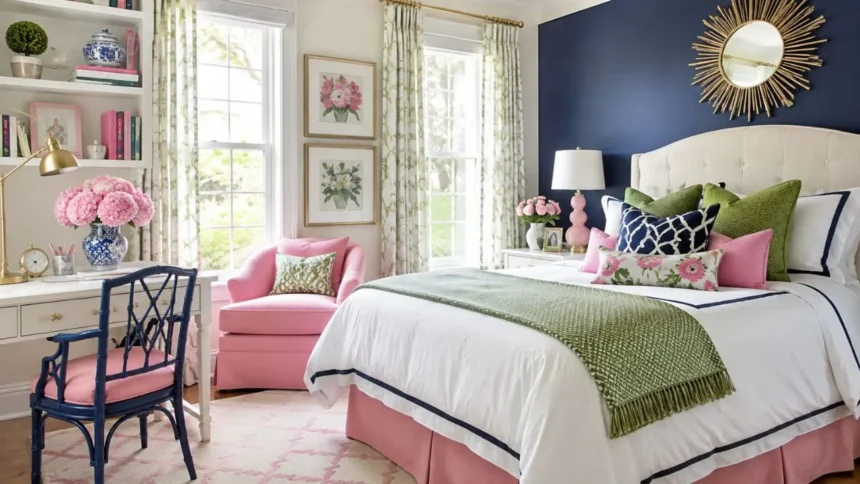
Preppy Room: Create a Polished and Playful Space
A preppy room combines timeless furniture, cheerful colours, organised layouts and playful decorative details. It can feel classic without becoming formal and colourful without looking chaotic. The style works especially well in bedrooms, teen rooms, dorm rooms, studies and guest spaces that need both personality and structure.
Traditional preppy interiors take inspiration from New England homes, Ivy League style, coastal living and leisure activities such as tennis, sailing and equestrian sports. Modern versions expand the look through brighter colours, relaxed furniture, bold artwork and personal collections that make the room feel less traditional and more individual.
A successful preppy aesthetic room does not require expensive furniture or designer wallpaper. You can create the style with striped bedding, framed prints, woven baskets, a tailored lamp, colourful cushions and a consistent palette. The strongest rooms look thoughtfully collected rather than purchased as one matching set.
This guide explains how to plan a preppy bedroom using colour, pattern, furniture, lighting, storage and wall décor. It also includes ideas for preppy teen bedrooms, college dorms, small rooms, pink and green palettes, coastal looks and affordable room makeovers.
What Is a Preppy Room?
A preppy room is an interior designed around classic shapes, traditional materials and cheerful patterns. Common features include navy blue, white, pink, green, plaid, gingham, stripes, florals, monograms, polished wood, rattan, brass and carefully selected artwork.
The style originally developed from American prep-school, Ivy League and New England influences. Its modern identity was strengthened during the 1980s, although designers continue to reinterpret it through coastal, Southern, Palm Beach and contemporary influences.
Preppy interior design balances opposites. It can combine antique furniture with modern artwork, formal patterns with relaxed bedding and traditional colours with unexpected accents. House Beautiful describes the style as simultaneously timeless and current, formal and relaxed, and masculine and feminine.
The style should feel organised but not impersonal. Books, photographs, sports memorabilia, travel objects and monogrammed accessories can reveal the resident’s interests. Personal details are essential because a preppy room should suggest a life and identity rather than merely copy a catalogue display.
Choose a Preppy Colour Palette
Begin with one dominant colour that covers the walls, bedding or largest furniture pieces. White, cream, pale blue, navy or soft green provides a dependable foundation. A controlled background gives brighter preppy colours enough space to feel energetic without overwhelming the room.
Classic combinations include navy and white, pink and green, blue and yellow, red and navy, or blush and pale blue. Deeper palettes may introduce burgundy, forest green, camel and dark wood. Architectural Digest identifies navy, burgundy, green, light blush and natural wood as characteristic colours within related American prep interiors.
Use approximately three main colours and repeat them across the room. For example, navy may appear in the headboard, rug and artwork, while white covers the walls and bedding. Pink or green can then provide smaller accents through cushions, lamps, books and decorative trays.
Avoid using every familiar preppy colour at equal strength. A room containing intense pink, green, yellow, red and blue may feel more like a party theme than a polished interior. Let one shade dominate, use another as support and reserve the brightest colour for a few memorable details.
Try Pink Preppy Room Ideas
A pink preppy room can feel sophisticated when the colour is balanced with white, navy, green, natural wood or brass. Instead of covering every surface in the same pink, combine several controlled tones, such as pale blush walls, coral cushions and one deeper raspberry accent.
Pink and green is one of the most recognisable preppy combinations. Use soft pink bedding with green piping, botanical artwork or a painted bedside table. White walls and neutral flooring can prevent the colours from becoming overly sweet or visually heavy.
For a calmer look, pair dusty pink with navy, cream and medium-toned wood. This palette can grow with a teenager and remain suitable in a guest room or first apartment. Tailored shapes, framed artwork and simple bedding keep the room polished.
House Beautiful and The Spruce both show that pink can work beyond children’s rooms when it is combined with traditional furniture, pattern and intentional details. Scalloped edges, stripes, cane furniture and contrasting blue accents can make pink feel established rather than temporary.
Use Blue and Green
Blue preppy rooms feel calm, classic and easy to adapt. Navy creates contrast and structure, while pale blue makes the room appear lighter. Use navy on a headboard, feature wall or rug, then add white bedding and a smaller amount of sky blue for variation.
Green can produce either a playful or academic atmosphere. Apple green and bright white feel fresh, while forest green, leather and dark wood suggest a traditional library or Ivy League study. Sage green offers a softer alternative for bedrooms where relaxation is the main priority.
Blue and green also work together naturally. A pale blue wall can support green patterned curtains, navy pillows and woven furniture. Repeating both colours through small objects creates continuity without requiring every textile to match perfectly.
A recent House Beautiful dorm guide recommends beginning with a defined colour palette and notes that blue and green can create a calm place to relax. This advice is particularly useful in bedrooms and study areas where visual energy should not interfere with rest or concentration.
Mix Classic Preppy Patterns
Patterns give a preppy room its energy and recognisable personality. Stripes, gingham, plaid, florals, houndstooth, checks and Greek-key borders are common choices. The goal is not to use all of them but to select a few patterns connected by colour and scale.
Begin with one dominant pattern, such as striped wallpaper, floral curtains or plaid bedding. Add a smaller pattern through cushions or an upholstered chair. Complete the room with solid-coloured textiles that provide visual breaks between the more detailed surfaces.
Varying scale prevents patterns from competing. Wide navy stripes can work with a small green gingham, while a large floral print can sit beside narrow striped piping. Keeping one or two colours consistent makes the combination feel deliberate.
Preppy interiors are known for pattern mixing, and established design references regularly connect the style with florals, stripes, plaid, gingham and houndstooth. Moderation remains important because strong patterns need solid colours and quieter textures around them.
Select Timeless Furniture
Preppy furniture usually has classic lines and dependable materials. Wooden beds, spindle headboards, campaign-style desks, upholstered armchairs, traditional dressers and tailored benches can all support the look. Furniture should feel durable rather than excessively trendy.
White-painted furniture creates a bright coastal appearance, while mahogany, walnut and other darker woods produce a more traditional atmosphere. Mixing one dark wooden piece with lighter items can add depth without making a small bedroom feel heavy.
Rattan, cane and wicker introduce a relaxed element that balances formal patterns. A woven headboard, desk chair, basket or lamp can soften painted furniture and polished metal. These materials are commonly used in preppy and coastal-preppy rooms.
Avoid buying a complete matching bedroom collection when possible. A coordinated bed, dresser, desk and bedside table can look flat and showroom-like. Combine compatible pieces with different finishes, then connect them through repeated hardware, colour or decorative details.
Style Preppy Bedding
The bed is normally the largest visual feature in a preppy bedroom, so its textiles should establish the main palette. Start with crisp white, cream, striped or lightly patterned bedding before adding stronger colour through pillows, blankets and a tailored bed skirt.
Border-frame bedding is a timeless choice because its contrasting edge adds definition without covering the bed in pattern. White sheets with navy, pink or green borders can work with floral wallpaper, plaid cushions and colourful artwork.
Layering creates comfort, but each layer should have a role. Use sleeping pillows, one or two decorative cushions and a folded throw instead of filling the bed with accessories that must be removed every night. A monogrammed pillow can personalise the arrangement without dominating it.
Combine different textures to keep a limited palette interesting. Cotton percale, linen, velvet, needlepoint, woven wool and light quilting can all appear in one room when their colours relate. Too many slippery or highly decorative fabrics may make the bed look formal rather than inviting.
Add Preppy Wall Decor
Preppy wall décor often reflects interests associated with travel, sport, nature, education and coastal life. Framed maps, botanical prints, equestrian art, rowing photographs, pennants, tennis rackets and vintage advertisements can provide character without relying on generic motivational signs.
A gallery wall can combine family photographs, small paintings, postcards and certificates. Use matching frames for a formal result or related wood and brass finishes for a collected appearance. Plan the arrangement on the floor before attaching anything to the wall.
Wallpaper is another effective option. Stripes, small florals, checks and botanical prints suit the style, but they do not need to cover every wall. A feature wall behind the bed or wallpaper inside a bookshelf can deliver pattern at a lower cost.
Even inexpensive prints look more finished when framed rather than taped directly to a wall. Designers advising college students recommend simple frames and removable hanging solutions to make dorm artwork appear more polished while respecting rental or residence rules.
Choose Lighting and Accessories
Lighting should combine practical brightness with decorative interest. Ceramic lamps, brass swing-arm sconces, pleated shades, glass lamps and traditional floor lamps all work well. Select warm bulbs for a comfortable evening atmosphere and include focused lighting near the desk or reading chair.
Accessories can introduce the most playful parts of preppy room décor. Decorative trays, monogrammed objects, porcelain containers, colourful books, small sculptures and fresh flowers can strengthen the palette while keeping useful items organised.
Brass is a popular metal because it works with navy, green, pink, wood and rattan. Use it consistently on lamps, picture frames, drawer handles or curtain hardware. Combining too many unrelated metal finishes can weaken the room’s visual structure.
A preppy room should feel expressive without becoming cluttered. The Spruce notes that successful preppy rooms contain personality while still choosing furniture and accessories purposefully. Leave space around significant objects so they remain noticeable.
Create a Preppy Teen Bedroom
A preppy teen bedroom should reflect the teenager’s current interests while allowing the design to mature. Begin with versatile furniture and a manageable wall colour, then use bedding, artwork and accessories to introduce personality that can change over time.
Sports interests can appear through framed tennis photographs, vintage rackets, team pennants or equestrian prints. These details should connect with genuine interests rather than being added only because they look traditionally preppy. Authentic objects make the room feel more personal.
Include a comfortable study area with suitable lighting, accessible storage and enough surface space for schoolwork. A tailored desk, upholstered or woven chair, memo board and organised shelves can support the theme while improving the room’s daily function.
Let the teenager choose important colours, artwork and personal displays. A parent-designed room may look polished, but it will not feel successful if the resident cannot recognise themselves in it. Preppy design is flexible enough to accommodate music, sports, travel, fashion and other individual interests.
Plan a Preppy Dorm Room
A preppy dorm room needs to be attractive, compact and easy to restore at the end of the academic year. Begin by checking residence rules covering wall fixings, electrical appliances, furniture movement, curtains and additional lighting before buying decorative products.
Choose one colour palette and repeat it through bedding, towels, storage and desk accessories. Navy and white can create a traditional base, while green, pink, red or yellow accents introduce personality. A consistent palette helps numerous inexpensive objects appear connected.
Use removable hooks, framed lightweight prints, fabric noticeboards and freestanding decorations instead of permanent alterations. Vintage or second-hand objects can make a plain dorm feel personal, while framed posters provide more polish than unmounted paper.
Storage should work vertically and below furniture. Use under-bed boxes, drawer organisers, baskets and over-door solutions permitted by the residence. Attractive storage allows practical items to support the design instead of creating visible clutter around the limited room.
Decorate a Small Preppy Room
A small preppy room should use pattern strategically. Choose one patterned focal point, such as the headboard, rug or curtains, then keep the remaining large surfaces quieter. This creates personality without visually reducing the available space.
Use furniture with more than one function. A trunk can hold bedding and serve as a nightstand or bench, while a desk with drawers can replace a separate storage unit. The Spruce specifically highlights trunks as practical storage pieces within preppy rooms.
Wall-mounted shelves, swing-arm lights and tall bookcases use vertical space while preserving the floor. Keep the areas around doors and the bed clear so movement remains comfortable. A beautiful layout will still feel unsuccessful when furniture interrupts everyday routines.
Mirrors and lighter wall colours can distribute light, but a small room does not have to be entirely white. Navy, green or patterned wallpaper can work when it is limited to one section and balanced with pale bedding, good lighting and visible open space.
Try Coastal Preppy Style
Coastal preppy rooms combine traditional patterns with light materials and seaside colours. Navy stripes, soft white bedding, woven furniture, pale wood and ocean-inspired artwork can create the look without filling the room with anchors, shells and literal nautical signs.
Pink, green and floral prints can make coastal preppy décor feel more Palm Beach than New England. Blue, white, dark wood and plaid create a more traditional northeastern appearance. Both directions work when the room maintains a clear palette and classic furniture.
Natural textures prevent the blue-and-white scheme from appearing cold. Add rattan, cane, jute, seagrass, linen and cotton through furniture, rugs, baskets and window treatments. These materials also make tailored furnishings feel more relaxed.
House Beautiful describes the line between coastal and preppy design as flexible, showing combinations of nautical stripes, pink-and-green florals and rattan. Use these elements as inspiration while avoiding excessive themed decoration.
Create an Old-Money Preppy Look
An old-money preppy room uses deeper colours, natural materials, traditional artwork and objects that appear collected over time. Navy, burgundy, forest green, camel, leather, polished wood and antique brass create a more mature atmosphere than bright pastel prep.
Introduce books, framed landscapes, equestrian art, vintage boxes, ceramic lamps and one or two antique or second-hand furniture pieces. The goal is to suggest history and personal interests rather than display artificial signs of wealth.
Pattern should remain balanced. Plaid, tartan, florals and stripes can appear together when solid upholstery and natural wood separate them. Architectural Digest notes that related old-money interiors depend on quality materials, balanced palettes, moderate pattern and antique pieces.
Avoid purchasing numerous objects merely because they look old. A room filled with fake trophies, imitation books and unrelated vintage accessories may feel staged. Choose fewer pieces with genuine usefulness, craftsmanship or personal meaning.
Complete a Budget Makeover
Begin a preppy room makeover by rearranging and decluttering before shopping. Clear unnecessary objects, improve the furniture layout and identify the most visible gaps. You may discover that the room needs better bedding or lighting rather than many small decorative purchases.
Paint offers one of the largest visual changes for the cost. A crisp white, pale blue, soft pink or muted green wall can establish the theme. Renters can use removable wallpaper, fabric panels or large framed prints when painting is not allowed.
Search second-hand shops for wooden furniture, brass lamps, mirrors, picture frames, books, baskets and traditional artwork. Minor scratches can contribute character, while paint, new handles or a simple lampshade can update an otherwise suitable piece.
Spend more on items that affect everyday comfort, such as the mattress, desk chair, curtains and practical storage. Save on decorative prints, trays, cushions and small accessories. A room appears more expensive when its layout and palette are controlled, not when every object has a high price.
Keep the Room Organised
Organisation supports the structured side of the preppy aesthetic. Give school supplies, clothing, books, beauty products and electronics designated storage locations. Clear surfaces allow colourful patterns and decorative objects to stand out rather than disappear among everyday clutter.
Use woven baskets, fabric boxes, trunks and decorative trays to connect storage with the room’s style. Labels can help when several containers look similar, especially in a teen room or dorm where space is limited.
Keep frequently used objects within easy reach. A tray on the bedside table can contain jewellery and small items, while a charging station prevents cables from spreading across the desk. Storage systems should match real habits instead of creating complicated routines.
Review the room seasonally and remove clothing, books and décor that are no longer useful. A preppy room can contain collections and layered pattern, but it still needs visual breathing space. Editing keeps the style polished rather than crowded.
Avoid Common Design Mistakes
The most common mistake is using too many symbols at once. A room containing anchors, tennis rackets, horses, monograms, university banners and nautical rope can feel like a themed display. Select details connected with the resident’s genuine interests.
Another mistake is matching every fabric perfectly. Preppy style benefits from coordination, but identical bedding, curtains and cushions may feel flat. Mix patterns at different scales and include solid colours to create depth and balance.
Do not overlook function while focusing on appearance. The desk needs comfortable lighting, curtains should provide privacy and storage must accommodate real belongings. Decorative decisions should improve the way the room works rather than create additional maintenance.
Finally, avoid copying a social media room exactly. Adapt the palette, furniture and decorations to the architecture, budget and person using the space. The best preppy room ideas provide a framework for personal expression rather than a strict list of products.
Conclusion: Build a Preppy Room That Feels Personal
A preppy room combines classic design with playful colour, organised layouts and meaningful details. Navy, white, pink, green, stripes, gingham, florals, wood, brass and rattan can all support the style when they are used with restraint.
Begin with a clear palette and practical furniture. Add one dominant pattern, layer compatible textiles and select lighting that supports reading, studying and relaxation. These foundational choices will have more impact than numerous small accessories.
Personalise the room with framed photographs, books, artwork, sports items or travel objects. A monogram or coastal detail can strengthen the style, but the room should still reflect the resident’s actual interests and routines.
Whether you are decorating a teen bedroom, dorm room or small apartment, the same principle applies: combine timeless foundations with flexible accents. A carefully edited preppy room can feel colourful, comfortable and polished without becoming formal or overly themed.
Frequently Asked Questions
What is a preppy room?
A preppy room combines traditional furniture, organised layouts, cheerful colours and classic patterns. Common elements include navy, pink, green, stripes, plaid, monograms, brass, rattan and framed artwork.
What colours are used in preppy room décor?
Popular colours include navy blue, white, pink, green, pale blue, red and yellow. Deeper versions may use burgundy, forest green, camel, dark wood and antique brass.
How can I make my bedroom look preppy?
Choose a consistent colour palette, add striped or bordered bedding, use framed wall art and introduce one or two traditional accessories. Keep the layout organised and mix patterns carefully.
Can a preppy room be neutral?
Yes. Use cream, beige, pale grey and natural wood as the base, then introduce navy, green or blush through small accents. Pattern and classic furniture can communicate the style without bright walls.
How do I create a preppy room on a budget?
Rearrange existing furniture, repaint selected pieces, frame affordable prints and buy baskets, lamps or wooden furniture second-hand. Focus on bedding, colour and organisation before purchasing decorative accessories.