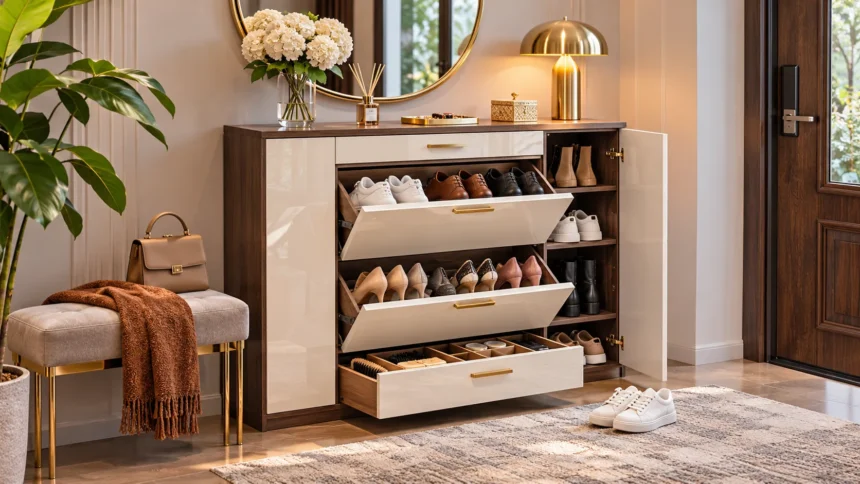
A shoe cabinet is one of the most practical furniture pieces for keeping your home organized and clutter-free. Shoes scattered around an entryway, hallway, or bedroom can make even a beautifully decorated space look untidy. A well-designed shoe storage cabinet keeps footwear neatly arranged while making it easier to find the right pair whenever you need it.
However, choosing the right shoe cabinet involves more than selecting an attractive design. Storage capacity, available space, materials, ventilation, and daily convenience all influence how well the furniture works in your home. Whether you need a slim shoe cabinet for a narrow hallway or a larger storage unit for your family, understanding the available options can help you make a better buying decision.
What Is a Shoe Cabinet?
A shoe cabinet is a storage furniture unit designed to organize and protect footwear in a designated space. Unlike an open shoe rack, most cabinets feature doors, drawers, or enclosed compartments that keep shoes out of sight. This design helps maintain a neat appearance in entryways, bedrooms, closets, and other living areas.
Shoe cabinets are available in different sizes, shapes, and materials to suit various storage requirements. Some have adjustable shelves, while others feature tilting compartments that allow shoes to be stored at an angle. Many modern designs also include additional features such as seating, decorative surfaces, or spaces for everyday accessories.
The main purpose of a shoe cabinet is to make footwear storage more convenient and organized. By assigning a specific place for shoes, it becomes easier to reduce clutter and maintain a tidy living environment. The right cabinet can also complement your interior design while keeping frequently used footwear accessible.
Why Do You Need a Shoe Cabinet?
A shoe cabinet helps solve one of the most common household organization problems: shoes accumulating near doors and walking areas. Without dedicated storage, footwear may become scattered across floors or stacked in inconvenient places. Keeping shoes organized can make daily routines smoother and reduce unnecessary clutter.
Another advantage is that enclosed storage can protect footwear from excessive dust and accidental contact. Shoes made from leather, suede, and delicate fabrics may benefit from appropriate storage conditions. However, cabinets should provide adequate ventilation because storing damp footwear in a completely enclosed space can encourage unpleasant odors and moisture problems.
Shoe cabinets can also improve the appearance of a room by providing structured storage. A design that matches existing furniture can become a natural part of the interior. Whether your home has a minimalist, traditional, or contemporary style, there are cabinet options that combine practical organization with decorative appeal.
Different Types of Shoe Cabinets
Shoe cabinets come in several designs, each suited to different room layouts and storage needs. Traditional cabinets feature shelves behind hinged doors, making them useful for storing multiple footwear styles. These models often provide enough depth for sneakers, formal shoes, and other commonly worn footwear.
Tilt-out shoe cabinets feature compartments that open outward at an angle. Their relatively shallow construction makes them popular for narrow hallways and compact entryways. However, the internal space may not accommodate oversized shoes, tall boots, or particularly bulky footwear, so checking compartment dimensions is important.
Other options include sliding-door cabinets, modular storage units, and furniture that combines shoe storage with seating. Some designs feature open and enclosed sections for additional flexibility. Understanding how each type works helps you select a cabinet that fits your room while providing convenient access to your footwear.
How to Choose the Right Shoe Cabinet Size
Choosing the right shoe cabinet size begins with measuring the area where you plan to place it. Record the available width, height, and depth before comparing furniture options. Remember to consider nearby doors, walking paths, and other furniture so the cabinet does not obstruct everyday movement.
The number and type of shoes you own should also influence your decision. A small cabinet may suit someone with a limited collection, while a larger household might need multiple compartments. Footwear size matters because boots, athletic shoes, and high heels may require more space than ordinary flat shoes.
It is helpful to allow some extra storage capacity for future needs without choosing furniture that overwhelms the room. Adjustable shelves provide flexibility when footwear styles change. Selecting a cabinet with suitable dimensions helps balance storage requirements, accessibility, and the overall appearance of your living space.
Slim Shoe Cabinets for Small Spaces
A slim shoe cabinet can be a practical solution for apartments, narrow entryways, and compact hallways. These cabinets are designed with reduced depth, allowing them to fit against walls without occupying excessive floor space. Many feature tilt-out compartments that store shoes at an angle.
Slim designs are particularly useful when the available space is limited but enclosed storage is preferred. They can keep frequently used shoes accessible while maintaining a neat appearance. However, their narrow construction may restrict the types of footwear that fit comfortably inside.
Before purchasing a slim shoe cabinet, check the internal dimensions and recommended storage capacity. Larger shoes may require additional clearance, even when the overall cabinet appears spacious. Tall, narrow cabinets should also be secured according to the manufacturer’s instructions to reduce the risk of tipping.
Shoe Cabinets With Doors vs. Open Shoe Racks
Shoe cabinets with doors provide concealed storage that helps maintain a tidy appearance. They are useful in shared living spaces where visible footwear may create a cluttered look. Enclosed designs can also limit dust exposure, although they require appropriate airflow to prevent moisture buildup.
Open shoe racks provide easier access and allow more air to circulate around footwear. They can be convenient for shoes worn frequently or pairs that need to dry after outdoor use. However, open storage leaves shoes visible and may require more regular dusting.
The best option depends on your storage habits, available space, and interior preferences. Some homeowners prefer a combination of both designs, using a cabinet for clean shoes and an open rack for frequently worn footwear. This arrangement can support organization while allowing damp shoes to dry before being stored.
Best Materials for a Shoe Cabinet
Shoe cabinets are commonly manufactured using solid wood, engineered wood, metal, and plastic. Each material has different characteristics that influence durability, appearance, maintenance, and price. Understanding these differences can help you select furniture that suits your household needs and daily use.
Solid wood cabinets often provide a traditional appearance and can offer long-lasting performance when properly constructed and maintained. Engineered wood options, including MDF and particleboard, are widely available in various finishes. Their durability depends on construction quality, surface protection, and exposure to moisture.
Metal shoe cabinets can provide a modern appearance and may be easier to clean, depending on their finish. Plastic designs are often lightweight and suitable for practical storage needs. When comparing materials, consider the room’s humidity, cleaning requirements, and how frequently the cabinet will be opened and closed.
Wooden Shoe Cabinets: Benefits and Considerations
Wooden shoe cabinets remain popular because they complement many interior design styles. Natural wood finishes can introduce warmth into entryways and bedrooms, while painted designs suit contemporary homes. Available options range from compact storage units to large furniture pieces with decorative doors and detailed construction.
Solid wood and engineered wood cabinets differ in price, weight, and resistance to environmental conditions. Some wood products can be affected by excessive humidity, particularly when protective finishes become damaged. Keeping footwear dry before storage can help reduce moisture exposure and support furniture maintenance.
When purchasing a wooden shoe cabinet, examine the construction quality rather than judging appearance alone. Check whether shelves feel stable, doors align correctly, and hinges operate smoothly. A well-constructed cabinet with suitable ventilation and durable surfaces is more likely to remain practical during everyday household use.
Modern Shoe Cabinet Designs for Your Home
Modern shoe cabinets often feature clean lines, simple handles, and neutral finishes that complement contemporary interiors. White, black, oak, and walnut-inspired designs are common choices because they coordinate with different furniture styles. Some cabinets use handleless doors to create a smooth, understated appearance.
Floating shoe cabinets provide another modern option by attaching storage units securely to a wall. This design can leave floor space visible and make cleaning underneath easier. However, wall-mounted furniture requires appropriate installation, suitable wall support, and attention to the manufacturer’s weight limitations.
Cabinets with mixed materials can also add visual interest to an entryway or bedroom. Wooden surfaces combined with metal frames or decorative panels create a distinctive appearance. Choosing a design that matches existing furniture helps the cabinet feel integrated into the room rather than becoming an unrelated storage addition.
Shoe Cabinet Ideas for Entryways and Hallways
Entryways are among the most practical locations for a shoe cabinet because footwear can be stored near the main entrance. A compact cabinet positioned against a wall helps keep the walking area organized. Choosing a design with a narrow profile can be particularly useful when the hallway has limited floor space.
Some entryway shoe cabinets include a flat top that can hold decorative accessories or everyday essentials. A small tray for keys, a decorative plant, or a simple lamp can make the furniture more useful. Avoid placing too many objects on top because a crowded surface can undermine the cabinet’s organized appearance.
A shoe cabinet can also be paired with wall hooks, a mirror, or a small bench to create a functional entrance area. This combination provides convenient storage for footwear and other everyday belongings. The layout should allow doors and drawers to open fully without blocking movement through the hallway.
Shoe Cabinets for Bedrooms and Closets
Bedrooms and closets provide alternative locations for shoe storage when the entryway is too small or already occupied. A shoe cabinet inside a wardrobe area can help keep footwear organized alongside clothing and accessories. Enclosed storage also creates a more coordinated appearance compared with shoes arranged across the floor.
For bedrooms, consider furniture that matches existing wardrobes, dressers, or bedside tables. Neutral finishes and simple designs can make the shoe cabinet blend into the room. Cabinets with adjustable shelves are particularly useful for storing different types of footwear without requiring separate storage furniture.
Closet shoe cabinets may prioritize storage capacity and accessibility over decorative details. Transparent or labeled compartments can help identify footwear quickly, while adjustable shelves provide flexibility. Before purchasing, measure the available closet space carefully and ensure that doors and drawers remain accessible after installation.
Shoe Cabinets With Seating and Extra Storage
A shoe cabinet with seating combines footwear organization with a convenient place to sit while putting on or removing shoes. These designs are particularly useful near entrances where people frequently change footwear. The seating area may feature a cushioned top or a simple wooden surface, depending on the furniture style.
Some models also include drawers, hooks, or small compartments for additional household items. These features can provide storage for shoe accessories, cleaning supplies, or everyday essentials. However, a cabinet should only be used as a seat when the manufacturer specifically identifies it as suitable for supporting a seated person’s weight.
When choosing a shoe storage bench, consider both seating comfort and internal capacity. Some designs provide generous seating space but relatively limited room for footwear. Comparing the dimensions and features ensures that the furniture meets your practical needs without taking up unnecessary space.
How Many Shoes Can a Shoe Cabinet Hold?
The storage capacity of a shoe cabinet depends on its dimensions, internal layout, and the size of the footwear being stored. Manufacturers often provide an estimated number of pairs, but actual capacity can vary. Large sneakers and boots generally occupy more space than flats or lightweight sandals.
Cabinets with adjustable shelves provide greater flexibility when organizing different footwear styles. Some allow shelves to be removed or repositioned to accommodate taller shoes. However, changing shelf positions can reduce the total number of pairs that fit inside the cabinet.
Before purchasing, count the shoes you plan to store and consider their individual sizes. It may help to measure your largest pair and compare those dimensions with the cabinet’s internal compartments. Choosing sufficient capacity can prevent overcrowding and make footwear easier to access.
Why Ventilation Matters in Shoe Cabinets
Ventilation is an important feature because shoes can retain moisture after regular use. Storing damp footwear in an enclosed space may encourage unpleasant odors and create conditions that support mold growth. Cabinets with appropriate airflow help reduce moisture accumulation and improve storage conditions.
Some shoe cabinets include ventilation openings, slatted doors, or perforated panels. These features allow air to circulate around stored footwear. However, ventilation alone cannot completely dry wet shoes, so footwear should be allowed to dry properly before being placed inside an enclosed cabinet.
Regular cleaning can also help maintain a fresh storage environment. Removing dust, checking for moisture, and allowing the cabinet to air out when necessary are practical maintenance habits. Selecting a cabinet designed for suitable airflow is particularly helpful in homes with humid indoor conditions.
How to Organize Shoes Inside a Cabinet
Organizing a shoe cabinet begins with separating footwear according to how frequently it is worn. Everyday shoes should remain in easily accessible compartments, while occasional footwear can occupy higher or less convenient shelves. This arrangement makes daily routines simpler and reduces unnecessary searching.
Grouping similar footwear together can also improve organization. Sneakers, formal shoes, sandals, and seasonal footwear may be stored in separate sections when space allows. Adjustable shelves and simple dividers can help maintain the arrangement without requiring complicated storage accessories.
Avoid overcrowding compartments because tightly packed shoes may become difficult to remove or maintain. Leaving adequate space can also improve airflow and help prevent unnecessary pressure on delicate footwear. Reviewing the contents occasionally allows you to reorganize the cabinet as your storage needs change.
How to Maintain and Clean a Shoe Cabinet
Regular cleaning helps keep a shoe cabinet functional and attractive over time. Dust and small amounts of dirt may accumulate inside compartments, especially when footwear is stored after outdoor activities. Removing shoes occasionally and wiping the shelves can help maintain a cleaner storage environment.
The appropriate cleaning method depends on the cabinet material and surface finish. Wooden cabinets may require gentle cleaning with a slightly damp cloth, while certain metal or plastic surfaces can tolerate other suitable cleaners. Always follow the manufacturer’s care instructions and avoid excessive water exposure.
Check hinges, handles, and other moving parts during routine maintenance. Loose fittings may affect how smoothly doors or drawers operate. Keeping the cabinet dry, allowing adequate ventilation, and addressing minor hardware problems early can help preserve its usefulness and appearance.
Common Mistakes to Avoid When Buying a Shoe Cabinet
One common mistake is buying a shoe cabinet without measuring the available space. Furniture that looks compact in a showroom may occupy more room than expected once installed. Checking width, depth, height, and door clearance helps prevent problems with the surrounding layout.
Another mistake is relying entirely on the advertised shoe capacity without considering footwear size. A cabinet designed for several pairs of small shoes may accommodate fewer large sneakers or boots. Reviewing internal dimensions provides a more realistic understanding of how much storage the furniture can provide.
Ignoring ventilation, construction quality, and safety features can also lead to disappointing results. A cabinet may look attractive but become inconvenient if drawers are difficult to use or shelves lack flexibility. Prioritizing practical features alongside appearance helps make the purchase more useful over the long term.
How Much Should You Spend on a Shoe Cabinet?
Shoe cabinet prices vary according to size, material, design, storage capacity, and construction quality. Compact engineered wood cabinets are often more affordable than large solid wood furniture pieces. Additional features such as seating, decorative finishes, and specialized compartments can also influence the overall price.
A higher price does not automatically guarantee better functionality for every household. A simple cabinet may provide excellent value when it fits the available space and meets storage requirements. Comparing construction quality, stability, ventilation, and usable capacity is more helpful than focusing exclusively on appearance.
Before buying, establish a budget that includes possible delivery and installation expenses. Wall-mounted or tall cabinets may require additional hardware or professional installation. Choosing furniture that balances quality, practical features, and affordability can help avoid unnecessary spending while meeting your organization needs.
Conclusion
A shoe cabinet is a practical furniture solution for keeping footwear organized and maintaining a tidy home. Available designs include traditional cabinets, slim tilt-out units, wall-mounted storage, and multifunctional shoe benches. Each option provides different advantages depending on available space, footwear collection, and interior preferences.
Before purchasing, consider important factors such as storage capacity, materials, ventilation, dimensions, and construction quality. A cabinet should comfortably accommodate your shoes while allowing convenient access and suitable airflow. Measuring the intended location and reviewing internal compartment sizes can help prevent common buying mistakes.
The best shoe cabinet is one that fits naturally into your home and supports everyday organization. Whether you prefer a compact entryway unit or a larger bedroom cabinet, practical features should remain a priority. With thoughtful selection and regular maintenance, a shoe cabinet can provide convenient footwear storage for years.
Frequently Asked Questions
What is the best type of shoe cabinet for a small hallway?
A slim tilt-out shoe cabinet is often a practical choice for narrow hallways because it provides enclosed storage with limited depth. Measure the available space and check internal capacity before purchasing.
Are shoe cabinets better than shoe racks?
Shoe cabinets provide concealed storage and can reduce visible clutter, while open shoe racks offer easier access and better airflow. The best choice depends on your room layout, footwear habits, and preferences.
How many pairs of shoes can a shoe cabinet store?
Capacity varies with cabinet dimensions, shelf arrangement, and shoe size. Compact designs may hold several pairs, while larger cabinets accommodate more. Always check internal measurements rather than relying only on advertised capacity.
Do shoe cabinets need ventilation?
Yes, adequate ventilation helps reduce moisture buildup and unpleasant odors inside enclosed storage. Shoes should also be allowed to dry before storage because ventilation alone cannot prevent problems caused by consistently damp footwear.
What material is best for a durable shoe cabinet?
Solid wood, quality engineered wood, and metal can all provide durable storage when properly constructed and maintained. The best material depends on budget, indoor humidity, cleaning requirements, and preferred furniture style.