Crabgrass is a common warm-season grass that often appears in lawns, gardens, and open landscapes. While many homeowners consider it an unwanted lawn weed, certain crabgrass species have agricultural and practical uses. Understanding its characteristics can help you decide whether to manage it, remove it, or explore its potential benefits in suitable growing conditions.
However, not all crabgrass varieties behave in exactly the same way. Some spread aggressively across maintained lawns, while others have been used as forage or grain crops. Choosing the right approach depends on the species, local climate, soil conditions, and intended purpose. Understanding these differences helps prevent unnecessary gardening expenses and poor landscaping decisions.
This guide explains the different types of crabgrass, their characteristics, common uses, and practical buying tips. You will also learn how to identify crabgrass, understand its growing habits, compare it with other lawn grasses, and make informed decisions about lawn care products and grass seed.
What Is Crabgrass and How Does It Grow?
Crabgrass refers to several grass species within the genus Digitaria. Many are warm-season annual grasses that grow rapidly during hot weather and produce seeds before cooler temperatures arrive. Their stems often spread outward from a central point, creating a low, branching appearance. This growth pattern gives crabgrass its familiar name and makes it easy to recognize in lawns.
Crabgrass usually begins growing when soil temperatures become warm enough for its seeds to germinate. It thrives in sunny areas where lawn grass is thin, damaged, or struggling. Once established, it can produce numerous seeds that remain in the soil. These seeds may germinate during future growing seasons when conditions become favorable.
Although crabgrass commonly appears in lawns, its behavior varies among species and environments. Some species grow close to the ground, while others develop more upright stems. Many tolerate heat and disturbed soil relatively well. Identifying the exact species and understanding its growth cycle can help homeowners and growers make more effective decisions.
Different Types of Crabgrass You Should Know
Large crabgrass, scientifically known as Digitaria sanguinalis, is one of the most familiar crabgrass species. It typically produces broad leaf blades and spreading stems that may develop a coarse texture. This species commonly grows in lawns, gardens, and disturbed areas. Its vigorous summer growth can make it difficult to manage once established.
Smooth crabgrass, or Digitaria ischaemum, is another common species found in maintained lawns. It generally has narrower leaves and fewer visible hairs than large crabgrass. Its spreading growth can create noticeable patches in thin turf. Smooth crabgrass commonly appears in sunny locations where desirable lawn grasses have limited competition.
Other members of the Digitaria genus include southern crabgrass and species cultivated for agricultural purposes. Fonio, for example, includes cultivated Digitaria species grown as grains in parts of West Africa. These grasses differ significantly in appearance, cultivation, and intended use. Their existence shows why identifying crabgrass correctly matters before buying seed or planning management.
Large Crabgrass vs. Smooth Crabgrass
Large crabgrass and smooth crabgrass share several characteristics, including warm-season growth and seed-based reproduction. Both can spread through open lawn areas during summer. However, their leaf surfaces, overall appearance, and growth habits may differ. Understanding these distinctions can help homeowners identify which species is present.
Large crabgrass often has noticeable hairs on its leaf blades and sheaths. It may develop broader leaves and a more coarse appearance compared with smooth crabgrass. Smooth crabgrass generally has less hairy leaf surfaces, although identifying features can vary. Examining several plant characteristics is more reliable than judging one leaf alone.
Both species can become difficult to manage when they produce seeds across a lawn. Their control usually involves improving turf density and using suitable lawn management practices. Product labels may also distinguish between grass species when listing controlled weeds. Accurate identification helps avoid choosing treatments that are unsuitable for the existing vegetation.
How to Identify Crabgrass in Your Lawn
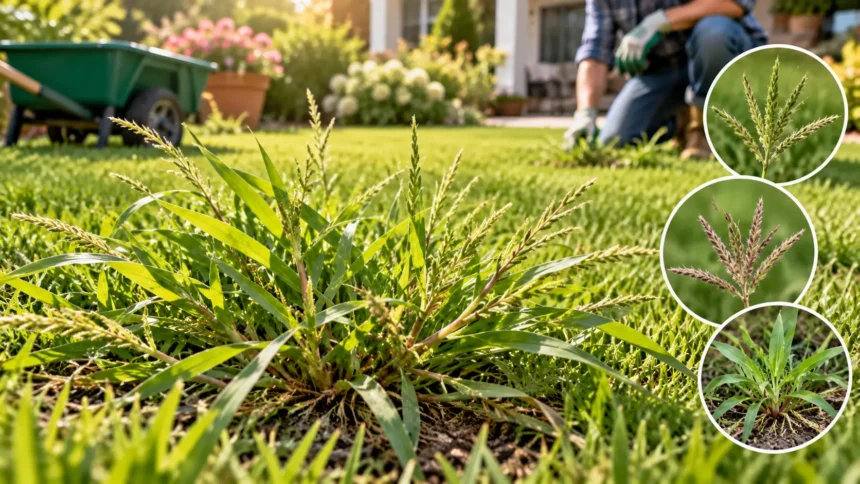
Crabgrass often develops a spreading pattern with stems extending outward from a central crown. Its leaves are typically broader than those of many fine-textured lawn grasses. During active growth, patches may appear lighter green or have a different texture from surrounding turf. These characteristics can help distinguish it from established lawn grass.
The seed heads provide another useful identification feature. Mature crabgrass often produces several narrow branches that extend from the upper stem in a finger-like arrangement. These branches contain numerous small seeds. However, other grasses can produce similar seed heads, so this feature alone does not guarantee accurate identification.
Growth timing and location can provide additional clues. Crabgrass frequently appears during warm weather in sunny, thin, or disturbed lawn areas. Compacted soil and exposed ground may make establishment easier. If identification remains uncertain, a local gardening specialist or agricultural extension service can help distinguish crabgrass from similar grasses.
Where Does Crabgrass Commonly Grow?
Crabgrass commonly grows in lawns, gardens, roadsides, agricultural fields, and other disturbed areas. It often establishes where soil receives plenty of sunlight and competing vegetation is sparse. Bare patches provide opportunities for seedlings to develop. Once established, plants can spread quickly during favorable growing conditions.
Warm temperatures generally support crabgrass growth, making summer an important part of its life cycle. Many common lawn species struggle during periods of heat or drought, creating openings for crabgrass. However, different turf grasses respond differently to environmental conditions. Maintaining suitable lawn coverage can reduce available space for unwanted seedlings.
Crabgrass can grow in various soil types, although its performance depends on moisture, fertility, and local conditions. It may tolerate challenging environments where some desirable plants perform poorly. This adaptability helps explain its widespread presence. Understanding where it thrives makes prevention and lawn maintenance more effective.
Is Crabgrass a Weed or a Useful Grass?
Crabgrass is usually considered a weed in ornamental lawns because it disrupts the desired appearance and consistency of turf. Its spreading growth can create uneven patches, particularly where lawns are maintained for uniform texture. Homeowners may also dislike its seasonal dieback. For these reasons, many lawn care programs focus on preventing its establishment.
However, the term weed depends partly on where a plant grows and how people intend to use the area. Certain crabgrass species have agricultural value, especially as forage. Their ability to grow during warm weather can be useful in suitable farming systems. This does not mean every crabgrass species is appropriate for agricultural production.
The decision to encourage or remove crabgrass should reflect your goals. In a decorative lawn, maintaining desirable turf may be the main priority. In a managed forage field, selected Digitaria species may provide practical benefits. Understanding the intended use helps determine whether crabgrass is a problem or a potential resource.
Common Uses of Crabgrass in Agriculture
Certain crabgrass species are used as forage for livestock in suitable agricultural environments. Some varieties can produce useful summer growth when managed under appropriate conditions. Farmers may harvest the plants for hay or use them within grazing systems. Their value depends on species selection, growing conditions, and forage quality.
Forage production requires more planning than allowing ordinary lawn crabgrass to grow. Farmers must consider seeding rates, planting conditions, fertility, harvesting schedules, and livestock nutrition. Proper management affects both yield and feed quality. Agricultural varieties should be selected according to regional recommendations rather than assuming all wild crabgrass has the same characteristics.
Selected Digitaria species also have food-related uses. Fonio is an example of a traditional grain crop belonging to the same botanical genus. However, cultivated fonio and common lawn crabgrass are not interchangeable food products. Anyone interested in edible grains should purchase properly identified food-grade products instead of harvesting unidentified lawn plants.
Benefits and Limitations of Growing Crabgrass
One potential benefit of selected crabgrass varieties is their ability to grow during warm weather. Certain forage types can provide useful plant material during summer when some cool-season grasses become less productive. Their relatively rapid growth may support agricultural operations. However, performance depends on climate, soil conditions, management, and the specific variety being grown.
Crabgrass can also establish in disturbed areas, which demonstrates its adaptability. However, this does not make it the best option for erosion control or landscaping. Many native grasses and ground covers offer more suitable long-term solutions. Choosing plants that match local conditions and environmental goals is important for successful land management.
The main limitation of common lawn crabgrass is its aggressive seed production and seasonal growth cycle. Annual species usually die after frost, potentially leaving open spaces in the turf. Their seeds may establish new plants during subsequent warm seasons. These characteristics make common crabgrass undesirable in lawns intended to remain uniform throughout the year.
Crabgrass vs. Regular Lawn Grass
Crabgrass differs from many popular lawn grasses in its growth pattern and seasonal behavior. Common lawn crabgrass species are generally annual plants, while established turf species may be perennial. Perennial grasses can survive across multiple growing seasons under suitable conditions. Annual crabgrass usually relies on seed production to establish new generations.
Popular turf grasses such as Bermuda grass, Kentucky bluegrass, and tall fescue are grown for their lawn characteristics. Each species has different requirements for temperature, sunlight, watering, and maintenance. Crabgrass may appear among these grasses when the lawn becomes thin. The resulting patches can create uneven texture and seasonal color differences.
Choosing between lawn grasses depends on local climate and intended use. Warm-season turf may perform better in hot regions, while certain cool-season grasses suit milder conditions. Crabgrass is generally not recommended as a replacement for a maintained residential lawn. However, selected agricultural varieties may serve different purposes in managed farming environments.
How to Prevent Crabgrass in Your Lawn
Preventing crabgrass begins with maintaining healthy, dense lawn coverage. Thick turf reduces the exposed soil available for weed seeds to germinate. Appropriate mowing, watering, and fertilization support desirable grass growth. The correct maintenance schedule depends on the turf species, local climate, and soil conditions.
Mowing height can influence how successfully crabgrass establishes. Cutting suitable turf grasses too short may weaken them and expose more sunlight to the soil. Following species-specific mowing recommendations helps maintain healthier coverage. Regular equipment maintenance also supports cleaner cuts and reduces unnecessary damage to lawn grass.
Pre-emergent herbicides are sometimes used to prevent crabgrass seedlings from establishing. These products must be suitable for the existing lawn and applied according to local regulations and label directions. Because products vary considerably, consult a qualified lawn care professional before choosing a treatment. Cultural prevention methods remain important even when chemical controls are used.
How to Manage Crabgrass That Is Already Growing
Managing established crabgrass depends on how much of the lawn is affected. Small patches may sometimes be removed manually when the soil is slightly moist. Removing plants before they produce mature seeds can reduce future spread. However, disturbing the soil may expose additional buried seeds, making follow-up lawn maintenance important.
Large crabgrass infestations often indicate underlying turf problems. Poor lawn coverage, inappropriate mowing practices, soil compaction, or unsuitable grass varieties may contribute to recurring weed growth. Addressing these issues helps prevent new seedlings from taking over. Simply removing visible plants may provide only temporary improvement if growing conditions remain unchanged.
Some lawn care products are designed to control established crabgrass, but their suitability depends on the turf species and product formulation. Incorrect treatment can damage desirable plants or create environmental risks. Professional advice is useful when infestations are extensive. Always prioritize lawful, labeled, and environmentally responsible management practices.
What to Know Before Buying Crabgrass Seed
Buying crabgrass seed requires understanding the intended purpose of the planting. Seed sold for agricultural forage differs from the common crabgrass growing in residential lawns. Buyers should look for clearly identified species and varieties. Purchasing seed without confirming its identity can lead to unexpected growth characteristics and management problems.
Seed quality is another important consideration. Reputable suppliers should provide information about germination, purity, and relevant seed testing. Agricultural buyers may also need details about planting suitability and regional performance. Reviewing these characteristics helps determine whether the seed meets the requirements of the intended growing environment.
Before purchasing, consider whether a crabgrass variety is appropriate for your location. Some species can spread into nearby areas and may be subject to local restrictions. Agricultural advisors can help evaluate suitable alternatives. Buying seed should be based on practical goals rather than assuming that any fast-growing grass will provide useful results.
How to Choose Crabgrass Control Products
When shopping for crabgrass management products, begin by identifying the problem correctly. Some products target newly germinating weeds, while others are intended for established plants. Their effectiveness and suitability vary depending on the grass species and growing conditions. Understanding these differences helps avoid purchasing unnecessary or inappropriate products.
Check whether a product is approved for use on your particular lawn type. A treatment suitable for one turf species may harm another. Product labels also specify important restrictions and safety requirements. Consulting a qualified local professional can help determine whether treatment is necessary and which options are appropriate.
Price should not be the only factor when comparing lawn care products. Consider suitability, coverage, expected results, and environmental responsibilities. Sometimes, improving mowing practices and repairing thin turf provides a more sustainable solution than repeated chemical treatment. Choosing a management strategy rather than an isolated product often produces better long-term outcomes.
Where to Buy Crabgrass Seed and Lawn Care Supplies
Agricultural suppliers may offer selected crabgrass varieties intended for forage production. Availability depends on local farming practices and regional demand. Buyers should confirm the species, variety, and intended agricultural use before placing an order. A supplier experienced in forage crops may provide helpful information about suitability and seed quality.
Garden centers and lawn care retailers usually focus on preventing or managing unwanted crabgrass. They may offer lawn seed, soil improvement products, and equipment for maintaining healthy turf. Some also provide identification assistance. Buying supplies locally can make it easier to select products appropriate for regional growing conditions.
Online retailers offer additional choices, but product descriptions should be reviewed carefully. Verify the supplier’s reputation, seed identification, packaging information, and applicable shipping restrictions. Avoid products that make unrealistic claims about permanent weed elimination. Reliable information and appropriate product selection matter more than promotional promises.
Common Mistakes When Managing Crabgrass
One common mistake is treating every unfamiliar grass as crabgrass. Several lawn weeds and desirable grasses have similar appearances. Incorrect identification can lead to unnecessary treatment or damage to healthy turf. Examining the plant carefully and obtaining expert advice when needed helps prevent avoidable problems.
Another mistake is focusing only on removing visible weeds. Crabgrass often becomes established because the surrounding lawn lacks sufficient coverage. If bare patches remain, new seedlings may continue appearing. Improving soil conditions and maintaining suitable turf growth are important parts of long-term weed prevention.
Homeowners also sometimes expect immediate and permanent results from one treatment. Crabgrass seeds may remain in the soil and germinate during future growing seasons. Effective management often requires consistent maintenance and repeated evaluation. Setting realistic expectations helps homeowners develop a practical lawn care routine.
How to Maintain a Healthy Lawn After Crabgrass Removal
After removing crabgrass, focus on restoring areas where desirable turf is missing. Bare soil creates opportunities for additional weeds to establish. Selecting suitable grass seed or sod can improve lawn coverage. The appropriate planting method depends on the existing turf species, climate, and seasonal conditions.
Watering and fertilization should support healthy grass development without creating unnecessary waste. Excessive watering may contribute to lawn problems, while insufficient moisture can weaken desirable plants. Soil testing can help identify nutrient needs before fertilizer is applied. Following appropriate local recommendations supports more reliable results.
Regular lawn inspections can help identify crabgrass seedlings before they become widespread. Pay attention to sunny edges, compacted areas, and spaces where grass coverage is thin. Correcting these conditions may reduce future infestations. Consistent maintenance is generally more effective than waiting until weeds dominate large sections of the lawn.
Conclusion
Crabgrass is a widely recognized warm-season grass with different characteristics depending on its species. Although common varieties are often considered weeds in residential lawns, selected species have agricultural uses. Understanding the difference between lawn crabgrass, forage varieties, and related grain crops is important before making planting or purchasing decisions.
Homeowners can manage unwanted crabgrass by improving turf health, identifying problem areas, and choosing appropriate control methods. Agricultural buyers should focus on correctly identified seed varieties and reliable suppliers. In both situations, climate, soil conditions, plant characteristics, and intended use influence the best approach.
The key to making informed decisions about crabgrass is understanding your specific needs. Whether you want to maintain a healthy lawn or explore suitable agricultural grasses, careful planning helps avoid unnecessary costs. With proper identification, responsible management, and suitable products, you can make choices that support your landscaping or growing goals.
Frequently Asked Questions
What is crabgrass, and why does it grow in lawns?
Crabgrass is a group of grasses belonging to the Digitaria genus. Common lawn species thrive during warm weather and frequently establish in sunny areas where turf is thin or disturbed.
What are the main types of crabgrass?
Large crabgrass and smooth crabgrass are two common lawn species. Other Digitaria species include agricultural forage grasses and cultivated grain crops, each with different characteristics and intended uses.
Is crabgrass useful for anything?
Yes, selected crabgrass species are grown for livestock forage, while related Digitaria species are cultivated as grains. However, common lawn crabgrass should not automatically be treated as suitable for these purposes.
What should I check before buying crabgrass seed?
Check the species, variety, seed quality, germination information, and intended use. Also confirm that the grass is suitable and permitted in your region before purchasing agricultural seed.
How can I prevent crabgrass from returning?
Maintain healthy, dense turf through suitable mowing, watering, and lawn repair. Address bare patches and recurring soil problems, and consult a professional about additional prevention methods when necessary.