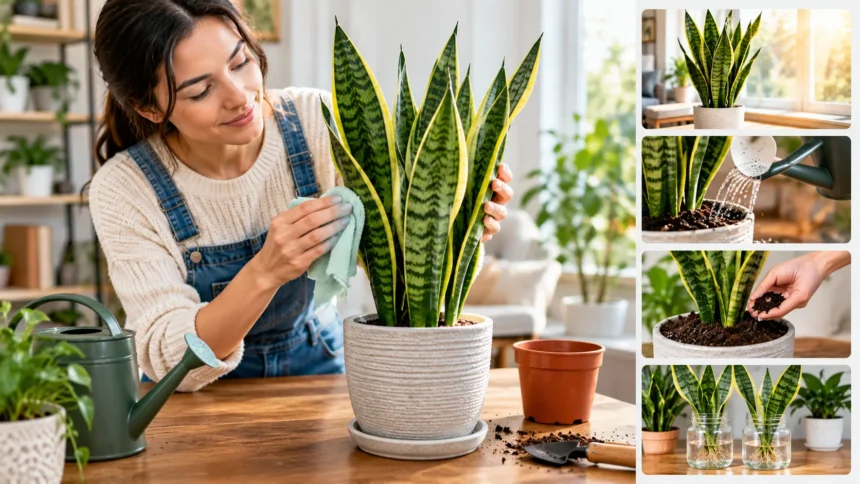
Snake plant care is relatively simple, making this popular houseplant an excellent choice for beginners and experienced plant lovers. Known for its upright, sword-shaped leaves and attractive green patterns, the snake plant adds a natural touch to homes, offices, and indoor spaces. It can tolerate a range of lighting conditions and does not require frequent watering. However, understanding its basic growing requirements is essential for keeping the plant healthy.
Snake plants are valued for their durability, distinctive appearance, and ability to adapt to different indoor environments. Although they are often described as nearly impossible to kill, improper watering, poor drainage, and extreme temperatures can damage them. Providing suitable light, well-draining soil, and occasional maintenance helps support healthy growth. This guide explains everything you need to know about snake plant care, including watering schedules, sunlight requirements, propagation, repotting, and common problems.
What Is a Snake Plant?
The snake plant is a popular evergreen houseplant known for its tall, upright leaves and low-maintenance growing habits. It belongs to the genus Dracaena and is commonly identified as Dracaena trifasciata, although its former scientific name, Sansevieria trifasciata, remains widely used. The plant is native to tropical regions of West and Central Africa. Its striking appearance makes it a common choice for indoor decoration.
Snake plants have thick, firm leaves that grow vertically from underground rhizomes. Many varieties feature green leaves with attractive horizontal markings, while others display yellow edges or silver-green coloration. Their architectural appearance works well in modern and traditional interiors. Depending on the variety and growing conditions, snake plants can remain compact or develop relatively tall leaves.
The plant is also called mother-in-law’s tongue because of its long, pointed foliage. Although snake plants tolerate periods of dryness, they still require suitable growing conditions to remain healthy. Their roots are especially sensitive to consistently wet soil. Understanding their natural growth habits helps explain why moderate watering and good drainage are essential.
Why Are Snake Plants Popular Indoor Plants?
Snake plants are popular because they combine attractive foliage with relatively simple care requirements. They can survive in various indoor lighting conditions and generally need less frequent watering than many tropical houseplants. Their upright growth habit also makes them suitable for smaller rooms. These characteristics appeal to people who want greenery without complicated maintenance routines.
Another advantage is the wide variety of leaf shapes, sizes, and patterns available. Some snake plants have tall, narrow leaves, while others grow in compact rosettes. Variegated varieties offer additional decorative interest through contrasting green, silver, and yellow markings. This diversity makes it easy to choose a plant that complements different interior spaces.
Snake plants are sometimes promoted as air-purifying houseplants because laboratory studies have shown that plants can absorb certain airborne compounds. However, ordinary indoor plants do not replace ventilation or established air-quality measures in real homes. Their main benefits are decorative appeal and the enjoyment of caring for plants. They should be appreciated without relying on exaggerated health claims.
How Much Light Does a Snake Plant Need?
Snake plants grow best in bright, indirect sunlight, although they can tolerate lower light levels. A position near a window with filtered natural light usually provides favorable growing conditions. Adequate light supports stronger growth and helps maintain attractive leaf patterns. The plant may survive in darker rooms but generally grows more slowly.
Low-light conditions reduce the amount of energy available for growth through photosynthesis. Snake plants kept in dim spaces may produce fewer new leaves and require less water. Although they tolerate shade better than many houseplants, they still need some light to remain healthy. Artificial grow lights may help in rooms that receive very little natural sunlight.
Snake plants can tolerate limited direct sunlight when gradually adapted to brighter conditions. However, sudden exposure to intense afternoon sun may scorch the leaves. Brown or faded patches can develop when the plant receives more sunlight than it can comfortably tolerate. Providing consistent, suitable lighting is generally better than frequently moving the plant between extreme conditions.
Best Indoor Locations for Snake Plants
Choosing the right location is an important part of successful snake plant care. A room with bright, indirect sunlight and stable temperatures is often ideal. Living rooms, bedrooms, and home offices can provide suitable environments when enough natural light is available. The plant’s vertical shape makes it especially useful for decorating corners and narrow spaces.
Windows facing east often provide gentle morning sunlight that many snake plants tolerate well. South- or west-facing windows may also work when the plant is positioned away from intense direct sunlight or protected by a light curtain. The exact placement depends on local climate and window exposure. Observing leaf condition can help determine whether the location is suitable.
Avoid placing snake plants directly beside heating vents, cold drafts, or frequently opened doors during extreme weather. Rapid temperature changes can stress the plant and affect growth. A stable indoor environment is generally more important than achieving a perfectly controlled temperature. Suitable placement also reduces the need for frequent adjustments and extra maintenance.
How Often Should You Water a Snake Plant?
Watering is one of the most important aspects of snake plant care because these plants are sensitive to excessive moisture. Their thick leaves store water, allowing them to tolerate relatively dry conditions. The soil should dry substantially between watering sessions. Watering too frequently can create conditions that lead to root rot.
During warmer months, an indoor snake plant may need watering approximately every two to four weeks, depending on light, temperature, pot size, and soil. In cooler or darker conditions, watering may be needed less often. These timeframes are general estimates rather than fixed rules. Checking soil moisture is more reliable than following a strict calendar.
Before watering, feel the soil several inches below the surface or use an appropriate moisture-checking method. If the potting mix remains damp, allow additional drying time. When the soil is sufficiently dry, water thoroughly and let excess moisture drain away. Never leave the plant sitting in a container of standing water.
Signs of Overwatering a Snake Plant
Overwatering is one of the most common reasons snake plants develop health problems. Excess moisture limits oxygen availability around the roots and encourages conditions associated with root rot. Yellowing leaves, soft stems, and a weakened base may indicate the problem. However, these symptoms can also have other causes, so checking soil conditions is important.
When a snake plant receives too much water, its leaves may become mushy or lose their normal firmness. The soil may remain wet for extended periods, particularly in poorly draining containers. An unpleasant smell near the roots can also suggest decay. Severe root damage may cause the plant to decline even when its leaves initially appear green.
If overwatering is suspected, stop adding water until the soil has been assessed. Remove the plant carefully if necessary and examine the roots for damaged or decaying sections. Repotting into fresh, well-draining soil may help when root rot is present. Preventing repeated waterlogging is essential for long-term recovery.
Signs of Underwatering a Snake Plant
Although snake plants tolerate drought, they still require water to maintain healthy growth. Extended periods without moisture can eventually cause the leaves to wrinkle, curl, or lose firmness. The potting mix may become extremely dry and pull away from the container edges. Growth may also slow considerably when insufficient water is available.
Underwatered snake plants sometimes develop dry, brown leaf tips or edges. However, similar symptoms can result from other environmental stresses. Checking the moisture level and overall condition of the plant helps identify the likely cause. A plant that has been dry for a long period may require careful rehydration.
When watering a very dry snake plant, apply water gradually until the potting mix becomes evenly moistened and excess water drains away. Extremely dry soil may initially repel water, so thorough but controlled watering is helpful. Avoid compensating by leaving the pot submerged for extended periods. Returning to an appropriate watering routine usually supports better growth.
Best Soil for Snake Plant Growth
Snake plants grow best in soil that allows water to drain quickly while providing enough support for the roots. A well-draining succulent or cactus potting mix is often a suitable choice. These mixtures generally contain ingredients that improve aeration and reduce prolonged moisture retention. Heavy garden soil is usually less appropriate for indoor containers.
A suitable potting mix may contain materials such as perlite, pumice, coarse mineral particles, or other drainage-supporting components. These ingredients help create spaces for air around the roots. Good root aeration is important because snake plants are vulnerable to prolonged waterlogging. The ideal mixture should remain structurally stable while allowing excess water to escape.
Soil quality also affects how often the plant needs watering. Fast-draining mixes may dry more quickly than moisture-retaining potting soils. Environmental conditions and container size influence this process as well. Instead of watering based only on the type of soil, monitor how quickly the specific potting mix dries in your home.
Choosing the Right Pot for a Snake Plant
The right container helps maintain healthy roots and prevents excess moisture from accumulating around the plant. A pot with drainage holes is strongly recommended because it allows extra water to escape. Containers without drainage make moisture management more difficult. Choosing a properly sized pot also supports stable growth.
Snake plants generally prefer containers that are only slightly larger than their root systems. An oversized pot holds additional soil that may remain damp for too long. This can increase the risk of root problems when watering is not adjusted. A pot that fits the plant comfortably is usually more practical than one with excessive empty space.
Terracotta pots can be useful because their porous material allows some moisture to evaporate through the container walls. Plastic and glazed ceramic pots can also work when drainage and watering are managed appropriately. Taller snake plants may require heavier containers for stability. The best choice balances drainage, root space, and the plant’s upright growth habit.
Ideal Temperature and Humidity for Snake Plants
Snake plants grow well in typical indoor temperatures and generally prefer warm, stable conditions. Temperatures around 65–85°F, or approximately 18–29°C, are suitable for many varieties. They can tolerate some variation, but prolonged exposure to cold conditions can damage their tissues. A comfortable room temperature is usually sufficient.
Cold temperatures below approximately 50°F, or 10°C, can place significant stress on snake plants. Exposure to frost can cause serious damage because the leaves contain substantial stored moisture. Keep plants away from cold windows during winter and protect them from sudden temperature drops. Stable conditions support more consistent growth.
Snake plants usually tolerate normal household humidity without special equipment. They do not generally require daily misting or consistently humid rooms. Excess moisture on foliage may be undesirable when air circulation is poor. Maintaining reasonable airflow and avoiding extreme environmental changes is often enough to keep the plant comfortable.
How to Fertilize a Snake Plant
Snake plants are relatively light feeders and usually require less fertilizer than rapidly growing houseplants. During active growth, a diluted balanced houseplant fertilizer may provide useful nutrients. Applying fertilizer sparingly can support new leaf development when the plant is otherwise healthy. Excessive feeding is unnecessary and can damage the roots.
Fertilizing once every four to eight weeks during the growing season may be sufficient for many indoor snake plants. However, the appropriate schedule depends on fertilizer strength, potting mix, and growth conditions. Always follow the product instructions and avoid applying more than recommended. Plants growing slowly in low light may need very little additional feeding.
Fertilizer requirements usually decrease during cooler months when growth slows. Applying concentrated fertilizer to extremely dry soil may also increase the risk of root irritation. Yellowing or weak leaves should not automatically be treated with fertilizer because watering problems are often responsible. Assess the plant’s overall condition before adding nutrients.
How to Repot a Snake Plant
Snake plants do not need frequent repotting because they generally grow slowly and tolerate relatively snug containers. Repotting becomes useful when roots crowd the pot, the container cracks, or the soil no longer drains appropriately. Some plants develop new shoots that gradually fill available space. These signs can indicate that additional room is needed.
To repot a snake plant, gently remove it from the existing container and examine the root system. Choose a new pot slightly larger than the previous one and fill it with suitable well-draining soil. Position the plant at approximately the same depth as before. Avoid burying the leaf bases excessively because trapped moisture can encourage problems.
After repotting, allow the plant to settle and adjust watering according to the condition of the roots and soil. Avoid soaking a plant that has suffered significant root damage. A stable location with indirect sunlight can support recovery. Repotting is generally easiest during active growth, although urgent root problems may require attention at other times.
How to Propagate a Snake Plant
Snake plant propagation allows new plants to grow from an established parent plant. Common methods include division and leaf cuttings. Division is often the simplest option because it separates naturally developing shoots with attached roots. This method also helps preserve the appearance of many variegated varieties.
To propagate through division, remove a healthy plant from its container and identify sections connected by underground rhizomes. Separate suitable sections carefully, ensuring each division has enough roots and healthy foliage. Place the divisions into appropriately sized pots with well-draining soil. Avoid excessive watering while the roots adjust to their new containers.
Leaf cuttings offer another propagation method, although results can take longer. Healthy leaf sections can develop roots and new shoots under suitable conditions. However, certain variegated snake plants may lose their original color patterns when propagated through leaf cuttings. Division is generally preferable when preserving distinctive leaf markings is important.
How Fast Do Snake Plants Grow?
Snake plants are typically slow to moderate growers, particularly when kept indoors. Their growth rate depends on light, temperature, nutrients, watering, and variety. Plants receiving bright, indirect sunlight generally grow more actively than those kept in dim rooms. New leaves often emerge gradually from the base of the plant.
During favorable growing conditions, snake plants may develop fresh shoots or increase their leaf height. However, growth can slow considerably during cooler months or periods of reduced light. A lack of rapid growth does not automatically indicate poor health. Healthy leaves and stable root conditions are often more meaningful indicators.
Different varieties also have naturally different growth habits. Some remain compact and produce relatively short leaves, while others develop taller, upright foliage. Providing suitable care supports the plant’s natural potential rather than forcing rapid growth. Excessive fertilizer or watering will not reliably speed development and may cause damage.
Common Snake Plant Problems and Solutions
Snake plants can develop problems when watering, lighting, or temperature conditions become unsuitable. Yellow leaves often indicate overwatering, although age, stress, and other factors can contribute. Soft leaf bases may suggest root or crown rot. Identifying the underlying issue is more useful than removing damaged foliage without correcting the cause.
Brown leaf tips can develop from inconsistent watering, physical damage, or environmental stress. Wrinkled leaves may indicate prolonged dryness, while faded patches can result from excessive sunlight. Some problems affect only individual leaves and do not threaten the entire plant. Monitoring changes over time helps determine whether adjustments are necessary.
Pests such as mealybugs, spider mites, and scale insects can occasionally affect snake plants. Check leaf surfaces and the spaces near the bases for unusual markings or insect activity. Isolating an affected plant may help prevent pests from spreading to nearby houseplants. Treatment should match the identified pest and follow the instructions for products labeled for indoor plant use.
Why Are Snake Plant Leaves Turning Yellow?
Yellowing snake plant leaves are commonly associated with excessive watering or poorly draining soil. When roots remain wet for too long, they may become damaged and struggle to support healthy foliage. The leaves can gradually lose their normal green color. Softness near the base is another warning sign of possible moisture-related problems.
However, yellow leaves are not always caused by root rot. Older leaves may naturally decline as the plant grows, and sudden environmental changes can also produce discoloration. Cold exposure, root crowding, and certain pest problems may contribute. Inspecting the soil, roots, and surrounding environment helps identify the likely explanation.
If the soil is consistently wet, reduce watering and improve drainage before adding more moisture. Damaged roots may require repotting into fresh soil. Yellow leaves that have lost substantial healthy tissue usually do not regain their original color. Preventing further damage is more important than attempting to restore individual leaves.
Why Are Snake Plant Leaves Falling Over?
Snake plant leaves may lean or fall over because of watering problems, physical damage, or insufficient structural support. Healthy leaves are generally firm and upright, although growth habits vary between varieties. Soft, collapsing leaves can indicate excess moisture and root problems. Assessing the leaf texture helps distinguish structural damage from normal growth.
Tall leaves may also bend when they become physically damaged or grow unevenly toward a light source. Plants receiving limited sunlight sometimes develop weaker growth. A crowded or unstable container can contribute to leaning as well. These problems may require adjustments to lighting, pot size, or overall plant support.
If a leaf has become soft and rotten, removing the damaged section may be necessary. Firm but leaning leaves can sometimes be supported temporarily while the plant continues growing. Avoid forcing severely bent leaves into an unnatural position. Correcting the underlying growing conditions helps protect new foliage from similar problems.
Snake Plant Care During Winter
Snake plants generally grow more slowly during winter because indoor light levels and temperatures often decrease. Reduced growth means the plant usually requires less water than during warmer months. Allowing the soil to dry thoroughly between watering sessions is especially important. Overwatering during cool conditions can increase the risk of root rot.
Keep the plant away from cold drafts, unheated windows, and sudden temperature changes. A location with bright, indirect sunlight can help maintain healthy foliage when daylight hours are shorter. Avoid placing the plant directly against cold glass. Stable temperatures provide better growing conditions than repeated exposure to heating and cooling extremes.
Fertilizer is usually unnecessary during periods of very slow growth. Check the soil occasionally rather than continuing a fixed summer watering schedule. Dry indoor air is generally less problematic for snake plants than excessive moisture. Simple seasonal adjustments can help the plant remain healthy until more active growth resumes.
Can Snake Plants Grow Outdoors?
Snake plants can grow outdoors in warm climates where temperatures remain suitable throughout the year. They generally prefer well-draining soil and protection from prolonged cold exposure. Bright shade or filtered sunlight can provide favorable conditions. However, plants moved from indoors should be introduced gradually to stronger outdoor light.
In regions with cool winters, snake plants can be kept outside during suitable warm periods and brought indoors before temperatures become damaging. Outdoor containers should have effective drainage, especially in rainy conditions. Prolonged exposure to saturated soil can harm the roots. Temperature and rainfall patterns should guide outdoor placement decisions.
Snake plants may spread through underground rhizomes in favorable climates. In some regions, certain snake plants can become invasive when planted directly in the ground. Local environmental guidance should be considered before outdoor planting. Container growing provides greater control over moisture, temperature exposure, and potential spread.
Are Snake Plants Safe for Pets?
Snake plants contain compounds called saponins that can cause gastrointestinal irritation when eaten by cats or dogs. Symptoms may include vomiting, drooling, nausea, or diarrhea. Although the severity varies, the plant should not be considered pet-safe. Keeping it out of reach is especially important in homes with curious animals.
Pets may chew plant leaves out of curiosity, boredom, or ordinary exploratory behavior. Placing snake plants on inaccessible shelves or within rooms pets cannot enter may reduce the risk. However, tall plants should also be positioned securely to prevent containers from tipping. Household safety is an important part of plant placement.
If a pet chews or swallows snake plant material, contact a veterinarian for appropriate advice. Avoid attempting home remedies or inducing vomiting without professional guidance. The amount consumed and the animal’s symptoms influence the recommended response. Pet owners who prefer lower-risk houseplants may consider alternatives known to be nontoxic to their animals.
Conclusion
Snake plant care is straightforward when you understand the plant’s basic requirements for light, water, soil, and temperature. These attractive houseplants grow best in bright, indirect sunlight and well-draining soil. Their ability to store moisture makes them relatively drought-tolerant, but prolonged waterlogging can damage their roots. Providing stable growing conditions supports healthy foliage and gradual development.
Successful snake plant maintenance involves checking soil moisture, avoiding excessive fertilizer, and choosing containers with adequate drainage. Occasional repotting and propagation can help maintain plant health and create new plants. Common problems such as yellowing leaves, root rot, and leaning foliage are often associated with environmental conditions. Addressing the underlying cause helps prevent recurring issues.
Snake plants are a practical choice for people who enjoy indoor greenery without demanding maintenance routines. Their distinctive upright leaves complement many decorative styles and indoor spaces. With appropriate care, they can remain attractive for years. Understanding their natural growing habits is the foundation of maintaining a healthy, long-lasting snake plant.
Frequently Asked Questions (FAQs)
How often should I water a snake plant?
Water a snake plant when the soil has dried substantially. Many indoor plants need water approximately every two to four weeks during warmer periods, but frequency varies with lighting, temperature, pot size, and soil conditions.
Does a snake plant need direct sunlight?
Snake plants prefer bright, indirect sunlight but can tolerate lower light conditions. Limited direct sun may be suitable after gradual adjustment, while intense sunlight can cause leaf scorching.
Why are my snake plant leaves turning yellow?
Yellow leaves commonly result from overwatering or poorly draining soil. Other causes include natural leaf aging, temperature stress, and root problems. Check the soil and roots before changing the watering routine.
Can a snake plant grow in a room without windows?
A snake plant may survive temporarily in a windowless room, but it needs adequate light for healthy long-term growth. An appropriate artificial grow light can support photosynthesis when natural sunlight is unavailable.
Is a snake plant toxic to cats and dogs?
Yes, snake plants contain saponins that can cause digestive irritation if pets chew or swallow the leaves. Keep the plant out of reach and contact a veterinarian if ingestion occurs.