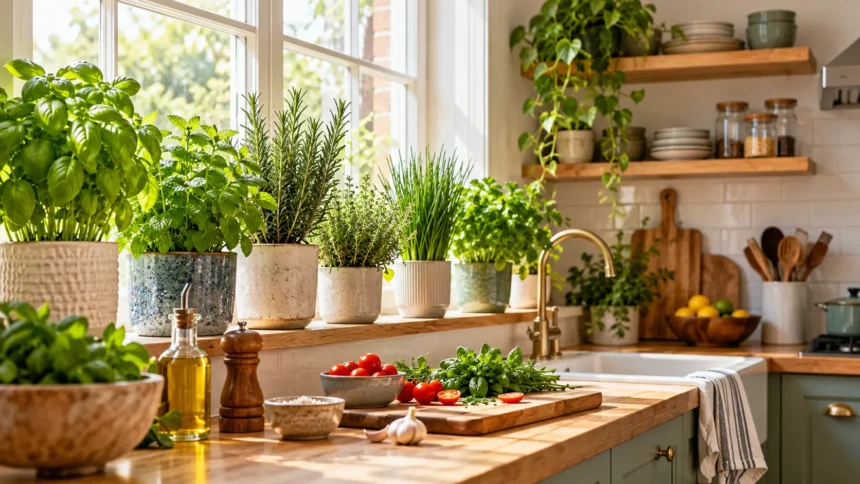
Growing fresh herbs in your kitchen is a simple way to bring greenery, natural fragrance, and homegrown ingredients into your everyday cooking. An indoor herb garden allows you to enjoy fresh basil, mint, parsley, and other flavorful plants without needing a large outdoor space. Whether you have a spacious kitchen or a small apartment, there are plenty of creative ways to grow herbs indoors.
Indoor herb gardens are also practical, affordable, and easy to personalize according to your kitchen layout. From sunny windowsill planters to vertical wall gardens, different growing methods can help you make the most of available space. Choosing suitable herbs, containers, lighting, and watering routines will help you create a beautiful and productive kitchen herb garden.
Why You Should Grow an Indoor Herb Garden
An indoor herb garden provides convenient access to fresh ingredients whenever you prepare meals. Instead of buying packaged herbs that may lose freshness before you use them, you can harvest small amounts directly from your plants. This convenience makes it easier to add natural flavor to soups, salads, sauces, and homemade dishes throughout the week.
Growing herbs indoors can also make your kitchen feel more welcoming and connected to nature. Green leaves, attractive containers, and pleasant herbal aromas introduce natural decorative elements without requiring major renovations. Even a small collection of healthy plants can brighten countertops, windowsills, or shelves while creating a more enjoyable environment for cooking and everyday activities.
Indoor gardening also provides an opportunity to learn basic plant care and develop a rewarding household hobby. Watching herbs grow encourages attention to lighting, watering, and seasonal changes. With suitable growing conditions, many culinary herbs can provide repeated harvests, making your kitchen garden both a practical resource and an attractive home improvement feature.
Choose the Best Location for Your Kitchen Herb Garden
Choosing the right location is one of the most important steps when planning an indoor herb garden. Most popular culinary herbs grow best with several hours of bright light each day. A sunny kitchen windowsill, bright shelf, or well-lit countertop can provide suitable growing conditions, depending on the direction of the windows and available sunlight.
South-facing windows often provide strong light in the Northern Hemisphere, while east-facing windows may offer gentler morning sunshine. However, neighboring buildings, trees, and seasonal changes can affect actual light levels. Observe your kitchen throughout the day to identify areas receiving consistent brightness before deciding where to place your herbs.
Temperature and airflow also influence plant health, especially in kitchens where cooking creates changing environmental conditions. Avoid placing delicate herbs directly beside hot appliances, heating vents, or cold drafts. Choosing a stable location with appropriate light and comfortable temperatures gives plants a better opportunity to establish healthy roots and produce flavorful leaves.
Create a Beautiful Windowsill Herb Garden
A windowsill herb garden is one of the easiest indoor gardening ideas for kitchens with limited space. Small pots can fit neatly along a sunny window while keeping fresh ingredients close to your cooking area. Basil, parsley, chives, and thyme are popular choices, provided the window supplies enough light for their individual growing requirements.
Choose containers that fit securely on the windowsill without blocking ventilation or creating a risk of falling. Pots with drainage holes help prevent excess moisture from collecting around plant roots. Matching ceramic containers, simple terracotta pots, or coordinated planters can create an organized appearance while allowing each herb to grow in its own space.
Rotate the containers occasionally if plants begin leaning toward the window because uneven lighting can encourage one-sided growth. Check soil moisture regularly, especially during warm weather when smaller pots may dry quickly. With proper placement and routine maintenance, a windowsill herb garden can become an attractive and productive feature of your kitchen.
Design a Vertical Indoor Herb Garden
Vertical herb gardens are ideal for kitchens where countertop and windowsill space is limited. By using wall-mounted planters or compact vertical stands, you can grow several herbs within a relatively small footprint. This arrangement creates an attractive green display while keeping valuable kitchen surfaces available for food preparation and everyday household activities.
Wall-mounted planting systems, hanging pocket planters, and tiered structures can all support vertical kitchen gardening. Select containers that allow excess water to drain without damaging walls, cabinets, or flooring. Herbs should also receive enough light at every level because plants positioned beneath upper shelves may experience shade and slower growth.
Vertical gardens work best when the structure is securely installed and individual plants remain easy to reach. Consider how you will water, prune, and harvest herbs before choosing a design. A carefully arranged vertical garden can transform an unused kitchen wall into a functional growing space that combines practical storage with natural decoration.
Use Hanging Planters for a Space-Saving Herb Garden
Hanging planters provide a creative alternative when your kitchen has limited shelves or counters. Suspended containers can hold herbs near bright windows while introducing greenery at different heights. This approach works particularly well in kitchens with open layouts, provided the plants receive sufficient light and remain safely positioned away from cooking equipment.
Lightweight hanging pots with drainage protection are useful for growing herbs without creating unnecessary weight or water-related problems. Trailing plants such as oregano or certain varieties of mint can create an appealing appearance. However, mint grows vigorously and generally benefits from having its own container to prevent competition with neighboring herbs.
Install hanging planters using supports appropriate for their total weight, including wet soil and mature plants. Keep them away from direct stove heat and locations where people frequently walk or work. Regular pruning helps maintain a tidy appearance and makes hanging herb gardens easier to manage throughout the growing season.
Build a Compact Countertop Herb Garden
Countertop herb gardens are convenient for home cooks who want fresh ingredients within easy reach. A small tray holding several individual herb pots can create an organized growing area near a bright window. This setup allows you to harvest leaves while preparing meals without needing to move between different rooms or outdoor garden spaces.
Choose compact containers that complement your kitchen design and provide enough room for healthy root development. A waterproof tray beneath the pots can catch occasional drainage and protect the countertop. Grouping herbs with similar lighting needs can simplify placement, although each plant should still receive watering according to its particular requirements.
Keep the countertop garden away from food preparation surfaces where soil or drainage water could create hygiene concerns. Remove fallen leaves and clean the surrounding area regularly to maintain a tidy kitchen. With adequate light and appropriate care, a small countertop arrangement can provide both culinary convenience and visual appeal.
Try a Mason Jar Herb Garden
Mason jars are popular decorative containers for creating rustic indoor herb garden displays. Their transparent glass makes them visually appealing on shelves and windowsills, especially when arranged with matching labels. However, ordinary mason jars do not include drainage holes, which makes direct soil planting more challenging for herbs that dislike waterlogged roots.
A practical approach is to use small nursery pots inside decorative jars rather than planting directly into sealed glass containers. This arrangement allows you to remove each pot for watering and let excess moisture drain properly. It also reduces the risk of saturated soil while preserving the attractive appearance of a coordinated glass container display.
Mason jar arrangements work particularly well in farmhouse-style, minimalist, and compact kitchens. You can personalize the jars with simple labels identifying each herb without overcrowding the display. The most important consideration is maintaining healthy growing conditions instead of allowing decorative preferences to interfere with drainage, root space, or suitable lighting.
Grow Herbs on Floating Kitchen Shelves
Floating shelves offer a stylish way to combine kitchen decoration with practical indoor gardening. A well-positioned shelf can display several small herb pots while leaving countertops free for cooking activities. This approach is especially useful when a kitchen has an unused wall area near a window or another reliable source of natural light.
Choose shelves that can safely support the combined weight of containers, moist potting mix, and growing plants. Waterproof saucers help protect the shelf surface from excess water. Arrange taller herbs toward the back and smaller varieties toward the front so each plant remains accessible and receives as much light as possible.
Avoid placing shelves too high because difficult access can make watering and harvesting inconvenient. Plants located far from windows may require supplemental grow lighting to maintain healthy growth. When installed thoughtfully, floating herb shelves can create an attractive kitchen feature while providing a practical home for several culinary plants.
Choose the Best Herbs to Grow Indoors
Choosing suitable herbs helps make your indoor garden easier to maintain and more useful for everyday cooking. Basil, parsley, mint, chives, thyme, and oregano are common options, although their growing requirements differ. Consider how frequently you use each herb in recipes before deciding which plants deserve space in your kitchen garden.
Basil generally prefers warmth, consistently adequate moisture, and strong light, making it suitable for bright indoor locations. Mint can tolerate somewhat different conditions but grows vigorously and should usually remain in a separate pot. Parsley and chives are useful culinary options, while thyme and oregano benefit from good drainage and sufficient light.
Start with two or three herbs instead of filling every available space immediately. A smaller collection makes it easier to understand watering preferences, monitor growth, and adjust lighting arrangements. As you become familiar with the plants, you can introduce additional varieties that complement your cooking habits and available indoor growing conditions.
Create an Indoor Herb Garden With Grow Lights
Not every kitchen receives enough natural sunlight to support healthy herb growth throughout the year. Grow lights provide supplemental illumination that can help plants develop when windows are shaded or daylight hours are limited. This option allows homeowners to create indoor herb gardens in apartments, kitchens with small windows, and other areas with insufficient natural brightness.
LED grow lights are commonly used because they can provide plant-friendly lighting while consuming relatively modest amounts of electricity. Choose a fixture designed for plant growth and follow its instructions for positioning and daily operating duration. Different herbs have different lighting requirements, so observing plant responses can help you adjust the setup.
A grow light can be installed above a small countertop garden, shelf arrangement, or purpose-built indoor growing station. Using a timer can provide a consistent lighting schedule and prevent accidental overnight operation. Adequate illumination, combined with proper watering and drainage, helps herbs develop stronger growth even when natural sunlight is limited.
Try a Self-Watering Indoor Herb Garden
Self-watering planters can simplify indoor gardening for people with busy schedules or limited experience caring for plants. These containers usually include a water reservoir that supplies moisture through a wicking system or similar mechanism. Their design can help maintain more consistent soil moisture, although performance depends on the container, growing medium, and plant requirements.
Herbs such as parsley and basil may appreciate appropriately managed moisture, while Mediterranean herbs often prefer the soil to dry somewhat between waterings. For this reason, self-watering systems are not equally suitable for every variety. Choosing compatible herbs and monitoring the growing medium are important steps when using reservoir-based indoor planters.
Self-watering containers still require regular attention because reservoirs must be refilled and plant health should be checked. Excessive moisture can encourage root problems when the system is poorly matched to the plant. When used correctly, these planters provide a convenient option for maintaining an indoor herb garden without frequent manual watering.
Use Recycled Containers for a Budget-Friendly Herb Garden
Creating a kitchen herb garden does not require expensive decorative pots or specialized equipment. Clean reusable containers can provide an affordable starting point while reducing unnecessary household waste. Suitable options include sturdy food containers, reused nursery pots, and other materials that can safely hold potting mix and accommodate healthy plant growth.
Before reusing a container, ensure it is thoroughly cleaned and appropriate for growing edible plants. Containers need adequate drainage holes and enough space for developing roots. Avoid using materials that previously contained hazardous substances, and select containers that will not easily crack or become unstable when filled with moist soil.
Recycled planters can also become part of your kitchen decoration through coordinated arrangements and simple finishing touches. Matching trays or labels can make different containers look organized without requiring substantial spending. This approach allows beginners to experiment with indoor herb gardening while investing more resources in healthy plants, suitable soil, and lighting.
Select the Right Soil and Containers for Indoor Herbs
Healthy indoor herbs depend on suitable growing media that support root development while allowing excess water to drain. Regular outdoor garden soil is often too dense for small indoor containers and may introduce unwanted pests. A quality potting mix designed for container gardening generally provides a better balance of moisture retention, drainage, and root aeration.
Most culinary herbs grow best in pots with drainage holes because excess water needs a reliable way to escape. Container size should match the plant’s current root system while allowing reasonable growing space. Terracotta pots can dry more quickly than plastic containers, which may influence watering frequency and suitability for different herb varieties.
Some herbs prefer more freely draining conditions, while others benefit from soil that retains moderate moisture. Rather than treating every plant identically, learn the growing preferences of each variety. Checking soil texture, root space, and drainage performance helps prevent common problems such as poor growth, root stress, and persistently saturated potting mix.
Learn How to Water Indoor Kitchen Herbs
Proper watering is essential for maintaining healthy indoor herbs because both excessive moisture and prolonged dryness can cause problems. Different herbs require different watering frequencies depending on container size, temperature, lighting, and growing medium. Checking the soil before adding water is generally more reliable than following a fixed daily watering schedule.
Insert a finger slightly into the potting mix to assess whether the upper layer feels dry or moist. Herbs that prefer consistent moisture may need watering sooner than drought-tolerant varieties such as thyme. When watering, apply enough moisture to reach the roots and allow excess water to drain away rather than collecting beneath the pot.
Signs of watering problems can include yellowing leaves, wilting, poor growth, or soil that remains wet for extended periods. These symptoms can have several causes, so inspect the growing conditions before making changes. Learning to recognize each plant’s needs helps maintain healthy indoor herbs while reducing avoidable stress and root-related problems.
Harvest and Maintain Your Indoor Herb Garden
Regular harvesting helps keep many culinary herbs compact and encourages additional leafy growth when performed correctly. Instead of removing large portions of a young plant, collect modest amounts from healthy stems and leaves. This approach allows the plant to continue developing while supplying fresh ingredients for everyday cooking and meal preparation.
Basil often benefits from pruning just above a suitable leaf node, encouraging branching and fuller growth. Chives can be trimmed carefully while leaving enough foliage for continued development. Woody herbs such as thyme and rosemary should be harvested conservatively, especially when plants are small or growing slowly under indoor conditions.
Routine maintenance should also include removing damaged leaves, inspecting plants for pests, and checking whether roots have outgrown their containers. Dusting leaves gently when necessary can help maintain a clean growing environment. With consistent care and thoughtful harvesting, an indoor kitchen herb garden can remain productive and attractive for an extended period.
Common Indoor Herb Garden Problems and Solutions
Indoor herbs sometimes develop problems because of insufficient light, unsuitable watering habits, or poor drainage. Yellow leaves, weak stems, and slow growth may indicate that plants are experiencing environmental stress. Identifying the underlying cause is important because similar symptoms can result from different problems and may require different adjustments.
Leggy growth often occurs when plants stretch toward insufficient light, making stronger illumination an important consideration. Persistently wet soil can contribute to root problems, while overly dry containers may cause wilting. Indoor herbs can also attract pests such as fungus gnats or aphids, especially when plant conditions are unfavorable.
Inspect your herbs regularly and make gradual changes based on their individual needs. Improving light exposure, adjusting watering routines, and removing badly affected material may help address common difficulties. If pest problems develop, choose control methods appropriate for edible plants and follow product instructions carefully to maintain safe kitchen gardening practices.
Conclusion
An indoor herb garden is a practical way to introduce fresh ingredients, natural greenery, and decorative appeal into your kitchen. Whether you choose a sunny windowsill, vertical wall arrangement, hanging containers, or countertop planters, the right setup depends on your available space and lighting conditions. Small gardens can provide useful harvests while making cooking more enjoyable.
Successful indoor herb gardening requires attention to plant selection, proper drainage, watering habits, and adequate light. Choosing herbs that match your cooking preferences also makes the garden more rewarding. Starting with a few manageable plants allows you to develop confidence and learn how different varieties respond to the conditions inside your home.
With thoughtful planning and regular maintenance, your kitchen herb garden can become a lasting part of your daily routine. Fresh basil, parsley, mint, thyme, and other herbs can add flavor to meals while creating an inviting atmosphere. Even a compact indoor growing space can offer meaningful benefits when the plants receive consistent care and suitable conditions.
Frequently Asked Questions
What Are the Best Herbs to Grow in a Kitchen?
Basil, parsley, chives, mint, thyme, and oregano are popular kitchen herbs. The best choices depend on available sunlight, container size, growing conditions, and how frequently you use each herb when cooking.
Can I Grow Herbs Indoors Without Sunlight?
Yes, herbs can grow indoors with suitable artificial grow lights when natural sunlight is insufficient. Choose plant-friendly lighting, follow recommended operating schedules, and provide appropriate watering and drainage for healthy growth.
How Often Should I Water My Indoor Herb Garden?
Watering frequency depends on the herb variety, container size, temperature, and soil conditions. Check the potting mix regularly and water according to each plant’s needs rather than following a fixed schedule.
What Is the Easiest Indoor Herb Garden for Beginners?
A small windowsill garden with individual pots is often an easy starting point. Choose a few herbs suited to your light conditions, use containers with drainage holes, and establish a simple care routine.
Can I Grow Multiple Herbs in the Same Container?
Yes, compatible herbs can share a sufficiently large container when they have similar watering, lighting, and soil requirements. However, vigorous plants such as mint are generally easier to manage in separate pots.