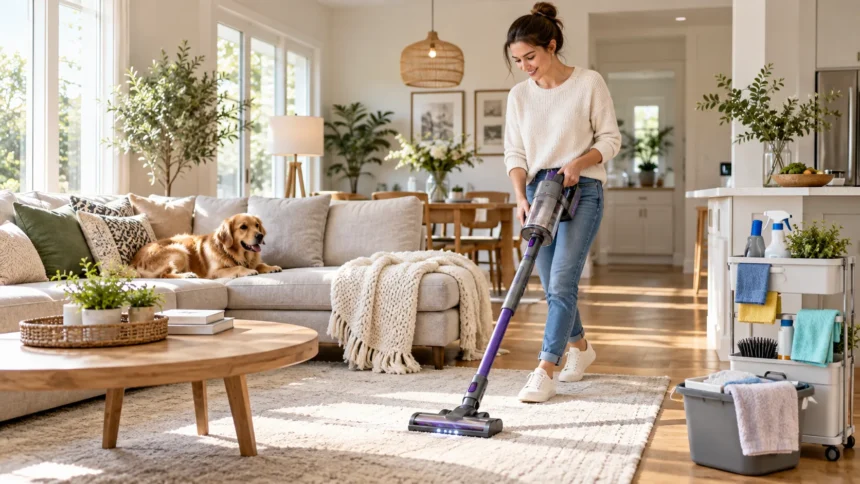
House cleaning can easily feel like a never-ending job, especially when chores are allowed to build up throughout the week. The good news is that keeping your home clean does not always require more time or effort. With the right systems, tools, and habits, you can clean more efficiently and avoid wasting energy on unnecessary steps.
The key is to simplify your routine and focus on tasks that create the biggest visible difference. Instead of moving randomly from room to room, use a clear cleaning order, keep supplies accessible, and prevent clutter from slowing you down. These small changes can make regular house cleaning faster, easier, and much more manageable.
Start by Decluttering Before You Clean
Cleaning becomes slower when every surface is covered with items that need to be moved first. Before dusting, wiping, or vacuuming, spend a few minutes returning misplaced objects to their proper places. Clearing tables, counters, floors, and furniture gives you immediate access to the surfaces that actually need cleaning and prevents unnecessary interruptions.
Use a basket when several items belong in different rooms. Walk through the space, collect everything that is out of place, and then return those belongings in one trip instead of repeatedly walking back and forth. This simple method can save time while helping you maintain focus on the room you are currently cleaning.
Try to reduce clutter permanently whenever you notice the same objects repeatedly getting in your way. If papers, shoes, toys, or clothing constantly collect in one location, create a convenient storage solution nearby. A cleaner organizational system reduces the amount of preparation required before every future cleaning session.
Gather Your Cleaning Supplies Before You Begin
Stopping midway through a task to search for a cloth, spray, brush, or vacuum attachment can make cleaning take much longer. Gather everything you are likely to need before starting. A basic cleaning caddy can hold frequently used supplies and allow you to carry them easily from one room to another.
Keep your collection simple and practical. You generally do not need dozens of specialized products for routine house cleaning. Appropriate multipurpose cleaners, microfiber cloths, brushes, a vacuum, mop, and a few task-specific products can handle most household surfaces while keeping your cleaning supplies easier to organize.
Store tools where they are convenient and safe to access. If you regularly clean bathrooms upstairs, keeping suitable supplies nearby can eliminate unnecessary trips downstairs. A well-organized cleaning station helps you begin tasks faster because everything is ready when you need it rather than scattered across different cupboards.
Clean From Top to Bottom
One of the easiest ways to clean more efficiently is to work from higher surfaces toward the floor. Dust can fall while you wipe shelves, light fixtures, furniture, and other elevated areas. If you vacuum first, you may end up cleaning the floor again after dust and debris fall during later tasks.
Begin with upper shelves, furniture tops, ceiling fans, or other dusty areas before moving to tables, counters, and lower furniture. Once those surfaces are finished, vacuum or sweep the floor. Following this direction prevents you from repeatedly undoing work you have already completed and creates a more logical cleaning flow.
The same principle applies in kitchens and bathrooms. Clean mirrors and upper surfaces before sinks, counters, and floors. Working systematically from top to bottom helps you complete each room in one pass, reducing repeated movement and making your overall house cleaning routine more organized.
Work Room by Room Instead of Randomly
Jumping between rooms can make cleaning feel longer because you repeatedly switch tools, products, and tasks. Choose one room or area and complete the major jobs there before moving on. This approach creates visible progress and helps prevent the feeling that the entire house is still unfinished after a long cleaning session.
Within each room, follow a consistent sequence. You might remove clutter first, dust second, wipe surfaces third, and clean floors last. Repeating the same pattern reduces decision-making because you already know what comes next instead of stopping after every task to decide where you should continue.
Some people prefer cleaning by category, such as dusting the entire house before vacuuming. That approach can also work when rooms are close together. The important point is to use a predictable system rather than moving randomly between unrelated chores, which wastes time and makes it easier to overlook areas.
Use a Timer to Stay Focused
A timer can make house cleaning feel more manageable by giving each session a clear beginning and ending. Set a realistic period, such as 15, 20, or 30 minutes, and focus only on cleaning until the timer ends. Short, concentrated sessions can often accomplish more than longer periods filled with distractions.
Timers are especially helpful for tasks you tend to postpone. Knowing that you only need to clean for a limited amount of time makes it easier to begin. Once you get started, you may discover that the bathroom, kitchen, or living room takes far less time to reset than you originally expected.
Avoid turning timed cleaning into a race that encourages careless work. The purpose is to maintain focus and prevent unnecessary distractions such as checking your phone or reorganizing unrelated items. Work at a steady pace and use the timer as a simple structure rather than pressure to clean perfectly.
Clean as You Go During the Day
Many large cleaning jobs begin as small messes that were ignored earlier. Wiping a fresh spill, rinsing a pan after cooking, or putting one item away usually takes only seconds. When these tasks are postponed repeatedly, they combine into much larger jobs that require significantly more time and effort later.
The kitchen is one of the best places to practice cleaning as you go. Return ingredients to cupboards while food cooks, put used utensils into the dishwasher, and wipe preparation surfaces before residue dries. By the time the meal is finished, much of the cleanup may already be complete.
Use the same habit throughout your home. Return toiletries after getting ready, hang clothing instead of leaving it on chairs, and take dishes with you when leaving a room. Small actions completed naturally during the day reduce how much dedicated cleaning time you need later.
Focus on High-Impact Areas First
When you have limited time, clean the areas that make the biggest visual and practical difference. Kitchens, bathrooms, living rooms, entryways, and other high-traffic spaces generally need more attention than rooms that are rarely used. Prioritizing these areas can make the entire home feel cleaner without requiring you to clean everything.
In the kitchen, clear counters, handle dishes, wipe the sink, and remove crumbs from the floor. In the bathroom, focus on the sink, mirror, toilet, and visible surfaces. These high-impact tasks can noticeably improve the room even when you do not have enough time for a detailed deep clean.
Do not spend equal amounts of time on every space simply because it appears on a checklist. A guest bedroom that has remained unused probably does not need the same level of attention as your family room. Cleaning according to actual household activity prevents wasted effort and makes your routine more efficient.
Let Cleaning Products Do Some of the Work
Many cleaning products work better when they have time to sit on the surface before being wiped away. Applying a suitable cleaner and immediately scrubbing may require more physical effort than necessary. Always follow the product instructions and allow the recommended contact time when appropriate for the surface and cleaning task.
Use that waiting time productively. For example, after applying cleaner in the bathroom, you can wipe the mirror, put toiletries away, or empty the trash while the product works. Multitasking in this way can reduce scrubbing while helping you complete several small tasks within the same cleaning session.
Avoid using stronger products than necessary in the hope of cleaning faster. Appropriate products, correct application, and regular maintenance usually matter more than aggressive cleaning. Keeping surfaces from becoming heavily soiled in the first place can save more time than relying on intense scrubbing during occasional deep cleans.
Use Efficient Tools for Common Tasks
The right cleaning tools can significantly reduce the amount of effort needed for everyday chores. Microfiber cloths can handle many surface-cleaning tasks efficiently, while a reliable vacuum with useful attachments can make floors, upholstery, and edges easier to manage. Choose tools that match your home rather than collecting gadgets you rarely use.
Keep tools in good condition so they continue working effectively. Empty vacuum containers, remove hair from brushes, wash reusable cloths, and replace worn mop heads when needed. Poorly maintained equipment can spread dirt or require several passes, turning a quick task into something much more time-consuming.
Consider convenience when selecting tools. A lightweight vacuum may encourage more frequent quick cleaning, while a heavy model hidden in difficult storage may rarely be used. The most useful tool is not necessarily the most advanced one; it is the option that makes routine cleaning easier to start and complete.
Keep Floors Clear and Easy to Clean
Floors take longer to clean when they are covered with shoes, toys, bags, cables, and other belongings. Develop simple habits that keep walkways open before vacuuming or mopping. Baskets, hooks, shoe racks, and cable organizers can prevent objects from constantly needing to be moved during every cleaning session.
Pay special attention to clutter that repeatedly returns to the same area. Shoes near an entrance probably need storage nearby, while children’s toys may benefit from accessible baskets in the room where they are used. Creating practical storage reduces preparation time and makes quick floor cleaning much easier.
You also do not need to vacuum or mop every room at the same frequency. Focus on kitchens, entryways, hallways, and other high-traffic areas more often. Less-used rooms can usually wait longer, allowing you to maintain cleaner floors without spending unnecessary time covering the entire house during every session.
Split Big Cleaning Jobs Into Smaller Tasks
Large cleaning projects often feel difficult because they combine too many jobs into one session. Instead of deep-cleaning the entire kitchen in one afternoon, divide it into smaller tasks such as cleaning the refrigerator, wiping cabinets, organizing drawers, and cleaning the oven on different days.
This method makes deeper cleaning easier to fit around work and family responsibilities. A 20-minute project is often easier to begin than a three-hour cleaning block. Small tasks can still produce meaningful improvements, and completing them regularly prevents less-visible areas from becoming excessively dirty or cluttered.
Create a rotating list of deeper jobs and complete one or two each week. Over the course of a month, you can maintain many parts of your home without dedicating an entire weekend to cleaning. Breaking work into manageable pieces helps prevent fatigue and makes long-term household maintenance more sustainable.
Create a Simple Weekly Cleaning Schedule
A weekly schedule removes the need to decide what to clean every day. You might clean bathrooms on Monday, dust on Tuesday, vacuum on Wednesday, mop on Thursday, and handle bedding or deeper tasks later in the week. The exact structure should reflect your home and available time.
Keep each session short enough to fit naturally into your routine. Fifteen to thirty minutes can be enough for many household tasks when clutter is already under control. Spreading chores across several days keeps each session manageable and prevents house cleaning from taking over one large block of your free time.
Allow flexibility when life becomes busy. Missing one scheduled task does not mean you need to complete twice as much the next day. Handle the most important chores first and return to your regular schedule when possible, rather than allowing one missed task to turn the routine into another source of stress.
Get Other Household Members Involved
Cleaning becomes much easier when everyone contributes to maintaining shared spaces. Household members can handle age-appropriate responsibilities such as dishes, laundry, putting away belongings, vacuuming, or taking out trash. Small contributions from several people can significantly reduce the amount of work one person needs to complete.
Assign responsibilities clearly instead of making vague requests for help. When everyone knows which tasks they normally handle, chores are less likely to be forgotten or duplicated. Simple expectations also reduce the time spent reminding people or deciding who should take care of a particular household job.
Encourage each person to clean up after themselves whenever practical. Returning belongings, dealing with small spills, and keeping personal spaces reasonably tidy reduces the need for one person to repeatedly restore order. Shared daily habits can make whole-house cleaning much faster than trying to handle every mess during one scheduled session.
Do a Short Daily Reset
A short daily reset helps prevent clutter and mess from carrying over into the next day. Spend about ten minutes clearing high-use areas, handling leftover dishes, returning misplaced items, and wiping obvious kitchen messes. This small amount of maintenance can make your home feel noticeably more organized.
Evening is a convenient time for many households because the day’s main activities are ending. Reset the kitchen, straighten the living room, organize shoes near the entrance, and prepare commonly used spaces for tomorrow. Waking up to clearer rooms can also make mornings feel less stressful and rushed.
Keep the reset simple enough that you can maintain it consistently. Do not turn it into a complete house-cleaning session every night. Focus only on obvious mess and essential tasks, then leave deeper chores for scheduled cleaning days so maintaining your home does not feel like constant work.
Conclusion
Making house cleaning faster and easier is less about working harder and more about improving your approach. Decluttering first, gathering supplies, cleaning systematically, and focusing on high-impact areas can reduce wasted time. Simple routines help you complete essential chores without repeatedly moving through the same spaces.
Cleaning as you go and handling small messes before they grow can also dramatically reduce your workload. Efficient tools, clear floors, short timed sessions, and a weekly schedule make household maintenance easier to fit around everyday responsibilities. When possible, sharing tasks with other household members can reduce the burden even further.
The best cleaning system is one that feels practical enough to maintain consistently. You do not need to clean every room perfectly or follow a rigid routine. By simplifying tasks and preventing clutter from building up, you can keep your home comfortable while spending less time and energy on house cleaning.
FAQs
What is the fastest way to clean a house?
Start by decluttering, then clean from top to bottom using a consistent room-by-room system. Focus on kitchens, bathrooms, floors, and visible surfaces before spending time on lower-priority areas.
How can I make cleaning feel less overwhelming?
Break large jobs into short sessions and focus on one room or category at a time. Using a timer and following a simple weekly routine can make cleaning feel more manageable.
Should I dust or vacuum first?
Dust before vacuuming because some debris will fall onto the floor while you clean higher surfaces. Vacuuming afterward allows you to remove that dust without needing to clean the floor twice.
How can I spend less time cleaning every week?
Clean small messes immediately, keep belongings organized, maintain clear surfaces, and divide larger chores across several days. Preventing buildup usually takes less time than repeatedly dealing with major messes.
How often should I deep-clean my home?
Deep-cleaning frequency depends on household activity, pets, children, and individual spaces. Rotating deeper tasks weekly or monthly can help maintain your home without requiring frequent whole-house deep-cleaning sessions.