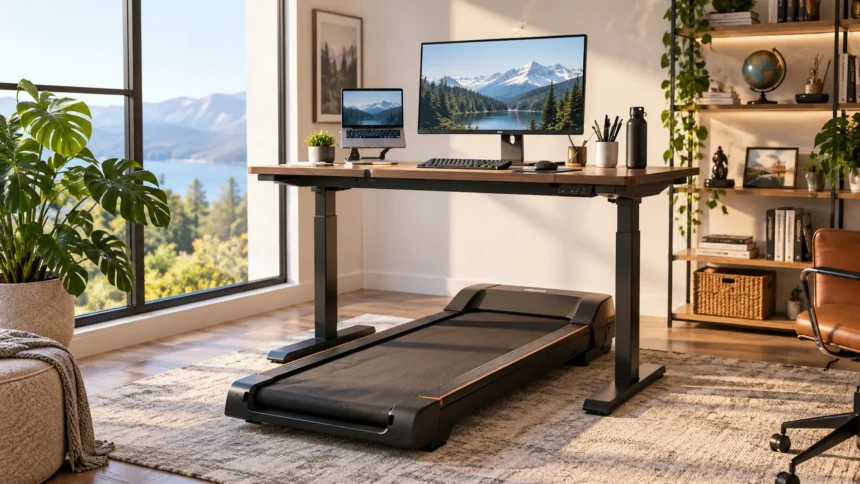
A treadmill desk can be a practical way to add more movement to a workday without leaving your computer for long periods. Instead of sitting through every email, meeting, or administrative task, you can walk slowly while handling lighter work. For people who work from home or spend many hours at a desk, this setup can make movement easier to fit into a normal routine.
Choosing the right treadmill desk requires more than finding the cheapest walking pad available. Size, noise level, speed range, weight capacity, desk compatibility, storage, and daily comfort all matter. Some models work best in compact apartments, while others suit dedicated home offices where the treadmill can remain in place throughout the day.
What Makes a Treadmill Desk Worth Considering?
A treadmill desk combines a walking treadmill with a standing workstation, allowing you to complete certain tasks while moving at a gentle pace. Many users prefer them for answering emails, reading documents, attending virtual meetings, or completing administrative work. Walking slowly can make long desk-based days feel less sedentary without requiring a separate workout session every few hours.
The biggest advantage is convenience. When the walking pad is already positioned beneath your desk, you can switch between sitting, standing, and walking more easily than if exercise requires changing clothes or leaving the workspace. That convenience may help people incorporate shorter movement sessions throughout the day instead of relying on one long session after work.
However, treadmill desks are not ideal for every task. Detailed design work, fast typing, precise mouse movements, or complicated spreadsheets may feel easier while sitting or standing still. The most practical approach is usually to treat walking as one working position among several rather than expecting to walk continuously for an entire workday.
WalkingPad C2 for Compact Home Offices
The WalkingPad C2 is often considered by people who want a compact walking treadmill that can be stored when not in use. Its slim format makes it easier to fit beneath many standing desks, and the folding design can be useful in apartments or bedrooms where permanent exercise equipment would take up too much valuable floor space.
This type of treadmill desk works particularly well for light walking during emails, online research, reading, or virtual meetings. Users looking for intense exercise or running speeds will generally need a different style of treadmill. The C2 is better suited to someone prioritizing compact storage, straightforward controls, and gentle movement during otherwise sedentary office tasks.
Before choosing a folding walking pad, measure the available floor area as well as your storage location. A treadmill may look compact in product photos but still require adequate clearance while operating. Consider where the power outlet is located and whether you can move the unit comfortably whenever you transition between walking and seated work.
UREVO 2-in-1 for Greater Flexibility
UREVO’s 2-in-1 treadmill options are popular with home-office users who want greater flexibility from one machine. Depending on the model, the treadmill can support slower walking beneath a desk while also allowing faster activity when used separately. This versatility may appeal to people who do not have enough room for both a traditional treadmill and a dedicated walking pad.
A flexible treadmill can be useful if your routine changes during the day. You might walk slowly while listening to a meeting in the morning, move the treadmill away for focused desk work, and use it again for a more active session later. This allows one piece of equipment to serve several purposes within a relatively small home environment.
Pay attention to how easily the treadmill transitions between configurations before buying. A multifunctional model is only valuable when changing modes is convenient enough that you will actually use them. Consider the controls, handle design, storage requirements, and available walking surface rather than choosing solely because a product advertises multiple operating modes.
Goplus 2-in-1 for Budget-Conscious Buyers
Goplus offers several walking and 2-in-1 treadmill designs that can appeal to buyers seeking a more affordable entry into treadmill-desk setups. These models commonly focus on essential walking features without the premium construction or advanced controls found on more expensive office treadmills. For occasional home use, that simpler approach may be sufficient.
A budget treadmill desk can make sense if you are unsure how frequently you will use a walking workstation. Starting with a reasonably priced model lets you test whether walking while working actually fits your routine before investing heavily. The key is to avoid sacrificing important basics such as stability, adequate walking space, and suitable weight capacity simply to save money.
When comparing lower-cost options, pay close attention to warranty terms and customer support. Motors, belts, remotes, and control boards may eventually require attention on any treadmill. A slightly higher purchase price can sometimes offer better long-term value when the manufacturer provides stronger support or replacement options for commonly worn components.
LifeSpan TR1200-DT3 for a Dedicated Setup
The LifeSpan TR1200-DT3 has long been associated with treadmill-desk users who want equipment designed specifically around walking while working. Unlike smaller folding pads, this style of under-desk treadmill is better suited to a dedicated office where the machine can remain positioned beneath an adjustable desk for regular use throughout the week.
A dedicated treadmill base may feel more substantial than ultra-compact walking pads. That can be useful for users who expect longer or more frequent walking sessions and care less about storing the machine after every use. The tradeoff is that heavier office-oriented equipment usually requires more floor space and may be inconvenient in multipurpose rooms.
This kind of model is worth considering when your workspace is permanent and walking will be a major part of your daily routine. Before purchasing, verify that your standing desk has enough height adjustment and width to accommodate comfortable walking posture. The desk and treadmill should function as one coordinated workstation rather than two pieces of equipment competing for space.
Egofit Walker Pro M1 for Incline Walking
The Egofit Walker Pro M1 is an interesting option for people attracted to a compact treadmill with an incline-oriented design. An inclined walking surface can make gentle walking feel more active without requiring high speeds. This may appeal to users who want their walking periods to feel somewhat more purposeful while still completing simple computer-based tasks.
Incline can also change how comfortable it feels to type or use a mouse while moving. Some users may prefer the added challenge, while others may find a flatter surface easier during longer work sessions. If your primary goal is concentration and light movement rather than exercise intensity, consider whether incline is something you genuinely want during working hours.
Compact dimensions remain an important advantage for many home offices. A shorter treadmill can fit more easily beneath certain desks and may be simpler to position in limited spaces. However, taller users or people with longer walking strides should pay particular attention to belt dimensions, because a very compact deck may feel restrictive during regular daily use.
Sperax Walking Pad for Simple Everyday Walking
Sperax walking pads are frequently considered by buyers who want a straightforward under-desk treadmill without creating an elaborate workstation. These machines typically emphasize compact dimensions, basic speed controls, and easier storage. That simplicity can work well for someone whose main goal is adding light walking to daily computer work rather than training for fitness performance.
A simple walking pad is especially useful for short movement sessions. You might walk for twenty or thirty minutes while checking messages, then move back to sitting when you need deeper concentration. Dividing the workday into different activity levels can feel more manageable than trying to walk continuously while completing every task.
As with other compact treadmills, check the walking surface and overall stability carefully. A smaller machine should still give you enough room to maintain a natural stride without constantly watching your feet. You should feel comfortable looking at your monitor rather than repeatedly looking downward because you are worried about stepping near the edge of the belt.
How to Choose the Best Treadmill Desk
Start by deciding how you intend to use the treadmill. Someone walking for thirty minutes a few times per week has different needs from a remote worker expecting several hours of daily use. Frequency influences how much attention you should give to motor durability, deck comfort, noise levels, controls, and overall construction quality.
Next, measure the available workspace carefully. Check treadmill length and width, the distance between desk legs, available storage space, and the maximum height of your standing desk. Your desk should rise high enough that your elbows can remain in a comfortable position while you stand on the elevated treadmill deck.
Consider practical features such as speed adjustment, remote controls, displays, portability, wheels, and automatic shutoff functions. Weight capacity should also provide an appropriate margin rather than sitting directly at the machine’s stated limit. A treadmill that fits your body, room, and working habits is generally more useful than one chosen because it has the longest feature list.
Create a Comfortable Treadmill Desk Workspace
Your desk setup affects how comfortable treadmill walking feels. Position the monitor roughly around eye level and keep the keyboard and mouse where your shoulders can stay relaxed. If the screen is too low or the keyboard is too far away, you may lean forward while walking, creating an awkward posture that becomes uncomfortable over longer sessions.
Think about the entire room rather than focusing only on the treadmill. Good lighting, accessible storage, cable management, and clear pathways can make a home office easier to use. If your workspace is part of a multipurpose guest area, even design ideas used to organize a bunk room can inspire smarter use of vertical storage and limited floor space.
Keep cables away from the treadmill belt and walking path. A nearby outlet is preferable to running extension cords through high-traffic areas, and headphones or wireless accessories can reduce unnecessary cables around the workstation. A simple, uncluttered setup makes it easier to switch between walking, standing, and sitting without repeatedly reorganizing the room.
Use a Treadmill Desk Safely and Productively
Begin at a slow speed while learning to work and walk at the same time. Walking too quickly can make typing difficult and may distract you from maintaining a comfortable stride. Start with simple tasks such as reading, listening to meetings, or organizing emails before deciding which activities you can comfortably complete while moving.
Wear supportive footwear if that feels more comfortable during longer sessions, and keep the treadmill surface clear. Avoid stepping onto a moving belt unexpectedly or reaching far across the desk while walking. Always follow the manufacturer’s operating instructions, particularly regarding speed settings, weight limits, maintenance, children, pets, and emergency stopping procedures.
Productivity should remain more important than reaching an arbitrary walking target. If a task requires intense concentration or precise movement, stop walking and complete it comfortably. A treadmill desk works best when it supports your workflow instead of turning ordinary office work into a constant balancing exercise between productivity and physical activity.
Who Should Consider a Treadmill Desk?
Remote workers and people with long desk-based schedules are obvious candidates for treadmill desks. Writers, marketers, consultants, customer-support professionals, managers, and other knowledge workers often have periods when they can walk while reading, listening, or handling routine communication. The ability to move without leaving the workspace can make these periods more active.
A treadmill desk can also suit people who struggle to schedule separate movement breaks during busy days. Having the equipment directly beneath a desk removes several barriers to getting started. Even relatively short walking sessions spread throughout the day may feel easier to maintain than depending on one long block of free time.
However, anyone with balance concerns, pain, mobility limitations, or medical conditions affecting safe treadmill use should consider professional guidance before changing their routine. A treadmill desk is also unnecessary if you already move frequently throughout the day. The best setup is the one that fits your individual work habits, comfort, available space, and activity preferences.
Conclusion
The best treadmill desk depends on how much space you have, how often you plan to walk, and what type of work you will complete while moving. Compact choices such as WalkingPad, Sperax, and some UREVO models can suit smaller spaces, while more dedicated options may work better in permanent home offices.
Before buying, pay attention to belt dimensions, desk compatibility, noise, storage, controls, stability, and weight capacity. These practical factors often matter more during everyday use than impressive feature lists. Measuring your room and understanding your working habits beforehand can help prevent purchasing a treadmill that becomes inconvenient after the initial excitement disappears.
A treadmill desk should make movement easier, not complicate your workday. Start slowly, use it during appropriate tasks, and switch between sitting, standing, and walking when needed. With the right machine and a comfortable workstation, an under-desk treadmill can become a practical addition to a more flexible home-office routine.
FAQs
Is a treadmill desk worth buying?
A treadmill desk can be worthwhile for people who spend many hours working at a computer and want more opportunities for light movement. Its value depends on available space, work habits, and how consistently it is used.
What speed should I use while working at a treadmill desk?
Most people find slower walking speeds easier for computer work because they allow better concentration and control. Start slowly and increase the pace only when you can work comfortably without affecting your balance or productivity.
Can you type while using a treadmill desk?
Yes, many people can type while walking slowly, although accuracy may decrease at higher speeds. Emails and routine writing are often easier than tasks requiring precise mouse movement, detailed design, or complicated spreadsheet work.
What should I look for when buying an under-desk treadmill?
Consider treadmill size, walking surface, weight capacity, noise, speed range, portability, controls, desk compatibility, storage requirements, and warranty coverage. Prioritize features that match your actual workspace and expected frequency of use.
Can a treadmill desk fit in a small home office?
Yes. Many compact walking pads are designed specifically for smaller workspaces and can slide beneath furniture or be stored vertically. Always measure the treadmill, desk opening, walking clearance, and intended storage area before purchasing.