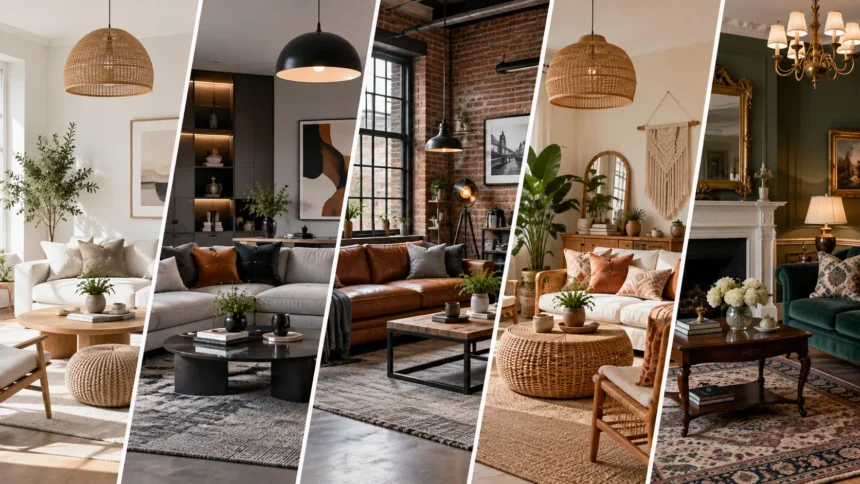
Interior design is more than choosing attractive furniture and matching colors. The style you select influences how a room feels, how easily it functions, and whether different elements look intentional together. Understanding popular interior design styles can help you make decorating decisions with more confidence instead of buying individual pieces that eventually feel disconnected.
Some people prefer clean modern spaces, while others feel more comfortable surrounded by vintage furniture, natural materials, bold patterns, or traditional details. There is no single style that works for every home. Your lifestyle, architecture, budget, available space, and personal preferences should all influence the direction you choose.
You also do not need to follow one design style perfectly. Many beautiful homes combine influences from two or three styles while maintaining a consistent color palette and visual balance. This guide explores different interior design styles, their defining features, and practical tips for choosing an approach that feels comfortable, functional, and personal.
1. Modern Interior Design
Modern interior design emphasizes clean lines, functional furniture, open spaces, and relatively simple decoration. The style developed from twentieth-century design movements that rejected excessive ornamentation in favor of practical forms. Neutral colors such as white, black, gray, beige, and brown are common, often paired with materials such as glass, metal, leather, and natural wood.
Furniture usually has straightforward shapes rather than elaborate carvings or decorative details. Rooms tend to feel uncluttered because each item has a clear purpose and visual space around it. Large windows, open floor plans, smooth surfaces, and carefully selected artwork can help create the bright and organized appearance associated with modern interiors.
To use modern design successfully, focus on quality rather than quantity. Choose several strong furniture pieces and allow them to stand out instead of filling every empty corner. Add warmth through textured rugs, natural wood, plants, or soft fabrics so the room feels welcoming rather than excessively cold or minimal.
2. Contemporary Interior Design
Contemporary interior design reflects what feels current rather than following one historical design period. Because trends change, contemporary interiors can evolve over time while incorporating influences from modernism, minimalism, organic design, and other popular movements. Clean shapes, open layouts, comfortable furniture, and carefully selected statement pieces are common features.
Neutral backgrounds often provide flexibility, while bold artwork, sculptural lighting, unusual furniture, or accent colors create personality. Contemporary spaces may combine curved furniture with straight architectural lines to create visual contrast. Natural materials and textured fabrics are also frequently used to prevent the clean aesthetic from becoming flat or overly formal.
If you like contemporary design, avoid copying every short-lived trend at once. Build the room around timeless furniture and introduce current looks through smaller elements such as cushions, lighting, artwork, or decorative accessories. These details are easier and less expensive to update when your preferences or broader interior trends change.
3. Minimalist Interior Design
Minimalist design is based on simplicity, intentional choices, and reducing unnecessary visual clutter. Rooms typically feature restrained color palettes, simple furniture, open surfaces, and practical storage that keeps everyday items organized. The goal is not to make a home feel empty but to ensure that everything included contributes either function or meaningful beauty.
Color schemes often rely on white, cream, gray, black, or muted natural shades. Materials such as light wood, linen, stone, and metal can add texture without making a room feel busy. Furniture with integrated storage is particularly valuable because minimalism becomes difficult to maintain when household items have no designated place.
The biggest mistake is removing so much personality that the home feels unfinished. Keep meaningful artwork, books, photographs, or objects that genuinely matter to you while eliminating repetitive decoration. Layering subtle textures through fabrics, rugs, and natural materials can create warmth without compromising the calm, organized atmosphere.
4. Scandinavian Interior Design
Scandinavian interior design combines simplicity with comfort and practicality. The style is associated with light colors, natural materials, functional furniture, and bright spaces that make the most of available daylight. White walls, pale woods, soft textiles, and understated accessories help create interiors that feel relaxed, clean, and inviting.
Comfort is an essential part of Scandinavian design, so rooms are rarely completely bare. Wool throws, woven rugs, cushions, candles, plants, and comfortable seating introduce warmth while maintaining visual simplicity. Furniture often combines attractive proportions with useful functionality, making the style especially practical for smaller apartments and family homes.
To achieve the look, begin with a light neutral palette and introduce natural wood throughout the space. Choose uncomplicated furniture and use soft materials to prevent the room from feeling sterile. Small amounts of black, charcoal, or muted color can provide contrast without disrupting the bright and peaceful Scandinavian aesthetic.
5. Traditional Interior Design
Traditional interior design draws inspiration from European interiors and emphasizes symmetry, craftsmanship, elegant furniture, and classic decorative details. Rich woods, upholstered seating, patterned fabrics, decorative moldings, and carefully arranged accessories are frequently used. Rooms often feel formal yet comfortable because furniture is arranged in balanced compositions that create a sense of order.
Colors can range from warm neutrals to deeper shades such as navy, burgundy, forest green, or warm brown. Floral patterns, damask, stripes, and detailed rugs can add character when used carefully. Decorative lighting, framed artwork, mirrors, ceramics, and fresh flowers can reinforce the classic atmosphere without requiring major architectural changes.
Natural floral arrangements work particularly well in traditional rooms because they introduce softness and color. If you are unsure what suits your space, learning about different flower types can help you choose arrangements that complement the room’s scale and color palette. Keep displays balanced so they enhance rather than overwhelm existing decoration.
6. Industrial Interior Design
Industrial interior design takes inspiration from factories, warehouses, lofts, and commercial buildings. Exposed brick, concrete, metal, visible pipes, dark finishes, and unfinished surfaces are common characteristics. Instead of hiding structural elements, the style often celebrates them as part of the room’s visual identity, creating an atmosphere that feels raw and urban.
Furniture usually combines practical shapes with materials such as reclaimed wood, steel, leather, and iron. Large pendant lights, open shelving, metal-framed furniture, and vintage-inspired pieces can reinforce the look. A neutral palette of charcoal, brown, black, gray, and warm wood tones keeps the room visually cohesive despite the variety of textures.
Industrial spaces can feel cold when too many hard surfaces are used. Soften the room with upholstered seating, rugs, curtains, plants, and warmer lighting. You do not need exposed brick or concrete architecture to use the style; a few carefully selected materials and furniture pieces can introduce industrial character into an ordinary home.
7. Bohemian Interior Design
Bohemian, or boho, interior design celebrates creativity, color, texture, and personal collections. Unlike highly structured decorating styles, bohemian interiors often feel layered and relaxed rather than perfectly coordinated. Patterned rugs, woven textiles, plants, handmade objects, artwork, vintage furniture, and travel-inspired accessories can all appear within the same room.
Color palettes vary considerably, although earthy shades such as terracotta, mustard, olive, cream, rust, and brown are common. Layering is central to the style, so cushions, throws, wall hangings, baskets, and rugs can create depth. Natural materials such as rattan, jute, wood, linen, and clay also support the informal atmosphere.
The challenge is preventing the room from becoming visually chaotic. Choose a few repeating colors or materials that connect different objects throughout the space. Leave some empty areas so individual pieces can be appreciated, and prioritize items with personal meaning rather than buying large quantities of decorations simply to create a bohemian appearance.
8. Farmhouse Interior Design
Farmhouse design combines rustic materials with comfortable furniture and practical everyday living. Wood, stone, linen, cotton, baskets, ceramics, and simple metal accents are frequently used. Traditional farmhouse interiors can feel warm and lived-in, while modern farmhouse versions introduce cleaner lines, lighter palettes, and more contemporary furniture into the same rustic foundation.
White, cream, beige, soft gray, muted green, and natural wood tones work particularly well with the style. Furniture should feel sturdy and comfortable rather than delicate or overly formal. Dining tables, benches, open shelving, textured rugs, and vintage-inspired lighting can help create a relaxed environment that suits family spaces.
Avoid covering every surface with rustic signs and themed decorations. Farmhouse design feels more authentic when natural materials and practical furniture establish the character of the room. Add a few vintage or handmade accessories for personality, but let texture, craftsmanship, and comfortable layouts provide most of the visual interest.
9. Mid-Century Modern Interior Design
Mid-century modern design became influential during the middle decades of the twentieth century and remains popular because of its clean forms and functional furniture. The style often features tapered legs, low-profile seating, organic curves, warm wood finishes, and simple geometric shapes. Furniture usually appears visually light, which can help smaller rooms feel more open.
Colors range from neutral backgrounds to stronger accents such as mustard yellow, teal, burnt orange, olive green, and deep blue. Materials including walnut, leather, molded plastic, glass, and metal frequently appear together. Statement lighting and graphic artwork can reinforce the period-inspired look without requiring every object in the room to be vintage.
A successful mid-century room should feel inspired by the era rather than designed like a museum set. Mix iconic shapes with contemporary pieces and keep the overall palette controlled. One distinctive chair, sideboard, lamp, or coffee table can establish the style strongly without filling the entire home with matching retro furniture.
10. How to Choose Your Interior Design Style
Start by paying attention to rooms you naturally feel comfortable in rather than choosing a style only because it is popular online. Save examples of interiors you genuinely like and look for repeated patterns. You may notice that you consistently prefer warm wood, neutral colors, curved furniture, traditional details, or bright minimalist spaces.
Consider your lifestyle as carefully as your visual preferences. A household with young children or pets may need durable fabrics and practical storage, while someone who entertains often might prioritize flexible seating and open gathering spaces. Your home’s architecture should also influence your choices because working with existing features can produce a more natural result.
If you like several styles, identify what they have in common and build from those shared elements. Scandinavian and minimalist styles both favor simplicity, while industrial and farmhouse interiors can both use reclaimed wood. Combining compatible influences around a consistent palette usually feels intentional, whereas randomly mixing unrelated furniture can make a room appear unfinished.
Conclusion
Understanding different interior design styles gives you a useful starting point for creating a home that feels visually consistent and comfortable. Modern, contemporary, minimalist, Scandinavian, traditional, industrial, bohemian, farmhouse, and mid-century modern interiors each offer different approaches to color, furniture, materials, and decoration.
You do not need to follow one style perfectly or replace everything you already own. Start by identifying the colors, textures, furniture shapes, and materials you naturally prefer. Then make gradual changes through paint, lighting, textiles, artwork, plants, and carefully chosen furniture rather than attempting to redesign every room at once.
The most successful interior is one that supports everyday life while reflecting the people who live there. Use design styles as guidance rather than strict rules. When function, comfort, proportion, and personal taste work together, your home can feel cohesive even when it includes influences from several different decorating traditions.
FAQs
What are the most popular interior design styles?
Popular styles include modern, contemporary, minimalist, Scandinavian, traditional, industrial, bohemian, farmhouse, and mid-century modern. Each has distinctive approaches to furniture, color palettes, materials, patterns, and decorative details.
Can I mix different interior design styles?
Yes. Mixing two or three compatible styles can create a more personal interior. Use a consistent color palette, repeated materials, and similar proportions so different furniture and decorative influences still feel connected.
How do I know which interior design style suits me?
Collect images of rooms you like and identify repeated colors, materials, furniture shapes, and layouts. Also consider your lifestyle, home architecture, maintenance preferences, budget, and how you want each room to feel.
What interior design style makes a small room look bigger?
Minimalist, Scandinavian, and modern styles can work particularly well in smaller rooms. Light colors, simple furniture, good storage, visual openness, and carefully controlled decoration can help limited spaces feel less crowded.
What is the difference between modern and contemporary interior design?
Modern design refers largely to established twentieth-century design principles, including clean lines and functional forms. Contemporary design reflects current preferences and continues changing as new materials, furniture trends, and decorating ideas become popular.