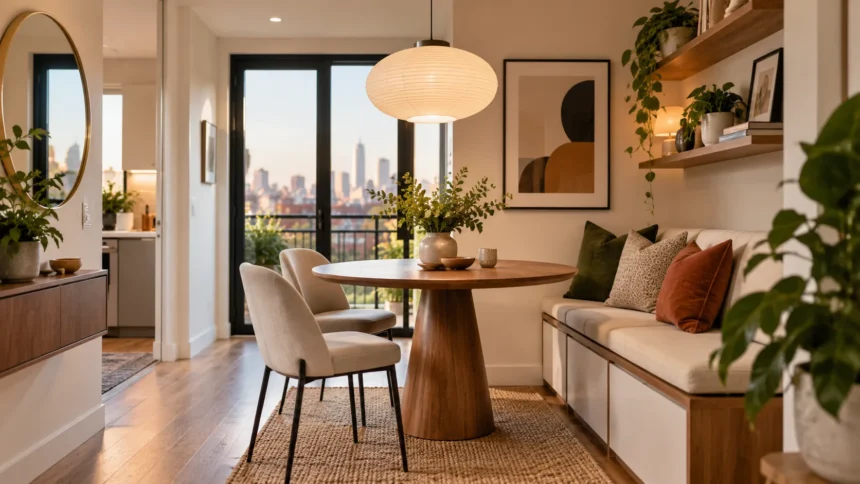
A small dining room can feel stylish, comfortable, and practical when every design choice works with the available space. The goal is not to squeeze in as much furniture as possible, but to create a layout that feels open and easy to use. Smart tables, lighter colors, flexible seating, and thoughtful storage can completely change how the room functions.
You do not need a major renovation to make a compact dining area feel more inviting. Small adjustments to furniture size, lighting, wall décor, and traffic flow can make a noticeable difference. With the right small dining room ideas, even a narrow corner or multipurpose space can become a place you genuinely enjoy using every day.
Choose the Right Dining Table Shape
The shape of your dining table can determine how easily people move around the room. Round tables are often useful in compact spaces because they eliminate sharp corners and allow traffic to flow more naturally. They can also create a relaxed atmosphere where everyone feels included in the conversation.
A small rectangular table may work better in a narrow dining room or against one wall. Square tables are practical for rooms with similar width and length, especially when only two to four people usually dine together. Measure carefully before buying so chairs can still be pulled out without blocking important walkways.
Consider how many people you actually seat on an ordinary day rather than designing around rare occasions. An oversized dining table can make a small room feel crowded even when it looks attractive in a showroom. Choosing a size that matches your everyday needs leaves more breathing room and makes the space easier to use.
Try an Extendable Table for More Flexibility
An extendable dining table is one of the smartest options for a small dining room because it adapts to different situations. You can keep it compact for everyday meals and expand it when guests arrive. This gives you extra seating when needed without permanently sacrificing valuable floor space.
Look for designs with easy-to-use extension mechanisms rather than tables that require complicated assembly. Drop-leaf, butterfly, and sliding extension styles can all work well depending on the room. Make sure the expanded table still fits comfortably so guests are not pressed against walls, cabinets, or surrounding furniture.
When the table is not extended, use the extra room for easier movement or other activities. A flexible dining area can double as a workspace, homework station, or casual gathering spot. Furniture that changes with your needs is especially valuable when one small room has to serve several purposes throughout the week.
Use Benches to Save Valuable Floor Space
Benches can provide more seating while using less visual and physical space than several individual chairs. A bench can sit close against a wall or slide completely under the table when not in use. This makes it particularly useful in small dining areas where chair backs would otherwise block pathways.
Built-in banquette seating can take the idea further by turning an unused corner into a practical dining zone. Cushioned seating makes the area feel comfortable, while storage beneath the bench can hold table linens, serving pieces, or other household items. This combination of seating and storage makes every square foot work harder.
If built-ins are outside your budget, a simple freestanding bench can create a similar effect. Choose one that matches the table height and is comfortable enough for everyday meals. Pairing a bench on one side with lightweight chairs on the other keeps the room flexible while reducing unnecessary furniture bulk.
Keep Furniture Visually Light
Heavy furniture can make a compact room feel smaller even when the measurements technically fit. Tables with slim legs, open bases, and lighter finishes create more visible floor space. This visual openness helps the dining room feel less crowded and allows the eye to move naturally through the room.
Chairs with narrow frames, open backs, or simple profiles can have the same effect. Bulky upholstered seating may be comfortable, but several large chairs can dominate a small space quickly. Choose furniture that provides enough comfort without adding more visual weight than the room can handle.
You can apply the same principle to storage pieces and decorative furniture. A slim console or wall-mounted shelf often works better than a deep cabinet. Small dining rooms benefit from pieces that feel intentional and functional rather than filling every available wall with heavy furniture.
Use Mirrors to Make the Room Feel Larger
Mirrors are a classic small-space design tool because they reflect light and create a stronger sense of depth. A large mirror placed on one wall can make the dining area feel more open without using any floor space. This works especially well when the room receives limited natural light.
Position the mirror where it can reflect a window, attractive light fixture, artwork, or another visually appealing part of the room. Avoid placing it where the reflection mainly shows clutter or a crowded storage area. The goal is to extend the best features of the space rather than duplicate its busiest areas.
One large mirror usually creates a cleaner look than several tiny decorative mirrors. Simple frames can keep the design modern and uncluttered, while more decorative options may suit traditional interiors. Choose a style that fits your overall décor rather than treating the mirror as a completely separate design element.
Choose Light Colors Without Making the Room Boring
Light colors can make a small dining room feel brighter and more spacious by reflecting available light. Soft white, warm beige, pale gray, muted green, and gentle neutral shades can create an airy foundation. These colors are especially helpful in rooms with limited windows or darker surrounding spaces.
You do not need to keep everything white to make the space feel open. Add personality through chairs, artwork, cushions, tableware, or one deeper accent color. A controlled mix of light foundations and richer details creates visual interest without making the room feel busy or enclosed.
If you are looking for broader beautiful home ideas, focus on balancing appearance with everyday usefulness. A well-designed small dining room should feel attractive but still be comfortable to move through. Good style works best when it supports how you actually use the space.
Make Lighting a Focal Point
Lighting can give a small dining room character without taking up valuable floor space. A pendant light or compact chandelier centered above the table helps define the dining area and makes it feel intentional. This is particularly useful in open-plan homes where the dining space shares a room with the kitchen or living area.
Choose a fixture that suits the scale of your table and ceiling height. An oversized chandelier can overwhelm a compact room, while a tiny fixture may feel visually disconnected. The right size creates enough impact to draw attention without making the ceiling or dining area feel crowded.
Consider adding a dimmer when possible so the same light works for different situations. Brighter lighting may be useful for homework or working from the table, while softer lighting creates a more relaxed atmosphere during dinner. Flexible lighting helps one small space serve multiple purposes comfortably.
Use Walls for Storage Instead of the Floor
When floor space is limited, vertical storage can make a major difference. Floating shelves, narrow wall cabinets, or mounted racks can hold plates, glassware, cookbooks, and decorative pieces without requiring another large furniture item. Using the walls keeps essentials accessible while preserving valuable room for seating.
Keep open shelves organized because overcrowding can make the room feel visually smaller. Display a few useful or attractive items and store less appealing objects elsewhere when possible. Matching containers or a limited color palette can also help open storage feel more intentional and less cluttered.
A shallow wall-mounted cabinet can be especially useful when you need concealed storage. Choose one with enough depth for the items you actually plan to keep inside rather than buying the largest option available. Small rooms benefit from storage that solves a specific problem without creating another obstacle.
Create a Dining Nook in an Unused Corner
A dedicated dining room is not necessary if your home has an unused corner near the kitchen or living area. A small round table, compact bench, and two chairs can transform an overlooked space into a functional dining nook. This approach works particularly well in apartments and smaller open-plan homes.
Use a rug, pendant light, artwork, or wall color to visually define the nook without adding physical barriers. These details create a clear dining zone while keeping the surrounding area open. When each zone has its own purpose, a multipurpose room can feel more organized and carefully designed.
Avoid overfilling the nook with accessories because compact areas become cluttered quickly. One piece of artwork, a simple centerpiece, and comfortable seating may be enough. Keeping the décor restrained allows the dining area to feel inviting rather than squeezed into a leftover section of the room.
Declutter the Table and Surrounding Area
A small dining table can look crowded very quickly when it becomes a permanent storage surface. Mail, bags, chargers, paperwork, and unused dishes can reduce the available eating space and make the entire room feel less organized. Keeping the tabletop mostly clear creates an immediate sense of openness.
Give everyday clutter a specific home somewhere else. A narrow entry console, drawer organizer, wall hooks, or storage basket can prevent unrelated items from collecting around the dining area. Simple storage systems are easier to maintain when they are placed close to where the clutter naturally appears.
Keep table décor minimal as well. A single vase, bowl, or small plant can add personality without consuming too much usable space. Large centerpieces may look dramatic, but they can make conversation difficult and require constant moving whenever the table is needed for meals or other activities.
Use Rugs Carefully in Small Dining Rooms
A rug can visually anchor the dining area and add warmth, texture, and color. In an open-plan space, it can also create a clear boundary between the dining zone and nearby living areas. However, the rug needs to be large enough for the chairs to remain comfortably on it when pulled back.
A rug that is too small can make the dining setup look cramped rather than spacious. Measure the table and allow extra room around every side before purchasing. Low-pile or flat-weave rugs are often easier to manage under dining furniture because chairs can slide more smoothly across them.
Choose patterns and colors that complement the room without overwhelming it. Subtle patterns can hide everyday marks while adding visual interest, which may be useful in frequently used dining areas. If maintaining a rug feels impractical for your household, leaving the floor uncovered can still create a clean and stylish look.
Conclusion
Small dining rooms can be both beautiful and functional when the layout is designed around everyday needs. Choosing the right table shape, flexible seating, visually light furniture, and smart wall storage can make the room feel larger. The goal is to create enough comfort for dining without filling every available inch with furniture.
Lighting, mirrors, lighter colors, and thoughtful décor can improve the atmosphere without requiring major renovations. Simple choices often produce the strongest results because small spaces show every design decision clearly. Keeping the table and surrounding area organized also helps the room feel calmer and more spacious.
Most importantly, design the dining space around how you actually live. An extendable table may be perfect for occasional guests, while a compact nook may suit a smaller household better. When furniture, storage, lighting, and style work together, even the smallest dining room can become one of the most enjoyable areas in your home.
FAQs
What table shape is best for a small dining room?
Round tables work well in compact spaces because they reduce sharp corners and improve movement. Rectangular tables may be better for narrow rooms, while extendable designs provide additional flexibility when guests arrive.
How can I make a small dining room look bigger?
Use lighter colors, mirrors, slim furniture, vertical storage, and good lighting. Keeping surfaces uncluttered and allowing visible floor space can also make the room feel more open and comfortable.
Are benches good for small dining rooms?
Yes. Benches can seat multiple people and often slide under the table when not in use. Built-in benches can also provide extra storage while making better use of corners.
Should I put a rug under a small dining table?
A rug can define the dining area and add warmth, but it should be large enough for chairs to remain on it when pulled out. Choose an easy-to-clean, low-pile option.
How can I add storage to a tiny dining area?
Use floating shelves, shallow wall cabinets, storage benches, or narrow consoles. Vertical solutions are especially useful because they provide organization without taking up too much valuable floor space.