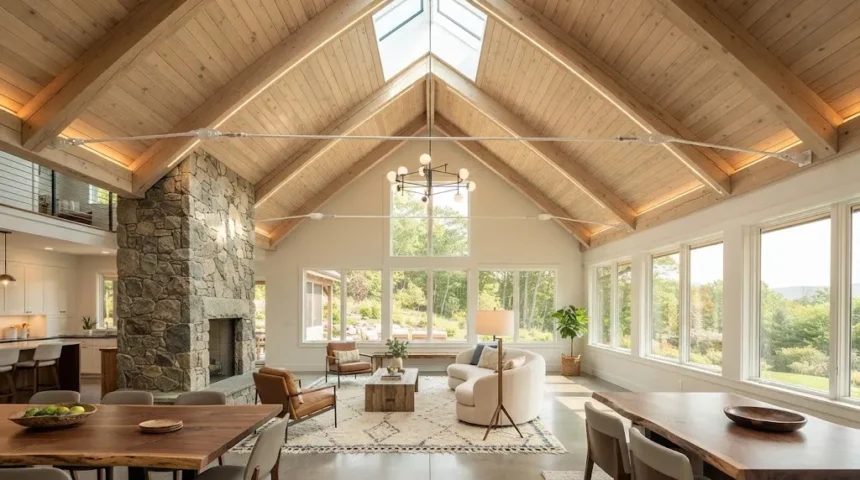
A vaulted ceiling can completely change the feeling of a room by adding height, openness, and architectural character. Instead of keeping the ceiling flat and low, this design draws the eye upward and creates a more spacious atmosphere. From modern living rooms to cozy bedrooms, vaulted ceilings can make ordinary spaces feel distinctive without adding extra floor area.
The beauty of a vaulted ceiling lies in its flexibility. It can look rustic with exposed wood beams, clean and contemporary with smooth white surfaces, or luxurious with dramatic lighting and large windows. The right combination of materials, colors, furniture, and lighting helps the ceiling become part of the overall design rather than an empty area overhead.
However, designing a high ceiling successfully requires more than simply appreciating the extra height. Furniture scale, lighting placement, acoustics, heating, and visual balance all matter. These vaulted ceiling ideas offer practical inspiration for creating a room that feels open, comfortable, stylish, and thoughtfully connected from floor to ceiling.
What Is a Vaulted Ceiling?
A vaulted ceiling is a ceiling design that rises higher than a traditional flat ceiling and usually follows an angled, curved, or pitched shape. The ceiling may follow the roofline or use architectural framing to create extra vertical space. This structure makes the room feel larger because the eye naturally follows the ceiling upward rather than stopping at a standard height.
There are several types of vaulted ceilings, including cathedral ceilings, barrel vaults, groin vaults, shed ceilings, and asymmetrical designs. Cathedral ceilings generally have two matching slopes meeting at a central peak, while shed ceilings rise in one direction. Each style creates a different visual effect and works better with certain architectural layouts, window placements, and interior design themes.
Vaulted ceilings are commonly used in living rooms, kitchens, bedrooms, entryways, and open-plan spaces. They work particularly well where homeowners want a strong architectural feature without filling the room with decorative elements. Even a simple white vaulted ceiling can create impressive visual interest because its height and angles become part of the room’s design.
Fresh Vaulted Ceiling Ideas for Living Rooms
Living rooms are one of the best places to highlight a vaulted ceiling because these spaces usually have larger furniture and more visual activity. A tall ceiling can make sofas, fireplaces, artwork, and windows feel better proportioned within an open room. Keeping the upper portion visually simple often allows the architecture to stand out without making the room feel overly decorated.
A floor-to-ceiling fireplace can become a dramatic focal point beneath a vaulted ceiling. Stone, plaster, brick, tile, or smooth concrete can emphasize the vertical scale while visually connecting the lower and upper parts of the room. Large artwork or a carefully arranged gallery wall can create a similar effect when a fireplace is not part of the layout.
Furniture placement should still create intimacy despite the extra height. Arrange sofas and chairs around a clear focal point so the room does not feel scattered or empty. Large rugs, substantial coffee tables, layered textiles, and warm lighting can visually ground the space while allowing the high ceiling to provide openness above.
Vaulted Ceiling Ideas for Kitchens and Dining Areas
A vaulted ceiling can make a kitchen feel brighter, larger, and more inviting, particularly in open-plan homes. The extra height gives cabinetry, kitchen islands, pendant lights, and windows more room to breathe visually. White or light-colored ceilings can amplify natural light, while wood accents can create warmth in spaces dominated by stone, metal, and cabinetry.
Pendant lights work especially well over kitchen islands because they help bridge the distance between the high ceiling and the work surface below. Fixtures with longer drops can add visual balance while providing practical task lighting. The size of the pendant should match the scale of the room so it does not appear too small beneath the expansive ceiling.
Dining areas under vaulted ceilings can feel particularly elegant with one strong central light fixture. A large chandelier or sculptural pendant can define the dining zone while bringing attention downward toward the table. Adding curtains, upholstered chairs, rugs, or natural wood elements can soften acoustics and prevent a large open dining space from feeling overly formal or echoing.
Use Exposed Beams for Extra Character
Exposed beams are one of the most popular ways to add personality to vaulted ceilings. They emphasize the ceiling’s shape and bring architectural rhythm to a room that might otherwise feel too plain. Depending on the finish, beams can create rustic, farmhouse, industrial, Mediterranean, transitional, or contemporary character without requiring major decorative additions elsewhere.
Natural timber beams work beautifully with neutral walls, stone fireplaces, and warm flooring. Dark stained beams create stronger contrast against white ceilings, while light oak or unfinished wood offers a softer Scandinavian-inspired appearance. Decorative beams can also provide the look of structural timber without requiring the weight or engineering considerations associated with large solid wood beams.
Beam spacing should support the proportions of the room rather than overwhelm them. Too many heavy beams can make the ceiling feel visually crowded, especially in smaller spaces. In modern interiors, fewer streamlined beams often create a cleaner result, while traditional or rustic rooms can handle more texture, visible grain, and substantial timber details.
Choose the Right Lighting for a Vaulted Ceiling
Lighting a vaulted ceiling requires more planning because fixtures are positioned farther from the floor than they would be in a standard room. Relying on one central ceiling light can create uneven illumination and leave certain areas dark. Combining several lighting sources usually produces a more comfortable and visually balanced result throughout the room.
Recessed lights can provide general illumination while preserving the clean lines of the ceiling. Pendants and chandeliers bring lighting closer to the activity zone, making them useful above dining tables, kitchen islands, or seating areas. Wall sconces and floor lamps can add another layer of light and create a softer atmosphere during evenings.
Consider where light is directed as well as how bright the fixture is. Uplighting can emphasize architectural angles and make the ceiling feel even more dramatic, while downward lighting improves visibility for daily activities. Dimmers are especially useful in vaulted rooms because they allow one lighting scheme to shift easily between bright daytime functionality and relaxed evening ambiance.
Best Colors and Materials for Vaulted Ceilings
White remains one of the safest and most versatile colors for vaulted ceilings because it reflects light and emphasizes openness. Warm white, soft cream, and pale gray can create a similar spacious effect while adding more depth than pure bright white. Light ceilings are especially effective in rooms where natural light is limited or the ceiling contains several architectural angles.
Darker colors can create a more dramatic and intimate appearance when used carefully. Charcoal, deep navy, warm brown, or muted green can visually lower a very tall ceiling and make an oversized room feel more comfortable. This approach works particularly well in bedrooms, libraries, dining areas, and spaces where a cozy atmosphere is more important than maximum brightness.
Materials can add just as much character as paint. Wood planks, tongue-and-groove paneling, textured plaster, and decorative beams can turn the ceiling into a strong design feature. If the room already contains several bold materials, keeping the vaulted ceiling simpler can maintain balance and prevent competing textures from making the interior feel visually busy.
Add Large Windows to Highlight the Height
Vaulted ceilings create opportunities for windows that would not fit comfortably in rooms with standard ceiling heights. Tall windows, clerestory windows, or triangular glass sections can fill the upper wall area while bringing additional daylight indoors. This combination can make the ceiling feel even higher and create a stronger connection between the interior and outdoor surroundings.
Clerestory windows are particularly useful when privacy is important. Because they sit higher on the wall, they allow natural light to enter without exposing the room at eye level. They can also direct sunlight deeper into open-plan interiors and reduce the need for artificial lighting during bright parts of the day.
Window placement should consider heat, glare, furniture arrangement, and views. Large south- or west-facing windows may introduce significant afternoon heat depending on the climate, so shading and efficient glazing may be necessary. Curtains, motorized shades, or architectural overhangs can provide control without taking away from the dramatic effect created by high-level windows.
Make a Vaulted Bedroom Feel Cozy
A vaulted ceiling can make a bedroom feel luxurious, but too much open vertical space may reduce the sense of comfort people expect from a sleeping area. Warm colors, upholstered furniture, layered bedding, and soft lighting can help bring the focus back toward human scale. The goal is to enjoy the architectural height without allowing the room to feel empty.
Placing the bed beneath the highest point of the ceiling can create strong symmetry in a cathedral-style room. Alternatively, positioning it against a lower wall can make the sleeping area feel more sheltered. A statement headboard, pendant lights, or wall treatments can visually anchor the bed and help fill the large wall surface beneath the ceiling.
Wood beams or wood ceiling panels can add warmth that works particularly well in bedrooms. Softer materials such as curtains, rugs, upholstered benches, and fabric headboards also improve acoustics and make the room feel more restful. Avoid filling every high wall with artwork, because some open space allows the ceiling architecture to remain calming rather than overwhelming.
Make Small Rooms Work With Vaulted Ceilings
A vaulted ceiling can make a small room feel significantly larger because it adds visual volume without increasing the footprint. This is particularly useful in compact bedrooms, home offices, kitchens, and cottage-style living spaces. Keeping walls and ceilings relatively light can maximize the effect by allowing natural and artificial light to travel through the room more easily.
Furniture scale becomes especially important in smaller vaulted rooms. Oversized furniture may make the floor area feel crowded even when the ceiling is high. Choose pieces that fit the room’s width and circulation needs, then use the vertical space for lighting, shelving, artwork, or carefully positioned windows instead of trying to fill every available surface.
A single architectural detail can be enough to give the space personality. One exposed beam, a narrow wood ceiling treatment, or a pendant fixture may create more impact than several competing design features. Keeping the lower part of the room organized and visually calm helps the vaulted ceiling deliver its main advantage: making a compact interior feel more open.
Practical Things to Consider Before Adding a Vaulted Ceiling
Creating a vaulted ceiling during a renovation can involve structural changes, insulation, ventilation, electrical work, and sometimes modifications to the roof framing. Not every existing home can accommodate the design easily. A qualified architect, structural professional, or experienced contractor should assess whether ceiling joists, roof supports, and mechanical systems can be modified safely.
Heating and cooling are also important because a room with greater volume may behave differently from one with a conventional ceiling. Warm air naturally rises, which can leave lower areas less comfortable if airflow is poorly managed. Ceiling fans, efficient insulation, thoughtful vent placement, and appropriate heating or cooling systems can help maintain a consistent indoor temperature.
Maintenance should be considered before choosing fixtures and finishes. Replacing bulbs, cleaning high windows, painting the ceiling, or maintaining ceiling fans can be more difficult when everything is several feet higher than normal. Planning accessible lighting, durable finishes, and practical window treatments from the beginning can prevent a beautiful vaulted ceiling from becoming inconvenient later.
Conclusion
A vaulted ceiling can bring dramatic height, natural light, and architectural character to almost any room. Whether the style is modern, rustic, traditional, or minimalist, the ceiling becomes an important design feature rather than simply a surface overhead. Thoughtful choices involving beams, lighting, windows, colors, and materials can make the added height feel intentional and connected to the rest of the interior.
The key is balancing openness with comfort. Large rooms benefit from substantial fixtures, vertical focal points, and furniture arrangements that create intimate zones, while smaller rooms often look best with simpler details and lighter finishes. Warm materials, layered lighting, rugs, curtains, and upholstery can prevent a tall space from feeling cold or unfinished.
Before making structural changes, consider practical factors such as insulation, heating, cooling, maintenance, and construction requirements. A beautiful vaulted ceiling should improve everyday living as well as appearance. When design and function are planned together, the result can feel spacious, welcoming, and timeless rather than simply taller.
FAQs
Does a vaulted ceiling make a room look bigger?
Yes. A vaulted ceiling adds vertical volume and draws the eye upward, making a room feel more spacious even when the floor area stays the same. Light colors and tall windows can enhance this effect further.
Are vaulted ceilings good for small rooms?
Vaulted ceilings can work very well in small rooms because the added height reduces the feeling of confinement. Keeping the design simple and using correctly scaled furniture helps preserve valuable floor space.
What lighting works best with vaulted ceilings?
Layered lighting usually works best. Recessed lights can provide general illumination, while chandeliers, pendants, wall sconces, floor lamps, and uplighting can add task lighting, atmosphere, and emphasis to architectural details.
Do vaulted ceilings make a house harder to heat?
They can increase the amount of air that needs to be heated or cooled. Good insulation, efficient HVAC planning, ceiling fans, and thoughtful vent placement can help maintain comfortable temperatures throughout the room.
Are exposed beams suitable for modern vaulted ceilings?
Yes. Exposed beams can look modern when they have clean lines, simple finishes, and restrained spacing. Light wood, dark contrasting beams, or streamlined decorative beams can all add structure without creating a heavy rustic appearance.