Garbage Disposal Not Working? Try These Easy Fixes
A garbage disposal that suddenly stops working can turn a normal kitchen cleanup into a frustrating problem. You may flip the wall switch and hear nothing, hear only a humming sound, or notice water backing up into the sink. Fortunately, many common garbage disposal problems have simple causes that homeowners can check before calling a professional. A tripped reset button, overloaded motor, jammed grinding mechanism, clogged drain, or loose electrical connection can all interrupt normal operation. The safest approach is to diagnose the symptoms carefully rather than immediately reaching inside the disposal. With a few basic troubleshooting steps, you may be able to restore normal operation without replacing the unit.
Before troubleshooting a garbage disposal not working, safety should always come first. Never place your hand inside the disposal chamber, even when the wall switch is turned off, because the mechanism can cause serious injuries. Disconnect power at the outlet or circuit breaker before attempting to remove objects or manually rotate the mechanism. Use tongs or pliers when retrieving visible debris rather than your fingers. If you are uncomfortable working around electricity, plumbing connections, or mechanical components, stop and contact a qualified professional. Simple repairs can save money, but no kitchen appliance problem is worth risking electrical shock or physical injury.
The first clue to the problem is usually what happens when you activate the disposal. A completely silent unit often indicates a power, reset button, switch, wiring, or motor problem. A disposal that hums but does not spin commonly suggests that the grinding mechanism is jammed. If the motor runs normally but water drains slowly, the problem is more likely a clog inside the disposal, P-trap, or drain line. Leaking water points toward seals, mounting connections, dishwasher hoses, or drain fittings instead. Matching the symptom to the likely cause makes troubleshooting faster and prevents unnecessary repairs.
Garbage disposals are relatively simple appliances, but they still have several components that can fail. Inside the unit, a motor turns a rotating plate that helps force food particles against a stationary grinding ring rather than using sharp spinning blades as many people imagine. Water carries the processed food through the drain system after it has been broken into smaller particles. Electrical protection mechanisms can shut the motor down when it overheats or becomes overloaded. Plumbing connections can also become blocked by grease, fibrous food, starch, or excessive waste. Understanding these basic systems makes many disposal problems easier to identify.
This guide walks through the most common reasons a kitchen sink garbage disposal stops working and explains practical fixes you can try safely. You will learn how to reset the disposal, check electrical power, release a jam, clear common clogs, diagnose humming, investigate leaks, and prevent future problems. It also explains when repeated failures may mean the disposal motor or another major component has reached the end of its useful life. Some issues require only a few minutes of troubleshooting, while others are better handled by a plumber or electrician. Start with the simplest checks and stop whenever the repair requires skills beyond your comfort level.
Start With These Quick Garbage Disposal Checks
Begin by confirming that the disposal is actually receiving electrical power. It sounds obvious, but loose plugs and accidentally switched outlets cause more problems than many homeowners expect. Look beneath the sink and check whether the disposal’s power cord is firmly connected to its outlet if your model uses a plug. Do not touch damaged wires, wet outlets, or exposed electrical components. If the plug appears secure, test whether another device works in the same outlet only when it is safe to do so. A dead outlet suggests the problem may be electrical rather than mechanical.
Next, check the wall switch that normally activates the disposal. A faulty or loose switch can prevent power from reaching the motor even when the disposal itself is completely functional. Flip the switch off and on once while listening carefully for any sound from the unit. Silence may point toward a power interruption, while humming suggests that electricity is reaching the disposal but the mechanism cannot rotate. If the switch feels unusually loose, warm, damaged, or produces sparking, stop using it. Electrical switch repairs are usually better left to someone who understands household wiring.
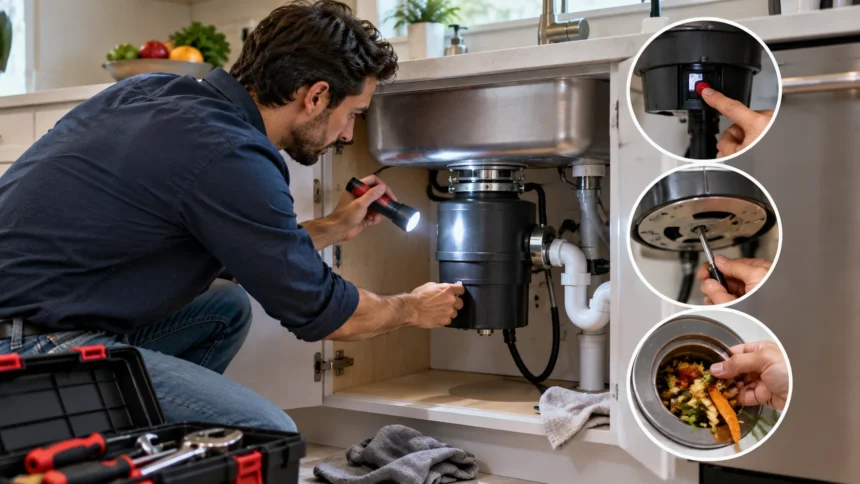
Look for the garbage disposal reset button, which is commonly located on the bottom of the unit. This small button acts as part of the motor’s overload protection system and may pop outward when the disposal overheats or becomes overloaded. Turn the wall switch off before pressing it. If the motor has recently been running hard, allow the unit to cool for several minutes first. Press the reset button firmly until it stays in place, then restore power and test the disposal briefly. If the reset button immediately trips again, a jam, overloaded motor, or electrical problem may still be present.
Your home’s electrical panel is another important place to check when the disposal is completely silent. A circuit breaker can trip when an appliance experiences an overload or electrical fault. Locate the breaker serving the kitchen or disposal and see whether it has moved to the tripped position. Reset it only if there are no signs of burning, damaged wiring, water exposure, or other electrical hazards. If the breaker trips again as soon as the disposal is activated, do not keep resetting it repeatedly. Recurring trips can indicate a serious electrical or motor problem that requires professional diagnosis.
Finally, inspect the sink area for obvious clues before taking anything apart. Look for standing water, unusual odors, visible utensils, food buildup, leaks beneath the cabinet, or objects trapped near the disposal opening. Think about what went into the unit just before it stopped working, because hard objects or fibrous foods often explain sudden jams. Also consider whether the disposal had been running for an unusually long period and may simply have overheated. These observations help distinguish a simple overload from a clog or mechanical failure. Starting with basic checks can often reveal the problem without unnecessary disassembly.
Garbage Disposal Not Turning On at All
When a garbage disposal makes no sound whatsoever, electricity is the first thing to investigate. Confirm that the wall switch is off, then check the plug beneath the sink if the unit is cord-connected. Kitchen cabinets are busy spaces, and bottles, cleaning supplies, or stored objects can accidentally loosen a plug over time. If the plug is secure, inspect the reset button on the bottom of the disposal. A popped reset button means the overload protector has interrupted power to prevent motor damage. After the unit cools, pressing the button may restore operation immediately.
If resetting the disposal does not help, inspect the circuit breaker. Kitchen appliances can share or occupy dedicated circuits depending on how the home was wired. A breaker may trip because of a temporary overload, electrical fault, or problem elsewhere on the circuit. Turn the disposal switch off before resetting the breaker so the appliance does not start unexpectedly. If power returns and the disposal works normally, monitor it for repeated problems. A breaker that trips frequently should be investigated because repeated resetting does not fix the underlying electrical issue.
Some garbage disposals are connected through a GFCI-protected outlet, even if the reset outlet is located elsewhere in the kitchen. A tripped ground-fault circuit interrupter can cut power to several downstream outlets at once. Look for nearby outlets with TEST and RESET buttons and see whether one has tripped. Press RESET only when the area is dry and there are no signs of electrical damage. If the GFCI refuses to reset or trips again when the disposal runs, stop troubleshooting. Moisture, damaged wiring, or an appliance fault may be creating a condition that requires an electrician.
The wall switch itself can also fail after years of use. Internal contacts wear out, wires loosen, and switches can stop sending electricity to the appliance even though they still move normally. A homeowner comfortable with electrical testing may be able to confirm whether voltage is reaching the disposal, but this is no longer a basic DIY task. Electricity beneath a sink deserves extra caution because plumbing connections and moisture are nearby. Never remove electrical covers while the circuit is energized unless you are trained to do so. Calling an electrician is safer when the power path cannot be confirmed through simple checks.
If the outlet, breaker, reset button, and switch all appear normal but the disposal remains completely dead, the motor or internal electrical components may have failed. Older units sometimes develop worn motors, damaged internal wiring, or failed start components that are not economical to repair. The age and condition of the disposal become important at this stage. A heavily corroded unit that has already experienced repeated jams or leaks may be better replaced than repaired. A newer disposal may justify professional diagnosis, especially if it is still under warranty. Avoid opening the sealed motor housing yourself because internal repairs can create electrical and mechanical hazards.
What to Do When the Garbage Disposal Hums but Won’t Spin
A garbage disposal humming but not spinning usually means the motor is receiving electricity but cannot rotate the grinding mechanism. This commonly happens when a utensil, bone fragment, fruit pit, fibrous food, or other hard object becomes wedged inside. Turn the disposal off immediately when you hear persistent humming. Allowing a stalled motor to remain energized can cause overheating and may trip the overload protector. Disconnect the unit from power at the outlet or breaker before investigating further. Never assume that flipping the wall switch off provides enough protection while working near the grinding chamber.
After disconnecting power, use a flashlight to look through the sink opening. Do not put your fingers into the disposal, even if you believe the electricity is completely disconnected. If you can see a foreign object, use long-handled tongs or pliers to remove it carefully. Metal utensils, bottle caps, glass pieces, bones, and other hard materials can become trapped between moving and stationary components. Removing the obstruction may be enough to restore operation. Check the chamber from several angles because small objects can hide beneath the rotating plate or along the edge of the grinding ring.
Many garbage disposals have a hex-shaped socket on the center of the bottom of the unit. A disposal wrench or appropriately sized Allen wrench can fit into this socket and allow you to rotate the internal mechanism manually. With power disconnected, move the wrench back and forth rather than forcing it aggressively in one direction. The goal is to loosen whatever has jammed the rotating plate. You may feel resistance at first and then notice the mechanism begin moving more freely. Once it rotates without excessive resistance, remove the wrench before restoring electrical power.
After releasing the jam, press the reset button if it has popped out. Restore power and run cold water before testing the disposal briefly. If the unit starts normally, let water continue flowing for a short period so loose food particles can move through the drain. Listen for unusual grinding, rattling, or scraping noises that might indicate something remains inside. If the disposal immediately jams again, turn it off and disconnect power before another inspection. Repeatedly forcing a stalled disposal to run can damage the motor or internal components.
Sometimes the mechanism moves freely with a wrench but the disposal still hums without starting. This can indicate that the motor has become weak or that an internal electrical component has failed. A disposal that repeatedly jams despite being empty may also have worn or damaged internal parts. At that point, replacing the unit may make more sense than continuing to reset it. The exact decision depends on the age, quality, and installation condition of the disposal. If you are uncertain whether the problem is mechanical or electrical, a qualified plumber or appliance professional can evaluate the unit safely.
How to Fix a Clogged Garbage Disposal and Slow Drain
A disposal can run normally while the sink drains slowly, which usually points toward a plumbing blockage rather than a failed motor. Food particles, grease, starch, soap residue, and other debris can accumulate inside the disposal outlet, P-trap, or nearby drain line. Start by running cold water and observing whether both sides of a double sink drain slowly. If water backs up when the disposal runs, a blockage downstream may be restricting flow. Avoid continuously operating the disposal against standing water because that rarely clears a serious clog. Instead, treat the issue as a drain problem and work methodically.
A sink plunger can sometimes clear a minor blockage near the disposal. If you have a double-basin sink, seal the second drain opening so the plunging pressure is directed toward the clog rather than escaping through the other basin. Add enough water to cover the plunger cup and create a strong seal. Use controlled plunging movements rather than extreme force that could loosen plumbing connections. After several attempts, remove the plunger and see whether the water begins draining normally. Never use your hand to feel for obstructions inside the disposal during this process.
The P-trap beneath the sink is another common location for food debris to collect. This curved section of drain pipe holds water that blocks sewer gases, but its shape can also trap dense food particles. If you are comfortable working with basic plumbing, the trap can sometimes be removed after placing a bucket underneath to catch water. Disconnect power to the disposal before working beneath the sink. Clean accumulated debris from the trap and inspect the nearby drain connection before reassembling everything securely. If the fittings are corroded, glued, difficult to access, or leaking, a plumber may be the safer option.
Grease and starchy foods are frequent contributors to garbage disposal clogs. Liquid cooking grease can appear harmless while warm but may cool and stick to the interior of drain pipes. Rice, pasta, flour, and similar foods can swell or form thick pastes that restrict water flow. Fibrous vegetables may wrap around moving components and combine with other debris. Avoid pouring chemical drain cleaners directly into a disposal unless the appliance manufacturer specifically allows the product. Strong chemicals can damage components, create hazardous splashes, and make later plumbing work dangerous for whoever opens the drain.
If plunging and accessible trap cleaning do not restore proper drainage, the blockage may be farther into the drain line. A plumber may use appropriate drain-cleaning equipment to remove the obstruction without damaging the disposal or pipes. Recurring clogs can indicate more than normal food buildup, especially when several fixtures drain poorly at the same time. In that situation, a larger branch or main drain problem may be involved. Pay attention to gurgling, water backing up elsewhere, or repeated slow drainage. Fixing the actual location of the blockage is more effective than repeatedly treating the disposal when the problem is farther downstream.
Why the Garbage Disposal Keeps Tripping the Reset Button
The reset button protects the disposal motor when the unit draws too much current or becomes too hot. If the button pops once after a difficult grinding job, the motor may simply have overloaded temporarily. Turn the disposal off and allow it to cool before pressing the reset button. Then check the chamber for anything that might have caused resistance. After ensuring the mechanism is clear, restore power and test the unit with cold running water. If it works normally afterward, the overload protection may have done exactly what it was designed to do.
Repeated reset trips indicate that something is still wrong. A partially jammed mechanism may rotate but create enough resistance to overload the motor. Disconnect the power and manually rotate the mechanism with the disposal wrench if your model supports this method. It should move relatively freely once any obstruction has been removed. Listen for scraping or grinding that suggests foreign material remains inside. Hard fragments can sometimes shift position and allow temporary movement before jamming again. Removing the actual obstruction is essential because continuously resetting the motor only repeats the overload cycle.
Overheating can also occur when the disposal runs for extended periods. These appliances are designed for relatively short food-processing tasks rather than continuous operation. Feeding too much waste at once can make the motor work harder and increase heat. Large quantities of fibrous, hard, or dense food create additional resistance. Use moderate portions and allow water to carry processed material through the drain as you work. If the unit routinely overheats during normal light use, however, the motor may be aging or another mechanical problem may be increasing the load.
Electrical problems can sometimes trigger the overload protection even when the grinding chamber is clear. Damaged internal components, voltage problems, loose connections, or deteriorating motor windings may cause excessive current draw. These issues cannot be diagnosed safely by repeatedly pressing the reset button. If the button trips immediately after each restart, stop operating the disposal. Repeated overloads can worsen motor damage or create additional electrical risk. A professional can test the appliance and power supply to determine whether the failure originates in the disposal itself or the household electrical system.
Age is another factor when reset problems become frequent. A disposal that has served for many years may develop worn bearings, corrosion, declining motor performance, or internal mechanical resistance. Repairing sealed internal components is often less economical than installing a replacement unit. If the disposal also leaks, makes unusual noises, jams frequently, or struggles with normal food waste, replacement becomes even more reasonable. Compare the cost of professional diagnosis and repair with the price of a modern unit appropriate for your household. Repeated reset trips should be viewed as a symptom rather than a permanent solution.
How to Troubleshoot a Leaking Garbage Disposal
Water beneath the sink does not automatically mean the disposal itself has cracked. Leaks commonly come from one of several connection points, including the sink flange at the top, dishwasher hose, discharge pipe, or plumbing fittings below the unit. Dry the cabinet and exterior of the disposal thoroughly before checking where fresh moisture first appears. You can place a paper towel around suspected connections to make small leaks easier to detect. Run water through the sink without operating the disposal initially and observe carefully. Then briefly run the disposal if it is otherwise functioning safely to see whether vibration reveals the source.
A leak from the top of the disposal often points toward the mounting assembly or sink flange. The flange forms the connection between the sink drain opening and the disposal. Over time, the seal can deteriorate, mounting hardware can loosen, or vibration can allow water to escape. Repair may involve removing and resealing the flange according to the disposal manufacturer’s installation method. Because the unit can be heavy, removing it from beneath the sink is not always a comfortable one-person DIY job. If you are unsure how the mounting system works, a plumber can reseal the connection without risking damage to the sink or disposal.
Dishwashers often drain through a hose connected to the garbage disposal. A loose clamp, split hose, or damaged connection can leak when the dishwasher pumps out water. Inspect the hose where it attaches to the disposal and look for cracks, moisture, or signs that the clamp has shifted. Disconnect electrical power before reaching around the disposal, especially when working in a wet cabinet. Replacing a damaged dishwasher drain hose may solve the leak without replacing the disposal. If the leak appears only while the dishwasher is draining, this connection deserves particular attention.
Leaks from the disposal’s discharge pipe are also common. The discharge pipe carries ground food and water from the disposal toward the P-trap and household drain. Gaskets can deteriorate, screws can loosen, or pipe alignment can place stress on the connection. Tightening loose fittings may solve minor leaks, but over-tightening can damage plastic components or distort gaskets. If a seal is worn, replacement is usually more effective than repeatedly tightening the joint. After any repair, run plenty of water and inspect the entire connection again because slow leaks may take several minutes to become visible.
A leak coming directly through the body or bottom of the disposal is usually more serious. Internal seals can fail as the unit ages, allowing water to enter areas that are not designed to be repaired easily. Corrosion can also weaken the housing over time. If water is leaking around electrical components, disconnect power and stop using the disposal immediately. Internal body leaks commonly mean the entire unit needs replacement rather than external tightening. Continuing to operate a leaking disposal can damage the cabinet, flooring, nearby wiring, and plumbing components, so persistent leaks should not be ignored.
Common Causes of Garbage Disposal Problems
Putting inappropriate materials into the disposal is one of the biggest causes of failure. Hard objects such as metal utensils, bottle caps, thick bones, glass, and fruit pits can jam or damage internal components. Even foods that seem soft can create problems when fed in excessive quantities. A disposal is designed to handle manageable amounts of suitable food waste, not act as a replacement for a trash can. Scraping large amounts of leftovers into the unit can overwhelm both the motor and drain line. Disposing of questionable material in the regular trash or compost is often the safer choice.
Fibrous foods can create another type of problem because long strands may wrap around moving components. Celery, corn husks, onion skins, artichoke leaves, and similar materials can be difficult for some disposals to process efficiently. The fibers may also combine with grease and other debris downstream to form stubborn clogs. Small amounts may pass through certain powerful models, but manufacturer recommendations should take priority. If you frequently prepare fibrous vegetables, collecting the scraps separately can reduce wear on the appliance. Preventing a jam is far easier than manually freeing one after the motor stalls.
Grease, fats, and oils can damage drain performance even though the disposal itself may appear to grind them easily. Warm grease flows down the sink as a liquid but gradually cools inside the plumbing. It can stick to pipe walls and trap food particles, creating increasingly narrow passages. Over time, this buildup may lead to slow drainage or complete blockages. Wiping greasy pans before washing them and disposing of cooking oil properly can reduce this problem. Running more water does not reliably prevent large amounts of grease from accumulating farther inside the plumbing system.
Too little water during operation is another avoidable mistake. Cold running water helps carry ground food through the disposal and into the drain line. Turning the water off immediately after grinding stops may leave particles sitting in the plumbing. Let the cold water continue briefly after the food has cleared so debris can move farther downstream. Cold water is generally preferred because it helps keep fats more solid while they pass through rather than encouraging them to coat the pipes. The exact operating instructions for your model should always take priority over general advice.
Normal wear eventually affects every garbage disposal. Motors weaken, seals deteriorate, mounting hardware loosens, and internal components become worn after years of use. Frequent jams, repeated reset trips, persistent leaks, loud mechanical noises, or difficulty grinding ordinary food can all signal that the unit is aging. Maintenance can extend useful life but cannot reverse serious internal wear. If multiple problems appear at the same time, replacement may be more economical than repairing each one individually. Choosing a properly sized disposal and using it correctly can help the replacement perform reliably for many years.
How to Prevent Your Garbage Disposal From Stopping Again
Good disposal habits begin with feeding food gradually rather than pushing large quantities into the chamber at once. Start the cold water, turn the disposal on, and introduce suitable scraps in manageable amounts. Give the mechanism time to process one portion before adding more. This reduces strain on the motor and helps prevent food from packing tightly around the grinding components. Large loads are especially problematic when they contain dense or fibrous materials. Treating the disposal as a convenience for small food scraps rather than a general waste bin dramatically lowers the chance of future jams.
Keep hard nonfood objects away from the sink opening. Forks, spoons, bottle caps, rings, small pieces of glass, and other objects can accidentally fall into the disposal while dishes are being washed. A removable sink strainer can help catch items before they enter the chamber when the disposal is not being used. If something does fall inside, disconnect power before attempting removal. Never reach in with your hand, even if the wall switch is off. Establishing this habit protects both the appliance and the people using it.
Avoid sending large amounts of grease, starch, coffee grounds, or fibrous waste through the disposal. These materials may not always damage the motor directly, but they can create difficult drain clogs. Pasta and rice can swell, while grease can coat plumbing and capture additional particles. Coffee grounds may collect in low areas of the drain instead of disappearing completely. Composting suitable food scraps or placing them in household waste can reduce the burden on the plumbing system. The disposal works best when it handles small amounts of food accompanied by adequate water flow.
Routine cleaning can help control odors and residue. After normal use, running cold water briefly can flush remaining particles through the drain. The removable splash guard may collect food residue and can often be cleaned according to the manufacturer’s instructions. Some homeowners use small amounts of dish soap and water for routine cleaning rather than harsh chemical products. Avoid putting your hand deep into the chamber to scrub it. Also avoid relying on aggressive drain chemicals or unverified cleaning mixtures that could harm plumbing materials or create dangerous reactions.
Finally, pay attention when the disposal starts behaving differently. A new humming sound, slower drainage, repeated reset trips, unusual vibration, or minor leak can be an early sign of a developing problem. Addressing the cause early may prevent a small obstruction or loose fitting from becoming a larger repair. Keep the disposal’s model information available so you can check manufacturer instructions for troubleshooting and compatible replacement parts. Know where its electrical breaker is located in case you need to shut off power quickly. Simple preventive habits can make the disposal safer, quieter, and much less likely to fail unexpectedly.
When Should You Repair or Replace a Garbage Disposal?
A relatively new disposal with one simple problem is usually worth troubleshooting. A single jam, tripped reset button, loose drain connection, or minor clog can often be corrected without replacing the appliance. If the motor still sounds strong and the housing is free from corrosion or internal leaks, basic repairs may restore years of useful service. Replacement should not be the automatic response whenever the disposal stops once. Start with the easiest causes and consider the overall condition of the unit. A small, inexpensive fix makes sense when the rest of the disposal is operating normally.
Age becomes more important when failures occur repeatedly. Garbage disposals do not last forever, and frequent jams or overheating can indicate that internal components are wearing down. If you have to press the reset button regularly despite using the appliance correctly, the motor may no longer handle normal loads efficiently. Persistent grinding noises, vibration, or difficulty starting can also indicate mechanical wear. At some point, paying for repeated service calls becomes less economical than purchasing a replacement. The exact lifespan varies according to model quality, installation, household use, and maintenance.
Internal leaks are one of the strongest reasons to consider replacement. A loose dishwasher hose or discharge gasket is usually repairable, but water leaking from the disposal body or bottom often points toward failed internal seals. These components are generally not intended for straightforward homeowner repair. Continued leaking can damage the cabinet and expose electrical components to moisture. Disconnect power if water is reaching electrical areas and stop using the unit. A new disposal can often be installed using existing plumbing connections, although differences in size or mounting style may require adjustments.
A completely failed motor may also justify replacement. If the disposal receives proper power, the reset system is functioning, and the mechanism is not jammed yet the motor will not run, internal failure becomes more likely. Some premium units may carry warranties that make repair or replacement more affordable, so check your purchase information before paying for service. For an older basic disposal, replacing the entire unit is often more practical than attempting motor repair. A professional can confirm the diagnosis if you are unsure whether the failure is electrical or mechanical.
Professional help is also appropriate whenever troubleshooting moves beyond your skills. Call an electrician for repeated breaker trips, damaged wiring, suspicious outlets, sparking, or unexplained power problems. A plumber is better suited for persistent drain clogs, leaking plumbing connections, difficult disposal replacement, or problems involving multiple fixtures. Some professionals handle both disposal installation and basic electrical connections depending on local regulations. Choosing the correct professional can prevent guesswork and unnecessary repairs. Easy fixes are worth trying when safe, but knowing when to stop is an equally important part of responsible DIY maintenance.
Frequently Asked Questions About a Garbage Disposal Not Working
Why is my garbage disposal not turning on?
A silent disposal may have lost power because of a tripped reset button, unplugged cord, GFCI outlet, circuit breaker, faulty switch, or internal motor problem. Start with the reset button and power supply before assuming the disposal needs replacement.
Why is my garbage disposal humming but not spinning?
Humming usually means electricity is reaching the motor but the grinding mechanism is jammed. Turn off and disconnect the power, remove visible obstructions safely, and use the manufacturer’s disposal wrench or hex socket method if your model supports it.
Where is the garbage disposal reset button?
The reset button is commonly located on the bottom of the disposal housing and is usually small and colored for visibility. Turn the disposal off and let an overheated motor cool before pressing it.
Why does my garbage disposal keep tripping the reset button?
Repeated trips can result from a jam, overload, overheating motor, or electrical problem. If the mechanism is clear but the reset keeps tripping, stop using the disposal and have it professionally inspected.
Can I put my hand inside a garbage disposal if it is turned off?
No. Never reach into a garbage disposal with your hand because the mechanism can cause severe injuries and power may be restored unexpectedly. Use tongs or pliers after disconnecting power completely.
How do I unclog a garbage disposal that still runs?
If the motor runs but the sink drains slowly, the blockage may be in the disposal outlet, P-trap, or drain pipe. Try safe plunging or accessible trap cleaning, and call a plumber if the clog remains or affects multiple fixtures.
Should I use chemical drain cleaner in a garbage disposal?
It is generally safer to avoid harsh drain cleaners unless the disposal manufacturer specifically approves them. Strong chemicals can damage components, create hazardous splashes, and make later plumbing repairs more dangerous.
Why is water leaking from the bottom of my garbage disposal?
Water leaking through the disposal body or bottom commonly indicates an internal seal or housing failure. These leaks often require replacement rather than a simple external repair.
How can I prevent my garbage disposal from jamming?
Feed appropriate food scraps gradually, run cold water during operation, and avoid hard objects, fibrous waste, grease, excessive starch, and large quantities of food. Let the water continue briefly after grinding to help flush particles through the drain.
When should I replace my garbage disposal?
Consider replacement when the disposal has repeated jams, frequent reset trips, a failed motor, internal leaks, heavy corrosion, or several problems at once. An older unit that requires frequent repairs is often more economical to replace than continually fix.