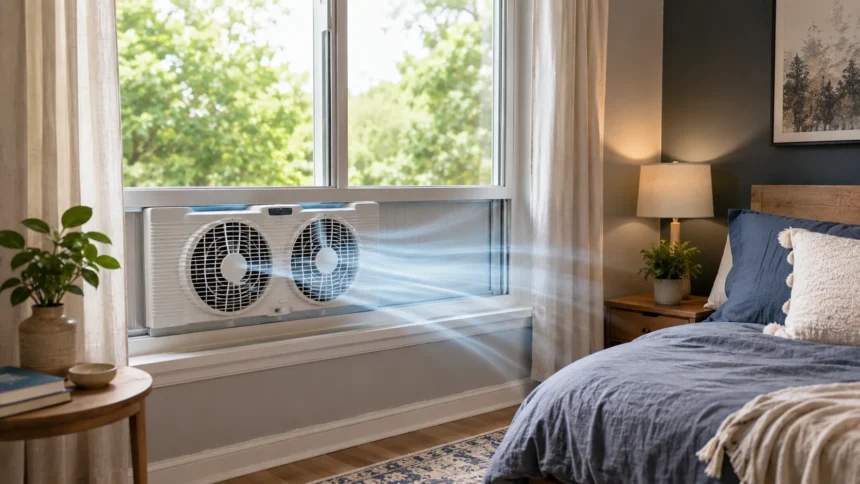
Best Window Fans for Cooling Rooms Fast & Efficiently
A good window fan can make a warm bedroom, kitchen, office, or living space feel noticeably more comfortable without taking up valuable floor space. Unlike an ordinary fan that mainly circulates the air already inside a room, a window fan can pull cooler outdoor air indoors or push hot, stale air outside. Reversible models can perform both jobs, making them particularly useful when indoor temperatures rise during the day but outdoor air becomes cooler in the evening. Modern window fans are also much more convenient than older basic designs, with features such as multiple speeds, thermostats, remote controls, timers, expandable side panels, and low-profile housings. Choosing the right model depends on your window dimensions, room size, noise tolerance, and climate. The most powerful fan is not necessarily the best option for every space.
Window fans work most effectively when they are used strategically rather than simply turned on whenever a room feels hot. Bringing outdoor air inside makes sense when the air outdoors is cooler and comfortable, while exhaust mode can help remove heat that has accumulated indoors. Using fans in multiple windows can create cross-ventilation that moves fresh air through an entire room or home. Bedrooms may benefit most from quiet operation and temperature controls, whereas kitchens may need stronger exhaust performance. Large living spaces may require higher airflow or a more powerful whole-room window fan. This guide explains the best window fans for different needs, the features worth paying for, how reversible airflow works, and practical ways to cool rooms faster and more efficiently.
What Is a Window Fan and How Does It Work?
A window fan is an electric fan designed to sit securely within an open window and move air between the indoors and outdoors. Depending on its design, the fan may pull fresh outside air into the room, exhaust warmer indoor air outside, or reverse between both functions. Twin window fans often contain two separate fan blades, creating additional flexibility for managing airflow. Some models can even run one side as intake and the other as exhaust, producing continuous air exchange through the same opening. Expandable panels or foam seals help fill gaps around the fan so air moves through the fan rather than around it. This basic design makes window fans useful for ventilation as well as personal comfort.
A window fan does not cool air in the same way an air conditioner does. Air conditioners remove heat and moisture from indoor air through a refrigeration system, allowing them to lower the room temperature even when it is hotter outside. A window fan simply moves existing air, so outdoor conditions strongly influence how effectively it cools a room. When the evening temperature outside is lower than the temperature indoors, bringing that cooler air inside can produce a significant improvement. During a hot afternoon when outdoor air is warmer, intake mode may actually make the room less comfortable. In that situation, exhaust mode may be more useful for removing accumulated indoor heat while limiting direct intake of hotter outdoor air.
The effectiveness of a window fan also depends on whether air has somewhere to travel. If a powerful exhaust fan pushes air outside but every other window and door is tightly sealed, airflow through the room may be limited. Opening another window on the cooler or shaded side of the house provides replacement air and creates a clearer airflow path. This setup can generate cross-ventilation, where outdoor air enters through one opening and warmer indoor air exits through another. In multi-room homes, positioning intake and exhaust fans strategically can move air across a much larger area. The objective is not simply to create strong airflow at one window. Effective window-fan cooling involves directing cooler air through the spaces where people actually need it.
Twin-blade window fans are popular because they provide more control than many single-fan designs. Two independently reversible motors can allow both blades to bring air in, both to exhaust air, or one to intake while the other exhausts. Intake mode is generally useful during cooler mornings, evenings, and nights. Exhaust mode can remove hot indoor air, cooking odors, and stuffiness when outdoor conditions make direct intake less desirable. Exchange mode continuously brings some fresh air into the room while pushing another portion outside. Not every twin fan provides independent control, however, so buyers should check how reversal works before purchasing. Electronically reversible motors are usually more convenient because users can switch direction without physically turning the fan around.
Modern low-profile window fans take a slightly different approach from traditional twin-blade models. Instead of using two obvious circular fans, some designs use an elongated air chamber that sits across the bottom portion of a window. These units can preserve more of the outside view while still pulling air through the opening. Their sealed installation may also help reduce unwanted gaps around the sides compared with loosely fitted portable fans. Low-profile designs can be especially attractive in bedrooms, home offices, and living rooms where appearance matters. However, window compatibility should always be checked because certain models are designed specifically for vertically opening windows. Measuring the opening before buying remains one of the most important steps in choosing any window fan.
Best Window Fans for Different Cooling Needs
The Vornado Transom Window Air Circulator is a strong premium choice for people who want powerful airflow without the bulky appearance of a traditional twin-blade window fan. Its low-profile design occupies relatively little vertical window space, making it useful when preserving the view matters. Reversible operation lets it bring outdoor air inside or exhaust stale indoor air, which gives users flexibility as temperatures change throughout the day. Multiple speed settings make it easier to balance stronger ventilation with quieter operation. Temperature-sensing control is particularly helpful for bedrooms because the fan can respond automatically rather than requiring constant adjustment. The Transom is best suited to buyers who value refined installation, strong whole-room circulation, and convenient controls more than the lowest possible purchase price.
The Lasko Twin Window Fan is a versatile alternative for people who prefer the familiar dual-blade design. Electrically reversible motors make it possible to switch between intake, exhaust, and air-exchange operation without physically removing the fan from the window. Multiple speed settings provide more control when a room needs stronger cooling during the evening but quieter airflow overnight. A built-in thermostat can reduce the need to manually turn the fan on and off as room conditions change. Remote operation is also useful when the fan is installed behind furniture or across a bedroom. This type of model works particularly well for users who want traditional twin-fan flexibility combined with modern conveniences rather than a completely basic manual window fan.
The Genesis A1 Window Fan is worth considering for buyers prioritizing value and straightforward room cooling. Twin-fan construction provides useful coverage across a standard window opening, while reversible airflow allows users to choose whether outside air comes in or indoor air goes out. It is especially suitable for bedrooms, small living spaces, and home offices where users want more ventilation without purchasing a premium low-profile system. A thermostat can add convenience during changing evening temperatures, particularly when the difference between outdoor and indoor conditions becomes greater after sunset. The design is relatively simple, which may appeal to people who do not need smart-home integration or advanced app controls. For many households, basic reliability and adaptable airflow matter more than having every available feature.
The Comfort Zone reversible twin window fan is another practical choice for budget-conscious buyers. The brand offers several window-fan configurations, including models with reversible airflow, multiple operating modes, and expandable installation systems. A twin-blade setup can work well in bedrooms and kitchens because the user can select intake when fresh air is desirable and exhaust when the room feels hot or stuffy. Some configurations include remote operation, which can make nighttime adjustments more convenient. These fans tend to prioritize functionality over premium styling, making them suitable for apartments, dorm-style rooms, workshops, or secondary bedrooms. Buyers should pay close attention to the exact model because features can vary within the same product family, particularly the number of speeds and how airflow direction is controlled.
The best window fan overall ultimately depends on the room rather than a universal ranking. A low-profile Vornado-style circulator can be excellent for a bedroom where noise, appearance, and window visibility matter, while a reversible Lasko twin fan may provide more flexible air exchange for everyday household use. Value-focused Genesis and Comfort Zone models can be perfectly suitable when the main objective is moving substantial amounts of air without paying for advanced controls. Larger spaces may require a more powerful high-airflow window fan rather than a compact bedroom model. Buyers should therefore treat product rankings as starting points rather than absolute answers. Window dimensions, airflow direction, sound level, controls, installation quality, and outdoor temperature patterns determine which fan will actually perform best in a specific home.
How to Choose the Best Window Fan
The first feature to check is window compatibility because even an excellent fan becomes useless if it does not fit securely. Measure the width of the actual opening where the fan will sit rather than measuring the entire window frame. Check the minimum opening height as well because some low-profile fans still require a specific amount of vertical clearance. Expandable side panels can accommodate several window widths, but every model has limits. Window style matters too, particularly if you have casement, crank, sliding, single-hung, or double-hung windows. Some fans support horizontal installation while others are designed only for one orientation. Reading installation requirements before ordering prevents the common mistake of buying a fan that technically matches the width but cannot be mounted safely.
Airflow direction should be the next major consideration. A basic intake-only fan may be sufficient if your primary goal is bringing cool nighttime air into a bedroom. Reversible fans provide much greater flexibility because they can also push warm or stale indoor air outside. Electrically reversible models are more convenient than designs requiring users to remove the fan and physically rotate it. Twin fans with independent motor control offer even greater versatility because they can sometimes intake and exhaust simultaneously. Kitchens and stuffy upper-floor rooms often benefit from strong exhaust capability, while shaded bedrooms may benefit primarily from intake. Think about when the room becomes uncomfortable and where cooler replacement air can come from before deciding which airflow configuration is best.
Noise is particularly important when choosing a window fan for sleeping or working. Powerful airflow usually creates some combination of motor noise, blade noise, and rushing air, so expecting complete silence is unrealistic. The goal is to find a sound level that feels like unobtrusive background noise rather than a distracting mechanical hum. Multiple speeds are valuable because high speed can rapidly exchange air before bedtime, while low speed can maintain circulation more quietly throughout the night. Fan design and installation quality also influence noise because vibrations can become louder when the unit does not sit securely against the window. User reviews can provide helpful information about real-world sound characteristics, especially from people who use the fan in bedrooms rather than large living spaces.
Thermostats, timers, and remote controls are useful when they reduce unnecessary interaction with the fan. A thermostat can allow compatible models to respond to room temperature automatically instead of running continuously regardless of conditions. Timers can shut the fan down after several hours, which may be useful when outdoor temperatures become too cold overnight. Remote controls allow users to change speed or airflow direction without walking across the room. Smart models may add app or voice control, which can be convenient in connected homes but is not essential for effective cooling. Buyers should prioritize features they will actually use. Paying more for complicated controls makes little sense if the fan will simply run at one preferred speed every evening.
Airflow capacity matters most when cooling larger rooms or trying to ventilate several connected spaces. Manufacturers may provide cubic-feet-per-minute figures, but direct CFM comparisons are not always perfect because fan design and installation influence how effectively that airflow reaches the room. A powerful fan installed with large gaps around it may perform less effectively than a slightly lower-output fan with a good seal. Room layout also matters because furniture, walls, doors, and hallways change how air travels. For larger areas, look for strong whole-room circulation and pair the exhaust window with an open intake window elsewhere. Smaller bedrooms can often prioritize quiet operation over maximum airflow. The best fan is the one capable of exchanging enough air without creating unnecessary noise or energy use.
Reversible Window Fans: Intake, Exhaust, and Exchange Modes
Intake mode pulls outdoor air through the window and directs it into the room. This is usually the most useful setting when outdoor temperatures are lower than indoor temperatures, such as during early mornings, cooler evenings, and overnight periods. Positioning the fan in a shaded window can make intake more effective because air on that side of the building may be cooler than air surrounding windows exposed to direct afternoon sun. Opening another window elsewhere allows warmer room air to escape as cooler air enters. If only one fan is available, placing it near the area where cooler outdoor air is most accessible often works well. Intake mode should be avoided when outdoor air is hotter, smoky, heavily polluted, or otherwise unpleasant.
Exhaust mode reverses the airflow and pushes indoor air through the window to the outdoors. This can be valuable when upper floors remain hot after outdoor temperatures begin falling because heat has accumulated in walls, furniture, ceilings, and indoor air throughout the day. Exhausting the warmest air creates negative pressure that encourages replacement air to enter through another open window. Kitchens can also benefit from exhaust airflow when cooking produces heat and odors, although a general window fan should not replace a properly installed range hood where one is required. Workshops and hobby rooms may also feel less stuffy with increased ventilation. However, window fans should never be used as substitutes for specialized ventilation systems needed for hazardous fumes or combustion gases.
Exchange mode is available on some twin window fans and runs one fan as intake while the other operates as exhaust. The idea is to create continuous air exchange through a single window rather than moving everything in one direction. This can be useful in a room with limited access to other open windows, although the total whole-room airflow may be lower than when both fans work together in one direction. Exchange mode is particularly useful when freshness and ventilation matter as much as maximum cooling. It may help reduce stuffiness by continuously replacing part of the indoor air. For rapid temperature reduction, however, running both fans in the optimal direction and providing another opening for replacement air can sometimes create a stronger overall airflow path.
Whole-home cooling works best when intake and exhaust locations are deliberately separated. During a cool evening, a fan on the warmer upper floor can exhaust hot air while open windows or intake fans downstairs bring cooler air inside. Because warm air naturally accumulates higher in a building, upper-level exhaust can be particularly useful after a hot day. In a single-story home, one fan can pull air inward from a shaded side while another pushes air outward on the opposite side. Interior doors should remain open enough for air to travel between these locations. This strategy effectively turns several rooms into one ventilation pathway. Randomly placing every fan in intake mode may create less effective circulation because the incoming air lacks a clear route back outside.
Wind direction can further influence how well intake and exhaust strategies work. A window on the side of the home facing a natural breeze may already experience positive pressure, making it a useful intake point. Windows on the opposite side may function effectively as exhaust locations because air naturally moves toward the lower-pressure side of the building. However, wind changes frequently, so users do not need to constantly redesign their entire setup. Start with the coolest or shadiest window as intake and the hottest area as exhaust, then observe how the room responds. Lightweight curtains or a small piece of tissue can help reveal the direction air is moving through doorways. Effective cooling comes from creating purposeful airflow rather than simply maximizing fan speed.
Best Window Fan for Bedrooms and Quiet Cooling
Bedroom window fans need to balance airflow with noise because a fan that cools aggressively but prevents sleep defeats much of its purpose. Multiple speed settings are therefore particularly valuable. High speed can be used for thirty minutes or longer before bedtime to remove accumulated heat quickly, while a lower setting can maintain airflow once the room becomes comfortable. Low-profile fans may also feel less intrusive because they occupy less of the window and often use controlled airflow chambers rather than exposed twin-blade housings. Remote controls are especially useful in bedrooms because users can reduce the speed or switch modes without getting out of bed. Temperature-sensing controls can add another layer of convenience during nights when outdoor conditions change significantly.
Fan placement can influence sleep comfort almost as much as the fan itself. A fan blowing strongly toward the bed may feel refreshing initially but become uncomfortable during prolonged sleep, particularly when nighttime temperatures drop. Direct airflow can also cause papers, curtains, or lightweight objects to move continuously and create additional noise. Positioning the bed outside the strongest airflow path can make the room feel naturally ventilated rather than windblown. If another window is available, using the bedroom fan as exhaust can sometimes cool the room without sending a continuous stream of air directly toward the sleeper. Experimenting with fan direction for several evenings is worthwhile because the most comfortable setup depends on room shape, window location, and outdoor conditions.
A thermostat can be particularly useful for overnight operation. Temperatures may remain warm when someone goes to bed but drop substantially several hours later. Without automatic control, a fan set to high intake could eventually make the room colder than desired. Temperature-responsive operation can reduce unnecessary running when the room reaches a selected comfort range. Timers offer another solution by shutting the fan down after a predetermined period. Neither feature is essential, but both can make sleep more comfortable while reducing unnecessary energy use. Users should understand that built-in fan thermostats are generally designed for simple comfort control and may not measure temperature as precisely as a dedicated room sensor. Placement near the window can also expose the sensor to outdoor conditions.
People sensitive to noise should focus on the quality rather than only the volume of fan sound. A smooth, consistent airflow hum is often easier to sleep through than rattling, clicking, pulsing, or changing motor noises. Secure installation can eliminate many avoidable sounds because loose extender panels and window frames may vibrate at higher fan speeds. Foam sealing can sometimes help stabilize the unit while also reducing unwanted gaps. Blades and grilles should be kept clean because accumulated dust can affect balance and airflow over time. If a new fan suddenly develops unusual mechanical noise, it should be inspected rather than simply tolerated. Sleep-oriented buyers may ultimately prefer slightly lower airflow if it produces a more consistent and unobtrusive sound throughout the night.
Outdoor conditions should also influence whether a bedroom window fan is appropriate. People with seasonal allergies may prefer keeping windows closed during periods of high pollen, particularly if outdoor air triggers symptoms. Wildfire smoke, heavy traffic pollution, dust, and unusually humid conditions can also make outdoor intake undesirable. A basic window fan does not filter outdoor air in the same way a dedicated air-cleaning system can. Security is another consideration because some fan installations require windows to remain partially open. Ground-floor bedrooms may need additional precautions or may not be suitable for unattended window-fan operation. Comfort should therefore be balanced with outdoor air quality, weather, security, and the specific design of the window before leaving a fan running overnight.
How to Use Window Fans to Cool a Room Faster
The most effective time to use a window fan for cooling is when outdoor air becomes cooler than the air indoors. During summer, this often happens after sunset and continues into the early morning. Instead of switching the fan on automatically during the hottest part of the afternoon, compare indoor and outdoor conditions first. Keep windows shaded or closed during extremely hot periods so unnecessary heat does not enter the home. Once the outdoor temperature drops, open selected windows and activate the fan to remove stored indoor heat. This strategy can cool floors, walls, furnishings, and other surfaces gradually overnight. Starting early in the evening often produces better results than waiting until the bedroom is already uncomfortable at bedtime.
Cross-ventilation can dramatically improve the effectiveness of a single powerful fan. Place the exhaust fan in one window and open another window across the room or on the opposite side of the home. Fresh air then enters through the open window, moves through the living space, and exits through the fan. If both openings are beside each other, much of the airflow may circulate locally instead of crossing the room. Keeping interior doors open allows air to pass through hallways and connected spaces. For multi-story homes, drawing cooler air into the lower floor while exhausting warmer air upstairs can create a useful whole-home ventilation pattern. The best arrangement may require some experimentation because every floor plan responds differently.
Heat-producing appliances can make a room harder to cool, so reducing internal heat is another useful strategy. Ovens, stovetops, gaming computers, televisions, dryers, incandescent lighting, and other equipment release heat into the surrounding air. Running a window fan while several major heat sources operate continuously may only partially offset that additional load. Cooking earlier in the day, using efficient lighting, and shutting down unnecessary electronics can reduce how much heat the fan needs to remove. Kitchen exhaust ventilation should be used appropriately while cooking. After heat-producing activities end, a window fan can help remove the remaining warm air more quickly. Cooling a room efficiently is often easier when heat generation and ventilation are managed together rather than treating the fan as the only solution.
Window coverings can also improve the results. Closing blinds, shades, or curtains on sun-facing windows during peak sunlight helps reduce solar heat entering the room. Exterior shading is often even more effective because it blocks solar energy before it reaches the glass. Once sunlight weakens and outdoor air becomes cooler, windows can be opened strategically for ventilation. The window containing the fan should remain as well sealed around the unit as practical so airflow passes through the fan chamber. Large open gaps can allow some air to bypass the fan and reduce directional control. Good cooling therefore combines daytime heat prevention with nighttime ventilation. The fan removes heat most efficiently when the home has not been absorbing unnecessary solar gain all day.
Do not expect a window fan to perform like an air conditioner during extreme heat. If nighttime outdoor temperatures remain very high, bringing that air indoors may offer limited relief. Fans can improve perceived comfort by increasing air movement, but they cannot create cold air or reduce temperature below the outdoor conditions they are drawing from. People who require reliable temperature control during dangerous heat may need air conditioning or access to a properly cooled environment. Window fans are strongest as low-energy ventilation tools during moderate weather, cool nights, transitional seasons, and climates with meaningful day-to-night temperature drops. Used under the right conditions, they can reduce reliance on air conditioning. Used under the wrong conditions, even a powerful model may simply move hot air faster.
Window Fan vs Box Fan, Tower Fan, and Air Conditioner
A window fan and a box fan can look similar in purpose, but their airflow strategies differ. A box fan normally sits on the floor, a table, or sometimes in a window and moves large volumes of air in a straightforward direction. Window fans are specifically shaped and equipped to fit within an opening and often include expandable side panels that create a more secure seal. Reversible window models can switch between intake and exhaust without needing to be physically turned around. Box fans provide more location flexibility because they can easily move between rooms. However, a purpose-built window fan generally creates a cleaner and more controlled connection between indoor and outdoor air. The better option depends on whether ventilation or portable circulation is the priority.
Tower fans are designed primarily to circulate indoor air and create a cooling sensation for people in the room. Their tall, narrow housings take up relatively little floor space, and oscillation helps distribute airflow across a wider area. Many tower fans offer numerous speeds, sleep modes, timers, remotes, and smart controls. However, they do not automatically remove hot air from the building because they remain entirely indoors. If a closed bedroom has accumulated substantial heat during the day, a tower fan mainly redistributes that heat while increasing air movement across occupants. A window fan can exchange the warm air for cooler outdoor air when conditions are favorable. Tower fans therefore excel at personal comfort and circulation, while window fans add a ventilation function that indoor-only fans cannot provide.
Air circulators are another alternative designed to move air throughout an entire room rather than produce a narrow breeze. They can be positioned on floors, tables, or stands and directed toward walls or ceilings to establish broad circulation patterns. This makes them useful alongside air conditioning because they can distribute cooled air more evenly. Window fans instead connect indoor and outdoor environments, making them more dependent on weather. On hot days when every outdoor surface is warmer than the interior, an indoor circulator may work better with an air conditioner than an intake window fan would on its own. During cool evenings, the window fan gains an advantage because it can replace hot indoor air with naturally cooler air. Many homes benefit from using both types at different times.
A window air conditioner provides true refrigeration-based cooling and is therefore much more powerful when temperatures remain high. It removes heat from the indoor environment and can maintain a selected temperature even when outdoor air is hotter. Many air conditioners also reduce indoor humidity, which can significantly improve comfort in humid climates. The tradeoff is greater electricity consumption, a higher purchase price, more complex installation, and the physical space occupied in the window. Window fans consume much less power because they mainly operate electric motors that move air. They can therefore be inexpensive to run when outdoor conditions allow natural cooling. The practical choice is not always fan versus AC; strategic fan use can reduce the number of hours air conditioning needs to operate.
A combined strategy often provides the best balance of comfort and efficiency. During the hottest afternoon hours, windows can remain closed while air conditioning maintains safe and comfortable indoor conditions. In the evening, once outdoor temperatures drop below the indoor temperature, the AC can sometimes be turned down or off while window fans exchange hot indoor air for cooler outside air. Indoor circulators can help distribute that fresh air throughout the home. Early the next morning, windows can be closed before outdoor temperatures climb again. This approach depends heavily on local climate, humidity, air quality, and individual comfort needs. Window fans are most valuable when treated as part of a broader cooling strategy rather than as a universal replacement for every other cooling appliance.
Window Fan Installation, Cleaning, Efficiency, and Safety
Proper installation begins with measuring the window and reading the manufacturer’s instructions. The fan should sit securely within the opening without wobbling or relying on improvised supports. Extendable panels, modular blocks, or included seals should be positioned according to the product design so gaps remain minimal. The window sash may help hold certain models in place, while other designs use different mounting methods. Never assume a fan can be installed vertically simply because its dimensions appear to fit; some motors and housings are designed for only one orientation. The power cord should reach the outlet without being stretched across walkways or pinched by the window. If installation feels unstable, stop and correct the setup before operating the fan at high speed.
Cleaning helps maintain airflow and prevents dust from accumulating on blades and grilles. Always unplug the fan before performing maintenance. Removable grilles or filters should be cleaned according to the manufacturer’s instructions rather than forcing parts apart that were not designed for user removal. A vacuum with a soft brush can remove loose dust from accessible areas, while a slightly damp cloth may be suitable for exterior surfaces. Electrical components should never be soaked or sprayed directly with cleaning liquids. Allow every cleaned component to dry completely before reconnecting the fan to electricity. Households with pets, open windows, or dusty outdoor environments may need to clean window fans more frequently because hair, pollen, and debris can accumulate rapidly around the intake.
Window fans are generally inexpensive to operate compared with compressor-based air conditioning because moving air requires far less energy than actively removing heat through refrigeration. Efficiency can be improved further by using the lowest fan speed that provides adequate ventilation. Thermostat controls can prevent unnecessary operation once the room reaches the desired comfort range, while timers can limit overnight use. The largest efficiency gains, however, come from operating the fan only when outdoor conditions are favorable. Running an intake fan all afternoon while the air outside is hotter than the room can work against your cooling goals. Checking outdoor temperature before opening windows costs nothing and can make a significant difference. Smart operation matters at least as much as buying an efficient motor.
Weather exposure should be considered because not every window fan is designed to remain installed during rain or severe weather. Some units have weather-resistant housings, but weather resistance does not necessarily mean the fan can safely operate through heavy rain. Follow the manufacturer’s guidance regarding storms, moisture, and seasonal storage. Strong winds can also affect loosely mounted units or blow rain through an open window. When the fan is removed for winter, clean it before storage and keep it somewhere dry. Outdoor debris and insects can enter through poorly sealed window openings, so screens may be useful where compatible with the installation. Users should also check that the window still closes securely after the fan is removed and that no hardware has been damaged.
Safety should always take priority over maximum airflow. Keep fingers, loose fabric, cords, and other objects away from fan blades and grilles while the unit is operating. Children and pets should not be able to push against an insecurely installed fan or reach moving components. Ground-level windows should be evaluated carefully for security because installing a fan may prevent the window from being fully locked in its normal position. Do not use household window fans to ventilate dangerous chemical fumes or spaces where specialized exhaust systems are required. Outdoor air quality should also be checked during smoke, dust, pollution, or severe pollen events before running the fan in intake mode. When properly installed and used under suitable conditions, a window fan can provide years of simple, efficient ventilation.
Frequently Asked Questions About Window Fans
What is the best window fan for cooling a room?
A reversible fan with strong airflow, multiple speeds, secure window sealing, and easy controls is usually the most versatile choice. Premium low-profile models such as the Vornado Transom suit whole-room use, while reversible twin fans from brands such as Lasko, Genesis, and Comfort Zone can provide strong value.
Do window fans actually make a room cooler?
Window fans can lower indoor temperature when they bring in outdoor air that is cooler than the air inside or exhaust accumulated indoor heat. They do not refrigerate air like an air conditioner, so effectiveness depends heavily on outdoor temperature and ventilation strategy.
Should a window fan face in or out?
Face the airflow inward when outdoor air is cooler and you want to bring fresh air into the room. Use exhaust mode when you want to remove hot or stale indoor air, ideally with another window open to provide replacement air.
Are window fans good for bedrooms?
Yes, particularly when nighttime outdoor temperatures are cooler than the bedroom. Look for low noise, several speed settings, remote operation, temperature control, and secure installation if you plan to use the fan while sleeping.
Can I run a window fan all night?
A properly installed fan can often be used for extended periods when the manufacturer’s instructions allow it and outdoor conditions remain suitable. Consider changing temperatures, rain, air quality, window security, and noise before leaving a fan operating overnight.