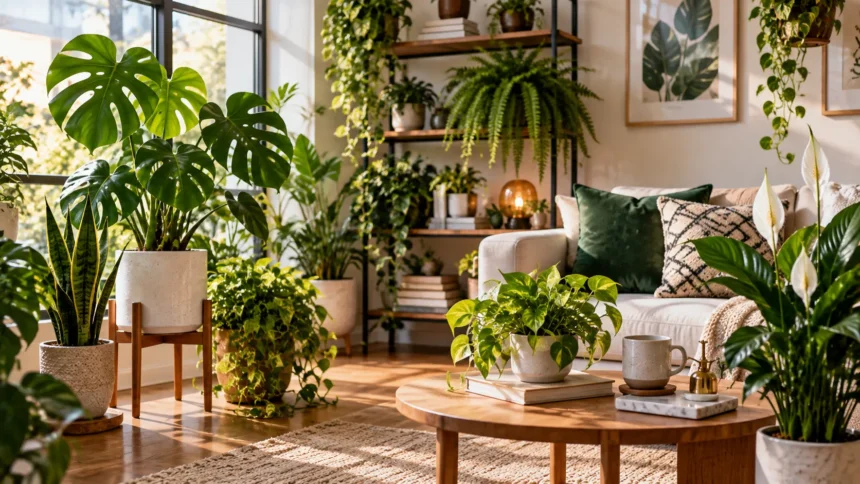
Indoor plants can completely change the feeling of a room without requiring a major decorating project. A healthy plant adds color, texture, movement, and a natural focal point that works with almost every interior style. From large tropical leaves to delicate trailing vines, houseplants can make living rooms, bedrooms, kitchens, and home offices feel warmer and more inviting.
Choosing the right indoor plant is not only about appearance. Light conditions, humidity, watering habits, available space, and your experience level all influence which plants will thrive in your home. Some varieties tolerate occasional neglect, while others need consistent moisture, bright indirect light, and more attention to remain healthy.
The good news is that there is an indoor plant for almost every type of home and lifestyle. Whether you want a dramatic floor plant, an easy desk companion, or greenery for a low-light corner, you can find an option that suits your space. Below are beautiful indoor plants worth growing, along with practical tips for keeping them looking their best.
1. Monstera for Bold Tropical Style
Monstera is one of the most recognizable indoor plants because of its large green leaves and distinctive splits. It can create a strong visual statement in a living room, bedroom, or bright office without requiring an elaborate display. As the plant matures, its foliage can become increasingly dramatic, giving even a simple space a lush tropical feeling.
Monsteras generally prefer bright indirect light, although they can tolerate somewhat lower light conditions with slower growth. Water when the upper portion of the potting mix begins to dry rather than keeping the roots constantly wet. Good drainage is essential because consistently soggy soil can encourage root problems and yellowing leaves.
Give the plant enough space to grow and consider adding a support pole as it becomes larger. Wiping the broad leaves occasionally can also remove dust and help the foliage look fresher. If you want one plant that immediately makes a room feel greener and more styled, Monstera is an excellent place to start.
2. Snake Plant for Easy Indoor Greenery
Snake plants are ideal for people who want attractive foliage without a demanding care routine. Their upright leaves create a clean architectural appearance that works well in modern, minimalist, traditional, and contemporary interiors. Because the plant grows vertically rather than spreading widely, it can also fit comfortably into corners and smaller rooms.
One reason snake plants are popular with beginners is their tolerance for imperfect conditions. They can handle different light levels, although growth is usually stronger in brighter indirect light. Their thick leaves store moisture, so they generally prefer drying between waterings rather than sitting in constantly damp soil.
Overwatering is usually a bigger problem than underwatering with this plant. Use a well-draining potting mix and a container with drainage holes whenever possible. If you travel frequently or sometimes forget your watering schedule, a snake plant can provide long-lasting greenery without requiring the constant attention of more sensitive houseplants.
3. Pothos for Beautiful Trailing Vines
Pothos is a versatile indoor plant known for heart-shaped leaves and long trailing stems. Depending on the variety, the foliage may feature shades of green, yellow, cream, or white. The plant looks particularly attractive on shelves, bookcases, hanging planters, or tall furniture where its vines have enough space to cascade naturally.
Pothos generally adapts well to ordinary indoor conditions and can tolerate moderate light. Variegated varieties often maintain stronger patterns when they receive brighter indirect light, while very dark areas may lead to slower growth. Allow the upper layer of soil to dry slightly before watering again to avoid keeping the roots constantly saturated.
You can trim long vines whenever the plant becomes too large or uneven. Cuttings can also be propagated in water, making pothos an enjoyable choice if you want to create additional plants over time. Its forgiving nature, fast growth, and decorative foliage make it one of the easiest houseplants to recommend to beginners.
4. Peace Lily for Elegant Leaves and Flowers
Peace lilies combine glossy green foliage with distinctive white blooms that can give rooms a softer and more elegant appearance. They work well in bedrooms, living areas, and other spaces where you want greenery with occasional flowers. Their graceful shape makes them particularly suitable for decorative planters or calm, neutral interiors.
These plants generally prefer bright to medium indirect light, although they can tolerate lower light with fewer flowers. Peace lilies appreciate more consistent moisture than drought-tolerant plants, but the soil should still drain properly. Their leaves may droop noticeably when the plant becomes thirsty, providing a visible reminder that watering is needed.
Avoid repeatedly allowing the plant to become extremely dry because this can stress the foliage. Brown leaf tips may appear when conditions are too dry or when watering quality and humidity are unsuitable. With balanced moisture and suitable light, a peace lily can provide both lush leaves and attractive blooms for long periods.
5. ZZ Plant for Low-Maintenance Beauty
The ZZ plant is another strong option for people who want houseplants that can tolerate occasional neglect. Its thick stems and glossy dark-green leaves give it a polished appearance that works equally well in homes and professional offices. The plant grows relatively upright, allowing it to fit into smaller spaces without creating excessive visual clutter.
ZZ plants store moisture in underground structures, which means they do not need frequent watering. Allow the potting mix to dry substantially between waterings, especially in cooler months or lower light. Too much moisture can create more problems than slightly dry soil, making restraint particularly important when caring for this plant.
Although ZZ plants tolerate lower light, brighter indirect conditions can encourage stronger growth. Avoid intense direct sun that may damage foliage after prolonged exposure. If you want a plant that looks sophisticated while requiring relatively little day-to-day attention, the ZZ plant can be an excellent addition to your indoor collection.
6. Rubber Plant for Statement Foliage
Rubber plants have large, glossy leaves that give them a strong decorative presence without looking overly complicated. Depending on the variety, leaves may appear deep green, burgundy, or variegated with cream and pink tones. A healthy rubber plant can eventually become a substantial indoor tree, making it ideal for empty corners that need height.
Provide bright indirect light for the best overall growth, particularly with variegated varieties. Water after the upper soil begins to dry and avoid allowing the pot to remain waterlogged. Consistent care usually works better than dramatic cycles between extremely wet and extremely dry conditions, especially when the plant is actively producing new leaves.
Rotate the container periodically if the plant begins leaning strongly toward a nearby window. You can also prune it to manage height or encourage a fuller shape. Rubber plants are particularly effective when you want greenery to act as furniture-like décor rather than simply adding a small plant to a shelf.
7. Spider Plant for Shelves and Hanging Baskets
Spider plants are cheerful indoor plants with long arching leaves that often feature green-and-white striping. Mature plants may produce smaller plantlets that hang from long stems, creating a full cascading appearance. This growth habit makes spider plants especially attractive in hanging baskets, on tall shelves, or near bright windows with filtered light.
They generally prefer bright indirect light but can adapt to moderate indoor conditions. Water when the upper soil starts drying and avoid keeping the roots permanently wet. Spider plants can sometimes develop brown leaf tips, which may be associated with inconsistent watering, dry air, or minerals and salts accumulating in the potting mix.
The small plantlets can be rooted to create new plants, making spider plants enjoyable for beginners interested in propagation. They also grow relatively quickly under suitable conditions. If you want an affordable plant that becomes fuller over time and looks good in elevated displays, the spider plant is an easy choice.
8. Fiddle Leaf Fig for a Dramatic Interior Feature
Fiddle leaf figs are famous for their large, violin-shaped leaves and tree-like form. When healthy, they can become one of the most striking decorative plants in a room. Their scale works particularly well beside sofas, near large windows, or in empty corners where a smaller plant would fail to create enough visual impact.
These plants generally prefer plenty of bright indirect light and can be less forgiving of sudden environmental changes. Move them gradually if you need to change their position and avoid repeatedly relocating the pot. Water when the upper soil has dried enough to prevent constant saturation while still avoiding prolonged severe dryness.
Fiddle leaf figs are not usually the easiest option for complete beginners, but their visual impact can justify the extra care. Monitor leaf changes and adjust watering, light, or placement thoughtfully rather than changing everything at once. A stable environment is often one of the most important factors in keeping the plant attractive.
9. Chinese Evergreen for Colorful Indoor Foliage
Chinese evergreen plants are valued for decorative leaves that can feature green, silver, cream, pink, or red patterns depending on the variety. Their colorful foliage makes them a strong option when you want more visual interest than a plain green plant. They fit especially well on side tables, plant stands, desks, or grouped indoor displays.
Many varieties can adapt to moderate indoor light, although more colorful plants often perform better with brighter indirect conditions. Keep the soil lightly moist but not waterlogged, allowing some drying between waterings. Avoid placing the plant directly beside cold drafts or strong heating sources that create sudden temperature changes.
Chinese evergreens are useful for creating layered displays because different varieties offer noticeably different colors and patterns. Combine them with simpler green plants to prevent the overall arrangement from becoming too busy. Their attractive leaves can provide year-round decorative interest even when flowering is not the main reason you grow them.
10. How to Style Indoor Plants Beautifully
Indoor plants look best when their size and shape complement the furniture around them. Use taller plants to fill empty corners, trailing plants on higher surfaces, and compact varieties on desks or side tables. Varying heights helps create a layered arrangement rather than placing several plants of exactly the same size in one flat row.
Planters also influence the final look. Terracotta creates a warm natural feeling, while ceramic containers can feel polished and decorative. If you enjoy gathering inspiration from highly styled events and spaces, even unrelated sources such as romantic wedding inspiration can provide useful ideas for combining greenery, flowers, soft colors, textures, and elegant decorative details.
Avoid filling every surface with plants simply because you enjoy greenery. A few well-placed specimens usually create stronger visual impact than dozens of small containers competing for attention. Leave enough negative space around larger plants so their foliage can be appreciated and the room continues to feel comfortable rather than crowded.
11. Tips for Keeping Indoor Plants Healthy
Light is one of the most important factors in indoor plant care. Observe how much direct or indirect sunlight each room receives throughout the day before deciding where plants should live. Moving a plant closer to or farther from a window can sometimes solve growth problems more effectively than changing fertilizer, soil, or watering schedules.
Water according to the needs of the individual plant rather than following one fixed weekly routine for everything. Check the soil before watering and remember that plants usually use moisture more slowly during cooler or darker periods. Pots with proper drainage make watering easier because excess moisture can escape rather than remaining around the roots.
Inspect foliage regularly for pests, yellowing, spots, or unusual growth. Cleaning dusty leaves and removing dead foliage can also keep plants looking healthier. When problems appear, change one care factor at a time when possible so you can understand what is helping instead of repeatedly adjusting light, watering, fertilizer, and placement simultaneously.
Conclusion
Indoor plants can bring color, texture, and natural beauty into almost any room. Monstera, snake plants, pothos, peace lilies, ZZ plants, rubber plants, spider plants, fiddle leaf figs, and Chinese evergreens all offer different appearances and care requirements, giving you plenty of options for your home.
Choose plants according to your actual conditions rather than simply purchasing whatever looks beautiful in a store. Consider available light, room temperature, space, humidity, and how consistently you are willing to water. Matching the plant to your lifestyle makes healthy growth much easier and reduces frustration for beginners.
Start with one or two varieties and learn how they respond to your home before building a large collection. As your confidence grows, experiment with different foliage shapes, heights, colors, and planters. Thoughtful placement and consistent basic care can turn ordinary houseplants into some of the most attractive decorative features in your home.
FAQs
What are the best indoor plants for beginners?
Snake plants, pothos, ZZ plants, spider plants, and many Chinese evergreen varieties are beginner-friendly choices. They generally tolerate ordinary indoor conditions and do not require extremely complicated watering or humidity routines.
Which indoor plants are good for low light?
Snake plants, ZZ plants, pothos, and some Chinese evergreens can tolerate lower-light conditions. However, very dark rooms may still limit growth, so providing at least some indirect natural light is generally beneficial.
How often should indoor plants be watered?
Watering frequency depends on the plant, potting mix, season, temperature, and light. Check the soil instead of following one schedule, and water when the moisture level matches the needs of that specific species.
What indoor plants look best in living rooms?
Monstera, rubber plants, fiddle leaf figs, and large snake plants make attractive living-room features because they provide height and bold foliage. Smaller trailing plants can complement them on shelves or side tables.
Why are the leaves on my indoor plant turning yellow?
Yellow leaves can result from overwatering, underwatering, poor drainage, insufficient light, natural aging, or other stress. Check soil moisture, root conditions, and lighting before making major changes to the plant’s care routine.