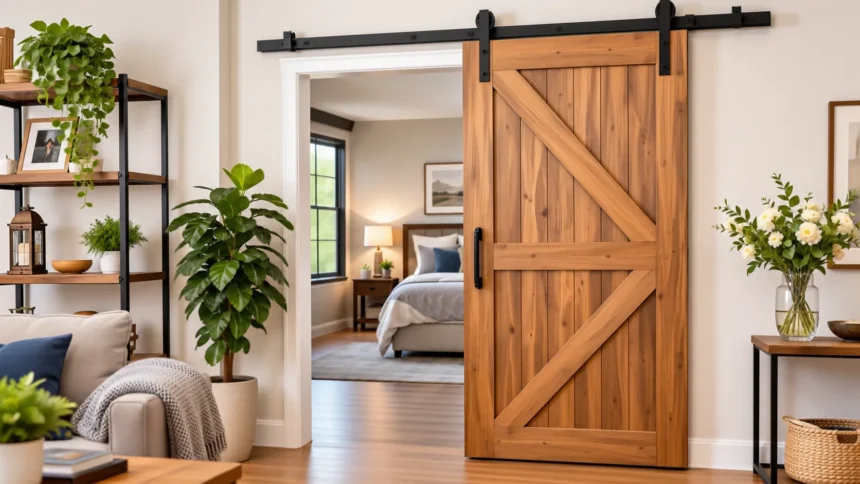
Sliding barn doors have become a popular choice for homeowners who want to improve their interiors without sacrificing valuable floor space. These doors combine practical functionality with attractive designs, making them suitable for bedrooms, living rooms, kitchens, and other areas. Their smooth sliding movement creates a distinctive appearance that works with both traditional and modern home styles.
Unlike traditional swinging doors, sliding barn doors move horizontally along a mounted track. This design eliminates the need for a door swing area, which can make furniture placement easier in certain rooms. However, selecting the right door involves more than choosing an attractive design. You must consider measurements, materials, hardware, installation requirements, and everyday usability before making a decision.
What Are Sliding Barn Doors?
Sliding barn doors are interior or exterior doors that move horizontally along a track rather than swinging open on hinges. The door panel hangs from rollers attached to hardware installed above the doorway. This mechanism allows the panel to slide sideways, covering or revealing the opening. The design originated from agricultural buildings but is now widely used in residential interiors.
Modern barn doors are available in numerous designs, including rustic wood, painted panels, glass inserts, and contemporary metal frames. Some styles feature traditional crossbuck patterns, while others use clean lines and minimalist finishes. These options allow homeowners to match their doors with existing furniture, flooring, and wall colors. The right design can complement a room without overwhelming its appearance.
Although barn doors are often associated with farmhouse interiors, they work in many different architectural styles. Contemporary homes may use sleek black hardware and simple wooden panels, while traditional spaces often feature natural finishes. Their versatility makes them useful for room dividers, closets, and decorative entrances. However, their suitability depends on available wall space and privacy requirements.
Why Choose Sliding Barn Doors for Your Home?
One major advantage of sliding barn doors is that they do not need the clearance required for a swinging door. This can be particularly useful in compact rooms where furniture placement is limited. Instead of opening into the room, the panel moves along an adjacent wall. However, that wall must remain clear enough to accommodate the door.
Sliding barn doors also provide decorative flexibility that many standard interior doors cannot easily match. Homeowners can choose natural wood grain, painted surfaces, glass panels, or industrial-inspired hardware. These combinations help create different visual effects, from cozy farmhouse interiors to modern minimalist spaces. A carefully selected barn door can become an attractive design feature while serving a practical purpose.
Another benefit is the ability to create flexible connections between rooms. A sliding panel can separate a home office from a living area or conceal a pantry when needed. Wide openings may accommodate double barn doors for a balanced appearance. However, because most barn doors do not seal tightly, they are generally less effective at blocking noise and light.
How to Choose the Right Barn Door Size
Accurate measurements are essential when selecting sliding barn doors for your home. Begin by measuring the doorway’s width and height rather than relying only on the size of an existing hinged door. The barn door panel should usually extend beyond the opening on both sides. This overlap helps reduce visible gaps and improves the finished appearance.
For many interior installations, homeowners choose a panel that overlaps the opening by approximately one to two inches on each side. The exact amount depends on the trim, wall configuration, and desired coverage. Height measurements must also account for the track, roller hardware, and floor clearance. Always follow the specific hardware manufacturer’s installation requirements before ordering.
You should also measure the available wall area beside the doorway. A single sliding barn door generally requires clear horizontal space at least equal to the panel’s width. Nearby switches, outlets, artwork, or furniture may interfere with movement. Checking these details early helps prevent installation problems and ensures the door can open completely without obstruction.
Popular Sliding Barn Door Styles
Rustic barn doors remain popular because they highlight natural wood textures and traditional craftsmanship. Reclaimed wood, distressed finishes, and crossbuck patterns create a warm farmhouse appearance. These designs work particularly well with neutral colors, exposed beams, and natural materials. However, homeowners should consider whether heavy decorative details complement the overall room design.
Modern sliding barn doors offer a cleaner appearance with simple panels and minimal ornamentation. Flat surfaces, smooth finishes, and streamlined hardware make them suitable for contemporary interiors. Popular choices include white painted panels, natural oak, and dark wood finishes. These doors can create a sophisticated look without requiring extensive changes to the surrounding space.
Glass barn doors are another option for rooms that benefit from additional natural light. Clear glass creates a more open appearance, while frosted glass provides visual privacy. Metal-framed glass panels often complement industrial or modern interiors. However, glass doors may require additional cleaning and should use appropriate safety glazing for their location and intended use.
Best Materials for Sliding Barn Doors
Solid wood is a traditional choice because of its attractive grain patterns and natural appearance. Oak, pine, maple, and other wood species offer different colors, textures, and levels of durability. Solid wood doors can often be refinished if their surfaces become scratched. However, they may be relatively heavy and can expand or contract as humidity changes.
Engineered wood products provide alternatives for homeowners seeking consistent dimensions or more affordable options. MDF doors often have smooth surfaces that work well with painted finishes. Other engineered wood constructions may offer improved dimensional stability compared with certain solid wood designs. Material quality, internal construction, and moisture resistance should influence the final selection.
Metal and glass are also used in contemporary barn door designs. Steel frames can create a distinctive industrial appearance, while aluminum may offer lighter construction in suitable products. Glass inserts allow light to pass between rooms and can make interiors feel more connected. Whatever material you choose, confirm that the track and mounting system support its weight.
Understanding Sliding Barn Door Hardware
Sliding barn door hardware includes the track, rollers, mounting brackets, door stops, and other essential components. The track supports the door and guides its horizontal movement. Rollers attach to the panel and allow it to travel along the track. High-quality hardware helps provide smooth operation and reduces unnecessary friction during everyday use.
Track systems are available in different finishes, including matte black, stainless steel, brushed nickel, and bronze. Matte black hardware often complements farmhouse and industrial interiors. Stainless steel can suit modern spaces and may provide useful corrosion resistance when appropriately specified. The finish should coordinate with nearby door handles, light fixtures, and other visible hardware.
Safety components are particularly important when choosing a barn door hardware kit. Door stops help limit travel, while anti-jump devices reduce the risk of rollers leaving the track. A floor guide helps prevent the panel from swinging outward. These features should be installed according to manufacturer instructions to maintain reliable operation and reduce potential hazards.
Single vs. Double Sliding Barn Doors
Single barn doors use one panel that slides to either the left or right of the doorway. They are commonly installed in bedrooms, closets, pantries, and home offices. This configuration is often simpler than a double-door arrangement because it requires fewer moving components. However, enough uninterrupted wall space must be available on the opening side.
Double sliding barn doors use two panels that move away from the center of a wider opening. They create a balanced appearance and can work well between living rooms and dining areas. Each side of the doorway requires sufficient clearance for its respective panel. Proper alignment is essential to keep the center gap even when the doors are closed.
The best configuration depends on doorway width, available wall space, and the room’s design. A single panel may be more practical for smaller openings, while double panels can complement wide entrances. Consider how often the doors will be used and whether nearby furniture affects their movement. Accurate measurements are essential for either installation style.
How Much Do Sliding Barn Doors Cost?
The cost of sliding barn doors varies depending on their size, material, design, and hardware quality. Basic manufactured door panels are generally less expensive than custom solid wood or specialty glass designs. Decorative finishes and larger dimensions can also increase the price. Comparing complete packages helps homeowners understand what is included before purchasing.
Hardware and installation expenses should be considered separately from the door panel itself. Some barn door kits include tracks, rollers, stops, and floor guides, while others require additional purchases. Professional installation may cost more when wall reinforcement or electrical adjustments are necessary. Total project expenses therefore depend on the condition and layout of the installation area.
Homeowners can manage costs by choosing standard sizes and readily available finishes. A quality engineered wood panel may provide a suitable alternative to expensive custom hardwood designs. However, choosing weak hardware simply to reduce expenses can create long-term problems. Prioritizing compatible components and secure installation usually provides better value than focusing only on the lowest price.
Where Can You Install Sliding Barn Doors?
Bedrooms are a common location for sliding barn doors because they create a decorative entrance without requiring a traditional swing area. They may also work well for walk-in closets and dressing areas. However, the gaps around many barn doors allow sound and light to pass through. Homeowners should consider these limitations before using them where strong privacy is essential.
Kitchens and pantries are another practical application for sliding barn doors. A door can conceal pantry shelves while providing convenient access to stored items. In open-plan homes, larger panels may help create temporary separation between living spaces. The surrounding wall must still provide enough clearance for the door to move freely.
Home offices, laundry rooms, and storage areas can also benefit from carefully chosen barn door systems. These spaces may not require the same level of acoustic privacy as bedrooms or bathrooms. Barn doors are generally unsuitable where a tightly sealed, fire-rated, or code-required door assembly is necessary unless an approved system is specifically designed for that application.
How to Install Sliding Barn Doors Properly
Installing sliding barn doors begins with checking the wall structure and confirming accurate measurements. The track must connect to suitable structural support rather than relying on drywall alone. Depending on the construction, a properly secured mounting board may be needed. The manufacturer’s instructions should determine fastener requirements, track height, and the recommended installation process.
After preparing the mounting surface, the track must be positioned level and secured using appropriate hardware. Rollers are then attached to the door panel according to the supplied instructions. Once the panel is hung, door stops, anti-jump devices, and floor guides must be installed. These components work together to control movement and improve operational safety.
The completed installation should be tested carefully before regular use. The door should slide smoothly without scraping the floor, shifting excessively, or striking nearby objects. Check that the panel remains properly supported throughout its full travel distance. If structural support, alignment, or hardware compatibility is uncertain, professional installation is the safer option.
Common Sliding Barn Door Installation Mistakes
Incorrect measurements are among the most frequent problems encountered during barn door installation. A panel that is too narrow may expose noticeable gaps when closed. A door that is too tall may interfere with hardware clearance or the floor. Measuring the full installation area before purchasing materials helps avoid these expensive mistakes.
Another common mistake is attaching the track to an unsuitable wall surface. Barn doors can place substantial loads on mounting hardware, especially when constructed from solid wood or glass. Fastening a heavy track only to drywall may create a serious safety risk. Proper structural anchoring is necessary for the weight and movement of the door.
Homeowners also sometimes overlook floor guides, door stops, and anti-jump components. Missing safety hardware can allow excessive swinging or uncontrolled movement. Poor alignment may cause noisy operation and uneven wear on rollers. Following the installation instructions and testing the complete system helps prevent these problems while supporting long-term performance.
How to Maintain Sliding Barn Doors
Regular cleaning helps sliding barn doors maintain their appearance and function properly. Dust can collect on the track, rollers, and decorative hardware over time. A soft cloth or suitable brush can remove loose dirt without damaging finishes. Wooden panels should be cleaned with products recommended for their specific surface treatment.
Hardware should be inspected periodically for loose fasteners, unusual movement, and visible wear. Door stops and floor guides must remain securely positioned to control the panel. If the door becomes noisy or difficult to slide, check for debris and alignment problems. Lubrication should only be applied when recommended by the hardware manufacturer.
Different door materials may require additional maintenance. Natural wood finishes can benefit from appropriate protective care, while glass panels need suitable cleaning products. Painted surfaces should be checked for chips or moisture-related damage. Addressing minor problems early helps preserve the door’s appearance and reduces the likelihood of more expensive repairs.
Are Sliding Barn Doors Good for Small Spaces?
Sliding barn doors can work well in smaller rooms because they eliminate the floor clearance needed for a swinging door. This makes it easier to position certain furniture items near an entrance. A compact home office or laundry room may benefit from this arrangement. However, the design still requires sufficient wall space beside the opening.
In narrow hallways, barn doors can be helpful when traditional doors interfere with movement. Their horizontal operation keeps the doorway area more open during use. However, protruding tracks, handles, and door panels must not create new obstructions. The installation should also preserve required passage widths and accessibility clearances where applicable.
Before choosing barn doors for compact interiors, consider alternative space-saving solutions. Pocket doors slide into wall cavities, while some bifold doors require less outward clearance than conventional hinged doors. Each system has different installation requirements and practical limitations. The best option depends on wall construction, available space, privacy needs, and the intended use.
Sliding Barn Doors vs. Traditional Hinged Doors
Sliding barn doors and traditional hinged doors operate differently and serve different design needs. Barn doors move horizontally along an exposed track, while hinged doors rotate around side-mounted hinges. Sliding systems eliminate the need for a traditional door swing area. However, they require suitable wall clearance and specialized mounting hardware.
Traditional hinged doors often provide better privacy because they can close directly against a door frame. Weatherstripping and properly fitted seals can also improve sound and light control. Most decorative barn doors leave small gaps around their edges. This difference matters in bedrooms, bathrooms, and other areas where privacy and noise reduction are important.
Both designs offer advantages depending on the installation location. Barn doors can provide decorative appeal and flexible room separation, while hinged doors often deliver more complete closure. Maintenance requirements also differ because sliding systems rely on exposed tracks and rollers. Comparing functionality, space requirements, accessibility, and privacy makes it easier to choose appropriately.
How to Match Sliding Barn Doors With Interior Design
Matching sliding barn doors with existing interiors begins with evaluating the room’s overall style. Natural wood finishes complement farmhouse, rustic, and traditional spaces. Smooth painted panels often suit modern interiors with simple decorative elements. Choosing a finish that works with surrounding furniture and flooring helps create a coordinated appearance.
Hardware color also influences how a barn door fits into a room. Black tracks and handles create noticeable contrast against light walls and wooden panels. Brushed metal finishes can provide a softer appearance in contemporary interiors. Matching hardware with other visible fixtures helps establish consistency without requiring every metal detail to be identical.
Door proportions, panel patterns, and surrounding wall colors should also be considered. Large decorative patterns may feel overwhelming in very small spaces, while simple panels often create a quieter appearance. Glass inserts can help maintain visual connections between adjoining rooms. The most suitable design balances personal preference with practical requirements and the existing architectural style.
Conclusion
Sliding barn doors offer a practical and decorative alternative to traditional hinged doors in suitable spaces. Their horizontal movement can free up floor space while creating an attractive feature within a room. Available styles range from rustic wooden panels to modern glass and metal designs. Selecting the right option depends on doorway dimensions, wall clearance, and everyday functional needs.
Accurate measurements, suitable materials, and dependable hardware are essential for a successful installation. Homeowners should consider door weight, structural support, privacy requirements, and maintenance before making a purchase. Properly installed tracks, floor guides, and safety components help ensure smooth movement. These details contribute to both reliable operation and long-term durability.
The best sliding barn doors combine an appealing design with practical functionality. Whether installed in a pantry, closet, home office, or living area, they should complement the available space. Comparing different styles and understanding installation requirements can prevent expensive mistakes. With thoughtful planning, a barn door can become a useful and attractive part of your home.
Frequently Asked Questions (FAQs)
Are Sliding Barn Doors a Good Choice for Bedrooms?
Sliding barn doors can work well in bedrooms where decorative appeal and space-saving design are priorities. However, their edge gaps may allow more noise and light through than properly fitted traditional doors.
How Much Bigger Should a Sliding Barn Door Be Than the Opening?
A barn door typically overlaps the opening by approximately one to two inches on each side. Exact measurements depend on trim, hardware design, and the manufacturer’s installation recommendations.
Can You Install Sliding Barn Doors on Drywall?
Sliding barn door tracks should not be supported by drywall alone. They require secure fastening to appropriate structural framing or a properly installed mounting board designed to support the door’s weight.
Do Sliding Barn Doors Need a Bottom Track?
Most interior sliding barn doors use a top-mounted track and a floor guide rather than a full bottom track. The guide helps prevent unwanted swinging and keeps the panel aligned during movement.
Are Sliding Barn Doors More Expensive Than Regular Doors?
Sliding barn doors can cost more than basic hinged doors because they require specialized tracks, rollers, and mounting hardware. However, total costs vary depending on materials, design, installation complexity, and whether professional labor is needed.