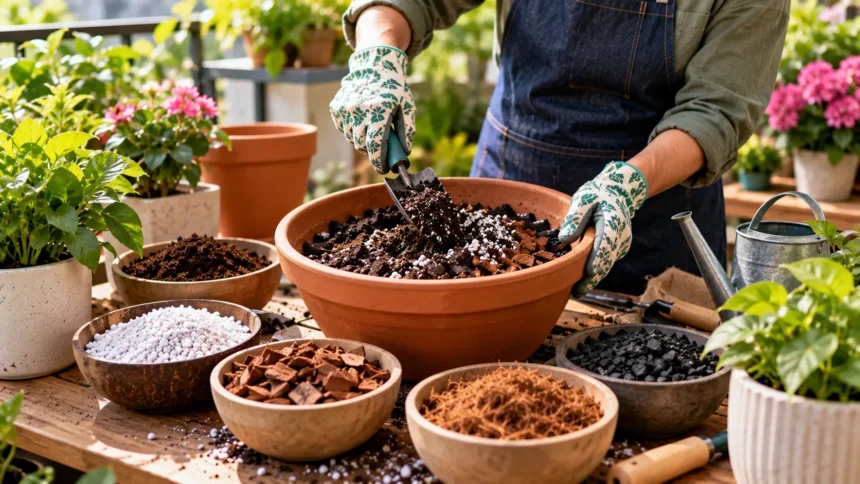
Why Choosing the Right Soil Mix Matters for Container Plants
Growing healthy plants in containers starts with choosing the right growing medium. Unlike garden plants, container plants depend on a limited amount of soil for moisture, nutrients, and root support. Poor-quality soil can become compacted, hold too much water, or dry out quickly. Choosing the best soil mix for healthy container plants creates better conditions for steady growth.
A good potting mix provides the right balance of drainage, airflow, and moisture retention. It allows roots to absorb water without remaining constantly wet. The right combination of materials also supports nutrient availability and healthy root development. Whether you grow flowers, vegetables, herbs, or indoor plants, understanding soil composition can help you avoid common gardening problems.
You do not need expensive gardening products or complicated formulas to create a reliable container soil mix. Many commercially available potting mixes provide an excellent starting point for everyday gardening. You can also adjust the ingredients based on specific plant requirements. Learning a few simple principles makes container gardening easier, more affordable, and more successful over time.
What Is the Best Soil Mix for Container Plants?
The best soil mix for most container plants is a lightweight, well-draining potting mix that holds enough moisture for roots. A typical combination contains peat moss or coconut coir, composted organic matter, and aeration materials such as perlite. These ingredients work together to support healthy root growth. The ideal proportions depend on plant type, container size, and growing conditions.
Unlike ordinary garden soil, a quality potting mix is designed specifically for restricted growing spaces. It contains materials that help maintain air pockets even after repeated watering. This structure is important because roots need oxygen as well as moisture. A suitable mix also allows excess water to drain while retaining enough moisture to prevent rapid drying.
There is no single soil recipe that works perfectly for every plant. Succulents prefer a faster-draining mix, while many leafy tropical plants benefit from greater moisture retention. Vegetables and flowering annuals often perform well in general-purpose potting soil. Understanding these differences helps you select a growing medium that matches your plants rather than relying on one formula for everything.
Understanding the Main Ingredients in Potting Soil
Peat moss and coconut coir are common ingredients in container growing mixes because they help retain moisture. Both materials support a lightweight structure when combined with suitable aeration ingredients. Coconut coir comes from processed coconut husks, while peat moss is harvested from peat deposits. Each has different environmental and practical considerations that gardeners may want to evaluate.
Perlite is a lightweight, expanded mineral commonly added to improve drainage and airflow. Its porous structure helps prevent a potting mix from becoming excessively dense. Vermiculite is another mineral ingredient, but it generally holds more moisture than perlite. Choosing between these materials depends on how much water the plant requires and how quickly the container dries.
Compost and other properly processed organic materials can improve nutrient availability and moisture retention. Some commercial mixes also include bark, fertilizer, or wetting agents to support plant growth. However, adding too much dense organic matter can reduce drainage. Understanding the role of each ingredient makes it easier to create a balanced mix instead of combining materials without a clear purpose.
Why Drainage Is Essential for Healthy Container Plants
Good drainage helps prevent excess water from remaining around plant roots for extended periods. When a potting mix stays saturated, oxygen becomes limited and roots may struggle to function properly. Prolonged waterlogging can also encourage root diseases. A well-draining soil mix allows unnecessary moisture to escape while retaining enough water to support normal growth.
Drainage depends on both the potting mix and the container itself. Pots should have suitable drainage holes that allow excess water to leave after watering. Even a carefully prepared soil mix can become waterlogged in a container without an outlet. Using containers with adequate drainage is therefore just as important as selecting the right growing medium.
Avoid placing a thick layer of gravel or stones at the bottom of a pot to improve drainage. This practice can reduce the space available for roots and may leave a wetter zone above the gravel. Instead, fill the container with an appropriate potting mix and use drainage holes. Consistent watering practices also help maintain healthy moisture levels throughout the root zone.
How to Balance Moisture Retention and Airflow
Container plants need enough moisture to support growth, but their roots also require oxygen. A soil mix that dries immediately may leave plants struggling during warm weather. However, a dense mixture that remains wet for too long can create equally serious problems. The ideal balance allows water to move through the pot while keeping useful moisture available.
Moisture-retaining ingredients such as coconut coir and peat moss help reduce rapid drying. Aeration materials, including perlite and pine bark, create spaces that support airflow and drainage. Combining these materials provides a more stable growing environment. The correct balance depends on factors such as plant species, pot material, temperature, and the surrounding humidity.
Check the soil regularly instead of watering according to a rigid schedule. Insert a finger into the growing medium to assess whether the upper layer has dried. Some plants prefer slightly moist conditions, while others need more drying between watering sessions. Observing actual soil moisture helps prevent overwatering and supports stronger root development.
Best Soil Mix for Indoor Container Plants
Many indoor plants grow well in a lightweight potting mix containing coconut coir or peat moss, perlite, and composted bark. This combination provides moisture retention while allowing excess water to drain. Common houseplants such as pothos and philodendrons often benefit from an airy growing medium. However, individual watering requirements vary depending on the plant and its environment.
Indoor containers usually receive less sunlight and airflow than outdoor pots. As a result, the growing medium may remain damp for longer periods. Adding suitable aeration materials can help reduce excessive moisture retention. Choose pots with drainage holes and avoid allowing containers to stand in collected water for extended periods.
Repotting indoor plants occasionally can help maintain healthy soil structure. Over time, organic materials break down and the mix may become compacted. Roots can also occupy much of the available container space. Refreshing the potting medium when necessary provides better growing conditions without requiring frequent or unnecessary transplanting.
Best Soil Mix for Outdoor Container Plants
Outdoor container plants face changing weather conditions, stronger sunlight, and greater moisture loss. A suitable potting mix should retain enough water for warm days while draining effectively after heavy rainfall. General-purpose container mixes often work well for many outdoor flowers and ornamental plants. Select a product designed for containers rather than using dense soil directly from the garden.
Large outdoor pots may benefit from a mix containing composted bark or other structural ingredients. These materials can help maintain air spaces as the growing medium settles. However, the entire container should still contain suitable planting material. Filling the bottom with rocks or unrelated materials can interfere with moisture movement and reduce useful root space.
Weather conditions should influence your watering routine and soil selection. Plants in exposed, sunny locations often dry faster than those growing in shaded areas. Terracotta containers may also lose moisture more quickly than many plastic pots. Monitoring moisture levels during different seasons helps you maintain healthy plants without relying on the same watering schedule throughout the year.
Best Soil Mix for Container Vegetables
Vegetables grown in containers need a growing medium that supports root development, moisture availability, and nutrient uptake. A high-quality potting mix designed for vegetables or general container gardening is usually a practical starting point. These mixes often include moisture-retaining materials, aeration ingredients, and a starter fertilizer. Check the product label to understand what nutrients are already included.
Tomatoes, peppers, and other fruiting vegetables require consistent access to water during active growth. A mix that dries too quickly can make watering difficult, especially during hot weather. However, overly wet soil may limit oxygen around the roots. Using sufficiently large containers with drainage holes helps maintain more stable moisture conditions.
Container vegetables also need nutrients because regular watering gradually removes some soluble minerals from the growing medium. Follow an appropriate feeding schedule based on the plant and fertilizer instructions. Avoid adding excessive fertilizer because high salt concentrations can damage roots. Balanced moisture, nutrition, and drainage create better conditions for productive container vegetable gardening.
Best Soil Mix for Herbs in Containers
Many culinary herbs grow successfully in containers when planted in a suitable, well-draining mix. Basil, parsley, and mint generally appreciate regular moisture without constantly saturated roots. A standard potting mix with good aeration can support these herbs. Container size, sunlight exposure, and watering habits will influence how often the growing medium needs additional moisture.
Mediterranean herbs such as rosemary, thyme, and oregano usually prefer faster-draining conditions. Adding perlite or other suitable mineral ingredients can improve aeration when a standard mix retains too much water. These plants may struggle when roots remain wet for extended periods. Their growing medium should provide drainage while still allowing enough water for healthy establishment.
Avoid assuming that every herb needs exactly the same soil conditions. Mint often benefits from more consistent moisture than rosemary, which generally tolerates periods of drying. Growing herbs with similar requirements together can make maintenance easier. Separate containers also allow you to adjust soil composition and watering according to each plant’s needs.
Best Soil Mix for Succulents and Cacti
Succulents and cacti generally need a growing medium that drains quickly and maintains good airflow around roots. Standard moisture-retentive potting soil may remain wet longer than many of these plants prefer. A commercial cactus and succulent mix provides a convenient starting point. The exact drainage requirements depend on the plant species and growing environment.
You can improve the structure of a suitable potting mix by adding mineral components such as pumice or perlite. Coarse mineral ingredients help create air spaces and reduce excessive water retention. Use clean, appropriate horticultural materials rather than fine sand that may make the mixture denser. The final mix should support roots while allowing water to move through the container.
Watering habits remain important even when the soil drains well. Many established succulents benefit from allowing the growing medium to dry before watering again. However, newly propagated plants and certain species may need different care. Always consider the plant’s individual requirements rather than applying the same watering method to every succulent or cactus.
Best Soil Mix for Flowering Container Plants
Flowering plants benefit from potting mixes that provide reliable moisture, drainage, and nutrient availability. Many annual flowers grow well in general-purpose container soil with suitable organic matter and aeration materials. Petunias, marigolds, and geraniums are popular examples of plants grown in outdoor pots. Their exact growing requirements vary, so always consider the individual species.
Flowering plants can use substantial nutrients during periods of active growth. Some commercial potting mixes contain fertilizer that supplies nutrients for a limited time. Once those nutrients become depleted, additional feeding may be necessary. Follow plant-specific fertilizer guidance and avoid excessive applications, which can damage roots or encourage unwanted growth patterns.
Container placement also influences how well flowering plants perform. Pots exposed to strong sunlight and wind may dry more quickly than sheltered containers. Larger pots generally provide more growing medium and can help moderate rapid changes in moisture. Combining appropriate soil with suitable light, watering, and nutrition supports healthier foliage and more consistent flowering.
How to Make Your Own Potting Soil Mix
Making a homemade potting mix allows you to control the ingredients and adjust the texture for different plants. For many common container plants, a useful starting mixture is two parts coconut coir, one part finished compost, and one part perlite. Measure the ingredients by volume rather than weight. This produces a lightweight mix with moisture retention and aeration, although adjustments may still be needed.
Combine the ingredients in a clean container and mix them thoroughly. Lightly moisten dry coconut coir before blending so the materials distribute more evenly. Avoid adding unfinished compost or unknown garden waste that may contain pests or plant pathogens. The finished mixture should feel loose and slightly moist rather than heavy, muddy, or tightly compacted.
Remember that homemade potting mixes may not provide all the nutrients plants need over time. Depending on the ingredients, you may need to add a suitable fertilizer according to the plant’s requirements. Test the mixture with a few containers before preparing large quantities. Observing plant growth and watering behavior helps determine whether the recipe needs further adjustment.
Should You Use Garden Soil in Containers?
Garden soil and container potting mix serve different purposes. Soil taken directly from the ground may contain fine particles that become dense inside a pot. This can reduce airflow and slow drainage, particularly after repeated watering. Most container plants perform better in growing media specifically designed to maintain suitable structure within limited spaces.
Garden soil may also contain weed seeds, insects, or disease-causing organisms. While healthy outdoor soil supports many garden ecosystems, those conditions do not always translate well to containers. Adding garden soil to a potting mix can change its drainage and moisture properties. For reliable results, use appropriately prepared container media rather than relying heavily on untreated ground soil.
Commercial potting mixes are generally lighter and easier to manage in movable containers. They often contain ingredients selected for water movement, aeration, and consistent root development. Some specialized container recipes include mineral soil components, but these should be used for a clear purpose. Choosing the correct growing medium helps avoid unnecessary problems during watering and plant maintenance.
How to Choose the Right Potting Mix for Your Plants
Begin by identifying the type of plant you want to grow and its general moisture requirements. A tropical foliage plant may benefit from a different mix than a cactus or Mediterranean herb. Read plant care information and select a growing medium that matches those needs. This approach is more reliable than choosing potting soil based only on packaging or price.
Check the ingredients listed on commercial potting mix bags whenever possible. Look for materials that support drainage, moisture retention, and appropriate root conditions. Also review whether the product contains fertilizer, water-retaining additives, or other ingredients. Understanding what is already included helps prevent unnecessary amendments and makes it easier to manage plant nutrition.
Consider your growing environment before making a final selection. Warm, windy conditions can increase moisture loss, while cool indoor spaces may keep soil damp longer. Container size and material also influence watering requirements. Choosing a suitable mix involves considering the plant, pot, and surrounding conditions together rather than focusing on only one factor.
Common Potting Soil Mistakes to Avoid
One common mistake is selecting soil that holds too much water for the plant being grown. Dense mixes can limit airflow and leave roots exposed to prolonged moisture. This is especially problematic for plants adapted to relatively dry growing conditions. Choosing an appropriate potting medium and checking drainage can help reduce these risks.
Another mistake is adding too many amendments without understanding their effects. Excess compost may make some mixes overly moisture-retentive, while excessive mineral material may cause faster drying. More ingredients do not automatically produce better soil. Start with a balanced mixture and adjust only when plant performance or growing conditions indicate a need.
Reusing old potting soil without checking its condition can also create problems. The medium may have broken down, accumulated salts, or become contaminated by pests and diseases. Inspect used soil carefully before deciding whether it can be refreshed. Replace material from containers affected by serious disease, and avoid transferring potentially contaminated soil to healthy plants.
When and How to Refresh Container Soil
Potting mixes gradually change as organic ingredients decompose and plants use available nutrients. Over time, the growing medium may settle, become compacted, or drain differently than before. These changes can affect root health and watering needs. Checking soil condition regularly helps determine whether refreshing or repotting is necessary.
Signs that a plant may need attention include poor drainage, persistent moisture problems, and roots crowding the container. Slow growth can also occur, although it may have several possible causes. Examine the plant’s overall condition before assuming the soil is responsible. Repotting is most useful when the existing medium or container no longer supports healthy growth.
When repotting, choose a suitable container and fresh growing medium that matches the plant’s requirements. Gently remove loose, exhausted material when appropriate without unnecessarily damaging healthy roots. Water according to the plant’s needs after transplanting and allow time for adjustment. Careful repotting can improve growing conditions while reducing avoidable stress.
How to Maintain Healthy Soil in Containers
Maintaining healthy container soil requires more than selecting the right ingredients initially. Watering habits, nutrient management, and regular observation all influence the growing medium over time. Check soil moisture before watering and allow excess water to drain freely. Avoid keeping containers continuously saturated unless the plant specifically requires consistently wet growing conditions.
Fertilizer should be used according to plant needs and product instructions. Container plants have limited access to nutrients outside their growing medium, so appropriate feeding may be necessary. However, excessive fertilizer can lead to salt buildup and root damage. Periodically examining the soil surface and plant foliage can help identify possible nutrition or watering concerns.
Keep containers clean and remove decaying plant debris that may encourage certain pests or diseases. Inspect drainage holes periodically to ensure they remain open. Adjust watering as temperatures, sunlight, and plant growth change throughout the year. These simple maintenance habits help preserve suitable growing conditions and support healthier container plants over time.
Conclusion
Choosing the best soil mix for healthy container plants begins with understanding drainage, moisture retention, and root aeration. A quality potting mix provides the structure plants need to absorb water and nutrients without remaining constantly saturated. Different plants require different growing conditions, making thoughtful soil selection essential. Matching the mix to the plant helps create a stronger foundation for growth.
General-purpose potting mixes work well for many indoor plants, flowers, and vegetables. However, succulents, Mediterranean herbs, and other specialized plants may benefit from adjusted ingredients. Coconut coir, compost, perlite, and bark can help create useful combinations when applied appropriately. The best results come from balancing these materials rather than relying on a complicated formula.
Healthy container gardening also depends on proper watering, suitable containers, and ongoing soil maintenance. Check moisture levels, monitor plant growth, and refresh the growing medium when necessary. Small adjustments can improve conditions without requiring expensive products. With the right soil mix and consistent care, container plants can grow successfully in many indoor and outdoor spaces.
Frequently Asked Questions
What is the best soil mix for most container plants?
A lightweight potting mix containing coconut coir or peat moss, composted organic matter, and perlite works well for many container plants. The ideal balance depends on the plant’s drainage and moisture requirements.
Can I use regular garden soil in pots?
Regular garden soil is generally not recommended for containers because it can become compacted and drain poorly. A properly formulated potting mix provides better aeration and moisture management for most container plants.
How can I improve drainage in container soil?
Use a well-draining potting mix containing suitable aeration ingredients such as perlite or pumice. Choose containers with drainage holes and avoid adding gravel layers that may interfere with normal moisture movement.
How often should container potting soil be replaced?
There is no fixed replacement schedule for every plant. Refresh or replace potting mix when it becomes compacted, drains poorly, develops serious contamination problems, or no longer supports healthy root growth.
Is coconut coir better than peat moss for container plants?
Both coconut coir and peat moss can retain moisture in potting mixes. Coconut coir is a peat-free option, while peat moss has different acidity and water-management characteristics. Choose according to plant needs and product quality.