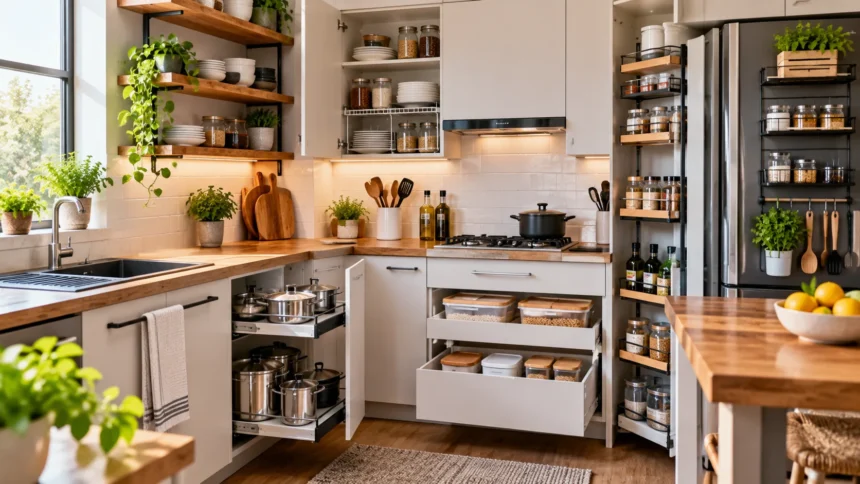
A small kitchen can quickly become cluttered when cabinets, drawers, and countertops are filled with everyday essentials. Finding enough room for cookware, utensils, groceries, and kitchen appliances can feel challenging, especially when storage space is limited. However, with the right kitchen storage hacks for small spaces, you can create a more organized and functional cooking area without making major renovations.
Smart kitchen organization is about using available space efficiently rather than adding unnecessary storage furniture. From vertical shelving and cabinet organizers to hidden storage compartments, simple improvements can make a noticeable difference. These 17 practical kitchen storage ideas will help you reduce clutter, improve accessibility, and make your small kitchen feel more spacious.
1. Install Floating Shelves to Use Empty Wall Space
Floating shelves are among the most practical kitchen storage solutions for small spaces because they turn unused walls into useful storage areas. Instead of relying entirely on traditional cabinets, you can install sturdy shelves above countertops or along available wall sections. These shelves provide convenient storage for everyday dishes, drinking glasses, spice jars, and decorative kitchen accessories.
Open shelving also creates a lighter appearance compared with bulky upper cabinets, making a compact kitchen feel less crowded. Arrange frequently used items within easy reach and keep heavier objects on lower, properly supported shelves. Matching containers or neatly stacked dishes can help maintain an organized appearance without sacrificing the convenience of having essential items readily available.
Before installing floating shelves, consider wall strength, mounting hardware, and the weight of the items you plan to store. Avoid placing shelves where they might interfere with cooking activities or create hazards near heat sources. When installed correctly, floating shelves provide additional kitchen storage while contributing to a clean and practical interior design.
2. Use Cabinet Door Organizers for Extra Storage
The inside of kitchen cabinet doors often provides valuable storage space that goes completely unused. Installing slim organizers, adhesive hooks, or lightweight storage racks can help accommodate smaller kitchen accessories without occupying additional shelf space. These organizers work particularly well for measuring spoons, cleaning gloves, lightweight utensils, and other frequently used household essentials.
Cabinet door storage is especially useful in small kitchens where every available inch matters. You can place organizers inside pantry cabinets for spice packets or inside sink cabinets for cleaning accessories. Keeping similar items together makes them easier to locate while reducing the amount of clutter that collects in drawers and countertop storage containers.
Choose organizers that fit comfortably within the cabinet and do not prevent doors from closing properly. Check the available clearance before purchasing racks, baskets, or hanging accessories, and avoid placing excessive weight on cabinet hinges. With careful planning, cabinet door organizers can create additional storage while keeping everyday kitchen essentials neatly arranged and accessible.
3. Add Pull-Out Drawers Inside Deep Cabinets
Deep kitchen cabinets often contain more usable space than people realize, but reaching items stored at the back can be difficult. Pull-out drawers and sliding cabinet organizers solve this problem by bringing stored items forward when needed. They are particularly helpful for organizing cookware, food containers, baking supplies, and other kitchen essentials that would otherwise become difficult to access.
Sliding drawers make it easier to keep cabinet contents organized because each item has a designated storage area. Instead of removing several pots to reach something at the back, you can simply extend the drawer. This arrangement reduces unnecessary rearranging and helps make daily cooking tasks more convenient in kitchens with limited storage capacity.
When choosing pull-out cabinet organizers, measure the cabinet’s interior width, depth, and available height carefully. Select durable sliding mechanisms that can support the intended contents without becoming unstable. Even installing one pull-out shelf in a frequently used cabinet can improve kitchen organization and make existing storage space considerably more functional.
4. Store Pots and Pans Vertically
Pots, frying pans, and baking trays can occupy considerable cabinet space when stacked on top of one another. Vertical organizers offer a practical alternative by allowing cookware to stand upright in separate compartments. This arrangement keeps individual items accessible and reduces the need to remove an entire stack whenever you want to use a particular pan.
Adjustable cookware racks can accommodate frying pans, cutting boards, baking sheets, and pot lids of different sizes. Placing these organizers inside lower cabinets or deep drawers keeps cooking equipment close to the stove without creating countertop clutter. Vertical storage also helps protect certain cookware surfaces from unnecessary rubbing and scratching caused by repeated stacking.
Choose a stable rack that fits securely inside the selected cabinet and allows enough room for handles. Arrange larger and heavier cookware carefully to prevent tipping or difficult access. By storing pots and pans vertically, you can make better use of cabinet space while creating a more organized and efficient cooking environment.
5. Install Magnetic Knife Strips on the Wall
A magnetic knife strip can free up valuable countertop and drawer space by providing dedicated wall storage for kitchen knives. Instead of using a bulky knife block, you can arrange compatible knives along a securely mounted magnetic holder. This solution is particularly useful in compact kitchens where countertop space is needed for food preparation.
Magnetic strips can also make knives easier to identify because each blade remains visible rather than being hidden inside a drawer. Choose a holder designed for knife storage and position it where adults can access it without reaching across cooking equipment. Keep the strip away from busy walkways and out of children’s reach.
Proper installation is essential because a poorly mounted strip may not hold knives securely. Follow the manufacturer’s instructions and confirm that each knife is firmly attached before leaving it in place. With suitable placement and careful handling, a magnetic knife strip can reduce clutter while helping maintain an organized cooking workspace.
6. Use Stackable Storage Containers in the Pantry
Stackable food storage containers help make better use of limited pantry and cabinet space by allowing dry ingredients to be arranged neatly. Instead of keeping multiple bulky packages, you can transfer suitable foods into clearly labeled containers. Rice, pasta, cereal, flour, and other dry goods can often be stored conveniently when appropriate food-safe containers are used.
Containers with compatible shapes and sizes create a more consistent storage arrangement and reduce wasted gaps between packages. Transparent options make it easier to identify ingredients and check remaining quantities before shopping. This visibility can also help prevent purchasing duplicates, particularly when shelves are crowded or pantry items are difficult to locate.
Choose containers with secure lids and materials suitable for the foods they will hold. Label each container with the ingredient name and relevant storage or expiration information to avoid confusion. Properly organized pantry containers can improve accessibility, maintain food quality, and create a cleaner appearance within a small kitchen.
7. Add Hooks Under Cabinets for Hanging Essentials
The underside of kitchen cabinets offers another opportunity to create additional storage without using countertops or existing shelves. Small hooks can hold lightweight items such as measuring cups, dish towels, or selected cooking utensils. This simple kitchen storage hack is especially practical when wall space is limited and drawer organization needs improvement.
Hooks can be installed beneath upper cabinets or inside suitable cabinet compartments, depending on available clearance. Choose locations that allow hanging items to remain accessible without interfering with food preparation or appliance use. Keeping everyday essentials within reach can reduce unnecessary movement around the kitchen and make cooking routines more efficient.
Use appropriate mounting hardware and confirm that the cabinet material can support the intended weight. Avoid hanging objects above open flames, hot cooking surfaces, or areas where they could accidentally fall into food. When positioned thoughtfully, under-cabinet hooks provide convenient storage while preserving valuable workspace in compact kitchens.
8. Use Drawer Dividers to Organize Kitchen Utensils
Kitchen drawers often become cluttered when cooking utensils, cutlery, and small accessories are stored together without separation. Drawer dividers create dedicated compartments for different items, making it easier to maintain an organized arrangement. They are particularly useful for spoons, forks, knives, measuring tools, and frequently used kitchen accessories that need convenient storage.
Adjustable drawer organizers allow you to customize compartments according to the dimensions of your available drawers. You can group similar utensils together while keeping less frequently used items toward the back. This arrangement improves visibility and reduces the time spent searching through crowded drawers during cooking, cleaning, or meal preparation.
Before purchasing drawer organizers, measure the interior dimensions and consider the height of the utensils you plan to store. Choose easy-to-clean materials that tolerate normal kitchen use and moisture exposure. Proper drawer organization helps maximize existing storage capacity while making everyday kitchen tasks simpler and more convenient.
9. Install a Pegboard for Flexible Kitchen Storage
Pegboards provide flexible wall storage by allowing hooks, small shelves, and hanging accessories to be arranged according to individual needs. A pegboard installed on an unused kitchen wall can hold utensils, measuring cups, lightweight cookware, and other everyday essentials. This approach makes use of vertical space while keeping frequently used items visible and accessible.
One advantage of pegboard storage is the ability to change the layout whenever your organization needs change. Hooks and accessories can often be repositioned without installing additional shelves or drilling new holes. This flexibility makes pegboards particularly useful in small kitchens where the available storage arrangement may need to accommodate changing cookware or household requirements.
Select a pegboard material that is suitable for kitchen conditions and capable of supporting the intended items. Secure it properly to the wall and keep heavy objects within recommended weight limits. A thoughtfully arranged pegboard can add practical storage while creating a visually organized cooking area without requiring expensive cabinetry modifications.
10. Use the Space Above Kitchen Cabinets
The empty area between upper kitchen cabinets and the ceiling can provide additional storage for items that are not needed every day. Decorative baskets, labeled containers, and lightweight storage boxes can help organize this otherwise unused space. It is particularly suitable for seasonal serving accessories or occasional-use kitchen supplies that do not require frequent access.
Using the tops of cabinets can reduce crowding inside the main storage compartments, leaving more room for everyday essentials. Matching storage baskets can create a neat appearance while helping protect stored items from dust. Closed containers are often preferable because exposed belongings may collect grease and airborne particles commonly found in cooking environments.
Avoid storing very heavy, fragile, or frequently used objects in elevated locations that are difficult to reach. Make sure containers remain stable and do not interfere with ventilation, sprinklers, or other building fixtures. With careful selection, above-cabinet storage can provide extra capacity without adding furniture or reducing available kitchen floor space.
11. Install a Slim Rolling Cart in Narrow Gaps
Narrow gaps between cabinets, refrigerators, and other kitchen fixtures are often overlooked when planning storage. A slim rolling cart can transform some of these unused spaces into convenient compartments for pantry items and household supplies. These carts typically feature multiple shelves and wheels, allowing them to slide into compact spaces when not in use.
Rolling carts are especially useful for organizing cooking oils, sealed food packages, cleaning products, or other items that fit safely within the shelves. Their mobility makes stored products easier to access compared with deep, fixed compartments. You can also choose a cart with adjustable shelves to accommodate containers of different heights while maintaining a compact footprint.
Before buying a rolling cart, measure the available gap carefully and allow enough clearance for smooth movement. Keep heavy items on lower shelves to improve stability and avoid blocking refrigerator ventilation or access to utilities. A properly sized rolling cart can provide practical storage without requiring permanent kitchen renovations.
12. Add Shelf Risers Inside Kitchen Cabinets
Shelf risers make better use of vertical cabinet space by creating additional storage levels above existing shelves. They are especially helpful in cabinets containing cups, bowls, plates, or small pantry products. Instead of leaving unused space above shorter items, a shelf riser provides another stable surface for organizing everyday kitchen essentials.
Stacking items across different levels can improve visibility and prevent products from becoming hidden behind one another. For example, a riser can separate smaller bowls from plates or create an elevated section for spice containers. This arrangement helps reduce clutter while allowing you to use the full height of a cabinet more efficiently.
Choose shelf risers that fit securely within the cabinet and can support the weight of stored items. Avoid placing fragile or heavy objects on unstable elevated surfaces, particularly near frequently opened cabinet doors. Simple shelf risers can significantly improve cabinet organization without requiring changes to the existing kitchen layout.
13. Organize the Space Under the Kitchen Sink
The cabinet beneath the kitchen sink often contains cleaning supplies, spare sponges, and household accessories arranged around plumbing fixtures. This irregular space can become difficult to manage without suitable storage containers. Stackable bins, adjustable organizers, and small removable baskets can help create dedicated areas while keeping plumbing connections accessible.
Grouping similar products together makes it easier to find cleaning supplies and maintain an organized cabinet. You can use separate containers for dishwashing products, replacement sponges, and other compatible household essentials. Keep chemicals in their original labeled packaging, and never store cleaning products where they could contaminate food or be accessed by children.
Before installing organizers, check for leaks, moisture buildup, and the clearance required around pipes and plumbing connections. Avoid placing storage accessories where they block access to shutoff valves or interfere with maintenance. A well-organized under-sink cabinet can improve convenience while making better use of an awkward storage area.
14. Use Hanging Baskets for Fruits and Vegetables
Hanging baskets can provide practical storage for suitable fruits and vegetables without occupying countertop space. Wall-mounted or suspended baskets allow certain produce items to remain visible and accessible during meal preparation. This approach is particularly useful in kitchens with limited work surfaces or cabinets that are already filled with essential cooking equipment.
Multi-tier hanging baskets provide separate compartments for different types of produce, helping reduce crowding and improve organization. They work best for foods that can safely be stored at room temperature, such as whole onions and certain fruits. However, storage requirements vary, and some produce should be refrigerated rather than kept in warm kitchen environments.
Choose sturdy baskets with enough airflow to help prevent trapped moisture around stored foods. Avoid placing them directly above cooking appliances, where heat and steam may affect produce quality. Properly positioned hanging baskets can support kitchen organization while keeping everyday ingredients within easy reach and protecting valuable countertop workspace.
15. Install Corner Cabinet Organizers
Corner kitchen cabinets often contain awkward spaces that are difficult to reach and organize effectively. Rotating shelves, pull-out corner systems, and specially designed cabinet organizers can make these areas more accessible. Instead of leaving items hidden deep inside a corner cabinet, these systems help bring stored cookware and supplies into view.
Lazy Susan organizers are a popular option because their rotating platforms allow users to access items without rearranging the entire cabinet. They can hold suitable pantry products, lightweight cookware, or other everyday essentials depending on their size and weight capacity. More advanced corner cabinet systems may include sliding shelves designed specifically for difficult cabinet layouts.
Measure the corner cabinet carefully before selecting an organizer, paying attention to door openings, hinges, and internal obstructions. Choose a system that fits the available space without preventing smooth cabinet operation. Making use of corner storage can increase practical kitchen capacity and reduce the frustration of retrieving items from hard-to-reach areas.
16. Use Over-the-Sink Storage Racks
Over-the-sink storage racks use the vertical space around the sink to hold selected kitchen accessories without taking up countertop room. Depending on the design, these racks may accommodate dishwashing supplies, drying utensils, or lightweight dishes. They can be especially useful in compact kitchens where traditional dish racks occupy a substantial portion of the available work surface.
Some over-the-sink organizers provide multiple compartments for plates, cups, cleaning accessories, and utensils. By moving these items upward, they help keep the surrounding countertop more open for meal preparation. However, the organizer should not block faucet operation or make washing dishes uncomfortable, because convenience remains an important part of effective kitchen storage.
Choose a rack made from moisture-resistant materials that are easy to clean and suitable for regular kitchen use. Confirm that the structure is stable and that stored items cannot fall into the sink unexpectedly. A correctly sized over-the-sink rack can improve organization while helping maintain a cleaner and less crowded kitchen countertop.
17. Create a Dedicated Storage Zone for Small Appliances
Small kitchen appliances such as blenders, toasters, coffee makers, and food processors can quickly consume valuable countertop space. Creating a dedicated appliance storage zone helps keep these items organized according to how frequently they are used. Appliances needed every day can remain accessible, while occasional-use equipment can be stored in suitable cabinets.
Appliance storage zones work best when they reflect normal cooking habits rather than placing every device in the same location. Frequently used equipment should be positioned where it can be retrieved comfortably without moving several other objects. Grouping related accessories together, such as blender attachments or coffee-making supplies, can also reduce clutter and simplify daily kitchen routines.
Consider ventilation, electrical safety, and manufacturer instructions when selecting storage locations for small appliances. Avoid operating heat-producing appliances inside enclosed cabinets unless the installation is specifically designed and approved for that purpose. Thoughtful appliance organization can free up preparation space and make a compact kitchen more practical without sacrificing everyday convenience.
Conclusion
Organizing a small kitchen does not require expensive renovations or additional square footage. Simple kitchen storage hacks, such as floating shelves, cabinet door organizers, vertical cookware racks, and drawer dividers, can help transform unused areas into practical storage. The key is identifying where clutter accumulates and selecting solutions that make everyday essentials easier to access.
Effective small kitchen organization also depends on making use of vertical space, awkward cabinet corners, and overlooked storage opportunities. Pull-out shelves, stackable containers, rolling carts, and hanging baskets can increase usable capacity without overcrowding the room. Choosing organizers that fit existing cabinets and support regular cooking habits helps maintain a functional and comfortable environment.
Start with one or two improvements that address your kitchen’s biggest storage challenges before adding more accessories. Keep frequently used items accessible, remove unnecessary clutter, and prioritize safe, stable storage arrangements. With thoughtful planning and consistent organization, even a compact kitchen can feel spacious, efficient, and enjoyable to use.
Frequently Asked Questions
1. How can I create more storage in a small kitchen?
Use vertical shelving, cabinet door organizers, drawer dividers, and stackable containers to maximize available space. Organizing unused corners and reducing unnecessary items can also improve storage capacity without requiring additional cabinets.
2. What is the best way to organize a kitchen with limited cabinet space?
Store frequently used items within easy reach and use shelf risers, pull-out organizers, and hanging hooks. Group similar products together and choose storage accessories that fit existing cabinet dimensions.
3. How do I keep my small kitchen countertops clutter-free?
Move suitable items into cabinets, wall-mounted organizers, or dedicated appliance storage areas. Keep only essential everyday products on the counter and regularly remove objects that are no longer needed.
4. Are open shelves good for small kitchens?
Open shelves can provide additional storage and make compact kitchens appear less crowded than bulky cabinets. However, they require regular cleaning and careful organization because stored items remain exposed to dust and cooking residue.
5. What are affordable kitchen storage hacks for small spaces?
Budget-friendly options include adhesive hooks, drawer dividers, shelf risers, labeled containers, and cabinet door racks. These simple solutions can improve organization without requiring expensive furniture, major renovations, or structural changes.