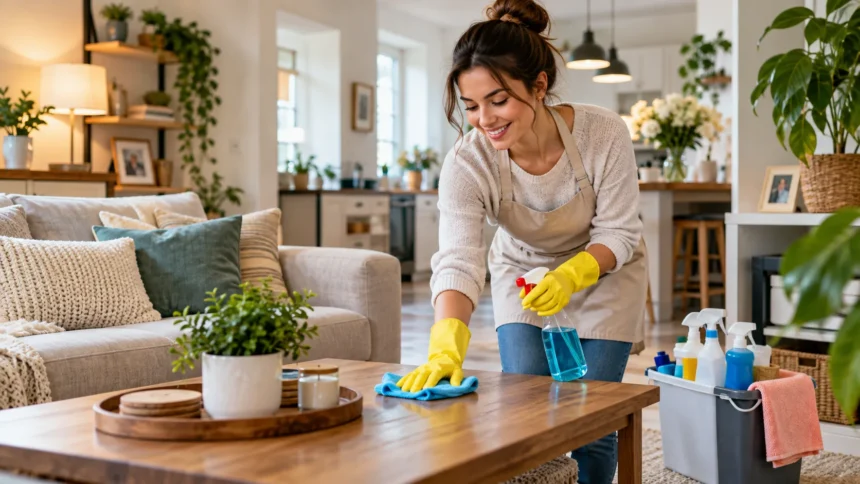
Keeping your home tidy does not require hours of cleaning every day. Small, consistent habits can prevent clutter, dirt, dishes, laundry, and everyday messes from building into overwhelming weekend projects. When basic cleaning becomes part of your normal routine, your home stays more comfortable without demanding constant attention or exhausting deep-cleaning sessions.
The most effective daily cleaning habits are simple enough to repeat even when life gets busy. Instead of trying to make every room perfect, focus on a few high-impact tasks that maintain order and cleanliness. Over time, these small actions can help you create a cleaner home, reduce stress, and spend less time catching up on neglected household chores.
Make Your Bed Every Morning
Making your bed is one of the easiest daily cleaning habits to build because it takes only a few minutes. A neatly made bed instantly makes the bedroom look more organized, even if other areas still need attention. It also removes one unfinished task from your environment and gives the room a more intentional, cared-for appearance.
You do not need decorative pillows, complicated bedding arrangements, or perfectly tucked corners for this habit to be useful. Simply straightening the sheets, arranging the pillows, and pulling the blanket or duvet into place is enough. Keeping the process simple makes it far more likely that you will continue doing it every morning.
This habit can also create momentum for other small household tasks. Once the bed is made, you may be more likely to put away clothing, open the curtains, or remove items from the floor. Starting your day with one quick improvement helps establish the idea that maintaining a tidy home happens through small actions rather than occasional cleaning marathons.
Clean Up Immediately After Meals
Kitchen mess can grow quickly when dishes, food packaging, crumbs, and cooking equipment remain on counters after meals. Make it a habit to handle the most obvious mess before leaving the kitchen. Putting dishes into the dishwasher, soaking difficult pans, wiping counters, and returning ingredients to storage can prevent a small cleanup from becoming a much larger task later.
You do not need to deep-clean the entire kitchen after every meal. Focus on restoring the main working areas so they are ready for the next time you need them. A clear sink and uncluttered countertops can make the whole kitchen feel cleaner, even if you still have larger chores such as mopping or appliance cleaning scheduled for another day.
Cleaning immediately is often easier because spills, grease, and food residue have not had time to dry onto surfaces. A quick wipe now may take seconds compared with scrubbing the same area later. Creating this habit also reduces unpleasant odors and helps keep food debris from attracting insects or creating unnecessary hygiene problems in busy kitchens.
Put Things Away Instead of Putting Them Down
One of the most useful habits for keeping a house tidy is returning items to their proper places immediately. Keys left on tables, jackets placed over chairs, shoes dropped near doors, and paperwork abandoned on counters can quickly create visual clutter. Each individual item may seem insignificant, but together they can make an otherwise clean room feel disorganized.
Give frequently used belongings a clear and convenient home. Shoes might belong on a rack near the entrance, keys in a tray, bags on hooks, and paperwork in a designated folder. Storage locations should match how you naturally move through your home so putting things away requires almost no extra effort.
Whenever you are tempted to leave something temporarily on a random surface, ask whether you can put it where it belongs instead. This small change prevents temporary piles from becoming permanent clutter. The more consistently you follow the habit, the less time you will eventually need to spend walking around the house collecting misplaced belongings.
Wipe Kitchen Counters and Tables Daily
Kitchen counters and dining tables are among the most heavily used surfaces in many homes. Crumbs, drink marks, food residue, packaging, and miscellaneous household items can accumulate quickly. A daily wipe keeps these areas looking cleaner while preventing dried spills and grease from becoming more difficult to remove during your next deeper cleaning session.
Before wiping surfaces, return unnecessary items to their proper locations. Put food back in cupboards, move paperwork away from eating areas, and store appliances you do not use regularly. Keeping counters reasonably clear makes daily cleaning faster because you can wipe the surface directly instead of repeatedly moving objects before you can begin.
A quick countertop clean is especially useful at the end of the evening. Waking up to a clear kitchen can make breakfast and morning preparation feel easier. It also helps establish a natural daily reset, ensuring that yesterday’s crumbs and clutter do not become the starting point for another busy day.
Do a Quick Bathroom Reset
Bathrooms can start looking untidy surprisingly quickly because they are used repeatedly throughout the day. Towels end up on floors, toiletries remain around the sink, water spots appear on mirrors, and products collect around showers. Spending a few minutes resetting the bathroom each day can reduce how much effort is required during your weekly bathroom cleaning.
Start by hanging towels, putting products back where they belong, and removing clothing or empty containers. Wipe obvious water or toothpaste marks from the sink when necessary. You do not need to disinfect every surface daily, but keeping frequently visible areas clear prevents small messes from making the room look neglected.
Good daily habits can also make bathroom deep cleaning less frustrating. When toiletries are already organized and surfaces are relatively clear, you can clean sinks, counters, showers, and floors much more efficiently. This approach separates everyday tidiness from heavier sanitation tasks while still helping the bathroom remain pleasant between detailed cleaning sessions.
Manage Laundry Before It Becomes a Pile
Laundry can quickly make bedrooms and bathrooms look messy when clothing collects on chairs, floors, and beds. Use hampers consistently so dirty clothes have one designated place from the moment they are removed. If possible, keep laundry baskets near the areas where clothing usually accumulates instead of expecting everyone to carry items across the home.
Clean laundry can create just as much clutter when it remains in baskets for several days. Try to fold or hang clothes relatively soon after they are dry, even if you cannot always do it immediately. Putting away one completed load is usually easier than allowing several loads to combine into a much larger sorting and folding project.
Your daily laundry habit does not necessarily mean washing clothes every day. The goal is to manage clothing continuously so it does not spread throughout your home. Collect dirty items, move finished laundry through the process, and return clean clothes to closets and drawers before baskets become permanent storage containers.
Sweep or Vacuum High-Traffic Areas
Certain areas of your home collect dirt much faster than others. Entryways, kitchens, hallways, and frequently used living spaces often gather crumbs, dust, hair, and outdoor debris throughout the day. A quick sweep or vacuum in these high-traffic areas can noticeably improve the appearance of your home without requiring you to clean every floor daily.
Focus only on areas that actually need attention. There is little benefit in vacuuming an unused guest room every evening simply because it appears on a checklist. Targeting visible dirt where people regularly walk allows you to maintain a cleaner environment while keeping your daily routine short enough to follow consistently.
If you have children or pets, certain rooms may require more frequent floor maintenance. Food crumbs, pet hair, soil, and other debris can accumulate faster in active households. Adjust your routine based on what you actually see rather than following a fixed rule, and save full-house vacuuming or mopping for your regular weekly cleaning schedule.
Reset the Living Room at the End of the Day
Living rooms often collect objects from many different parts of the household. Blankets, toys, cups, chargers, books, remotes, clothing, and miscellaneous items can gradually spread across sofas and tables. A short evening reset can restore order and prevent these small objects from becoming a larger decluttering project by the end of the week.
Start by taking dishes to the kitchen and returning items that belong in other rooms. Fold blankets, arrange cushions, clear the coffee table, and place remotes or entertainment accessories in their designated locations. The entire process may take only several minutes when completed daily, particularly if everyone in the household participates.
Try not to turn the evening reset into a full cleaning session. The goal is simply to return the room to its normal baseline so tomorrow begins with less clutter. This creates a calmer shared space and reduces the amount of visible mess you have to deal with during weekly dusting, vacuuming, and more detailed cleaning.
Use a Ten-Minute Evening Tidy
A ten-minute tidy can prevent small household messes from carrying into the next day. Set a timer and move quickly through the areas that need the most attention. Pick up misplaced objects, clear visible surfaces, deal with simple dishes, straighten furniture, and handle any small tasks that can realistically be completed within the short time available.
A timer is useful because it gives cleaning a clear beginning and ending. Instead of feeling as though you must continue until the house is perfect, you know the routine will stop after ten minutes. This makes it easier to begin on evenings when you are tired and would otherwise postpone every cleaning task until tomorrow.
Focus on progress rather than perfection during these sessions. Some evenings you may accomplish a surprising amount, while other nights you might only clear one busy room. The value comes from consistency because ten minutes repeated across the week can prevent many small chores from accumulating into hours of work during your free time.
Deal With Clutter Before Going to Bed
Before going to bed, look for the handful of items most likely to make tomorrow feel more chaotic. This might include shoes in walkways, mail on the dining table, cups beside the sofa, children’s toys on the floor, or work supplies spread across shared surfaces. Putting away obvious clutter creates an immediate improvement without requiring detailed cleaning.
Use a basket if several items need to be returned to different rooms. Walk through the main living areas, collect anything that is out of place, and then return each item to its proper location. This method can prevent repeated trips around the house and make a quick nightly decluttering routine feel more manageable.
Do not use the basket as permanent storage. The purpose is to move misplaced belongings efficiently rather than hide clutter until the container is full. Finishing the process before bed means you wake up to clearer floors and surfaces, making the home feel more organized before the day’s activities begin creating new messes.
Keep Cleaning Supplies Convenient and Organized
Daily cleaning habits are easier to maintain when basic supplies are easy to access. If you have to search through a crowded cupboard every time you need a cloth or surface cleaner, even small chores can feel inconvenient. Keep commonly used products together and store them somewhere practical, while always following product safety and storage instructions.
You may find it useful to keep basic supplies near the areas where they are used most often. For example, bathroom cleaning essentials can stay in a suitable nearby storage area, while kitchen cloths and appropriate cleaners can remain close to the sink. Convenient placement makes it easier to handle small messes immediately instead of postponing them.
Avoid collecting more cleaning products than you actually need. Too many bottles, cloths, brushes, and specialized tools can create another storage problem. A simple, organized supply system helps you quickly find what you need while making it easier to notice when products are running low and need to be replaced.
Follow the One-Minute Rule for Tiny Tasks
Many household chores take less than a minute but are often postponed until they become part of a larger mess. Throwing away packaging, hanging up a jacket, replacing a toilet roll, wiping a small spill, or putting one item back in a drawer can usually be completed immediately. Handling these tasks prevents unnecessary clutter from accumulating.
The one-minute rule works because it removes small decisions from your future workload. Instead of noticing the same item several times and repeatedly thinking about dealing with it later, you complete the task once and move on. These tiny actions can significantly reduce the number of unfinished chores competing for your attention throughout the day.
Use the rule sensibly rather than allowing every small household task to interrupt important work or rest. If dealing with something immediately is genuinely convenient, handle it. When it would disrupt what you are doing, add it to your normal reset routine instead of feeling pressured to stop everything whenever you notice a minor mess.
Conclusion
The best daily cleaning habits are usually the simplest ones. Making the bed, cleaning up after meals, returning belongings to their proper places, managing laundry, and resetting busy rooms can prevent ordinary household mess from becoming overwhelming. Small tasks completed regularly are often more effective than waiting for one major cleaning day.
Your daily routine does not need to include every possible household chore. Focus on high-traffic areas and the tasks that make the biggest difference to how your home looks and functions. Ten or fifteen minutes of focused maintenance can keep many spaces under control while leaving deeper cleaning for your weekly or monthly schedule.
Consistency matters more than perfection when building a tidier home. Some days you may complete every habit, while busy days may require you to focus only on essentials. By returning to these simple routines regularly, you can maintain a cleaner, calmer living space without allowing household cleaning to take over your entire schedule.
FAQs
What should I clean every day at home?
Focus on dishes, kitchen counters, obvious spills, clutter, and heavily used areas. You may also benefit from quick bathroom and floor resets depending on your household, pets, and daily activity.
How long should daily cleaning take?
Many households can maintain basic order with around 10 to 30 minutes of focused cleaning each day. Larger homes, families, or homes with pets may require additional time depending on activity levels.
Is it necessary to vacuum every day?
Not usually. Daily vacuuming can help in high-traffic areas or homes with pets, but many rooms only need vacuuming weekly. Clean according to visible dirt and household activity rather than following a rigid rule.
How do I make daily cleaning a habit?
Attach small cleaning tasks to routines you already follow, such as wiping counters after dinner or resetting the living room before bed. Keep tasks short and easy enough to repeat consistently.
What is the fastest way to keep a house tidy?
Put belongings away immediately, manage dishes and laundry regularly, keep surfaces clear, and complete a short evening reset. Preventing mess from accumulating is usually faster than repeatedly tackling large amounts of clutter.