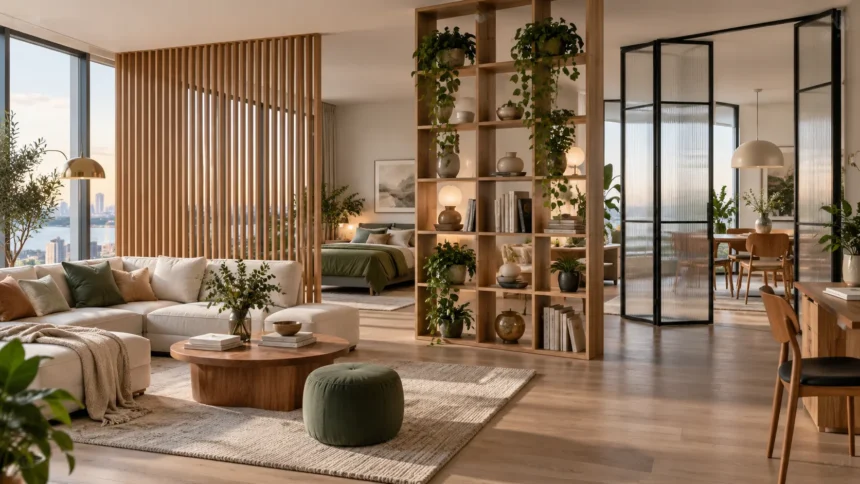
Room dividers can completely change how a space feels without requiring major construction. They can create privacy, separate functional zones, improve layout, add storage, or introduce a decorative focal point. Whether you live in a studio apartment, open-plan home, shared bedroom, or flexible workspace, the right divider can make the room feel more organized and intentional.
The best room divider ideas balance function with appearance. Some options create strong privacy, while others simply suggest where one area ends and another begins. From shelving units and curtains to slatted wood, glass panels, screens, and plants, there are creative solutions for almost every budget and interior style.
Why Use a Room Divider?
A room divider helps create separate zones without the expense or permanence of building a new wall. This can be especially useful in open-plan homes where living, dining, working, and sleeping areas share the same large space. A divider gives each zone more definition while keeping the overall layout flexible.
Dividers can also improve privacy. In studio apartments, shared bedrooms, or home offices, even a partial visual barrier can make a major difference. Some designs block views completely, while others provide enough separation to make each area feel more personal without reducing natural light too much.
Another benefit is decoration. A well-designed divider can become a statement feature rather than something purely practical. Materials, colors, shapes, and textures can support different design styles while helping the room feel more coordinated and visually interesting.
Open Shelving as a Room Divider
Open shelving is one of the most practical room divider ideas because it separates space while adding useful storage. A bookcase can divide a living room from a dining area, create a work zone in a bedroom, or provide structure within a large open-plan apartment. Open shelves also allow some light to pass through.
The shelves can hold books, baskets, plants, ceramics, framed photos, and decorative objects. Keeping the arrangement balanced prevents the divider from feeling too heavy. Leaving some spaces open between objects creates visual breathing room and allows the shelving to feel more like furniture than a solid wall.
Choose a shelving unit that suits the scale of the room. Tall shelving creates more separation, while lower units maintain stronger sightlines between zones. If the shelf is freestanding, make sure it is stable and secured appropriately so it does not become a tipping hazard.
Curtain Room Dividers
Curtains are one of the easiest and most affordable ways to divide a room. They work especially well in studio apartments, shared bedrooms, or rental homes where permanent construction is not practical. A ceiling-mounted track can create a flexible barrier that opens completely when you want the room to feel larger.
Fabric choice changes the effect dramatically. Heavy curtains provide more privacy and can help reduce visual distraction, while sheer curtains create a softer boundary without blocking much light. Linen, cotton, velvet, or lightweight translucent fabrics can all work depending on the look and level of separation you need.
Curtains are also easy to update when your decor changes. Replacing fabric usually costs much less than rebuilding a fixed partition. For a polished result, choose curtains long enough to reach near the floor and use a track or rod that looks intentional rather than temporary.
Folding Screens and Decorative Panels
Folding screens are classic room dividers because they are portable, flexible, and available in many styles. They can separate sleeping areas, hide clutter, create a dressing zone, or provide privacy in a shared room. Because they do not require permanent installation, they are particularly useful for renters.
Decorative screens come in wood, metal, woven materials, fabric, and carved designs. A simple wood screen works well in minimalist or Scandinavian interiors, while patterned or carved panels can become a decorative feature. The material should complement the furniture and overall atmosphere of the room.
The main advantage is flexibility. You can fold the screen away when you want more open space and reposition it as your needs change. Choose a wide enough screen to create meaningful separation, and make sure the feet or base remain stable on your flooring.
Slatted Wood Room Dividers
Wood slat dividers create separation while maintaining light and airflow. Vertical slats are especially popular because they add architectural interest without making the room feel closed in. They work beautifully between living and dining areas, near entryways, or beside staircases where a solid wall would feel too heavy.
The spacing between slats determines how much privacy the divider provides. Narrow gaps create a stronger visual barrier, while wider spacing maintains more openness. Natural oak, walnut, painted timber, or dark-stained wood can dramatically change the character of the design.
Slatted partitions suit many interiors, including modern, Japandi, Scandinavian, and contemporary spaces. They can also make low ceilings feel taller when the vertical lines run from floor to ceiling. For a custom finish, match the wood tone with nearby furniture or flooring.
Glass Partition Ideas
Glass dividers are ideal when you want to separate areas without blocking natural light. They are commonly used between kitchens and living rooms, home offices and bedrooms, or entry areas and larger open spaces. Clear glass keeps the visual connection strong, while textured or frosted glass adds more privacy.
Black-framed glass partitions create an industrial or modern look, while frameless panels feel more minimal. Reeded, fluted, or frosted glass can soften views without making the room dark. These options are especially useful when one side of the partition still needs daylight from windows located elsewhere.
Glass dividers usually cost more than curtains or folding screens, but they can create a more permanent and polished result. Safety glass and professional installation are important. The frame style should also match the rest of the room so the partition feels integrated rather than added later.
Use Plants as Natural Room Dividers
Plants can create a soft and natural boundary between different parts of a room. Tall plants such as palms, fiddle-leaf figs, or clustered planters can visually divide a seating area from a workspace. This approach works best when you want gentle separation rather than complete privacy.
Plant stands and shelving can strengthen the effect. A long planter box filled with upright plants creates more structure, while hanging plants can define space vertically without taking up much floor area. Mixing heights and leaf shapes can make the divider feel full and intentional.
This option also adds texture and color to neutral rooms. However, choose plants that suit the available light and your ability to care for them. Artificial plants can provide a similar decorative effect if the area is too dark for healthy indoor growth.
Sliding Door Room Dividers
Sliding doors are practical when you want a room to switch between open and private. Barn-style doors, pocket doors, sliding glass panels, and modern track systems can all create flexible separation. They work particularly well between bedrooms and dressing areas, kitchens and dining spaces, or home offices and living rooms.
Unlike swinging doors, sliding systems do not require as much clearance. This makes them useful in smaller homes where every square foot matters. When open, the room can feel connected, and when closed, the divider creates a much stronger boundary than a screen or curtain.
The door material should match the level of privacy you need. Solid wood provides stronger visual separation, while glass maintains light and openness. Make sure the track system is installed correctly so the doors move smoothly and remain secure during regular use.
Room Divider Ideas for Studio Apartments
Studio apartments often need clear zones because sleeping, living, dining, and working areas share one room. A divider near the bed can create a stronger sense of privacy and stop the space from feeling like one oversized bedroom. Curtains, shelves, and screens work particularly well in compact apartments.
Storage dividers are especially useful because they solve two problems at once. A bookcase or wardrobe can provide separation while creating space for clothes, books, or household items. Open shelving generally keeps the apartment brighter, while solid storage creates a stronger visual barrier.
Avoid using oversized or overly dark dividers that make the studio feel smaller. Partial-height units, light materials, and transparent or open designs can define zones without blocking views completely. The goal is to make each area feel purposeful while preserving as much openness as possible.
Room Dividers for Living and Dining Areas
Open-plan living and dining areas often benefit from subtle separation rather than a complete wall. A shelving unit, console table, slatted screen, or large indoor plant arrangement can mark the transition between zones. Furniture placement can reinforce the boundary without requiring a physical partition.
For example, the back of a sofa can face the dining area while a narrow console sits behind it. This creates a clear visual edge between the two functions. A rug under each area can further define the spaces and make the overall layout feel more intentional.
If you prefer a stronger architectural feature, consider a partial wall or wood slat divider. These options maintain communication between the spaces while creating more structure. Match materials with existing flooring, furniture, or cabinetry to keep the open-plan room visually connected.
Room Dividers for Home Offices
Working from home can be difficult when the office shares space with a bedroom or living area. A room divider can create a psychological boundary that helps separate work time from personal time. Even a lightweight screen can make the workspace feel more dedicated and professional.
Open shelving works well because it can store office supplies while blocking some visual distraction. Curtains can completely hide the desk after work, which is helpful in bedrooms or multi-use spaces. Glass partitions offer a more permanent option for those who need separation without losing natural light.
Acoustic privacy may also matter if you frequently take calls. In that case, a decorative screen alone may not provide enough sound reduction. Heavier curtains, solid partitions, rugs, upholstered furniture, and acoustic panels can help make the workspace feel quieter and more focused.
DIY Room Divider Ideas
DIY room dividers can be affordable and highly customizable. Simple projects include hanging fabric from ceiling tracks, assembling open cube shelving, creating a wood frame with woven panels, or building a basic vertical slat screen. These ideas allow you to adjust size and materials to fit your room.
Repurposed doors, shutters, or wooden panels can also create distinctive folding screens. Sanding and repainting old pieces can turn inexpensive materials into a feature that looks intentional. Hinges allow several panels to fold together, making the divider easier to move and store.
Before starting a DIY project, consider stability and safety. Tall freestanding structures may need anchoring, especially in homes with children or pets. Measure carefully and make sure any materials installed near heating, lighting, or electrical systems are appropriate for that location.
How to Choose the Right Room Divider
Start by deciding what the divider needs to accomplish. Privacy requires a different solution from simple visual zoning. Curtains and solid panels provide stronger separation, while shelving, slats, plants, and glass work better when you still want light and connection between areas.
Next, consider the size of the room. Large, solid dividers can overwhelm compact spaces, while delicate screens may look insignificant in large open-plan areas. The height, width, transparency, and material should feel proportionate to the architecture and nearby furniture.
Finally, think about flexibility and budget. Renters may prefer curtains, screens, or freestanding shelves, while homeowners may invest in built-in glass or wood partitions. Choosing a divider that matches both your practical needs and decorating style will make the solution feel like a natural part of the room.
Conclusion
Room dividers offer a practical way to improve layout, privacy, storage, and visual organization without always building permanent walls. Open shelves, curtains, folding screens, wood slats, glass panels, sliding doors, and plants can all create effective separation depending on the room and your needs.
The best choice depends on how much privacy, light, flexibility, and storage you want. Small spaces usually benefit from lighter or open designs, while larger rooms can handle stronger architectural partitions. Matching the divider to existing colors and materials helps the entire space feel coordinated.
A good room divider should solve a practical problem while improving the appearance of the room. Focus on function first, then select a design that supports your preferred interior style. With the right approach, even a simple divider can make a space feel more organized, flexible, and thoughtfully designed.
FAQs
What is the cheapest way to divide a room?
Curtains and folding screens are among the cheapest options. They require minimal installation, can be moved easily, and provide flexible separation without the expense of constructing a permanent wall.
How can I divide a room without blocking light?
Use open shelving, vertical wood slats, glass panels, sheer curtains, or plants. These options create visual separation while allowing natural light to travel through the room.
What is the best room divider for a studio apartment?
Open shelving, curtains, and folding screens work well in studios because they create separate zones without taking up excessive space. Storage dividers are especially useful in compact apartments.
Can a bookcase be used as a room divider?
Yes. A freestanding bookcase can divide functional areas while adding storage and display space. Open-back shelving keeps the divider lighter and allows more light to pass through.
Do room dividers make a room look smaller?
They can if they are too large, dark, or solid for the space. Light-colored, open, transparent, or partial-height dividers can define areas without making the room feel significantly smaller.