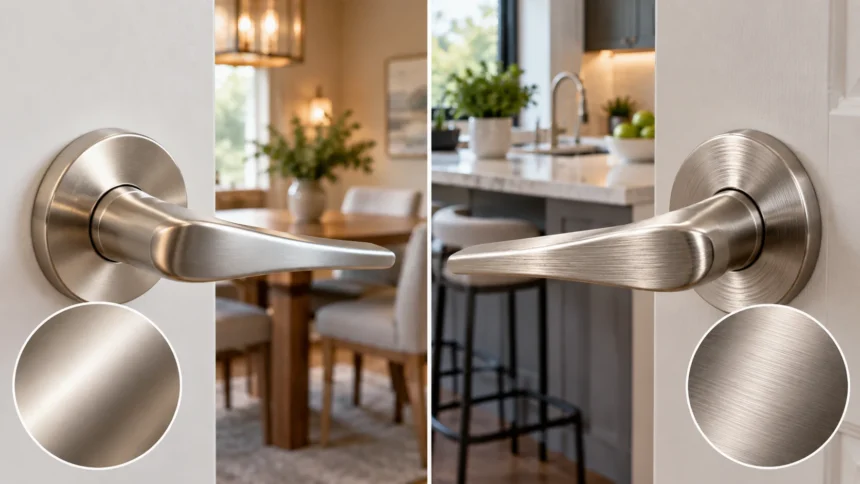
Satin nickel and brushed nickel are two popular metal finishes used on faucets, cabinet hardware, lighting, door handles, and bathroom fixtures. At first glance, they can look very similar, which makes choosing between them confusing. The difference usually comes down to texture, sheen, maintenance, style, and how each finish works with the rest of your interior.
Both finishes can create a polished, modern look without the strong shine of chrome. Satin nickel tends to feel smoother and slightly softer, while brushed nickel usually shows more visible linear texture. Understanding where each option works best can help you make a smarter decision whether you are planning a full renovation or simply updating a few fixtures on a limited budget.
What Is Satin Nickel?
Satin nickel is a metal finish with a smooth, muted appearance and a soft sheen. It reflects some light but does not look highly polished or mirror-like. This subtle surface makes it suitable for homeowners who want a refined metallic detail without creating too much contrast in the room.
The finish is commonly used on cabinet pulls, faucets, door hardware, light fixtures, and bathroom accessories. Satin nickel can feel slightly more elegant than heavily textured finishes because its surface looks clean and even. It works particularly well in transitional, contemporary, and softly modern interiors where visual balance is important.
Depending on the manufacturer, satin nickel may appear slightly warmer or cooler in tone. That is why two products labeled satin nickel may not match perfectly when placed next to each other. If you are using multiple fixtures in one space, compare samples or product photos carefully before buying everything separately.
What Is Brushed Nickel?
Brushed nickel has a textured finish created by brushing the metal surface in a consistent direction. This process leaves fine visible lines that reduce shine and create a slightly more casual appearance. The result is a finish that looks modern while still feeling warm enough for traditional or transitional interiors.
Because the texture breaks up reflections, brushed nickel often hides fingerprints and minor water spots better than smoother finishes. This makes it popular for frequently touched hardware, kitchen faucets, bathroom fixtures, and cabinet handles. It can maintain an attractive appearance with relatively simple routine cleaning.
Brushed nickel is widely available at many price points, which makes it practical for both affordable updates and larger renovation projects. You can find it on everything from basic drawer pulls to premium plumbing fixtures. Its broad availability also makes matching different products somewhat easier than working with less common specialty finishes.
Satin Nickel vs Brushed Nickel: Main Difference
The biggest difference between satin nickel and brushed nickel is the surface texture. Satin nickel generally looks smoother and more uniform, while brushed nickel shows visible directional lines. Both are low-shine finishes, but brushed nickel usually appears slightly more textured and casual when viewed closely.
Satin nickel can reflect light in a softer, more even way. Brushed nickel tends to scatter reflections because of its brushed surface, which can make the finish appear slightly darker or more muted. These differences may be subtle from a distance but become more noticeable when fixtures are placed side by side.
Neither option is automatically better for every room. Satin nickel may appeal to someone who wants a cleaner, more polished look, while brushed nickel may suit a homeowner who values texture and easy maintenance. The best choice depends on your style, budget, surrounding materials, and how much daily use the fixture receives.
Which Finish Looks More Modern?
Satin nickel often feels slightly more refined and streamlined because of its smoother surface. It works well with modern cabinetry, simple lighting, clean bathroom vanities, and uncluttered interiors. If your design uses soft neutrals and minimal detailing, satin nickel can support that look without becoming overly shiny.
Brushed nickel can also look modern, particularly when paired with flat-panel cabinets, stone countertops, matte surfaces, and contemporary lighting. Its visible grain gives it more texture, which can prevent a modern room from feeling too cold. This makes it a versatile option when you want both clean lines and a touch of warmth.
The overall design matters more than the finish name alone. A traditional faucet in satin nickel can still feel classic, while a sleek brushed nickel fixture can look highly contemporary. Focus on the shape and proportions of the product as well as the finish when trying to create a specific style.
Which Is Better for Kitchens?
Brushed nickel is often a strong choice for kitchens because it handles frequent touching well and tends to hide fingerprints. Faucets, drawer pulls, cabinet handles, and appliance hardware can all benefit from a finish that does not show every mark. This makes daily maintenance easier in a busy kitchen.
Satin nickel can work beautifully in kitchens where a smoother, slightly more polished appearance is preferred. It pairs well with white, gray, cream, navy, and wood cabinetry. If your kitchen has simple countertops and clean lines, satin nickel can create a subtle decorative detail without looking overly industrial.
Think about how your kitchen connects visually with nearby spaces. In open-plan homes, hardware should feel coordinated with lighting and furniture in adjoining rooms. If your dining space is compact, browsing practical small dining room ideas can help you choose finishes and furniture that create a more consistent overall look.
Which Is Better for Bathrooms?
Both finishes perform well in bathrooms, but brushed nickel is often preferred for its ability to disguise fingerprints and minor water marks. Faucets, towel bars, shower hardware, and cabinet pulls are touched frequently, so a textured finish can make everyday maintenance less noticeable.
Satin nickel is a good option when you want the bathroom to feel smoother and slightly more elegant. It works particularly well with marble-look surfaces, light tiles, soft gray paint, and contemporary vanities. Its lower shine keeps the room calm while still adding enough metallic contrast to prevent the design from feeling flat.
In either case, water quality and cleaning habits matter. Hard-water deposits can appear on almost any finish if they are allowed to build up. Wiping fixtures regularly with a soft cloth and avoiding harsh abrasive cleaners can help both satin and brushed nickel maintain their appearance longer.
Which Finish Is Easier to Clean?
Brushed nickel generally has an advantage when it comes to hiding everyday marks. The fine lines in the finish help disguise fingerprints, light smudges, and small water spots. This can make it a practical choice for families, busy kitchens, shared bathrooms, or any area where hardware receives constant use.
Satin nickel is still easy to maintain, but its smoother surface can show certain marks more clearly under direct lighting. Regular wiping with a damp microfiber cloth is usually enough for basic cleaning. Drying the surface afterward can help reduce streaks and mineral spots.
Avoid abrasive pads, aggressive chemicals, or rough powders on either finish. These products can scratch the surface or alter the protective coating. When cleaning faucets or hardware, gentle methods are usually more effective for preserving the original look and avoiding unnecessary wear.
Which Is More Durable?
Durability depends heavily on the product quality and manufacturing process rather than the finish name alone. A high-quality brushed nickel faucet can last much longer than a cheap satin nickel one, and the reverse is also true. Construction, plating quality, coatings, and daily use all influence long-term performance.
Brushed nickel may visually hide small scratches and wear better because its surface already contains texture. Minor marks can blend into the brushed pattern rather than standing out. This makes it useful for frequently touched hardware or areas where a perfectly smooth appearance may be difficult to maintain.
Satin nickel can also be durable when properly manufactured and cared for. Its smoother finish may reveal scratches more clearly if damaged, but normal household use should not automatically cause problems. Choosing reputable hardware and avoiding harsh cleaning products usually matters more than selecting one nickel finish over the other.
Satin Nickel vs Brushed Nickel for Cabinet Hardware
Cabinet hardware is one of the easiest ways to introduce either finish into a kitchen, bathroom, laundry room, or built-in storage area. Brushed nickel pulls work particularly well on frequently used cabinets because their texture helps conceal fingerprints. They also pair naturally with stainless steel appliances and many neutral cabinet colors.
Satin nickel knobs and handles create a slightly smoother and more polished effect. They can look especially attractive on shaker cabinets, painted furniture, and transitional cabinetry. If the room already contains several textured surfaces, satin nickel can provide a cleaner contrast without adding another strong visual pattern.
When selecting hardware, consider shape as carefully as finish. Long bar pulls feel more modern, while rounded knobs or detailed handles can lean traditional. Testing one or two samples on your cabinet doors before ordering an entire set can help you judge both scale and color more accurately.
Which Nickel Finish Works With More Colors?
Both satin and brushed nickel are versatile because their neutral metallic tones complement a wide range of colors. White, black, gray, navy, green, beige, and natural wood all work comfortably with nickel finishes. This flexibility makes them safer long-term choices than some highly distinctive or trend-driven metals.
Brushed nickel often looks particularly natural with warm woods, earthy neutrals, and stainless steel. Its slightly textured surface gives it an approachable feel that blends easily into kitchens and bathrooms. Satin nickel can feel more refined beside cooler grays, whites, marble-look materials, and smooth contemporary cabinetry.
You do not need every metal finish in the room to match exactly. Mixing nickel with black, brass, or stainless steel can work when the combination feels intentional. Repeating each finish in at least a few places usually creates a more balanced appearance than introducing several unrelated metals only once.
Which Is Better for a Small Budget?
Brushed nickel is often easier to find in affordable product ranges because it is widely used across home improvement categories. Cabinet pulls, faucets, lighting, and door hardware are available at many price levels. This makes it practical when you need to replace several items without spending heavily on specialty finishes.
Satin nickel can also be budget-friendly, although availability varies by product category and manufacturer. If you find a satin finish you like at a good price, there is no reason to avoid it simply because brushed nickel is more common. Compare total project cost rather than focusing only on the price of one fixture.
For the best value, spend more on items with moving parts or plumbing components and save on simpler decorative hardware. A reliable faucet may deserve a larger share of the budget than cabinet knobs. This approach helps you balance appearance, durability, and cost without turning a modest update into an expensive renovation.
Can You Mix Satin Nickel and Brushed Nickel?
Yes, satin nickel and brushed nickel can sometimes be used in the same space because their colors are relatively similar. However, the difference in texture may become noticeable when two fixtures sit directly beside each other. Mixing them works best when the items are separated or when the overall design already includes varied finishes.
For example, brushed nickel cabinet hardware can coexist with a satin nickel light fixture if they are not visually competing. The room may still feel coordinated because both finishes belong to the same general nickel family. Problems usually arise when nearby fixtures are intended to match perfectly but clearly have different tones or textures.
If you want a highly consistent look, choose one main nickel finish and repeat it across most hardware. You can then introduce another metal intentionally as an accent. This method creates a more deliberate design than trying to match several products that happen to use slightly different interpretations of nickel.
How to Choose Between Satin and Brushed Nickel
Start by looking at the surfaces already present in your room. If you have a lot of texture from wood grain, stone, tile, or patterned fabrics, smooth satin nickel may create balance. If your space feels very sleek and plain, brushed nickel can introduce subtle texture without becoming visually heavy.
Next, think about maintenance. Busy households may prefer brushed nickel because it tends to hide fingerprints and minor marks more effectively. Satin nickel may appeal more to homeowners who prioritize a smoother look and do not mind wiping fixtures a little more frequently.
Finally, compare actual product samples whenever possible. Finish names are not perfectly standardized, so one manufacturer’s satin nickel may resemble another brand’s brushed nickel. Seeing the products under your own lighting and beside your cabinets, counters, or walls is the best way to make a confident decision.
Conclusion
Satin nickel and brushed nickel are both versatile finishes that can work in kitchens, bathrooms, dining spaces, and throughout the home. Satin nickel has a smoother, softer appearance, while brushed nickel shows more visible texture. Neither finish is automatically superior; the best choice depends on your style and practical priorities.
Brushed nickel is often a smart pick for busy households because it hides fingerprints and minor wear well. Satin nickel can create a cleaner, more refined look that works beautifully in contemporary and transitional interiors. Both options are available at different price levels, so your budget does not have to determine the finish entirely.
Before buying, compare samples, consider nearby materials, and think about how often the fixture will be touched or cleaned. A consistent finish strategy usually creates a more polished home than choosing hardware one item at a time. With thoughtful planning, either satin or brushed nickel can deliver lasting style without unnecessary spending.
FAQs
What is the main difference between satin nickel and brushed nickel?
Satin nickel usually has a smoother, more even surface, while brushed nickel shows fine directional lines. Both have a muted shine, but brushed nickel generally looks more textured and casual.
Is satin nickel more expensive than brushed nickel?
Not necessarily. Pricing depends more on the brand, product quality, and construction than the finish itself. Brushed nickel may offer more budget options simply because it is widely available.
Does brushed nickel show fingerprints?
Brushed nickel can show some marks, but its textured surface generally hides fingerprints and smudges better than smoother finishes. Regular wiping with a soft cloth helps keep it looking clean.
Can I use satin nickel with stainless steel appliances?
Yes. Satin nickel and stainless steel can work well together because both have cool metallic tones. They do not need to match perfectly as long as the overall combination looks intentional.
Which finish is better for cabinet hardware?
Both work well. Brushed nickel is practical for frequently touched cabinets because it hides marks, while satin nickel offers a smoother, slightly more refined appearance for contemporary or transitional designs.