Why Smart Shoe Storage Matters
Shoes can quickly become one of the biggest sources of clutter in a bedroom, hallway, closet, or entryway. Even a modest collection takes up surprising amounts of floor space when pairs are left scattered around. Smart shoe storage keeps footwear organized, makes daily routines easier, and helps small rooms feel cleaner and more spacious.
A good shoe organization system should make frequently worn pairs easy to reach while keeping less-used footwear protected. The best solution depends on how many shoes you own, the available space, and where you usually put them on or take them off. Matching the storage method to your routine prevents organization from becoming inconvenient.
You do not necessarily need a large walk-in closet or expensive built-in shelving to stay organized. Vertical racks, under-bed containers, hanging organizers, benches, and slim cabinets can make excellent use of overlooked spaces. The goal is to store more footwear without allowing storage itself to dominate the room.
Use Vertical Shoe Racks to Save Floor Space
Vertical shoe racks are one of the simplest ways to increase storage without using much floor area. Instead of spreading shoes horizontally across a closet or hallway, a tall rack stacks several pairs upward. This makes vertical storage especially valuable in apartments, narrow bedrooms, and small entryways where every square foot matters.
Choose a rack that matches the types of shoes you own. Closely spaced shelves work well for flats, sneakers, and sandals, while boots and high-top shoes need greater clearance. Adjustable shelving can be particularly useful because you can change the spacing rather than leaving unnecessary empty space between smaller pairs.
Placement also matters when using tall storage. Position frequently worn shoes around waist or eye level so they are easy to grab, while seasonal or occasional footwear can go toward the top. Heavier shoes should generally remain lower to keep the rack stable and reduce the chance of items falling when you reach upward.
Make the Most of Under-Bed Shoe Storage
The area under a bed is often wasted, yet it can provide substantial hidden storage for footwear. Low-profile boxes, rolling drawers, or fabric organizers can hold several pairs without taking up additional room. This makes under-bed shoe storage particularly useful for seasonal shoes that do not need to remain visible every day.
Choose containers with separate compartments if you want pairs to stay neatly organized. Transparent lids or labeled fronts can also save time because you can identify the contents without opening every box. For delicate shoes, breathable fabric organizers may be preferable to tightly sealed containers that can trap moisture over long periods.
Keep everyday shoes somewhere easier to access if pulling containers from beneath the bed becomes inconvenient. Under-bed storage works best for formal shoes, seasonal sandals, boots, or backup footwear. Rotating shoes according to the season can free up valuable closet space while keeping rarely used pairs protected until they are needed again.
Add Shoe Storage to Your Entryway
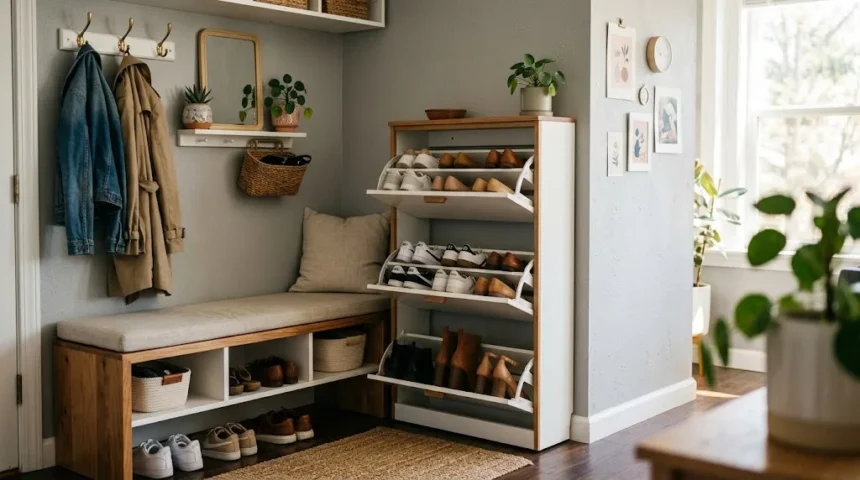
The entryway is one of the most practical locations for everyday shoe storage because footwear can be removed immediately after entering the home. A slim rack, bench, cabinet, or set of baskets can prevent shoes from spreading into nearby rooms. Keeping this area organized also creates a cleaner first impression when guests arrive.
A storage bench is especially useful because it combines seating with hidden or open shoe compartments. You can sit comfortably while putting on shoes, then store them directly underneath. Narrow benches work well in smaller hallways, while larger entryways can accommodate cabinets that hide footwear completely behind doors.
Keeping shoes organized also leaves more room for seasonal decorations without making the entrance feel crowded. During autumn, for example, a tidy entryway provides space for lanterns, plants, or creative pumpkin carving ideas near the doorway. Good organization makes decorating easier without sacrificing practical walking space.
Try Over-the-Door Shoe Organizers
An over-the-door organizer turns unused vertical space into practical storage without requiring additional furniture. Pocket-style organizers are particularly useful for flats, sandals, slippers, and lightweight sneakers. Because the organizer hangs behind a door, it can store many pairs while remaining mostly hidden whenever the door is open.
These organizers are also useful beyond bedroom closets. They can hang behind utility-room doors, wardrobe doors, or hallway closets depending on your home’s layout. Clear pockets make it easy to identify each pair, while fabric pockets provide a softer appearance and may better protect shoes from dust or scratches.
Check door clearance before installing one because a heavily filled organizer can interfere with opening and closing. Avoid placing extremely heavy boots in lightweight pockets that may stretch over time. For smaller footwear collections, using only part of the organizer allows the remaining pockets to hold shoe accessories, cleaning supplies, socks, or insoles.
Use Slim Shoe Cabinets for Small Spaces
Slim shoe cabinets are ideal for hallways and narrow rooms because they provide enclosed storage without extending far from the wall. Many designs use tilting compartments that hold shoes at an angle, allowing several pairs to fit inside a relatively shallow cabinet. This keeps footwear hidden while maintaining a clean and uncluttered appearance.
A closed cabinet can be particularly helpful if you dislike seeing shoes throughout the room. It protects footwear from dust and prevents an entryway from feeling visually busy. The flat top can also provide a practical surface for keys, decorative objects, small baskets, or other items you regularly need before leaving home.
Measure both the cabinet and your footwear before buying. Some extremely shallow models may not comfortably accommodate large shoes, thick sneakers, or boots. If several household members will use the cabinet, assign separate compartments or shelves so everyone knows exactly where their footwear belongs and organization remains easy to maintain.
Organize Shoes Inside a Closet
Closet shoe storage works best when every available area has a clear purpose. The floor can hold racks or cubbies, shelves can store boxed footwear, and unused wall sections may accommodate hanging organizers. Combining several storage methods can dramatically increase capacity without requiring a complete closet renovation.
Place frequently worn shoes where they are easiest to see and reach. Rarely worn formal footwear can sit on higher shelves, while everyday sneakers and work shoes should remain lower. Keeping pairs together and facing them consistently also makes the closet look more organized while helping you immediately notice which shoes are available.
Consider removing original shoe boxes if they consume unnecessary space. Stackable transparent boxes generally create a more uniform storage system and make identification easier. If you prefer keeping original packaging, attach small labels or photographs to the front so you do not have to pull down several boxes before finding the pair you need.
Store Boots Without Wasting Space
Boots require more storage space than most other footwear, especially tall styles that can collapse when unsupported. Keeping them upright helps maintain their shape and prevents creasing. Boot shapers, rolled magazines, or purpose-made inserts can support taller pairs while allowing them to stand neatly beside one another.
Short ankle boots can usually fit on normal shelves, but tall boots may require dedicated closet floor space. Adjustable shelving lets you create taller sections only where necessary instead of leaving oversized gaps throughout the entire unit. This allows sneakers, flats, and sandals to use tighter shelf spacing elsewhere.
If floor space is extremely limited, specialized boot hangers can suspend certain pairs from closet rods. Make sure clips do not damage delicate materials and that the rod can support the additional weight. Seasonal boots can also be placed in breathable under-bed containers once warmer weather arrives, freeing accessible storage for summer footwear.
Use Stackable Shoe Boxes for a Neat Look
Stackable shoe boxes are a practical choice when you want footwear protected while keeping the collection visually organized. Uniform containers fit together more efficiently than mismatched retail boxes and can be arranged on shelves or closet floors. Clear designs make it easier to find the right pair without opening several containers.
Boxes are particularly useful for special occasion shoes, collectible sneakers, or footwear that needs protection from dust. Ventilated models can improve airflow, while front-opening doors allow you to retrieve shoes without dismantling an entire stack. This can make vertical storage much more convenient when several boxes are placed on top of one another.
Avoid storing damp or dirty footwear immediately after wearing it. Allow shoes to dry, remove surface dirt, and then place them inside the container. Maintaining clean storage protects both the shoes and surrounding pairs while reducing odors that can become trapped inside enclosed boxes or tightly packed closet spaces.
Rotate Seasonal Shoes to Create More Room
Keeping every pair accessible throughout the entire year wastes valuable storage space. Instead, rotate footwear according to the season so only shoes you are likely to wear remain in prime locations. Winter boots can move into deeper storage during summer, while sandals and lightweight shoes can be packed away during colder months.
Before storing seasonal footwear, clean each pair and allow it to dry completely. Check for repairs that should be handled before the next season instead of rediscovering damaged shoes months later. Stuffing delicate shoes or boots lightly can also help maintain their shape while they remain unused for extended periods.
Label containers clearly with categories such as winter boots, summer sandals, or formal shoes. This prevents unnecessary searching when the weather changes again. Seasonal rotation also provides a natural opportunity to review your collection and identify pairs that no longer fit, feel comfortable, or deserve valuable storage space.
Declutter Shoes Before Buying More Storage
Before purchasing another rack or cabinet, determine whether every pair in your collection is worth storing. Shoes that are damaged beyond repair, uncomfortable, or untouched for years may simply be taking up useful space. Decluttering first can significantly reduce the size and cost of the storage solution you actually need.
Take every pair out and sort them into categories such as keep, repair, donate, and discard. Try on questionable shoes rather than keeping them because you might wear them someday. If a pair consistently hurts your feet or no longer fits your lifestyle, additional storage will not make it more useful.
Repeat this process periodically as your footwear collection changes. A one-in, one-out rule can also prevent storage from becoming overcrowded again. When new shoes enter the home, consider whether an older pair can leave, helping your existing storage remain manageable rather than constantly expanding to accommodate unnecessary clutter.
Create a Shoe Storage System That Stays Organized
The smartest shoe storage solution is one you can maintain without extra effort every day. If returning shoes requires opening several boxes or rearranging shelves, pairs will eventually end up on the floor. Place everyday footwear in the easiest locations and reserve more complicated storage for shoes used only occasionally.
Group shoes according to a system that makes sense to you. You might organize by type, frequency of use, season, household member, or occasion. Keeping categories together makes it faster to choose footwear and prevents similar pairs from becoming scattered across several unrelated storage areas throughout the home.
Finally, leave a little empty capacity whenever possible. Filling every shelf completely means even one new pair can disrupt the entire system. A small amount of breathing room makes footwear easier to retrieve, keeps shelves looking cleaner, and gives your collection enough flexibility to change without immediately requiring another piece of storage furniture.
Conclusion
Smart shoe storage is about using the space you already have more efficiently. Vertical racks, slim cabinets, under-bed organizers, door pockets, stackable boxes, and entryway benches can significantly increase capacity without making rooms feel crowded. The right solution depends on your footwear collection, available space, and daily routine.
Start by decluttering your shoes before investing in additional storage. Once you know which pairs genuinely deserve space, organize them according to how frequently you wear them. Everyday footwear should remain accessible, while formal and seasonal shoes can move into less convenient areas such as upper shelves or under-bed containers.
A successful shoe organization system should be simple enough to maintain every day. Combine practical storage with seasonal rotation and occasional decluttering to prevent footwear from taking over your home again. Even a small bedroom or narrow hallway can stay organized when every pair has a clear and convenient place.
FAQs
What is the best shoe storage idea for a small space?
Vertical shoe racks, over-the-door organizers, and slim cabinets are excellent for small spaces because they use height rather than valuable floor area. Under-bed storage is also useful for seasonal footwear.
How can I store lots of shoes in a small closet?
Use stackable boxes, adjustable shelves, vertical racks, and hanging organizers together. Keep frequently worn shoes accessible while moving seasonal or rarely used pairs to higher shelves or under-bed storage.
What is the best way to store shoes in an entryway?
A slim shoe cabinet or storage bench works especially well in an entryway. Both options keep frequently worn footwear nearby while preventing loose pairs from cluttering the floor and walking areas.
Should shoes be stored in boxes?
Boxes can protect shoes from dust and damage, especially for special or seasonal footwear. Transparent or labeled boxes are easier to manage because you can identify pairs without opening every container.
How do I keep shoe storage from becoming cluttered?
Give every pair a designated place, keep everyday shoes easiest to access, and declutter regularly. Seasonal rotation and a one-in, one-out rule can also prevent your footwear collection from exceeding available storage.