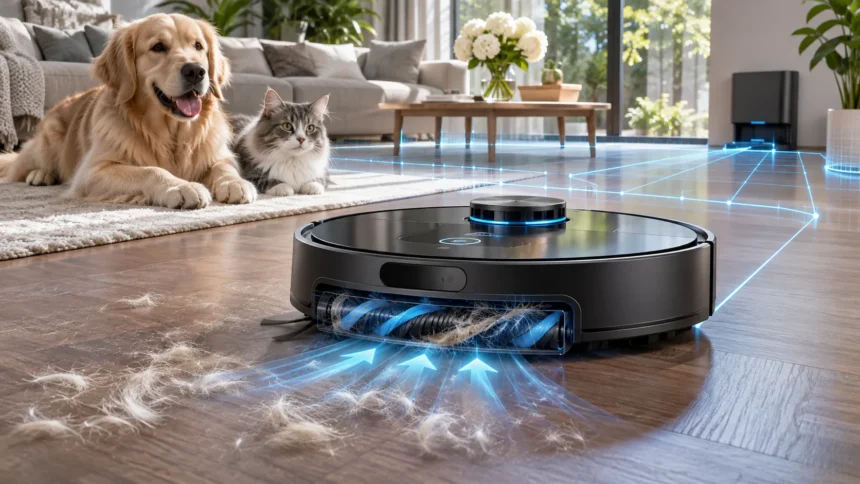
Pet hair can quickly collect on carpets, hardwood floors, rugs, and other areas of your home. Whether you have a playful dog or a long-haired cat, keeping floors clean can become a daily challenge. Regular vacuuming takes time, especially when pets shed throughout the year. Fortunately, robot vacuums can help manage loose fur and everyday dirt with less manual effort.
Choosing the best robot vacuum for pet hair involves more than comparing prices or suction power. Important features include anti-tangle brushes, smart navigation, effective filtration, and automatic dustbin emptying. These technologies can improve cleaning performance and make maintenance easier. However, the right model depends on your flooring, household layout, and pets’ shedding habits.
This guide explains the most important robot vacuum features for pet owners. You will learn how different technologies work, what to look for when shopping, and which mistakes to avoid. Understanding these details can help you choose a practical cleaning solution that keeps your home comfortable and easier to maintain.
What Makes the Best Robot Vacuum for Pet Hair?
The best robot vacuum for pet hair combines reliable cleaning performance with features that reduce maintenance. It should collect loose fur, dust, and debris from the floors in your home. Strong suction, effective brushes, and efficient navigation all contribute to better results. A well-designed vacuum should also operate consistently without frequent interruptions caused by tangled hair.
Different households have different cleaning requirements based on their pets and flooring. A home with several long-haired dogs may require stronger anti-tangle technology than an apartment with one short-haired cat. Carpeted areas can also require more powerful cleaning than smooth floors. Choosing a model based on actual household conditions usually produces better results.
Convenience is another important consideration when comparing robot vacuums. Features such as automatic charging, scheduled cleaning, and self-emptying stations can reduce routine cleaning responsibilities. However, premium technology is not always necessary for every home. The ideal robot vacuum should provide dependable performance, straightforward maintenance, and useful features within your budget.
Why Suction Power Matters for Pet Hair Removal
Suction power plays an important role in collecting pet hair from floors and carpets. Loose fur can settle into carpet fibers, making removal more difficult than cleaning smooth surfaces. A robot vacuum needs sufficient airflow and effective brush movement to lift this material. Strong suction is helpful, but it does not determine overall cleaning performance by itself.
Manufacturers often advertise suction power using measurements called pascals, abbreviated as Pa. Higher numbers may indicate greater suction pressure under particular testing conditions. However, differences in airflow, cleaning head design, and brush contact can affect actual results. Comparing independent cleaning tests provides a more complete picture than relying only on advertised specifications.
Some robot vacuums include automatic suction adjustment for different flooring types. When the device detects carpeting, it may increase power to improve debris collection. This feature can be useful in homes with both carpets and hard floors. However, stronger cleaning modes may increase noise levels and reduce battery runtime.
Anti-Tangle Brushes for Long Pet Hair
Pet hair wrapping around vacuum brushes is a common problem in households with shedding animals. Long strands can become trapped around rotating rollers and reduce their effectiveness. Removing tangled hair regularly can also become frustrating. Anti-tangle brush systems are designed to reduce this buildup and make routine vacuum maintenance easier.
Manufacturers use several technologies to improve hair management. Some robot vacuums feature rubber rollers, while others use specially shaped bristles or integrated comb mechanisms. These designs help guide hair toward the suction opening instead of allowing it to wrap around moving parts. Their effectiveness varies, especially when collecting large amounts of long fur.
Pet owners should look for brushes that are easy to remove and clean. Even models advertised as tangle-resistant may require occasional maintenance. Checking replacement brush availability is also important because components can wear over time. An effective anti-tangle design can improve cleaning consistency while reducing the time spent removing trapped hair.
Self-Emptying Dustbins for Easier Maintenance
A self-emptying robot vacuum automatically transfers collected debris into a larger container at its docking station. This feature reduces the need to empty the robot’s small dustbin after every cleaning session. It is particularly convenient for homes where pets shed heavily. Larger collection capacity can make scheduled cleaning easier to maintain.
Self-emptying stations usually use disposable bags or reusable collection containers. Bagged systems may reduce direct contact with collected dust during disposal. However, replacement bags create an ongoing expense. Bagless systems avoid some consumable costs but may release more dust when emptied, depending on their design.
Automatic emptying does not eliminate maintenance completely. Pet hair can still accumulate around brushes, filters, wheels, and collection pathways. Some docking stations also produce noticeable noise while transferring debris. Nevertheless, self-emptying technology can be a valuable investment for pet owners who want to reduce frequent manual cleaning tasks.
HEPA Filtration and Better Dust Control
Pet hair often collects alongside dust, dander, and other small particles. A robot vacuum with an effective filtration system can help retain particles collected during floor cleaning. This may be especially useful in homes with animals that shed regularly. However, filtration performance depends on both the filter and the vacuum’s overall construction.
HEPA filters are designed to capture very small airborne particles under specified testing conditions. Some robot vacuums use genuine HEPA filtration, while others have different high-efficiency filters. Buyers should review product specifications carefully rather than assuming every advertised filter performs equally. A well-sealed system also helps prevent collected dust from escaping.
Regular filter maintenance is essential for maintaining vacuum performance. Dirty filters can restrict airflow and reduce cleaning efficiency. Some models use washable filters, while others require periodic replacement. Follow the manufacturer’s instructions because washing a non-washable filter may damage it and reduce its effectiveness.
Smart Navigation and Room Mapping Features
Smart navigation allows a robot vacuum to move through rooms using a planned cleaning route. Many models use laser sensors, cameras, or other detection systems to understand their surroundings. These technologies can help reduce repeated cleaning and improve floor coverage. Accurate navigation becomes especially valuable in homes with several rooms.
Room mapping also allows owners to customize their cleaning schedules. For example, a robot might clean the living room more frequently because pets spend most of their time there. Some apps support room-specific suction settings and virtual boundaries. These controls provide greater flexibility without requiring users to supervise every cleaning session.
Navigation performance varies between different robot vacuums. Crowded rooms, narrow spaces, and changing furniture arrangements can affect mapping accuracy. Camera-based systems may also have different lighting requirements from laser-based models. When comparing options, consider your home’s layout and whether advanced navigation features provide meaningful benefits.
Obstacle Avoidance for Pet Toys and Accessories
Pet owners often have toys, feeding bowls, and other accessories scattered around their homes. These objects can interfere with automatic vacuuming if the robot fails to recognize them. Obstacle avoidance technology helps detect certain items and adjust the cleaning route. This can reduce collisions, interruptions, and the risk of objects becoming trapped.
Advanced robot vacuums may use cameras, sensors, and artificial intelligence to identify obstacles. Some systems can recognize cables, shoes, and selected pet-related objects. However, detection accuracy varies between products and situations. Even expensive models can miss small objects or incorrectly identify items on the floor.
Preparing the cleaning area remains important regardless of the vacuum’s obstacle detection capabilities. Remove small toys, loose cables, and objects that could become trapped. Pet accidents should always be cleaned manually before running a robot vacuum. These precautions help prevent unwanted messes and improve overall cleaning reliability.
Cleaning Performance on Carpets and Hard Floors
Flooring type strongly influences how effectively a robot vacuum removes pet hair. Smooth surfaces such as tile, laminate, and sealed hardwood usually allow loose fur to be collected more easily. Carpets can trap hair deep within their fibers. As a result, carpet cleaning often requires effective agitation alongside suitable suction.
Robot vacuums designed for mixed flooring may automatically adjust cleaning settings when moving between surfaces. Carpet detection can increase suction, while specialized brush systems may improve hair collection. However, high-pile carpeting and thick rugs can remain challenging. Some robots struggle to move through deep fibers or cross raised rug edges.
Before purchasing, compare cleaning performance on flooring similar to your own. A vacuum that works well on hardwood may not deliver equally strong results on carpets. Reviews that test embedded pet hair can provide useful information. Matching the machine’s capabilities to your home helps avoid disappointing cleaning results.
Robot Vacuum and Mop Combinations for Pet Owners
Robot vacuum and mop combinations provide two cleaning functions in one machine. The vacuum collects fur and dry debris, while the mop handles suitable dirt on hard floors. These systems can be useful when pets track dust or muddy paw marks indoors. However, their effectiveness depends on the mopping technology and floor conditions.
Some premium models include rotating mop pads, automatic water dispensing, and docking stations that clean the mop attachments. Others provide simpler damp-wiping functions. Certain robots can lift their mop pads when they detect carpets. This helps reduce unnecessary moisture exposure on flooring that should remain dry.
A robot mop should not replace proper cleaning of every pet-related mess. Liquid accidents and contaminated surfaces usually require immediate manual cleaning and appropriate sanitation. If a robot fails to recognize these areas, it may spread unwanted material. Vacuum-and-mop combinations are most useful for maintaining floors between more thorough cleaning sessions.
Battery Life and Automatic Charging
Battery life determines how much floor space a robot vacuum can cover during a cleaning session. Larger homes may require longer operating times than smaller apartments. High suction settings and demanding carpet conditions can also increase battery consumption. Advertised runtimes may differ from actual performance under normal household conditions.
Many robot vacuums automatically return to their charging stations when battery power becomes low. Some models can resume cleaning from where they stopped after recharging. This feature is especially helpful for homes with multiple rooms. It reduces the need to restart unfinished cleaning sessions manually.
Battery capacity should be considered alongside navigation efficiency and cleaning speed. A robot with excellent route planning may cover a home more efficiently than one with a larger battery but poor navigation. Buyers should also check battery replacement options. Practical battery performance contributes to reliable long-term operation.
Smart App Controls and Cleaning Schedules
Smartphone apps allow users to manage robot vacuum settings and cleaning schedules remotely. Depending on the model, an app may provide room maps, suction adjustments, maintenance reminders, and cleaning history. These functions make it easier to customize routine cleaning. Pet owners can schedule sessions around their household activities.
For example, a robot vacuum might clean the main living areas each morning while family members are away. Some models allow users to establish restricted zones around feeding stations or delicate objects. Others support customized cleaning intensity for different rooms. These features can improve convenience when they work reliably.
An advanced app should still be simple to understand and use. Complicated controls or unstable connections can make everyday cleaning frustrating. Buyers should also review privacy settings, particularly when devices include cameras or cloud-connected features. Dependable basic functionality is often more valuable than numerous complicated settings.
Noise Levels and Pet-Friendly Cleaning
Robot vacuums create noise through their motors, brushes, wheels, and docking systems. Some pets become nervous around unfamiliar moving devices or sudden sounds. Others adjust quickly and show little interest. Noise levels can therefore influence how comfortable a vacuum is for both animals and household members.
Different cleaning settings may produce noticeably different sound levels. Maximum suction modes are usually louder than standard operation. Self-emptying docks can also generate brief but powerful noise when transferring debris. Buyers concerned about sound should compare measured operating noise rather than relying only on descriptions such as quiet or silent.
Pets should be introduced to robot vacuums gradually and without pressure. Allow animals to observe the device from a comfortable distance and leave the area whenever they choose. Running cleaning sessions while pets are in another room may be helpful. A predictable routine can reduce unnecessary disturbances.
Best Robot Vacuum Features for Multi-Pet Homes
Households with multiple pets often experience faster hair accumulation than homes with one animal. A robot vacuum for these environments should provide dependable suction and effective hair management. Larger dust collection capacity can also reduce maintenance interruptions. Consistent cleaning performance matters because fur may accumulate again shortly after each session.
Self-emptying stations can be especially convenient when several animals shed regularly. Anti-tangle rollers help manage longer hair, while effective navigation improves coverage across frequently used rooms. Scheduling tools can also support regular cleaning. However, owners should still inspect brushes and filters because heavy fur buildup can affect performance.
The ideal combination of features depends on animal size, shedding patterns, and household flooring. Multiple short-haired pets may create different cleaning demands from one heavily shedding long-haired dog. Testing information and realistic maintenance expectations can guide the purchase. Choosing based on actual conditions provides better value than focusing only on premium features.
How Much Does a Good Robot Vacuum for Pet Hair Cost?
Robot vacuums are available at different price levels, ranging from basic cleaning models to advanced multifunction systems. Budget options usually focus on simple floor cleaning and automatic charging. Midrange products may provide better navigation and improved brush designs. Premium models often include self-emptying docks, advanced obstacle recognition, and automated mop maintenance.
A higher price does not always guarantee better pet hair removal. Some expensive robots prioritize convenience features rather than significantly stronger cleaning performance. Buyers should compare actual pickup results, maintenance requirements, and warranty coverage. Paying for features that match household needs is usually more practical than selecting the most expensive available model.
Ownership costs also extend beyond the initial purchase price. Replacement brushes, filters, batteries, dust bags, and cleaning accessories may require ongoing spending. Some specialized parts can be difficult to find after a model becomes older. Reviewing spare part availability and maintenance expenses helps identify better long-term value.
Common Mistakes When Buying a Robot Vacuum
One common mistake is focusing only on advertised suction power. Although suction is important, pet hair removal also depends on airflow, brush design, and contact with floor surfaces. A high suction rating does not automatically guarantee better carpet cleaning. Independent performance comparisons can provide more useful buying information.
Another mistake is assuming a robot vacuum will eliminate every cleaning responsibility. These machines can maintain floors regularly, but they may struggle with stairs, upholstered furniture, and deeply embedded hair. Manual vacuuming is still necessary in many households. Realistic expectations help owners appreciate the benefits without overlooking limitations.
Ignoring maintenance requirements can also lead to disappointing results. Pet fur may become trapped in rollers and wheels, while filters can collect significant dust. A poorly maintained vacuum may lose efficiency over time. Choosing easy-to-clean components and following maintenance instructions can help prevent unnecessary performance problems.
How to Maintain a Robot Vacuum for Pet Hair
Regular maintenance helps a robot vacuum collect fur and debris efficiently. Begin by inspecting the main brush for tangled hair or trapped objects. Check side brushes and wheels because these components can also collect loose strands. Removing buildup according to manufacturer instructions helps maintain smooth movement and effective cleaning.
Dustbins and filters require attention as well. Empty collection containers when needed and replace full dust bags before airflow becomes restricted. Clean or replace filters according to the recommended schedule. Avoid washing parts unless the manufacturer specifically identifies them as washable.
Sensors, charging contacts, and docking stations should also be checked periodically. Dust accumulation can interfere with navigation, charging, and automatic emptying. Software updates may improve device reliability or address known issues. Consistent maintenance helps protect the vacuum and supports dependable cleaning over the long term.
How to Choose the Right Robot Vacuum for Your Home
Choosing the right robot vacuum begins with understanding your home’s most important cleaning challenges. Consider flooring type, room size, shedding levels, and the amount of furniture. Homes with long-haired pets may benefit from advanced anti-tangle systems. Carpeted households should prioritize tested hair pickup performance rather than advertised suction alone.
Next, decide which convenience features are genuinely useful. A self-emptying station may save time in a busy household, while advanced mapping can help manage multiple rooms. Small apartments may not require a large multifunction docking system. Identifying essential features first can prevent unnecessary spending.
Finally, compare product reliability, replacement part availability, and long-term maintenance requirements. Review cleaning tests that reflect realistic household conditions and examine warranty terms. The best robot vacuum for pet hair should fit your cleaning needs without creating excessive maintenance work. A practical balance of performance, convenience, and cost usually delivers the strongest overall value.
Conclusion
Finding the best robot vacuum for pet hair requires careful attention to cleaning performance and everyday convenience. Strong suction, effective anti-tangle brushes, smart navigation, and reliable filtration can help manage loose fur. Self-emptying systems and automatic cleaning schedules may further reduce manual work, particularly in households with heavy-shedding pets.
The right model depends on your flooring, home layout, budget, and pets’ habits. Expensive technology is not always necessary when a simpler vacuum can meet your cleaning requirements. Comparing real-world performance and maintenance costs helps identify the most practical choice.
A robot vacuum cannot replace every household cleaning task, but it can make regular floor maintenance considerably easier. Choosing suitable features and following a consistent maintenance routine will support better performance. With the right expectations, a dependable robot vacuum can help keep pet hair under control and create a cleaner, more comfortable home.
Frequently Asked Questions
What is the best robot vacuum for pet hair?
The best robot vacuum for pet hair combines reliable suction, a tangle-resistant brush, effective navigation, and convenient maintenance. The ideal model depends on your flooring, shedding levels, budget, and preferred cleaning features.
Do robot vacuums work well for dog and cat hair?
Yes, many robot vacuums effectively collect loose dog and cat hair from carpets and hard floors. However, deeply embedded fur may require occasional manual vacuuming, especially on thick carpets.
Is a self-emptying robot vacuum worth buying for pets?
A self-emptying robot vacuum can be worthwhile for homes with heavily shedding pets. It reduces frequent dustbin emptying, although brushes, filters, and docking systems still need regular cleaning.
Can robot vacuums remove pet hair from carpets?
Yes, suitable robot vacuums can remove pet hair from carpets using effective suction and brush agitation. Performance varies with carpet thickness, hair type, and vacuum design, so independent testing is useful.
How often should I run a robot vacuum for pet hair?
Many pet owners benefit from daily or several-times-weekly cleaning. The ideal schedule depends on shedding levels, household activity, flooring, and dustbin capacity. Adjust frequency according to visible hair accumulation.