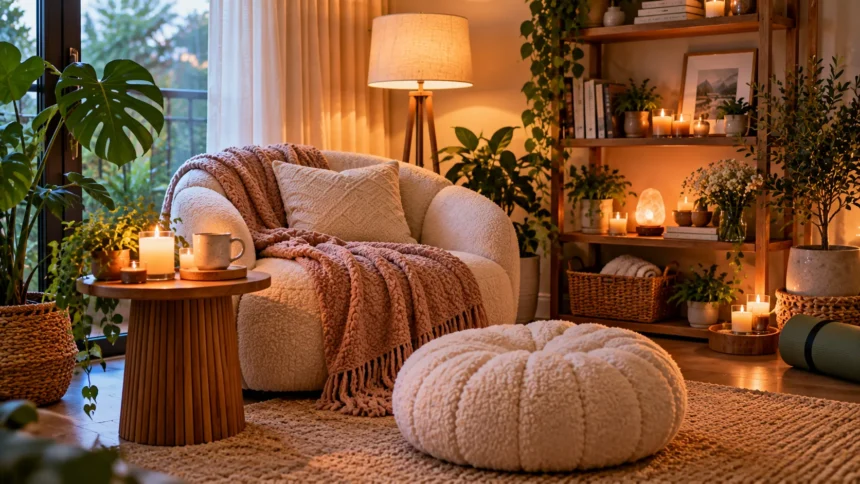
Creating a relaxing self-care corner at home gives you a dedicated place to slow down, recharge, and enjoy quiet moments away from everyday responsibilities. You do not need an entire room or an expensive renovation to create one. Even a small bedroom corner, unused chair, window area, or quiet section of your living room can become a comfortable personal retreat.
The most effective self-care spaces feel simple, inviting, and personal. Comfortable seating, soft lighting, organized essentials, calming colors, and a few meaningful details can transform an overlooked area into somewhere you genuinely want to use. The goal is not perfection but creating a peaceful environment that makes intentional downtime easier to enjoy.
Choose the Right Location for Your Self-Care Corner
Start by looking around your home for an area that feels naturally quieter than the rest. A bedroom corner, spot beside a window, unused section of the living room, or small area near a bookshelf can work well. You do not need much floor space as long as the location feels reasonably comfortable and separate from busy household activity.
Think about what usually happens around the area before choosing it. A beautiful corner beside a television may not feel relaxing if other people regularly use the room for entertainment. Similarly, a location beside your work desk can make it difficult to mentally separate relaxation from emails, deadlines, and unfinished responsibilities.
Natural light can be helpful if you plan to read, journal, or enjoy your self-care space during the day. However, easy access matters just as much as appearance. Choose somewhere you can realistically use without moving furniture or setting everything up again whenever you want a few minutes of quiet time.
Start With Comfortable Seating
Comfortable seating is the foundation of a self-care corner because you are unlikely to use the space if sitting there feels awkward. An existing armchair, small lounge chair, floor cushion, bench, or supportive dining chair can work depending on your available space. You do not automatically need to purchase new furniture.
Add a cushion or soft throw if the seating needs additional comfort. These small textile changes can make a basic chair feel much warmer and more inviting while also introducing color and texture. Choose fabrics that feel pleasant against your skin rather than selecting something purely because it looks stylish.
Consider how you plan to use the space when choosing your seating position. Reading may require stronger back support, while meditation or gentle stretching may work better with floor cushions. Your self-care corner should support the activities you genuinely enjoy instead of copying a setup designed for someone else’s routine.
Use Soft Lighting to Create a Calm Atmosphere
Lighting can completely change the mood of a small area. Bright overhead lighting may make your self-care corner feel like another functional part of the house, while a table lamp, floor lamp, or dimmable light can create a warmer and more relaxing atmosphere. Use enough light to remain comfortable without making the space excessively bright.
If your corner receives natural daylight, take advantage of it during the morning or afternoon. Position your chair where you can enjoy the light without uncomfortable glare. In the evening, switch to softer artificial lighting so the same area can continue feeling inviting after the rest of the room becomes darker.
Battery-operated candles or safely used traditional candles can also create a softer visual effect if they suit your home. Keep decorative lighting simple rather than adding several competing light sources. One thoughtfully positioned lamp can often create a stronger relaxing atmosphere than filling the corner with unnecessary lighting accessories.
Add Soft Textures for Extra Comfort
Soft textures can make a small self-care area feel noticeably warmer and more welcoming. A knitted throw, comfortable cushion, small rug, fabric basket, or upholstered chair can create visual softness without requiring much space. These details help distinguish the corner from the more practical areas surrounding it.
Try combining two or three different textures instead of using the same material everywhere. A smooth cushion, woven basket, and soft blanket can add enough variety to make the area interesting while keeping the overall appearance calm. Too many textures or patterns may make a compact corner feel unnecessarily busy.
Choose items you can genuinely use rather than purely decorative accessories. A blanket should feel comfortable enough to wrap around yourself, while cushions should provide real support. Self-care spaces feel more inviting when comfort and appearance work together instead of when decoration makes the area harder to use.
Keep Your Self-Care Essentials Organized
Your relaxation corner can quickly become cluttered if books, journals, skincare products, chargers, cups, and other items collect there without designated storage. Use one small basket, drawer, tray, or shelf to hold the things you regularly use. Keeping essentials nearby makes it easier to enjoy the space without searching around the house.
Organize items according to the activities you prefer. You might keep a journal and pen together, place books in a small basket, or store headphones and charging accessories in a drawer. Avoid bringing every self-care product you own into the area, because too many belongings can reduce the calm feeling you are trying to create.
Review the space occasionally and remove anything that no longer belongs there. Empty cups, old magazines, packaging, and miscellaneous household objects can slowly turn a relaxing corner into another storage area. A quick weekly reset keeps the setup simple and ensures everything in the space continues to serve a clear purpose.
Bring Natural Elements Into the Space
Natural materials can make a self-care corner feel softer and more grounded. Wooden furniture, woven baskets, cotton fabrics, greenery, or a small vase of flowers can introduce warmth without overwhelming a compact area. You only need one or two natural elements to create a noticeable visual difference.
If you enjoy plants, choose one that suits the available light and your willingness to maintain it. A healthy plant near the chair can add color and make the area feel more refreshing. Avoid overcrowding the space with several pots, especially when your corner is already limited in size.
You can also use natural textures if live plants are not practical. A wooden tray, woven rug, linen cushion, or dried decorative arrangement can create a similar sense of warmth. The goal is to add gentle visual interest while maintaining the simple and peaceful atmosphere of your personal retreat.
Create a Small Collection of Relaxing Activities
Your self-care corner becomes more useful when you know what you want to do there. Reading, journaling, listening to music, gentle stretching, meditation, crafting, or simply enjoying a quiet drink can all fit naturally into the space. Choose activities that genuinely help you slow down rather than activities you think you should enjoy.
Keep the supplies for one or two activities nearby so beginning requires very little effort. A book, notebook, headphones, or small art kit may be enough. When everything is easily accessible, you can use the corner for ten minutes without turning relaxation into a preparation project.
Avoid expecting the space to support every hobby you have. A crowded collection of books, exercise equipment, craft materials, and electronics can quickly make the area feel chaotic. Keeping the purpose relatively focused helps preserve the calm atmosphere and makes the corner easier to maintain.
Reduce Digital Distractions Around the Corner
A relaxing corner may be less effective if your phone constantly interrupts you with notifications. Consider keeping your device slightly away from the chair or switching off nonessential alerts while using the space. You can still keep it nearby when necessary without allowing it to control your quiet time.
If you use your phone for music, meditation audio, or reading, decide what you want before sitting down. Open the playlist or app you need, then avoid repeatedly switching to messages, social media, or work. Intentional technology use can support relaxation without allowing digital distractions to dominate your self-care routine.
Keep work devices away from the corner whenever possible. Laptops, paperwork, and professional equipment can visually connect the space with deadlines and productivity. Even if you cannot create a large physical separation, storing work materials out of sight during personal time can make the corner feel more clearly dedicated to rest.
Add a Subtle Personal Touch
Your self-care corner should feel like your space rather than a generic design copied from social media. Add one or two personal objects that genuinely make you happy, such as a favorite photograph, piece of artwork, meaningful book, handmade item, or small souvenir connected to a positive memory.
Be selective when adding decorative pieces. Too many sentimental objects can make a small area feel crowded and visually distracting. Choosing a few items with real meaning often creates more personality than covering every available surface with accessories simply because the space needs decoration.
You can also change small details seasonally if you enjoy refreshing your environment. A different cushion cover, lightweight summer throw, or warmer winter blanket can create a new feeling without redesigning the entire corner. Keeping the foundation simple makes occasional updates easy and inexpensive.
Make the Space Easy to Maintain
A self-care corner should reduce stress rather than create more cleaning and organization work. Choose a setup that can be reset in only a few minutes. A chair, small table, basket, lamp, and a few useful items are often enough to create a comfortable space without introducing complicated maintenance.
Build a quick reset into your routine after using the corner. Return books to their basket, put away your journal, remove cups, fold the blanket, and clear anything that does not belong. These small habits prevent temporary clutter from gradually taking over the space.
Clean the area along with the surrounding room rather than treating it as a separate project. Dust the lamp or table, vacuum the rug, and wash blankets or cushion covers when needed. Regular light maintenance keeps your relaxation corner fresh and prevents it from becoming another neglected area of the home.
Use the Corner Consistently
Creating a beautiful self-care corner provides little benefit if you rarely use it. Build short periods of quiet time into your normal routine instead of waiting until you have an entire free evening. Even ten or fifteen minutes of reading, journaling, or sitting quietly can make the space feel worthwhile.
You might use the corner with morning coffee, after finishing work, or during a screen-free period in the evening. Connecting self-care time to an existing habit makes it easier to remember. The routine does not need to happen at exactly the same time every day to become meaningful.
Allow the way you use the space to change depending on your mood. Some days you may want to read, while another day you might simply sit with music or enjoy a quiet drink. Flexibility helps the corner remain enjoyable instead of turning self-care into another rigid routine you feel obligated to follow.
Conclusion
Creating a relaxing self-care corner at home does not require much space or money. A comfortable chair, soft lighting, simple storage, and a few thoughtful textures can transform an unused area into a peaceful personal retreat. The most important thing is choosing a location that feels comfortable and easy to access.
Keep the setup focused on the activities that genuinely help you relax. Books, journaling supplies, music, soft blankets, plants, or meaningful decorative details can make the space feel personal without overcrowding it. Reducing digital distractions and keeping work materials away can further protect the calm atmosphere.
Your self-care corner should be simple enough to use and maintain regularly. Rather than trying to recreate a perfect wellness space, create something that fits naturally into your own home and routine. With a few intentional choices, even a small corner can become a comfortable place to slow down and enjoy meaningful personal time.
FAQs
Where is the best place to create a self-care corner?
Choose a relatively quiet location with enough space for comfortable seating. A bedroom corner, window area, unused living room section, or small reading nook can all work well.
What should I put in a self-care corner?
Start with comfortable seating, soft lighting, a blanket, and storage for a few relaxing activities. Books, a journal, headphones, plants, or a favorite drink can also fit naturally.
How can I create a self-care corner in a small home?
Use an unused corner, compact chair, wall-mounted shelf, and small basket instead of large furniture. Keeping the setup minimal allows you to create a calming space without sacrificing much floor area.
How can I create a relaxing corner without spending money?
Rearrange furniture you already own and use existing blankets, cushions, books, lamps, or baskets. Decluttering and changing the way you use an overlooked area can make a significant difference.
How do I keep my self-care space relaxing?
Limit clutter, remove work materials, reduce unnecessary notifications, and reset the area after each use. Keeping only meaningful and useful items helps preserve the calm atmosphere over time.