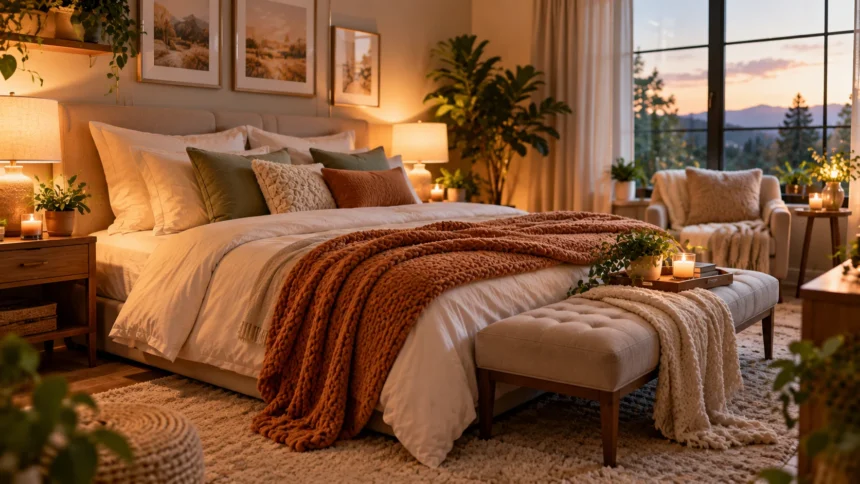
A cozy bedroom should feel like a place where you naturally want to slow down at the end of the day. Soft textures, comfortable bedding, warm lighting, organized surfaces, and personal details can transform even a simple room into a relaxing retreat. You do not need an expensive renovation or designer furniture to create that comforting atmosphere.
The most inviting bedrooms usually combine comfort with simplicity. Instead of filling the room with decorations, focus on the elements that affect how the space feels when you enter it. Thoughtful choices involving color, lighting, bedding, furniture, storage, and natural textures can make your bedroom warmer, calmer, and much more enjoyable to spend time in.
Start With a Warm and Calming Color Palette
Color can influence the overall mood of a bedroom before you add any furniture or accessories. Warm neutrals, soft beige, muted green, gentle blue, cream, and earthy tones can create a peaceful foundation. Choose colors that feel comfortable to you rather than following a trend that may not suit your personal style.
You do not necessarily need to repaint the walls to change the atmosphere. Bedding, curtains, rugs, cushions, artwork, and throws can introduce softer colors without requiring a major decorating project. Keeping the largest visible elements within a coordinated palette can make the room feel more balanced and intentionally designed.
If you enjoy stronger colors, use them as accents instead of covering every surface. A deep-colored cushion, piece of artwork, or throw can add personality while allowing the overall room to remain calm. Limiting the number of competing colors also reduces visual clutter and helps the bedroom feel more restful.
Make the Bed the Most Inviting Part of the Room
The bed is usually the largest piece of furniture in the bedroom, so it naturally becomes the main visual focus. Start with comfortable sheets, supportive pillows, and bedding that suits the season. A bed that looks soft and feels comfortable can instantly make the entire bedroom seem more inviting.
Layering can create a cozy appearance without making the bed difficult to use. Add a duvet or comforter, then place a lightweight blanket or textured throw near the foot of the bed. A few well-chosen cushions can provide additional softness while keeping the arrangement simple enough to reset each morning.
Avoid covering the bed with so many decorative pillows and blankets that preparing it becomes inconvenient. Cozy does not mean overcrowded. The goal is to create a sleeping area that looks warm and welcoming but still feels practical enough that you can use and maintain it comfortably every day.
Use Soft and Layered Lighting
Lighting has a powerful effect on how cozy a bedroom feels. Bright ceiling lights can be useful for cleaning or getting dressed, but they may feel harsh during quieter evening hours. Adding bedside lamps, wall lights, or dimmable fixtures allows you to create softer lighting when you want the room to feel more relaxing.
Try using several smaller light sources rather than relying entirely on one central fixture. A bedside lamp can create a comfortable reading area, while another lamp across the room can provide gentle background illumination. Layered lighting makes the bedroom feel warmer because different parts of the room can be lit without becoming overly bright.
Natural light matters during the day as well. Open curtains when appropriate to bring warmth and brightness into the room, then switch to softer artificial lighting in the evening. This gradual change can make the bedroom feel lively during the day and more intimate as you begin to wind down.
Add Soft Textures Throughout the Bedroom
Texture helps a bedroom feel warm even when the color palette is simple. Soft blankets, woven rugs, upholstered furniture, cotton bedding, linen curtains, and knitted cushions can create visual depth without requiring bold patterns. These materials make the room look comfortable while also providing practical softness you can actually enjoy.
Try mixing a few different textures rather than using the same material everywhere. A smooth duvet, chunky throw, soft rug, and woven basket can complement one another while keeping the design relaxed. The contrast creates interest without making the room feel cluttered or overly decorated.
Pay attention to how materials feel as well as how they look. A decorative blanket may be beautiful, but it contributes more to a cozy retreat when it is also pleasant to use. Choosing fabrics that feel comfortable against your skin makes the bedroom more inviting because the softness is functional rather than purely visual.
Keep the Bedroom Organized and Clutter-Free
Clutter can quickly make a bedroom feel busy instead of relaxing. Clothing on chairs, paperwork on bedside tables, and bags on the floor create visual reminders of unfinished tasks. Clearing these items allows the softer and more comfortable elements of the room to stand out instead of being hidden by everyday mess.
Give commonly used belongings convenient storage locations. Clothing can go into drawers or the wardrobe, books can stay on a shelf, and smaller accessories can be placed in baskets or trays. Storage should be easy enough to use every day so keeping the room organized does not become another difficult chore.
Do a short reset whenever the bedroom starts feeling untidy. Put away clothing, clear surfaces, remove cups, and return misplaced items to their proper locations. Spending a few minutes maintaining order can help preserve the calm atmosphere and prevent the room from gradually becoming a storage area.
Create a Comfortable Bedside Area
The area beside your bed has a strong influence on how relaxing the room feels because you interact with it every morning and evening. Keep the bedside table simple and useful rather than filling it with miscellaneous belongings. A lamp, book, glass of water, and small personal item may be enough.
If your bedside table has drawers, use them to hide items that you need but do not want constantly visible. Chargers, tissues, notebooks, and other small essentials can remain accessible without creating surface clutter. This allows the area around the bed to look cleaner and more intentional.
Manage cables carefully as well. Charging cords and electronic accessories can quickly create a messy appearance, especially in a small bedroom. Simple cable clips, ties, or a compact charging station can keep everything organized while helping the sleeping area feel quieter and less dominated by technology.
Bring Natural Elements Into the Room
Natural elements can make a bedroom feel warmer and more grounded. Wood furniture, woven baskets, cotton fabrics, plants, dried flowers, and natural textures introduce softness without making the space overly decorative. Even one or two carefully selected additions can change the atmosphere of a plain bedroom.
If you enjoy plants, choose varieties that suit the light conditions in your room and your ability to maintain them. One healthy plant on a dresser or near a window can add life and color. Avoid filling every surface with greenery, because too many plants can make a small room feel crowded.
Natural materials can also be incorporated through smaller decorative details. A wooden tray, rattan basket, linen curtain, or woven rug can provide subtle texture and warmth. These elements work particularly well in neutral bedrooms because they add visual interest while maintaining the calm and understated mood.
Create a Small Relaxation Corner
If your bedroom has enough space, create a small area dedicated to quiet activities. A comfortable chair, soft cushion, and small lamp can turn an unused corner into a reading or relaxation spot. This gives you somewhere to unwind without automatically getting into bed whenever you want to rest.
You do not need much furniture to create this zone. In a small bedroom, a floor cushion, compact chair, or simple bench may be enough. Keep the area uncluttered so it feels like part of the bedroom rather than becoming another place where clothes and miscellaneous belongings accumulate.
Use the space for activities that help you slow down, such as reading, journaling, or listening quietly to music. Creating a separate relaxing area can make the bedroom feel more versatile while still supporting the overall sense of calm that defines a cozy retreat.
Control Noise, Temperature, and Airflow
Comfort involves more than furniture and decoration. A bedroom can look beautiful but still feel unpleasant if it is too hot, cold, noisy, or stuffy. Adjusting the physical environment to match your comfort preferences can make the room significantly more enjoyable, especially in the evening.
Use fans, heating, air conditioning, windows, and seasonal bedding as appropriate for your climate. Lighter materials may feel better during warmer months, while thicker blankets can create extra warmth in colder weather. Having flexible layers allows you to adapt the bedroom without completely changing the setup.
Noise can also affect the cozy atmosphere. Curtains, rugs, and upholstered furniture may soften some sound within the room, while closed doors or windows can reduce outside disturbances when appropriate. A comfortable temperature, fresh air, and manageable noise levels work together to make the bedroom feel more peaceful.
Add Personal Details That Make the Room Feel Yours
A bedroom retreat should reflect your personality rather than look like a generic showroom. Photographs, meaningful artwork, favorite books, travel memories, or carefully chosen decorative objects can make the space feel familiar and comforting. Personal details often create more warmth than expensive decorations because they have genuine meaning.
The key is to be selective. Instead of filling every wall and surface, choose a smaller number of items that you truly enjoy looking at. Leaving open space around personal objects can make them feel more intentional and prevent the room from becoming visually crowded.
Consider rotating decorations occasionally rather than displaying everything at once. Seasonal artwork, different cushion covers, or a favorite throw can refresh the bedroom without requiring major changes. This approach keeps the space interesting while preserving the simple, uncluttered atmosphere that makes a cozy room easier to enjoy.
Conclusion
Creating a cozy bedroom retreat is mainly about combining comfort, simplicity, and personal style. Soft bedding, warm lighting, calming colors, natural textures, and organized surfaces can make a significant difference without requiring a large budget. The goal is to create a room that feels inviting every time you enter it.
Small environmental details matter too. Comfortable temperature, controlled noise, fresh air, soft textiles, and a tidy bedside area all contribute to the overall atmosphere. When these elements work together, the bedroom begins to feel less like another functional room and more like a dedicated space for rest and quiet time.
The best cozy bedroom is one that fits your lifestyle and preferences. You do not need to follow every decorating trend or recreate a designer room exactly. By choosing comfortable materials, reducing clutter, and adding meaningful details, you can create a personal retreat that feels warm, peaceful, and easy to maintain.
FAQs
How can I make my bedroom cozy on a small budget?
Start with inexpensive changes such as rearranging furniture, reducing clutter, adding a soft throw, and using warmer lighting. Small textile and lighting upgrades can create a noticeable difference without requiring new furniture.
What colors make a bedroom feel cozy?
Warm neutrals, soft beige, cream, muted green, gentle blue, and earthy shades can create a comfortable atmosphere. Choose colors you personally enjoy and keep the overall palette relatively coordinated.
How can I make a small bedroom feel cozy without making it crowded?
Use a simple color palette, practical storage, soft lighting, and only a few decorative pieces. Focus on texture and comfort rather than adding extra furniture or filling every available surface.
What type of lighting is best for a cozy bedroom?
Layered lighting works well because it allows you to control brightness throughout the evening. Bedside lamps, wall lights, and dimmable fixtures can create a softer atmosphere than one strong overhead light.
What is the easiest way to make a bedroom feel more relaxing?
Start by clearing clutter, improving the bedding, lowering harsh lighting, and adjusting the room temperature. These simple changes can immediately make the bedroom feel calmer and more comfortable.