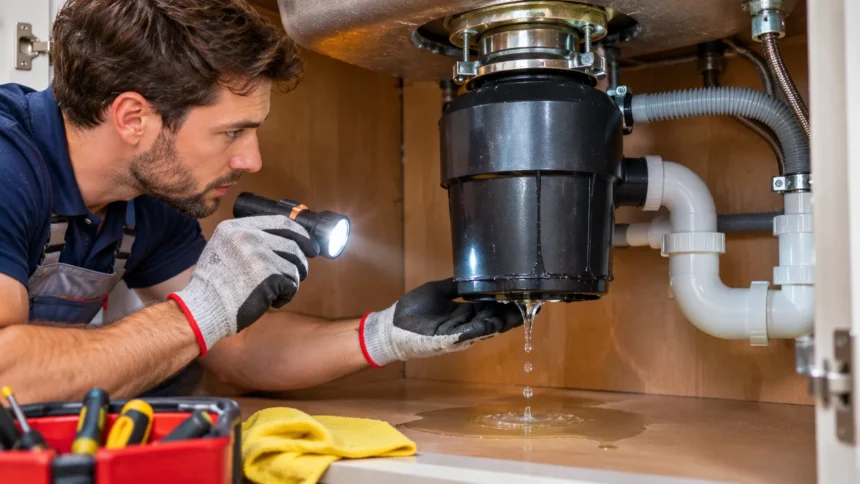
A leaking garbage disposal can quickly turn a small kitchen problem into a frustrating plumbing issue. Water collecting beneath the sink may damage cabinets, create unpleasant odors, and increase the risk of electrical problems. If you notice your garbage disposal leaking from bottom, it is important to identify the source before attempting repairs. Some leaks involve loose connections, while others indicate internal damage that may require replacing the unit.
Garbage disposals operate in wet environments, but water should remain inside the intended plumbing system. Over time, seals, connections, and internal components can wear out or become damaged. Understanding how these problems develop can help homeowners distinguish manageable plumbing issues from more serious equipment failures. This guide explains common causes, warning signs, inspection methods, repair options, replacement costs, and practical ways to prevent future leaks.
Why Is My Garbage Disposal Leaking From the Bottom?
A garbage disposal leaking from the bottom often indicates that water is escaping through an internal seal or damaged housing. Unlike leaks around external plumbing connections, a true bottom leak may involve components inside the appliance. These problems can develop as the disposal ages. Identifying where the water originates is essential before choosing a repair.
One possible cause is deterioration of the internal seals that help keep water away from the motor compartment. Continuous exposure to moisture, vibration, and normal wear can affect these components. Corrosion may also weaken the disposal housing over time. When water escapes through the bottom casing, replacing the appliance is often more practical than attempting internal repairs.
However, water dripping from the bottom does not always mean the disposal itself is damaged. A leak near the sink mounting assembly or discharge pipe may run down the exterior housing. The water can then collect at the lowest point and appear to come from underneath. Careful inspection helps avoid replacing a functioning disposal unnecessarily.
Common Signs of a Leaking Garbage Disposal
The most obvious sign of a garbage disposal leak is water collecting inside the cabinet beneath the kitchen sink. You may notice puddles after washing dishes or operating the disposal. Damp cabinet flooring and water stains can also indicate an ongoing problem. However, the exact source may not be immediately visible.
Another warning sign is a persistent musty smell beneath the sink. Moisture trapped inside enclosed cabinetry can encourage mold growth and damage wooden surfaces. Peeling cabinet finishes or swelling around the base may suggest that water has been present for some time. These changes should prompt a closer inspection of the plumbing system.
Some garbage disposals also develop unusual operating noises or electrical problems as they age. These symptoms do not necessarily prove that a leak is present. However, they become more concerning when combined with visible moisture. If water appears near the electrical connections or motor compartment, stop using the appliance and arrange professional assessment.
How to Find Where the Garbage Disposal Is Leaking
Before inspecting a leaking garbage disposal, turn off its power using the appropriate circuit breaker or unplug it if the plug is safely accessible and completely dry. Do not touch wet electrical connections. If water has reached electrical equipment, contact a qualified professional. Safety should come before attempting to locate the leak.
Once the area is safe, use a flashlight to examine the sink flange, disposal mounting assembly, discharge pipe, and dishwasher drain connection. Look for visible moisture, water stains, or damaged fittings. Dry the accessible exterior surfaces with a cloth. This makes it easier to recognize where fresh water first appears during a professional or otherwise safe inspection.
Water may travel along pipes or appliance surfaces before dripping into the cabinet. Therefore, the lowest visible drip is not always the original source. Check the connections above the disposal before assuming the housing has failed. If the leak is difficult to locate or electrical components may be involved, a licensed plumber can perform a safer and more reliable assessment.
Garbage Disposal Leaking From the Sink Flange
The sink flange is the metal fitting that connects the garbage disposal mounting assembly to the sink opening. It helps create a watertight connection between the sink and the disposal system. If the seal deteriorates or the mounting assembly becomes loose, water may escape around the flange. This can make the disposal appear to be leaking.
A flange leak may become noticeable when water collects in the sink or flows around the drain opening. Moisture can travel down the disposal housing and drip from its underside. The actual problem may involve worn sealing material, an improperly seated flange, or a damaged mounting component. Correct diagnosis helps determine the appropriate repair.
Depending on the disposal design, a plumber may need to reseal or reinstall the flange assembly. The appropriate sealing method depends on the manufacturer’s instructions and sink material. Silicone sealant or plumber’s putty may be specified for certain installations, but they are not interchangeable in every situation. Proper installation helps prevent recurring moisture problems.
Garbage Disposal Leaking From the Side Pipe
A garbage disposal has a discharge outlet that connects the appliance to the sink’s drain plumbing. This connection allows wastewater and ground food particles to move into the drainage system. If the gasket becomes damaged or the connection loosens, water may escape. The leak often becomes noticeable when the sink drains.
The discharge connection typically includes a fitting, gasket, and pipe arrangement designed for the specific disposal. Over time, vibration and normal use may contribute to connection problems. A damaged pipe or incorrectly positioned gasket can also allow water to escape. These issues may be mistaken for an internal disposal leak when water runs downward.
A qualified plumber can inspect the connection and determine whether a gasket, fitting, or pipe needs replacement. External plumbing leaks are often easier to repair than leaks originating inside the disposal housing. However, simply applying sealant over a leaking joint may not address the underlying problem. Correctly fitted components provide a more dependable solution.
Garbage Disposal Leaking From the Dishwasher Connection
Many garbage disposals include an inlet that allows a dishwasher drain hose to connect to the appliance. Wastewater from the dishwasher travels through this hose before entering the drainage system. A loose hose clamp, damaged connection, or deteriorated hose can cause leaks. These problems may only appear when the dishwasher operates.
A dishwasher-related leak can be difficult to identify because the garbage disposal may remain dry during ordinary sink use. Water may appear beneath the cabinet during or shortly after a dishwasher cycle. The moisture can run along the disposal housing and collect underneath. This may create the impression that the appliance itself is leaking.
Inspection should focus on the hose, connection point, and surrounding plumbing. Damaged hoses or fittings may need replacement rather than temporary sealing. Any work should follow the relevant appliance instructions and appropriate safety precautions. A plumber or appliance technician can determine whether the problem originates from the disposal connection or another part of the dishwasher drainage system.
Can a Garbage Disposal Leak Because of a Damaged Internal Seal?
Internal seals help prevent water from entering areas of the garbage disposal that are not designed to hold moisture. These components operate in an environment exposed to frequent water flow and vibration. Over time, normal wear may reduce their effectiveness. A failed seal can allow water to move into unintended sections of the appliance.
When an internal seal fails, water may emerge through openings near the bottom of the disposal. This is different from an external pipe leak that can often be addressed by replacing a fitting. The affected components may be difficult to access, depending on the manufacturer’s design. Repairing them may not be economical or supported by the manufacturer.
Continuing to operate a disposal with an internal leak may create additional damage and electrical hazards. It is best to stop using the appliance and arrange appropriate assessment. In many cases, replacing the disposal is the recommended solution. A professional can confirm whether the unit is defective before you purchase a replacement.
Is It Safe to Use a Garbage Disposal That Is Leaking?
Using a leaking garbage disposal is not recommended, particularly when water may be entering its motor compartment. Garbage disposals combine electrical components with plumbing, making moisture exposure a significant concern. Even a small leak can worsen unexpectedly. Continuing to run the unit may increase damage to nearby surfaces and equipment.
If you discover water beneath the appliance, stop operating the disposal and avoid using the affected sink until the source is identified. Disconnect power only when it is safe to do so. Never touch a wet plug, switch, or electrical connection. When moisture has reached electrical components, a qualified electrician or appliance professional should assess the situation.
Leaks can also affect kitchen cabinets, flooring, and surrounding plumbing. Prolonged moisture may create conditions that encourage mold growth and material deterioration. Drying the affected cabinet helps reduce secondary damage once the area is electrically safe. Addressing the source promptly is more effective than repeatedly cleaning up water while continuing to use the appliance.
How to Fix a Garbage Disposal Leaking From the Bottom
The correct repair depends on whether the leak originates from an external plumbing connection or the disposal’s internal components. A loose or damaged external fitting may be repairable. However, a true leak through the bottom housing often indicates a more serious problem. Accurate diagnosis should come before purchasing parts or attempting repairs.
For an external leak, a plumber may replace a worn gasket, adjust a fitting, or correct an improperly installed connection. Repairs must follow the manufacturer’s requirements and appropriate safety procedures. The appliance should remain disconnected from power during relevant work. Avoid applying adhesive or sealant to electrical openings or attempting to block drainage from the motor housing.
If water is escaping through the bottom casing because of internal damage, replacement is frequently the most practical option. Many residential disposals are not designed for economical internal seal repairs. Attempting to open the motor housing can introduce additional safety risks. A qualified professional can evaluate whether repair is supported or replacement is necessary.
When Should You Replace a Leaking Garbage Disposal?
Replacement becomes more likely when water is leaking from internal seals, damaged metal housing, or areas near the motor compartment. These conditions may indicate that the appliance has reached the end of its useful service life. External plumbing repairs cannot correct internal corrosion. Continuing to use the unit may lead to further problems.
Age can also influence the decision. Many residential garbage disposals remain serviceable for roughly eight to fifteen years, although actual lifespan varies with design, maintenance, and usage. Older appliances may develop several problems around the same period. Replacing an aging unit can sometimes be more economical than paying for repeated repairs.
Before selecting a replacement, consider the existing mounting system, available cabinet space, electrical setup, and plumbing connections. Not every disposal model fits every installation without adjustments. Manufacturer warranties may also cover certain defects or replacement costs. A professional can help determine whether the existing installation is suitable for a new appliance.
How Much Does It Cost to Fix a Leaking Garbage Disposal?
Repair costs depend on the location of the leak, the condition of the appliance, and local labor rates. Replacing an accessible gasket or correcting a plumbing connection is generally less involved than replacing the entire disposal. However, a technician may need to inspect the system before providing an accurate estimate.
A basic residential garbage disposal replacement in the United States may cost a few hundred dollars including typical installation, while higher-end models or complicated plumbing work can cost more. Actual prices vary widely by location, product, and service provider. Internal repairs may be unavailable or uneconomical. Requesting an itemized estimate helps homeowners compare suitable options.
The lowest initial repair price is not always the most economical choice. If an older disposal has recurring leaks or motor problems, replacement may reduce the likelihood of additional service visits. On the other hand, replacing a functional unit because of a loose external connection may create unnecessary expense. The best decision depends on diagnosis and overall condition.
How to Prevent Garbage Disposal Leaks
Preventing leaks begins with using the garbage disposal according to its manufacturer’s instructions. Avoid forcing large quantities of food waste into the appliance at once. Excessive loading and unsuitable materials can contribute to mechanical stress or drainage problems. Appropriate usage supports the condition of the appliance and its plumbing connections.
Regularly check beneath the sink for damp areas, loose-looking connections, or unusual odors. Early detection may prevent a minor leak from damaging cabinets or flooring. Avoid storing items against the disposal that could place pressure on pipes or fittings. Keep the cabinet organized enough to notice moisture when it first develops.
Garbage disposals should also be maintained according to their specific instructions. Avoid pouring grease or cooking oil into the sink because these materials can contribute to drain blockages. Do not use harsh chemical drain cleaners in the disposal unless the manufacturer explicitly permits them. Responsible maintenance may reduce some problems, although normal wear cannot be prevented entirely.
Common Garbage Disposal Repair Mistakes to Avoid
One common mistake is assuming that every drip beneath a garbage disposal comes from the bottom seal. Water can travel from the sink flange, dishwasher hose, or discharge pipe before reaching the lowest part of the appliance. Replacing the disposal without checking these connections may not solve the actual problem. Proper inspection helps avoid unnecessary expenses.
Another mistake is continuing to operate the disposal while water is visible around its electrical components. The appliance may still seem to function normally, but that does not establish that it is safe. Never attempt electrical repairs with power connected. Uncertain or wet electrical conditions require professional assistance rather than experimentation.
Homeowners sometimes attempt to cover leaks with large amounts of adhesive, tape, or waterproof sealant. These materials may temporarily hide water without correcting damaged components. They can also make later inspection more difficult. A durable repair should address the underlying cause using appropriate parts and methods rather than simply covering the visible symptom.
When to Call a Professional Plumber
A professional plumber can help when the leak source is unclear or the repair involves multiple plumbing connections. They can evaluate the sink flange, discharge outlet, dishwasher connection, and surrounding drain system. This assessment may reveal problems unrelated to the disposal itself. Accurate diagnosis is particularly valuable when water has traveled along several surfaces.
Professional assistance is also advisable when the appliance requires replacement or the existing plumbing appears damaged. Improper installation can cause additional leaks, drainage problems, and unnecessary costs. Some repairs may involve electrical work that requires a qualified electrician. The appropriate professional depends on the nature of the problem.
Seek prompt assistance when leakage continues, cabinet materials become saturated, or water approaches electrical equipment. If the disposal is producing unusual electrical symptoms, leave it switched off until it can be assessed. Do not delay addressing substantial water damage. Timely repairs help protect the kitchen and reduce the likelihood of more expensive problems.
Conclusion
A garbage disposal leaking from the bottom can result from internal seal failure, corrosion, damaged housing, or water traveling down from an external plumbing connection. The first step is to identify the actual source rather than assuming the appliance needs replacement. External connection leaks may be repairable. Internal leaks often require replacing the disposal.
Safety is particularly important because garbage disposals contain electrical components near water. Stop using a leaking appliance and avoid touching wet electrical connections. A qualified professional can inspect the plumbing and determine whether repair is practical. Addressing the problem early may also prevent cabinet damage, moisture-related deterioration, and additional plumbing expenses.
Regular inspection, proper usage, and suitable maintenance can help reduce some garbage disposal problems. However, seals and other components naturally wear over time. When leakage develops, a careful diagnosis provides the best starting point. Choosing the appropriate repair or replacement helps restore reliable kitchen drainage and protect your home from further water damage.
Frequently Asked Questions
Why is my garbage disposal leaking water from the bottom?
A bottom leak may indicate damaged internal seals, corrosion, or a failing disposal housing. However, water from an upper plumbing connection can also run downward and appear to originate underneath.
Can a garbage disposal leaking from the bottom be repaired?
External leaks involving pipes, gaskets, or mounting connections may be repairable. A true internal bottom leak often requires replacing the disposal because internal components may not be economically serviceable.
Is it dangerous to use a leaking garbage disposal?
Yes, especially if water reaches electrical components. Stop using the disposal, avoid touching wet electrical connections, and arrange professional inspection before operating the appliance again.
How long does a garbage disposal usually last?
Many residential garbage disposals last approximately eight to fifteen years, depending on product quality, usage, and maintenance. Some fail sooner, while others remain functional for longer periods.
Should I replace my garbage disposal if it leaks from underneath?
Replacement is often appropriate when an internal seal or housing has failed. However, have the leak source checked first because an external plumbing connection may be responsible.